
Imagine selling the extra solar power from your roof directly to your neighbor without calling a utility company or waiting weeks for a bill. That is exactly what Peer-to-Peer Energy Trading is all about. By using blockchain technology, homeowners and small businesses can trade electricity locally, cutting out middlemen and keeping more money in their pockets. This isn't just a futuristic idea; it is happening right now in cities like New York, Australia, and Denmark.
The core promise is simple: lower costs, higher transparency, and a more resilient local grid. Traditional power grids lose about 5-8% of energy during transmission. When you trade energy with someone down the street, those losses disappear. Plus, instead of accepting a low feed-in tariff set by a utility, you get to sell at market rates. For many solar owners, this means turning a passive asset into an active income stream.
How P2P Energy Trading Actually Works
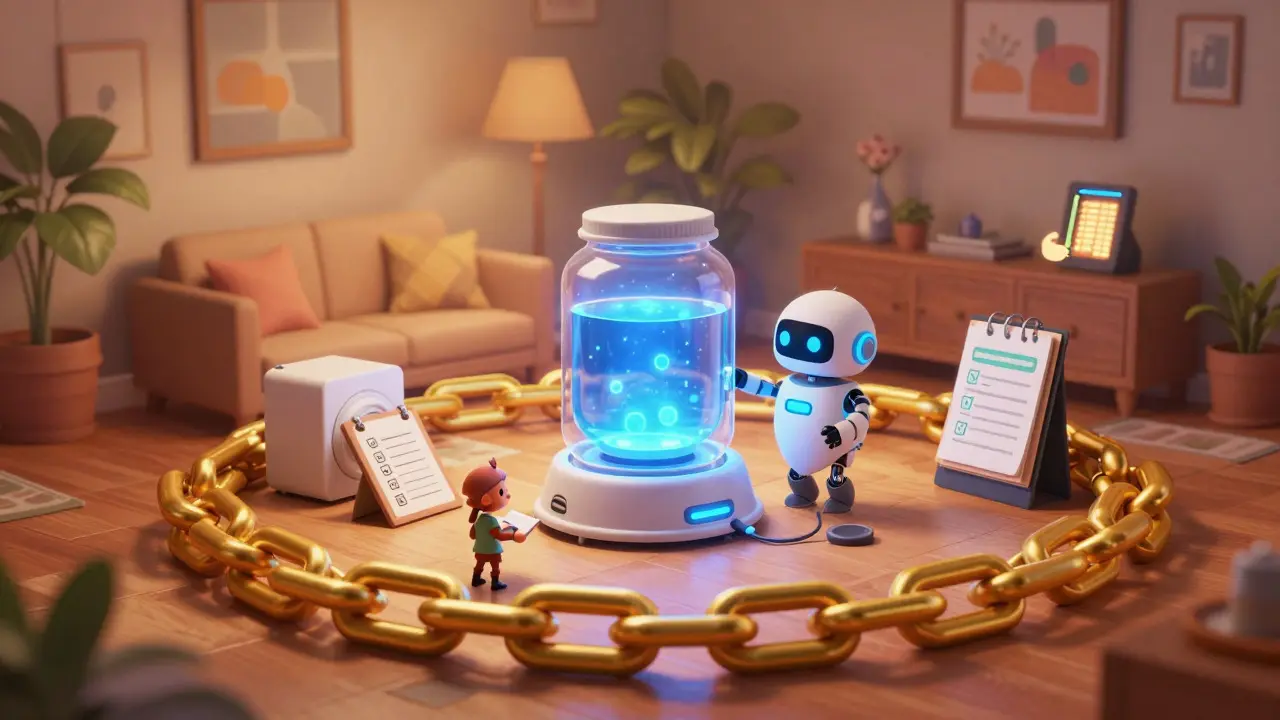
To understand how this functions, you have to look at the four main pieces that make up the system. Think of it as a digital marketplace where electricity is the product and the blockchain is the receipt book that never lies.
- Smart Meters: These devices record your energy production and consumption in real-time. They don't just measure kilowatt-hours; they send data every 15 to 60 minutes to the network. You need meters that comply with standards like IEEE 2030.5 or OpenADR 2.0 to ensure they talk to the blockchain platform correctly.
- Blockchain Ledger: This is the backbone. Platforms like Ethereum, Hyperledger Fabric, or Corda record every transaction. Once a trade is made, it is immutable. No one can go back and change the price or the amount of energy exchanged. This removes the need for trust between strangers.
- Smart Contracts: These are self-executing code snippets. You set the rules-for example, "sell 5 kWh at $0.15/kWh if my battery is full." When the conditions are met, the contract automatically executes the trade and transfers the payment. No human intervention needed.
- User Interface: This is the app or web portal you use. It shows your balance, available energy, and lets you set your pricing strategy. It’s designed to be as easy as using a ride-sharing app.
The process starts when you register your generation capacity on the platform. From there, the system continuously matches your surplus supply with local demand. If your neighbor needs power and you have extra, the smart contract handles the rest. It’s automated, fast, and transparent.
Real-World Success Stories and Data
You might wonder if this works outside of theory. The answer is yes, but with some caveats. The Brooklyn Microgrid project in New York City was one of the first major implementations, launching in 2016. As of late 2024, it has connected over 500 participants across three neighborhoods. Participants report saving 12-18% on their energy bills compared to traditional utility rates.
In Australia, Power Ledger ran a trial in Fremantle involving 100 households. The results were impressive: 97% user satisfaction. Solar owners in the trial earned between AUD$220 and AUD$350 monthly from selling their surplus energy. That is real cash flow for people who already paid for solar panels.
Over in Europe, a community in Sonderborg, Denmark, used a blockchain-based system to reduce its dependency on the main grid by 37% during winter months. This matters because winter is when heating demand spikes. Being able to share local renewable energy helps stabilize the local load.
| Feature | Traditional Utility Model | P2P Blockchain Model |
|---|---|---|
| Transaction Costs | High (includes utility margins) | 30-45% lower |
| Settlement Speed | Monthly billing cycles | Near-instant via smart contracts |
| Transparency | Opaque pricing structures | Public, immutable ledger |
| Grid Resilience | Vulnerable to single-point failures | Distributed, local backup capability |
| Energy Losses | 5-8% during transmission | Minimal (local exchange) |
Challenges and Limitations You Should Know
It’s not all sunshine and rainbows. There are practical hurdles that keep P2P trading from being everywhere yet. First, there is the scalability issue. Current blockchain platforms, especially public ones like Ethereum, handle around 15-30 transactions per second. Visa handles 24,000. For a neighborhood of 50-500 people, this is fine. But for a city of millions? Not yet.
Then there is the regulatory maze. Electricity markets were built for centralized utilities. In many US states, selling electricity directly to another person is technically illegal unless you are a licensed utility. This caused issues for projects like WePower in Lithuania, which faced 18 months of delays before shutting down due to unclear regulations. However, things are changing. The EU’s Clean Energy Package and the US Federal Energy Regulatory Commission’s Order 2222 have opened doors for these models.
Technical complexity is another barrier. Onboarding a new user can take 3-5 hours. You have to connect smart meters, verify identity, and understand how to set prices. For non-technical users, this can be frustrating. Additionally, smart meter interoperability remains a pain point, affecting about 22% of initial deployments. If your meter doesn’t speak the same language as the platform, nothing works.
The Economic Case: Why It Makes Sense
Let’s talk numbers. According to IRENA, blockchain can reduce transaction costs for electricity trading among prosumers by 30-45% compared to traditional arrangements. That is significant. If you spend $100 a month on electricity, that’s a potential savings of $30 to $45, plus whatever profit you make from selling surplus.
For investors, the return on investment for solar panels improves. Instead of getting a fixed, often low, feed-in tariff, you participate in a dynamic market. Prices fluctuate based on supply and demand. During sunny afternoons, when everyone is producing, prices drop. During cloudy evenings, when demand is high and supply is low, prices rise. Smart contracts allow you to capture these peaks.
The global market for P2P energy trading was valued at $1.27 billion in 2023 and is projected to hit $8.43 billion by 2028. That is a CAGR of 46.1%. Companies like Shell have started exploring hybrid models, and startups like LO3 Energy and Power Ledger have raised over $250 million combined. The money is flowing, signaling confidence in the model.
Future Outlook: What’s Coming Next
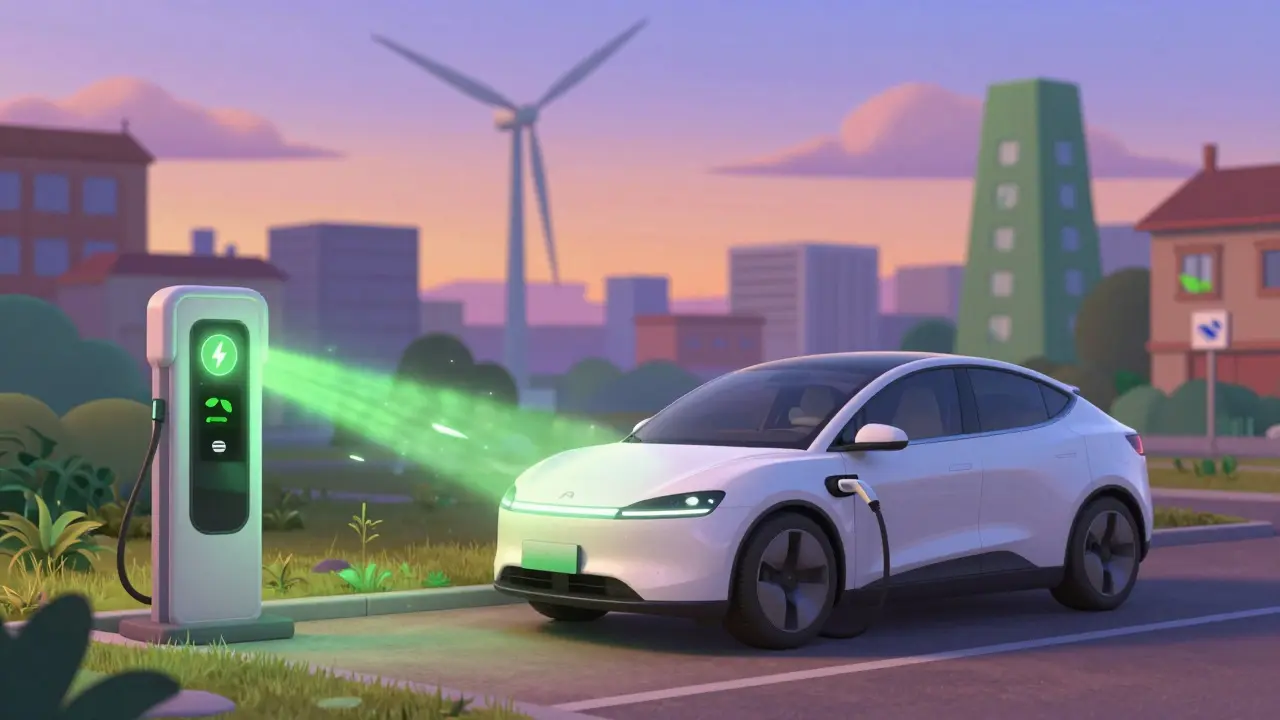
Where is this heading? Two big trends are emerging. First, the integration of Electric Vehicles (EVs). Your car battery isn’t just for driving; it’s a mobile power plant. BMW and Siemens launched a joint trial in Munich in April 2024, connecting 200 EVs to the energy market. This is called Vehicle-to-Grid (V2G) technology. Soon, you might sell energy from your car while it’s parked at work.
Second, cross-border trading. The European Blockchain Services Infrastructure launched in January 2024 includes energy trading as a certified use case. This could allow a household in Germany to buy green energy from a wind farm in Denmark, settling the trade instantly on a shared blockchain. This level of granularity was impossible before.
Ethereum’s switch to proof-of-stake in 2022 also helped. It reduced the energy consumption of the blockchain itself by 99.95%, addressing a major criticism that blockchains are wasteful. Now, the overhead cost of running the network is negligible compared to the energy being traded.
By 2030, experts predict P2P trading could account for 10-15% of distributed renewable energy transactions in regions with supportive laws. It won’t replace the utility entirely, but it will become a vital part of the mix, offering flexibility and resilience.
Frequently Asked Questions
Do I need special hardware to start P2P energy trading?
Yes, you typically need a compatible smart meter that can communicate with the P2P platform. Standard utility meters often don't have the necessary two-way communication capabilities. Check if your current meter supports IEEE 2030.5 or OpenADR 2.0 standards, or ask your provider about upgrading to a smart meter capable of high-frequency data reporting.
Is P2P energy trading legal in my country?
Legality varies significantly by region. In the EU, frameworks like the Clean Energy Package support 'active customers' and 'renewable energy communities.' In the US, regulations are state-specific, but FERC Order 2222 has opened wholesale markets to distributed resources. Always check local regulations or consult with a legal expert specializing in energy law before launching a large-scale operation.
How much can I actually save or earn?
Savings depend on your location, energy usage, and local market dynamics. In trials like the Brooklyn Microgrid, users saved 12-18% on bills. Prosumers in Australia earned AUD$220-350 monthly. The key is maximizing the sale of surplus energy during peak price times, which smart contracts help automate.
What happens if the internet goes down?
Most P2P systems require internet connectivity for real-time data transmission. If the internet fails, the smart contracts cannot execute new trades. However, physical energy flow continues. You would revert to standard net-metering or local backup protocols until connectivity is restored. Some advanced microgrids have offline modes, but this is not yet standard for residential P2P apps.
Which blockchain platform is best for energy trading?
There is no single 'best' platform. Ethereum is popular for its large developer ecosystem and transition to proof-of-stake. Hyperledger Fabric is often chosen by enterprises for its permissioned nature and higher throughput. Corda is favored for financial-grade privacy. The choice depends on whether you want a public, open network or a private, consortium-based one.
