
You just realized you can’t find your 12 or 24-word recovery phrase. Panic sets in. Your heart races as you scroll through old notes, check email drafts, and dig through junk drawers. Maybe you have $500 in Bitcoin, maybe it’s $50,000 in Ethereum. Does it matter if you can recover crypto without seed phrase? For most people, the answer is a brutal no. But before you accept defeat, let’s look at why this happens, what tiny exceptions exist, and how to stop this from happening again.
| Scenario | Recovery Chance | Action Required |
|---|---|---|
| Lost Hardware Wallet (Ledger/Trezor) | High (if backup exists) | Restore on new device using written backup |
| Lost Software Wallet (MetaMask/Trust) | Low | Check for local data backups or cloud sync (rare) |
| Forgotten Password (Non-HD Wallets) | Medium | Brute-force tools like BTCRecover (slow) |
| No Backup, No Password | Near Zero | Funds are effectively burned |
The Math Behind the Lockout
To understand why recovery is so hard, you have to look at how wallets work. They aren’t vaults with keys; they’re calculators. When you set up a wallet, software generates a random number. That number becomes your private key. From that private key, math creates your public address. If you lose the starting point-the seed phrase-you can’t reverse-engineer the destination. It’s like trying to unscramble an egg. The process is one-way.
This isn’t just a policy choice by companies like MetaMask or Trust Wallet. It’s cryptography. The standard used by almost every modern wallet is BIP-39. This standard turns random entropy into those human-readable words. If you don’t have the words, you don’t have the entropy. Without the entropy, you can’t generate the master private key defined by BIP-32. There is no "forgot password" button because there is no central server holding your data. Your funds live on the blockchain, not in the app. The app is just a lens that lets you see them. Lose the lens, and you’re blind.
When Recovery Might Actually Work
Is it truly impossible? Almost. But "almost" leaves room for edge cases. If you used a non-custodial software wallet on a desktop, such as older versions of Bitcoin Core, the private keys might still be stored in a file on your hard drive. Even if you deleted the UI, the `wallet.dat` file could contain the raw keys. Tools like BTCRecover can sometimes help if you remember part of your password but forgot the rest. This is brute-forcing-trying millions of combinations until one fits. It takes time, but it works if the password was weak or partially remembered.
Another scenario involves cloud backups. Some mobile wallets offer encrypted cloud backups. If you enabled this feature before losing your phone, you might restore access by logging into your iCloud or Google Drive account. However, many users disable this for security reasons, assuming their written note was enough. If you didn’t turn on cloud sync, this door is closed.
Hardware wallets present a different challenge. If you lost your Ledger Nano X but wrote down the seed phrase, you’re fine. Buy a new device, enter the words, and you’re back. But if you lost both the device and the paper note? You’re stuck. Unlike bank accounts, there is no customer support line that can reset your identity. As Andreas Antonopoulos, author of Mastering Bitcoin, noted, the seed phrase is mathematically equivalent to your ownership proof. No math, no proof, no coins.

Beware of Recovery Scams
Desperation makes us vulnerable. If you search online for "how to recover lost bitcoin," you’ll find dozens of services claiming they can hack the blockchain or use AI to guess your seed phrase. Most are scams. Here’s why: To "guess" a 12-word seed phrase, you’d need to try billions of combinations. A 24-word phrase has more possibilities than atoms in the observable universe. No computer can brute-force it in a reasonable timeframe.
Legitimate forensic firms analyze transaction history to trace stolen funds, but they don’t "recover" access to a locked wallet. They track where money went. If you sent coins to a scammer, they might help you report it to exchanges. But if you simply lost your own keys, no external service can magically unlock your wallet. Be skeptical of anyone asking for your private key upfront. If they claim they can recover funds without your seed phrase, they likely want to steal whatever little you have left.
Preventing Future Losses
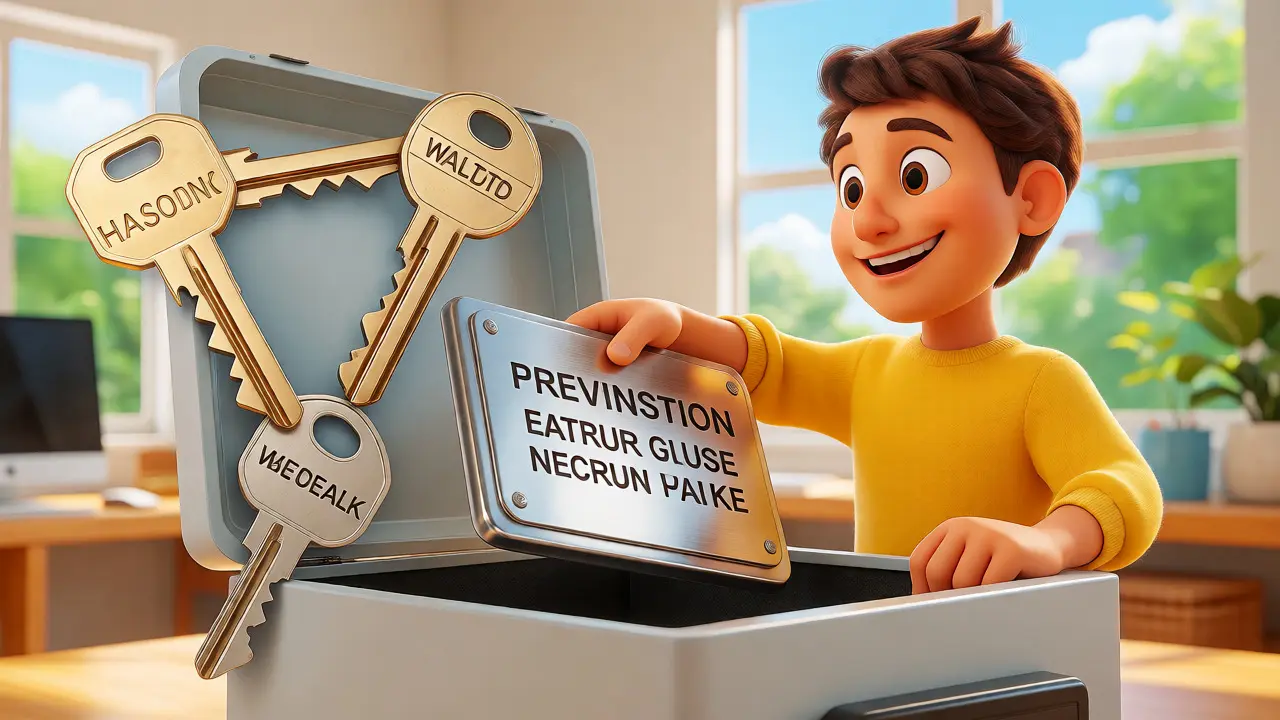
If you survived this scare-or if you’re planning ahead-here is how to bulletproof your setup. First, never store your seed phrase digitally. Screenshots, cloud notes, and password managers are vulnerable to hacks. Paper is good, but fire and water destroy paper. Metal plates, like those from Billfodl or Cryptosteel, survive house fires and floods. Engraving your words on steel is the gold standard for long-term storage.
Second, consider multisignature (multisig) setups. Instead of one key controlling all funds, require two out of three keys to sign a transaction. You can keep one key on a hardware wallet, one on a phone, and one in a safe deposit box. If you lose one, you still have access. This adds complexity but removes the single point of failure. Services like Casa or Unchained Capital offer managed multisig solutions for those who don’t want to manage the tech themselves.
Third, test your backup. Many people write down their seed phrase once and never verify it. Years later, when they need it, they discover a typo or a missing word. Every six months, import your seed phrase into a temporary, empty wallet. Check that the addresses match. If they do, your backup is valid. This simple habit saves thousands of dollars.
The Cost of Convenience
Crypto offers freedom, but that freedom comes with responsibility. In traditional banking, if you forget your password, the bank resets it. They hold custody of your money. In crypto, you are the bank. This design prevents censorship and seizure, but it also means mistakes are permanent. According to Chainalysis, approximately $3.8 billion in cryptocurrency was permanently lost in 2023 due to forgotten or misplaced seed phrases. That’s real wealth vanishing into digital limbo.
Vitalik Buterin, co-founder of Ethereum, argues that alternative recovery methods would weaken security. If someone else holds a copy of your key, they become a target. Hackers attack the weakest link. By keeping sole control, you eliminate third-party risk. It’s a trade-off: total sovereignty for total responsibility. For most users, the fear of loss drives better habits. Write it down. Hide it well. Verify it often.
Can I recover my crypto if I only remember some words of my seed phrase?
Yes, potentially. If you remember most of the words (e.g., 10 out of 12), specialized software like BTCPop or Electrum can perform a partial brute-force attack. These tools cycle through possible combinations for the missing words. It may take hours or days depending on your computer's speed, but it is feasible if the number of missing words is small.
Does MetaMask save my seed phrase on their servers?
No. MetaMask is a non-custodial wallet. Your Secret Recovery Phrase (SRP) is stored locally on your device, encrypted with your password. MetaMask employees cannot see it, nor can they reset it for you. If you lose the SRP and your password, you lose access unless you have a separate backup.
What if I lost my hardware wallet but have the seed phrase?
You are safe. Purchase a new compatible hardware wallet (like a new Ledger or Trezor). During setup, choose the option to "Restore from existing seed." Enter your 12 or 24-word phrase. Your balances will reappear because the funds exist on the blockchain, not inside the physical device.
Are there any legitimate paid services to recover lost seed phrases?
Be very cautious. Most claims are scams. Legitimate services usually assist with recovering passwords for known wallets or tracing stolen transactions. They rarely claim to "guess" a full random seed phrase. Always research reviews on independent platforms like Reddit or Trustpilot before paying any fees.
How does a multisig wallet help with recovery?
A multisig (multi-signature) wallet requires multiple keys to authorize a transaction. For example, a 2-of-3 setup means you need two out of three possible keys to move funds. If you lose one seed phrase, you can still access your money using the other two keys. This eliminates the single point of failure associated with standard single-key wallets.

Rosanna Cole
November 12, 2026 AT 13:43honestly i lost my ledger years ago and just gave up. felt like burning money but whatever.