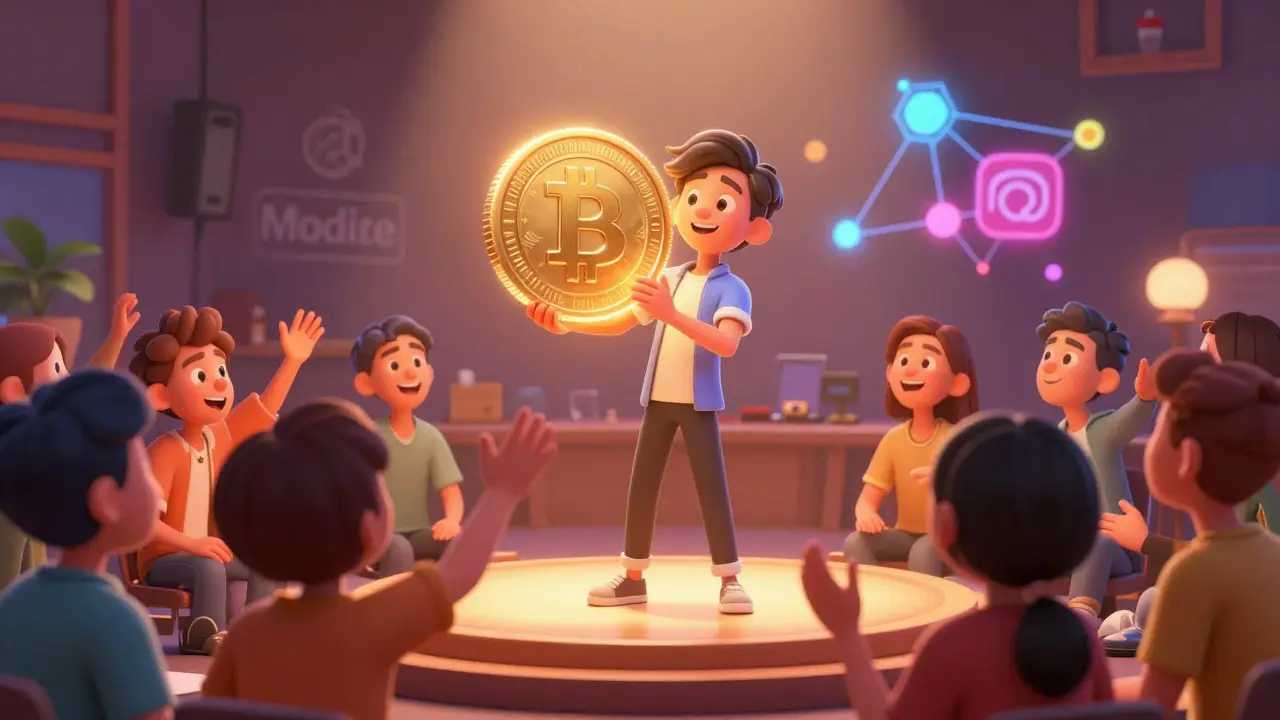
Imagine a world where your biggest fan doesn't just buy your merch or subscribe to your channel-they actually own a piece of your success. That is the promise of social tokens, which are digital assets issued by creators to monetize content and build direct relationships with their audience without traditional intermediaries. Unlike standard cryptocurrencies like Bitcoin that anyone can mine or buy on an exchange, social tokens are personal. They are tied directly to you, the creator. If you are a musician, artist, podcaster, or influencer, these tokens allow you to create a private economy where value flows directly from your community to your wallet.
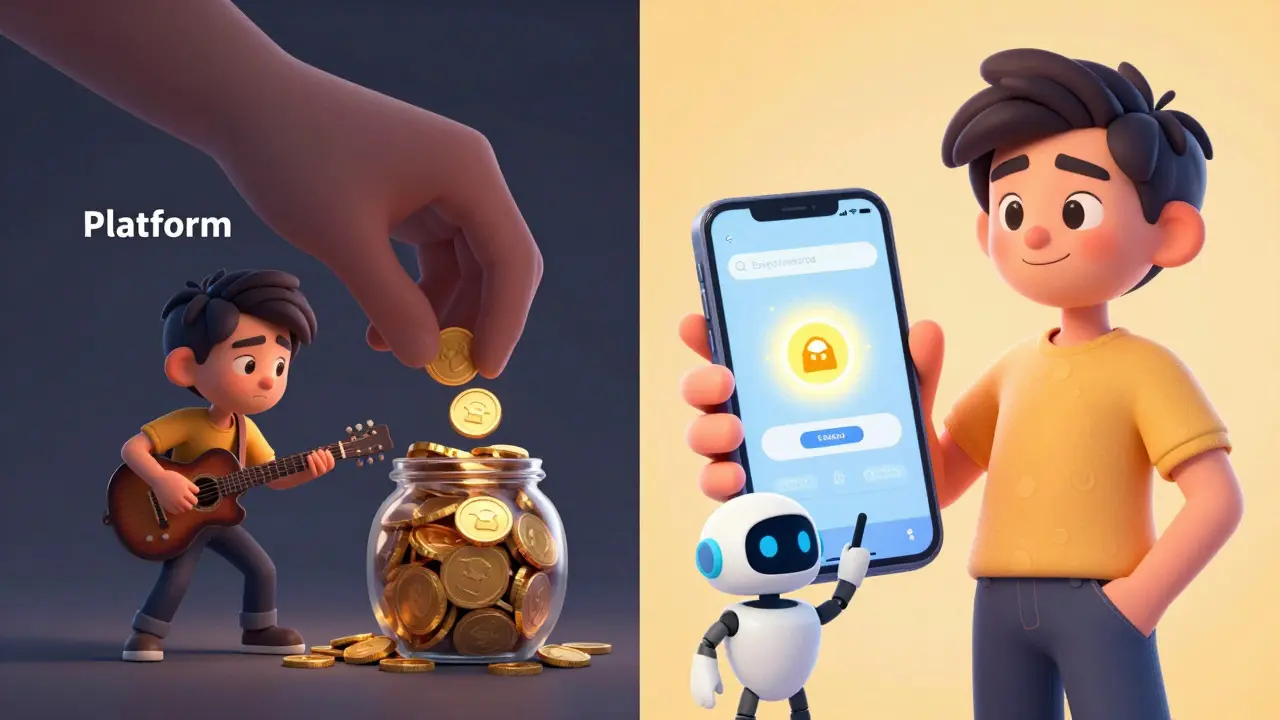
The concept took off around 2020 and 2021 as blockchain technology matured. Platforms like Ethereum, Polygon, and Solana provided the infrastructure for these experiments. But why should you care? Because the traditional creator economy is broken. You likely know the pain of giving 30% to 50% of your earnings to platforms like YouTube, Spotify, or Instagram. Social tokens change that math. They turn passive viewers into active stakeholders who benefit when you succeed.
What Exactly Are Social Tokens?
To understand how to use them, we first need to define what they are. A social token is a type of cryptocurrency, usually built on the ERC-20 standard (on Ethereum) or similar protocols on other chains, that represents membership or access within a specific creator's ecosystem. Think of it like a digital VIP pass that also functions as currency.
There are generally three types of tokens you will encounter in this space:
- Creator Tokens: These are personal tokens linked to an individual. Holding them might give you access to exclusive Discord channels, early ticket sales, or behind-the-scenes content.
- Community Tokens: These often govern participation in a Decentralized Autonomous Organization (DAO). Holders vote on decisions, like which charity to support or which song to release next.
- Platform Tokens: These incentivize activity on a specific platform, rewarding users for engaging with content or helping moderate communities.
It is crucial to distinguish social tokens from NFTs (Non-Fungible Tokens). While NFTs are unique digital collectibles-like a one-of-a-kind painting-social tokens are fungible. This means one $RAC token is identical to another $RAC token. You can split them, trade them, and use them interchangeably within the ecosystem.
The Mechanics: How Creators Actually Make Money
You might be wondering, "Okay, I have a token. How does that put food on the table?" The answer lies in utility and secondary market fees. When you launch a social token, you set the initial price and supply. Fans buy them using crypto or sometimes fiat currency through integrated payment processors.
Here is where the magic happens: royalty fees. Most smart contracts allow creators to program a perpetual royalty fee, typically between 1% and 10%, on every secondary market transaction. This means whenever two fans trade tokens back and forth, you get paid. It creates a passive income stream that grows as your community becomes more active. According to data from World.org in August 2023, this model allows creators to generate revenue without paying the hefty platform fees associated with traditional streaming services.
Furthermore, token value often correlates with your popularity. As your follower count grows and your engagement rates spike, demand for your token rises. Early adopters who bought in at $1 might see their holdings appreciate to $5 or $10 as your career takes off. This appreciation incentivizes fans to hold onto their tokens rather than selling immediately, creating a stable base of supporters.
| Feature | Traditional Platform (e.g., Patreon) | Social Tokens (Web3) |
|---|---|---|
| Platform Fees | 5% - 30% | Gas fees only ($0.01 - $5.00 per tx) |
| Ownership | Platform owns the relationship | Creator owns the relationship |
| Revenue Model | Recurring subscription | One-time purchase + Secondary royalties |
| Fan Incentive | Access to content | Access + Potential financial upside |
| Barrier to Entry | Credit card | Crypto wallet setup |
Real-World Success Stories and Lessons Learned
Theory is great, but let's look at real people. One of the most famous examples is musician RAC (Adam Feeney). He launched the $RAC token, granting holders exclusive access to unreleased tracks and quarterly voice calls. Within six months, this initiative generated $3.2 million in direct fan funding. This wasn't just hype; it was a functional economy where fans felt invested in his artistic direction.
However, it is not always smooth sailing. On Reddit's r/CryptoCurrency, user u/MusicCreator89 documented earning $8,200 monthly from their $SONG token after an initial development cost of $1,200. But contrast that with u/ArtistStruggles, who abandoned their project after six months because only 12% of their fans completed the wallet setup process. This highlights the biggest hurdle: onboarding complexity.
A survey by Coinbase in November 2022 found that 68% of creators cited technical barriers as their top challenge. Asking a casual fan to download MetaMask, buy Ethereum, swap it for your token, and pay gas fees is a massive friction point. Successful creators solve this by using embedded fiat on-ramps like Moonpay, allowing fans to buy tokens directly with credit cards, hiding the blockchain complexity behind a simple web interface.
Technical Requirements and Costs
If you are ready to jump in, what do you need? You don't need to be a coder, but you do need some basic blockchain literacy. Here is a breakdown of what launching a social token typically involves:
- Wallet Setup: You need a digital wallet like MetaMask to store your tokens and interact with smart contracts.
- Platform Selection: You can build from scratch, but most creators use platforms like Roll, Coinvise, or Mintgate. These handle the heavy lifting of smart contract deployment.
- Tokenomics Design: You must decide on supply, price, and utility. Too much supply dilutes value; too little limits accessibility.
- Legal Compliance: This is critical. The SEC has issued enforcement actions against improperly structured tokens. You may need legal consultation costing $2,500 to $7,500 to ensure your token isn't classified as an unregistered security.
Costs vary wildly. A basic launch on a low-fee chain like Polygon might cost under $500 in development and marketing. A complex, custom-built system on Ethereum could run $5,000 or more. Remember, you also have to account for gas fees-the network transaction costs-which can range from pennies on Polygon to several dollars on Ethereum during peak congestion.
Risks and Regulatory Challenges
Let's keep it real: social tokens are risky. The primary risk is volatility. If your content flops or you lose relevance, your token price can crash to zero. This hurts your fans, who lose money, and damages your reputation. Critics like David Gerard argue that 90% of social token projects fail due to unsustainable tokenomics. He warns that many projects rely on speculation rather than genuine utility.
Regulation is another minefield. In the United States, the Securities and Exchange Commission (SEC) watches crypto closely. Between 2021 and 2023, the SEC issued 12 enforcement actions against social token projects that violated securities laws. To stay safe, many creators are adopting the "Constitutional Token Model," pioneered by ECOS.am in Q1 2023. This model separates governance rights from financial instruments, making it easier to argue that the token is not a security but a utility asset.
Additionally, there is the "alignment problem." Jesse Walden, founder of Variant Fund, describes social tokens as the solution to misaligned incentives between creators and audiences. However, if the token becomes purely speculative, fans stop caring about your art and start caring only about the price chart. Maintaining utility-exclusive content, voting rights, real-world perks-is essential to keeping the community healthy.
Is It Right for You? A Decision Framework
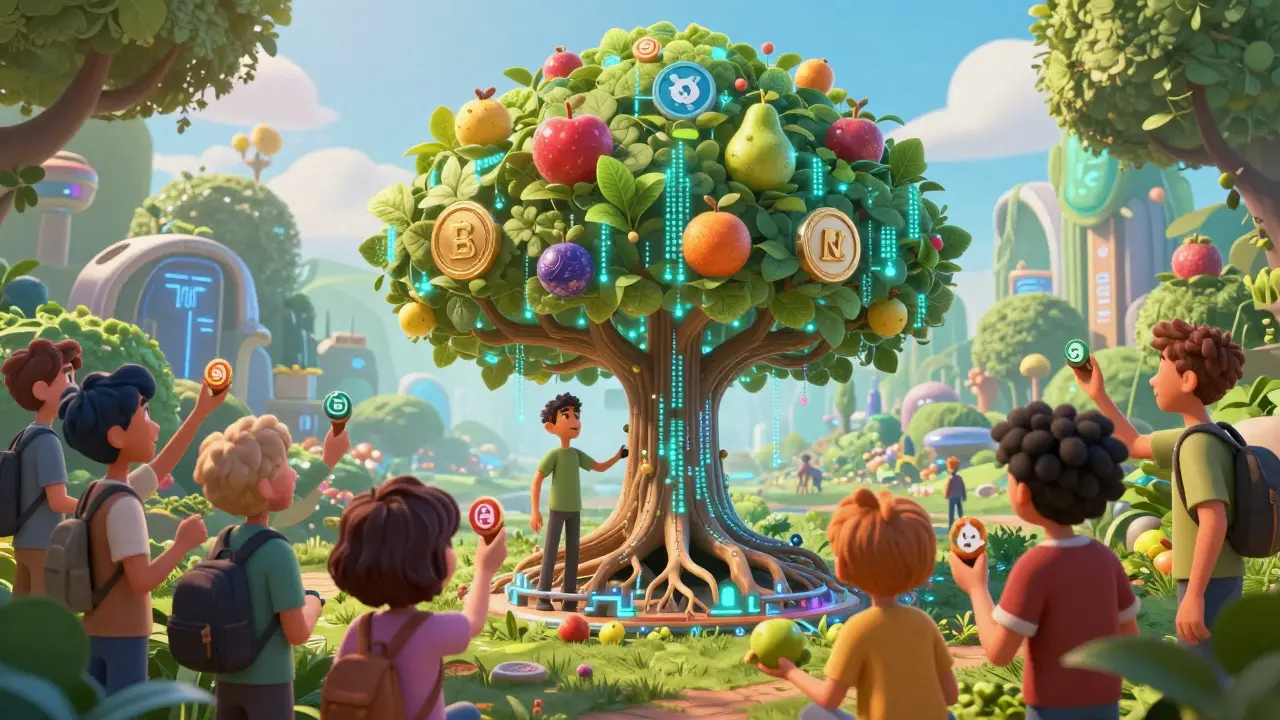
Social tokens are not for everyone. Harvard Business Review analyzed 127 implementations and concluded that they require a minimum of 5,000 highly engaged followers to be economically viable. If you are just starting out, you might want to stick to traditional methods until you have built a dedicated superfan base.
Ask yourself these questions before launching:
- Do I have a community that already trusts me enough to invest financially?
- Can I provide ongoing utility (content, access, voting) that justifies holding the token?
- Am I prepared to handle customer support for technical issues like wallet connectivity?
- Have I consulted a lawyer regarding securities laws in my jurisdiction?
If the answer to all of these is yes, then social tokens could revolutionize your business model. They offer a path to true ownership, higher margins, and deeper fan connections. But if you are looking for a quick cash grab, look elsewhere. The technology demands commitment and transparency.
The Future of Creator Ownership
The landscape is evolving rapidly. By Q2 2023, social tokens represented about 1.7% of total creator revenue, but projections suggest this could hit 8.3% by 2025. Major platforms are taking notice. Twitter integrated social token wallets directly into profiles in March 2023, reducing onboarding friction by 63%. Patreon is beta-testing integrations that show 41% higher retention among token-enabled accounts.
We are moving toward hybrid models. Expect to see combinations of social tokens, NFTs, and traditional subscriptions. For instance, you might buy a social token for general access, then spend those tokens to mint limited-edition NFTs of your artwork. This layering of utilities creates a robust ecosystem that keeps fans engaged long-term.
As Linda Xie, former Coinbase product manager, noted, social tokens enable community members to collaborate and share ownership in the value created together. This shift from consumer to co-owner is the defining characteristic of the Web3 era. For creators willing to navigate the technical and regulatory complexities, the rewards are significant. You are no longer renting an audience; you are building a owned, decentralized community.
What is the difference between a social token and an NFT?
Social tokens are fungible, meaning each token is identical and interchangeable, like dollars. They function as currency or membership passes within a creator's ecosystem. NFTs (Non-Fungible Tokens) are unique digital assets, like a specific painting or ticket, where each item has distinct properties and value. Social tokens are used for transactions and access, while NFTs are often used for collectibles or proof of ownership.
How much does it cost to launch a social token?
Costs vary significantly based on complexity and blockchain choice. Using existing platforms on low-fee chains like Polygon can cost between $500 and $1,500 for development and initial marketing. Custom solutions on Ethereum may cost $5,000 or more. Additionally, creators should budget $2,500 to $7,500 for legal consultation to ensure compliance with securities laws.
Are social tokens legal in the United States?
The legality depends on how the token is structured. The SEC has enforced actions against tokens deemed unregistered securities. To mitigate risk, many creators use utility-focused models that emphasize access and governance rather than profit-sharing. Consulting with a crypto-savvy attorney is essential to navigate regulations like the Howey Test.
Which blockchain is best for social tokens?
Ethereum is the most established but has high gas fees. Polygon and Solana are popular alternatives due to their lower transaction costs and faster speeds, making them better for frequent micro-transactions and broader fan adoption. The choice depends on your target audience's technical comfort and your budget for network fees.
How do creators earn money from social tokens?
Creators earn through initial sales of the token to fans and, more importantly, through secondary market royalties. Smart contracts can be programmed to take a percentage (usually 1-10%) of every trade between fans. This provides a passive income stream that scales with community activity and token liquidity.

Prudence Flemming
August 14, 2026 AT 04:11the ontological shift from consumer to stakeholder is profound yet often misunderstood by the masses who cling to fiat illusions. we are witnessing the dissolution of the platform monopoly through cryptographic proof of value. it is not merely about money but about redefining social contract via smart contracts. the utility must be intrinsic otherwise it collapses under its own speculative weight. think deeply about what ownership truly means in a digital realm.
Lance Jantz
August 15, 2026 AT 01:38Oh, the sheer audacity of suggesting that a mere mortal can replicate the genius of RAC! It is adorable how you think a few lines of code can replace the soulful connection of true artistry. But let us not forget that only the elite with the proper wallets and the refined taste for blockchain aesthetics will survive this great filter. The rest? They shall perish in the gas fee purgatory they so richly deserve. 😂
Don Fizy
August 16, 2026 AT 17:09You got this! :D Just remember to start small and build trust first. Don't rush into the complex stuff until your community is ready. It's all about the journey and learning as you go. Keep pushing forward! :)
Phil Babb
August 17, 2026 AT 15:27LISTEN UP!! This is the future!!! Why are people still sleeping on this?! The American dream of creator independence is right here!!! Stop letting big tech steal your thunder!!! Embrace the blockchain or get left behind!!! IT IS THAT SIMPLE!!! 🔥🔥🔥
Dominic Greco
August 17, 2026 AT 16:44It’s all a setup by the SEC to track every transaction you make 🕵️♂️ They want to know who holds your tokens so they can freeze your assets if you speak out against the regime. Trust no one. The ‘utility’ is just a Trojan horse for total surveillance. Wake up sheeple! 👁️👄👁️
Sean Rowland
August 18, 2026 AT 09:22The premise of fungibility within a personal ecosystem is fundamentally flawed. How can one claim uniqueness when the asset is interchangeable? It is a paradox of identity. Furthermore, the legal ramifications are being grossly underestimated by these techno-utopians. One must consider the jurisprudential implications of unregistered securities in depth.
Sus Sawyer
August 18, 2026 AT 19:55Look man, I've been down this road before and its tricky but totally doable if ya keep it simple. dont overcomplicate the tokenomics. just give em access to cool stuff and let 'em trade. the secondary market fees are where the real magic happens, trust me on that. keep grinding! 💪
Aryan MISHRA
August 19, 2026 AT 09:51Tokenomics is everything!! Without proper supply caps and burn mechanisms, your project is dead on arrival!! Study the whitepapers!! Do not rely on hype!! Hype dies!! Utility remains!! Be disciplined!!
Ryan Robinson
August 19, 2026 AT 19:46i mean it sounds cool but like why bother if im just gonna lose my shirt anyway lol. maybe ill try it later when i have more cash to burn. seems kinda risky tbh.
Earl Kott65
August 21, 2026 AT 00:47Ah yes, the classic 'own your audience' narrative 🙄 As if any of us actually understand how to manage a DAO without turning it into a cult of personality. But sure, let's pretend that putting a price tag on friendship makes it more valuable. Groundbreaking stuff right there 🎭
Ethan Yuwono
August 23, 2026 AT 00:42there is a quiet dignity in direct exchange between artist and patron. perhaps the noise of the market obscures this truth. we should listen more to the silence between transactions. the technology is merely a vessel for human connection after all.
Jack Delasquez
August 24, 2026 AT 08:43so basically u pay gas fees to feel special? wow. thats deep. i guess if u got the crypto then go for it. just dont cry when the rug pulls. happened to me last time. lol.
Harman Singh
August 25, 2026 AT 17:55why does everyone else get it and i dont? i tried setting up metamask and it broke my laptop. now i feel stupid and poor. please explain again but simpler. i need validation not jargon. am i too dumb for web3?