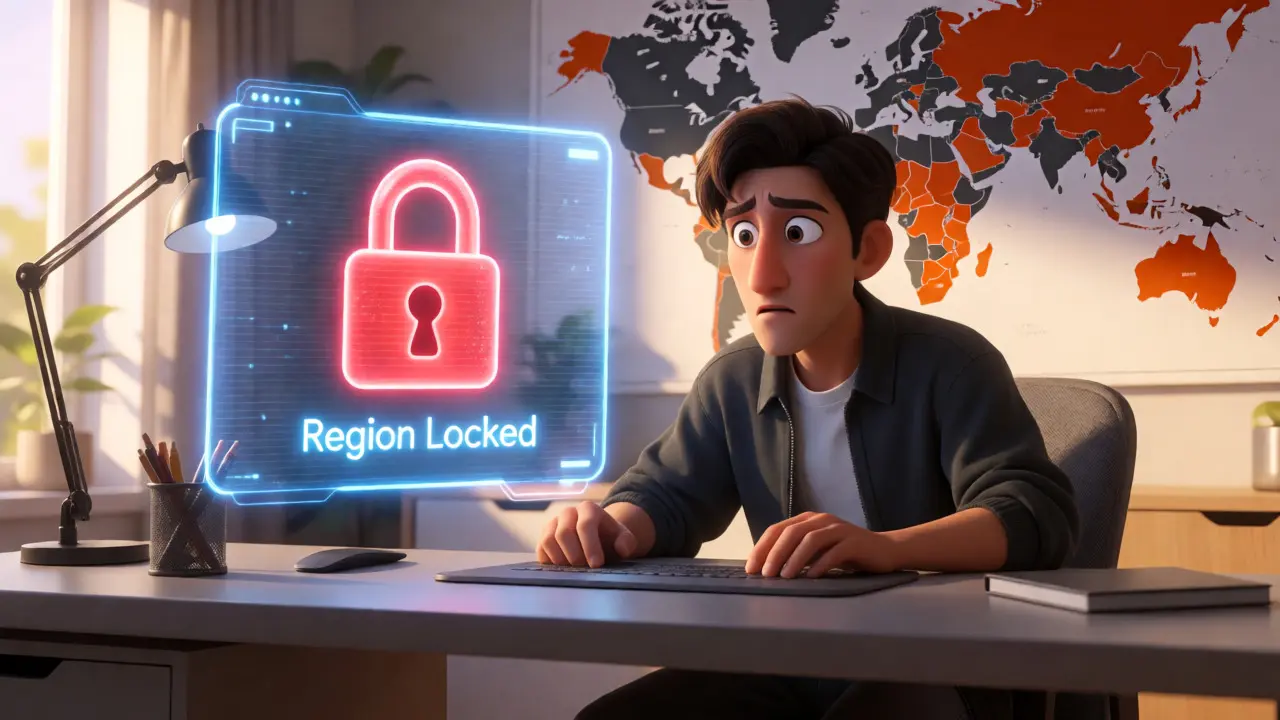
You just signed up for Kraken, ready to buy some Bitcoin or stake your Ethereum. But when you try to deposit funds, the screen flashes a warning: "Service unavailable in your region." It’s frustrating, especially if you’re in a country that seems perfectly fine for crypto elsewhere. The truth is, Kraken isn't just picking and choosing randomly. They operate under a strict web of international laws, sanctions, and local financial rules that block trading in specific places.
As of 2026, understanding where you can actually trade on this platform saves you from locked accounts and frozen assets. Whether you are in a sanctioned nation, a specific US state with unique laws, or part of the European Economic Area dealing with new stablecoin rules, the map of allowed territories has changed significantly. This guide breaks down exactly which jurisdictions are blocked, why it happens, and what it means for your portfolio right now.
The Core List of Banned Countries
Let’s start with the hard bans. These are countries where Kraken simply does not offer services at all. If you live here, you cannot open an account, fund it, or trade any digital asset. This list aligns closely with international sanctions regimes enforced by bodies like the US Treasury’s Office of Foreign Assets Control (OFAC) and similar agencies globally.
The primary prohibited nations include:
- Afghanistan
- Belarus
- Russia (including Crimea, Donetsk, and Luhansk regions)
- Iran
- Iraq
- North Korea
- Syria
- Libya
- Sudan
- South Sudan
- Cuba
- Democratic Republic of the Congo
Beyond these major names, there is a secondary tier of restricted territories often tied to instability or specific anti-money laundering (AML) concerns. Users in the Central African Republic, Congo-Brazzaville, Eritrea, Guinea-Bissau, Lebanon, Mali, Namibia, Somalia, Tajikistan, and Yemen also face complete service prohibitions. If you are traveling through these areas, be aware that accessing your Kraken account might trigger security flags, even if you don't live there permanently.
US State-Specific Restrictions
Just because you are in the United States doesn't mean you have full access. The US regulatory landscape is fragmented, meaning each state can impose its own rules on cryptocurrency exchanges. Kraken has to navigate this patchwork carefully to stay compliant with both federal laws and state-level financial authorities.
Two states stand out as having the most significant limitations:
| State | Restriction Type | Details |
|---|---|---|
| New York | Limited Access | Residents cannot trade most assets directly via standard interface. Often requires pre-verification or specific institutional pathways due to BitLicense regulations. |
| Washington | Restricted Trading | Similar to NY, certain derivatives and margin products may be unavailable or require special approval pending state regulator alignment. |
| Texas & New Hampshire | Fiat Currency Limits | Residents cannot fund, trade, or hold Euro (EUR). USD transactions remain available. |
| All 50 States | Asset Bans | XRP trading is prohibited nationwide. ETH2.S is limited to staking only (no direct trading). FLOW token trading is banned for US residents. |
The ban on XRP across all US states is particularly notable given Ripple's legal battles. While the SEC lawsuit against Ripple had mixed outcomes, Kraken maintains a conservative stance, keeping XRP off the trading pairs for American users to avoid potential regulatory friction. Similarly, if you were hoping to trade FLOW tokens, you’ll need to look elsewhere if you reside in the US, Canada, or Japan.
European Union and the MiCA Impact
If you are based in Europe, things got complicated recently due to the Markets in Crypto-Assets (MiCA) regulation. This framework aims to create a unified rulebook for crypto across the European Economic Area (EEA). For Kraken, this meant saying goodbye to several popular stablecoins that didn't meet the new transparency and reserve requirements.
In early 2025, Kraken announced the delisting of five major stablecoins for EEA customers. This affected over 30 countries, including Austria, Cyprus, Czechia, Malta, Portugal, Spain, and Sweden. The affected assets were:
- Tether (USDT)
- PayPal USD (PYUSD)
- TrueUSD (TUSD)
- Tether EURt
- TerraClassicUSD (USTC)
This wasn't a sudden switch-off. Kraken implemented a phased rollout. First, they moved these coins to "reduce-only" mode, then "sell-only," before finally terminating spot trading. By March 2025, the conversion process was largely complete for most users. If you held USDT in your Kraken wallet while living in the EU, you likely saw it converted or forced to sell. This highlights a critical point: holding assets on an exchange subjects you to their compliance decisions. Self-custody wallets aren't subject to these delistings, though you still can't trade them on Kraken if you're in the EEA.
Privacy Coins and Regional Bans
Not all restrictions are geographic; some are asset-specific based on local attitudes toward privacy. Australia serves as a prime example. Due to strict AML laws overseen by AUSTRAC, Australian residents cannot fund, trade, or hold privacy coins. Specifically, Dash (DASH), Monero (XMR), and Zcash (ZEC) are off-limits for Aussie traders on Kraken.
Japan presents another case. While not a total ban, Japanese residents face enhanced documentation standards for trading Yen-denominated pairs. The Financial Services Agency (FSA) in Japan is known for its rigorous approach, requiring detailed proof of residence and source-of-funds declarations that might feel excessive compared to other regions.
How Kraken Enforces Location Rules
You might wonder, "Can I just use a VPN?" Technically, yes, but practically, it’s risky. Kraken uses a multi-layered verification system to determine your true location. They don't just look at your IP address. They cross-reference this with:
- Government-Issued ID: Your passport or driver's license shows your residential address.
- Proof of Residence: Utility bills or bank statements confirm where you actually live.
- Payment Methods: Credit cards and bank accounts are linked to specific countries. A German credit card used with a US IP address raises red flags.
- Transaction Monitoring: Ongoing activity patterns help detect if you are trying to bypass regional locks.
If Kraken detects that you are spoofing your location using a VPN to access services unavailable in your actual jurisdiction, they can freeze your assets. In severe cases, they may terminate your account entirely. Recovery of funds can take weeks, and you might be required to withdraw to a wallet that matches your verified identity. Don't gamble with compliance just to save a few basis points on fees.

Why These Restrictions Exist
It’s easy to blame Kraken for being too cautious, but consider their position. Founded in 2011 by Jesse Powell, Kraken has built a reputation for security and regulatory adherence. They hold licenses from heavyweights like FinCEN in the US, the FCA in the UK, FINTRAC in Canada, and the FSA in Japan. Maintaining these licenses requires strict adherence to sanctions lists and local laws.
For instance, Kraken received Wyoming’s first Special Purpose Depository Institution (SPDI) charter in 2020, making it one of the first crypto firms with a US banking license. Losing that status because of sloppy geographic compliance would be catastrophic. Furthermore, past fines, such as the 2022 US Treasury penalty for sanctions violations, serve as painful reminders. Being proactive about blocking jurisdictions is cheaper than paying millions in fines later.
What Should You Do?
If you find yourself in a blocked jurisdiction, you have three main options:
- Switch Exchanges: Look for platforms that serve your specific region. Some smaller or offshore exchanges may have looser geographic policies, though they often come with higher risks regarding insurance and liquidity.
- Self-Custody: Move your assets to a hardware wallet like Ledger or Trezor. You retain ownership regardless of exchange policies. However, remember that you won't be able to trade those assets *on* Kraken if you are in a blocked zone.
- Wait for Regulatory Changes: Laws evolve. Washington State and New York residents have been waiting years for expanded access. Keep an eye on Kraken’s official blog for updates on re-entering markets.
For those in the EU, diversifying your stablecoin holdings away from USDT towards MiCA-compliant alternatives like EURC or fully regulated USD-backed tokens is wise. Don't let your entire portfolio sit in a single asset that could get delisted overnight.
Can I use a VPN to trade on Kraken if my country is blocked?
While technically possible, it is highly discouraged. Kraken verifies identity through government IDs and proof of residence, not just IP addresses. Using a VPN to mask your location can lead to account suspension, asset freezing, and eventual termination of your account without recourse.
Why is XRP not available for trading on Kraken in the US?
Kraken prohibits XRP trading for all US residents to mitigate regulatory risk associated with the Securities and Exchange Commission (SEC)'s scrutiny of various cryptocurrencies. Despite legal developments, Kraken maintains a conservative stance to protect its US operating licenses.
Are privacy coins banned everywhere on Kraken?
No, privacy coins like Monero (XMR) and Zcash (ZEC) are available in many jurisdictions. However, they are specifically banned for residents of Australia due to strict Anti-Money Laundering (AML) regulations enforced by AUSTRAC.
What happened to Tether (USDT) in Europe?
Due to the Markets in Crypto-Assets (MiCA) regulation, Kraken delisted Tether (USDT) and other non-compliant stablecoins for users in the European Economic Area. This involved a phased reduction in trading capabilities throughout 2025, culminating in final conversions or sales.
Can residents of New York use Kraken?
Yes, but with limitations. New York residents face stricter controls due to the state's BitLicense framework. Certain trading features, particularly involving derivatives or specific altcoins, may be restricted or require additional verification steps compared to residents in other US states.

Sasha Wilde
September 2, 2026 AT 17:07Finally someone explains this without the usual corporate fluff 🙄 Kraken blocking XRP in the US is just them being scared of the SEC even after the lawsuit basically ended lol. They want to keep their licenses safe so they sacrifice user choice. Typical exchange behavior. Don't trust 'em 🚫
Saket Kulkarni
September 3, 2026 AT 06:28I appreciate the clarity provided here regarding the regulatory frameworks. It is indeed prudent for exchanges to adhere strictly to OFAC guidelines and local mandates such as MiCA. The delisting of USDT in the EEA was a necessary step for long-term compliance, albeit painful for those who preferred that specific stablecoin for its liquidity. One must remember that self-custody remains the ultimate safeguard against such institutional policy shifts.
Sonya Kirkwood
September 4, 2026 AT 18:21You think it's random? It's not random! The list of banned countries isn't just about sanctions; it's about surveillance states wanting to control capital flight. Why do you think Russia and Iran are on there? Because crypto threatens the central bank monopoly. And don't get me started on the US state restrictions. New York and Washington aren't protecting you; they're creating friction to make you use traditional banks. It's all connected. The VPN warning is a trap because they track your payment methods, which links back to your real identity anyway. You can't hide from the ledger of life.
Jess Emmerson
September 6, 2026 AT 00:55Hey everyone 👋 Just wanted to add that if you're in Texas or NH, the Euro ban is super annoying if you travel often. I used to hold EURC but had to switch everything to USD pairs. It’s a hassle but at least we can still trade BTC. Stay chill and check your local laws before signing up!
Ferdinand Friday
September 6, 2026 AT 20:15The interplay between national sovereignty and decentralized finance creates a fascinating paradox where the very nature of borderless currency clashes with the rigid borders of legal jurisdiction. When Kraken restricts access based on geographic location, they are essentially acknowledging that while code is law, the state still holds the monopoly on violence and enforcement within physical territory. This restriction serves as a reminder that financial freedom is not an absolute right but rather a privilege granted by regulatory bodies who fear losing control over monetary policy. We see this in the privacy coin bans in Australia, where the desire for anonymity is viewed with suspicion by authorities who equate opacity with illicit activity, thereby stifling innovation under the guise of security. Ultimately, the user must navigate this complex web of compliance, understanding that every click on a trading interface is subject to the invisible hand of the regulator, making the dream of true decentralization somewhat elusive in practice.
Courtney Parker
September 7, 2026 AT 14:25Meh. Good post I guess :/ Still doesn't explain why they block FLOW specifically when other altcoins are fine. Seems arbitrary. Whatever. :|
Finlay Samms
September 9, 2026 AT 08:38BitLicense in NY is a nightmare honestly :/ My mate couldn't margin trade for months until he got special approval. It slows things down massively compared to UK users who have way more flexibility with the FCA rules. Glad I'm out of the US system now.
Sasha Wilde
September 10, 2026 AT 13:09@Jess Emmerson yeah exactly. And @Courtney Parker FLOW is probably blocked cause of some old contract issue or whatever. Kraken hates risk. Simple as that. 🤷♂️
Paige Ray
September 11, 2026 AT 03:31This is really helpful for beginners who might feel overwhelmed by the legal jargon. It feels safer knowing exactly where the boundaries are.
Harish Ramaiah
September 11, 2026 AT 22:11Wow!!! 😱😱😱 This is SO important!! I almost lost my account last year because I didn't read the fine print about the Central African Republic!!! 😭😭😭 People need to be careful!!! Don't ignore these rules!!! Or else you will cry like I did!!! 😢😢😢
Gabriela Gonzalez
September 12, 2026 AT 07:41You got this! 💪 If you're stuck in a restricted zone, just pivot to a hardware wallet and wait it out. Regulatory landscapes change fast! Keep learning and stay safe! 🚀🔒
Idowu Emmanuel
September 13, 2026 AT 01:48Great breakdown. For those in Nigeria, we mostly stick to P2P because global exchanges are tough to navigate with our Naira restrictions. Knowing the global map helps us understand why certain partners fail us sometimes. Keep pushing forward!
Stephen McElreavy
September 13, 2026 AT 03:27Greetings friends! 🌍 As we navigate this digital frontier, let us remember that respect for local customs and laws is paramount. While I am based in the States, I admire how different regions approach this. In Japan, the FSA requires rigorous documentation, which shows a deep cultural respect for order and verification. It is dramatic how much paperwork is needed, but it ensures safety. Let us support each other across borders! 🤝✨
Rachel Aldaco
September 15, 2026 AT 03:07Why do we accept these walls? The internet has no borders, yet we build fences around our money. Is it protection or control? The exchange decides what you own. That is scary. We are just numbers in their compliance sheet. Wake up people.
John Martin
September 15, 2026 AT 12:05Hey team! 👋 Just a quick tip: if you are using a VPN, make sure your bank card matches the IP region too. Kraken's fraud detection is smart! 🧠 Also, don't stress about the USDT delisting in Europe, just swap to EURC early. It saves headaches later. You guys are doing great staying informed! 💪😊
Eliza Stein-Dodd
September 15, 2026 AT 16:39Accurate info. Self-custody is key. Always. 🔑