
Remember October 2021? If you were deep in the Binance Smart Chain ecosystem, you likely remember the buzz around the third GameFi Expo. It wasn't just another marketing stunt; it was a massive distribution event where projects like MOBOX, Dragonary, and DSG Metaverse handed out over $60,000 worth of tokens. For many, this was their first real introduction to the concept of "play-to-earn" on a chain that didn't charge an arm and a leg for gas fees.
If you missed it back then, or if you're trying to understand how these early campaigns shaped today's gaming landscape, you need to look at the mechanics. The MOBOX airdrop during the BSC GameFi Expo III wasn't a simple "click here, get paid" deal. It required actual engagement. You had to watch streams, take quizzes, and prove you understood the platform. This article breaks down exactly what happened, how the MBOX token economy worked, and why this specific campaign is still relevant for anyone tracking crypto gaming history.
What Was the MOBOX BSC GameFi Expo III?
The BSC GameFi Expo III ran from October 23 to October 30, 2021. Think of it as a week-long festival dedicated to blockchain games on the Binance Smart Chain. While other expos focused on emerging startups, Expo III featured established players ready to scale. MOBOX stood out because it combined decentralized finance (DeFi) mechanics with traditional gaming elements. They allocated roughly $20,000 worth of MBOX tokens specifically for participants who engaged with their content.
Why does this matter now? Because it set a precedent. Before this, many airdrops were spammy and unverified. By partnering with CoinMarketCap for the distribution, MOBOX added a layer of legitimacy. You weren't just connecting a random wallet; you were verifying your identity through a trusted platform. This reduced the risk of bots draining the pool and ensured that real humans received the rewards. The maximum allocation per user was capped at 4,500 MBOX, which sounds small today but represented significant value given the market conditions of late 2021.
Understanding the MOBOX Ecosystem and MOMOs
You couldn't claim the airdrop without understanding what MOBOX actually was. At its core, MOBOX is a metaverse platform featuring NFT characters called MOMOs. These aren't just pretty pictures; they are functional assets. Each MOMO has a hash power rating, which determines how much MBOX you can mine daily.
The system relied on a dual-token economy:
- MBOX: The primary governance and utility token. This is what you mined and traded.
- MEC (MOBOX Crystal): An in-game currency used for upgrades and enhancements.
To maximize your mining efficiency, you needed to strategically group MOMOs by rarity. Common, Uncommon, Rare, Epic, and Legendary MOMOs each contributed different amounts of hash power. The clever part? Grouping them together provided bonus multipliers. It wasn't enough to just own one rare character; you needed a team. This design encouraged users to hold onto their assets rather than dumping them immediately, creating a more stable economic loop within the game.

How to Participate: Step-by-Step Mechanics
Participation required more than just having a wallet. The organizers wanted to filter out people who wouldn't actually play the game. Here is how the process unfolded for successful claimants:
- Bookmark the Link: The airdrop page on CoinMarketCap didn't go live until October 23. Savvy users bookmarked the URL days in advance to avoid missing the window.
- Connect Wallet: You needed a compatible BSC wallet, such as MetaMask or Trust Wallet, connected to the CoinMarketCap interface.
- Watch the Livestream: On October 25, a host named Simran conducted a live stream via Twitter, YouTube, and Binance Live. Attending this wasn't optional if you wanted full credit.
- Complete the Quiz: After watching, you had to answer questions about MOBOX’s games and tokenomics. Getting these wrong meant losing points toward your final allocation.
- Claim Rewards: Once verified, the MBOX tokens were distributed directly to your connected wallet.
This structure forced users to learn the product before receiving payment. It’s a stark contrast to today’s often chaotic airdrop meta, where bots dominate. By requiring educational engagement, MOBOX built a community of informed holders rather than just speculators.
Game Lineup: Token Master, Block Brawler, and ChainZ Arena
The airdrop promoted three distinct gaming experiences, each catering to different player types. Understanding these helps explain why MOBOX attracted such diverse capital inflows during that period.
| Game Title | Genre | Key Mechanic | Status in 2021 |
|---|---|---|---|
| Token Master | Board Game / Strategy | Mini-games including MOMOpoly, Plunder, and MOBOXer. Uses MOMOs for dice rolls. | Active Core Product |
| Block Brawler | RPG / Action | Six profession choices with PVP and PVE modes. Focuses on combat stats. | Active Beta |
| ChainZ Arena | Idle RPG | Cross-blockchain compatibility. Designed for mobile and PC integration. | Launched Dec 2021 |
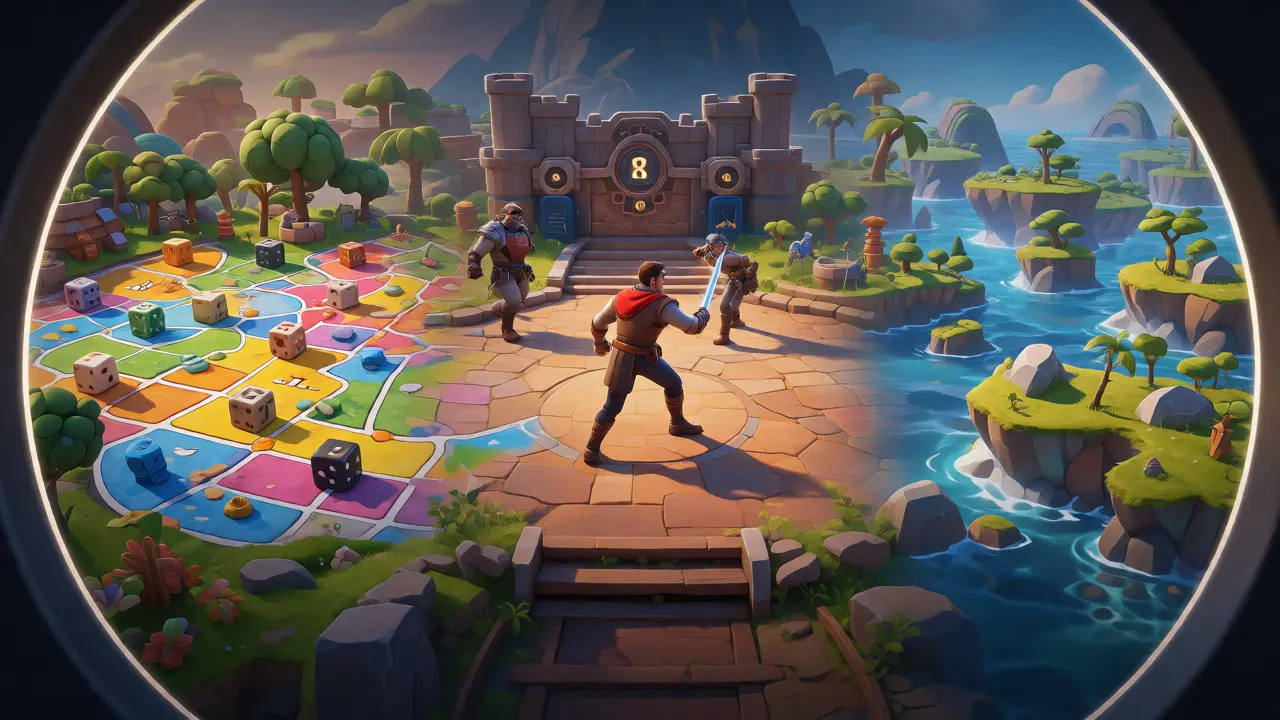
Token Master was the entry point for most. It felt familiar, like Monopoly, but with blockchain stakes. Block Brawler appealed to those wanting deeper RPG progression. ChainZ Arena was the ambitious project, promising cross-platform play that bridged the gap between mobile gamers and crypto enthusiasts. This variety was crucial for capturing a broader audience beyond just hardcore DeFi farmers.
Market Context and Financial Impact
In October 2021, the GameFi sector was exploding. Axie Infinity had proven the model worked, and everyone wanted a piece of the pie. MOBOX ranked second among all BSC GameFi projects for incoming funds in the month prior to Expo III. That statistic alone tells you the momentum behind the brand.
At the time of the analysis, MOBOX’s market cap hovered around $28.73 million. For airdrop recipients, holding onto those 4,500 MBOX tokens turned out to be a smart move. As the platform matured and ChainZ Arena launched, the token saw increased utility. Today, looking back, we see that early adopters who participated in these educational campaigns often held longer than those who bought purely on hype. The friction involved in claiming the airdrop acted as a natural filter for commitment.
Experts at the time noted that MOBOX’s approach to "hash power" mining was innovative. Instead of burning tokens to create NFTs, users mined them using NFTs. This circular economy kept demand for both MBOX and MOMOs consistent. Critics, however, warned about the complexity. New users struggled to understand crystal upgrades and rarity bonuses, leading to a steep learning curve that might have hindered mainstream adoption compared to simpler games.
Legacy of the Campaign
The MOBOX BSC GameFi Expo III airdrop wasn't just about free money. It demonstrated how to effectively onboard users into complex Web3 gaming environments. By combining education with incentives, MOBOX created a template that other projects later copied. The partnership with CoinMarketCap proved that centralized platforms could safely facilitate decentralized asset distributions.
If you’re analyzing current GameFi trends, look back at this event. It highlighted the importance of sustainable tokenomics. Projects that ignored the balance between emission rates and gameplay depth failed quickly. MOBOX survived because its airdrop targeted users willing to engage with the mechanics, not just the price chart. That distinction remains critical for any investor or gamer entering the space today.
What was the maximum amount of MBOX I could get from the Expo III airdrop?
Participants could receive up to 4,500 MBOX tokens. However, reaching this maximum required completing all steps of the campaign, including watching the livestream and passing the quiz with high accuracy.
Did I need a specific wallet to claim the MOBOX airdrop?
Yes, you needed a wallet compatible with the Binance Smart Chain (BSC), such as MetaMask or Trust Wallet. The claim process was handled through CoinMarketCap, so your wallet had to be connected to their platform securely.
What are MOMOs in the MOBOX ecosystem?
MOMOs are cubic NFT characters unique to MOBOX. They serve as mining devices that generate MBOX tokens based on their hash power. Users can upgrade MOMOs using MEC crystals and group them by rarity to earn bonus mining rewards.
Why did MOBOX require a quiz for the airdrop?
The quiz ensured that participants actually understood the platform's mechanics and tokenomics. It filtered out bots and casual speculators, ensuring that the distributed tokens went to users likely to engage with the games long-term.
Is MOBOX still active after the 2021 airdrop?
Yes, MOBOX continues to operate as a major GameFi platform. It has expanded its game lineup and maintained significant trading volumes, proving that the initial community built during events like Expo III sustained the project's growth.
