
So, you heard about OKX being the second-largest crypto exchange by volume, processing over $13 billion daily? It sounds like a no-brainer to jump on board. But here’s the catch: if you’re sitting in the United States, Canada, or even parts of Europe right now, you might find yourself staring at a "Service Unavailable" screen. Or worse, you signed up, got your hopes up, and then hit a wall when trying to withdraw funds because your IP address didn’t match your passport.
This isn't just a glitch. OKX operates under a complex web of global regulations that change faster than Bitcoin’s price. As of late 2025 and heading into 2026, the platform serves users in roughly 160 countries, but that number is a moving target. The rules depend entirely on where you live, what features you want to use, and how strict your local government is about financial oversight. If you are trying to figure out if you can actually trade on OKX from your location, this guide breaks down exactly who gets in, who gets kicked out, and why some countries get partial access while others get nothing at all.
The Three Tiers of OKX Access Restrictions
Not all restrictions are created equal. OKX doesn’t just have a simple "yes" or "no" list for every nation. They categorize jurisdictions into three distinct tiers based on regulatory pressure and compliance risks. Understanding which tier your country falls into saves you hours of frustration during the sign-up process.
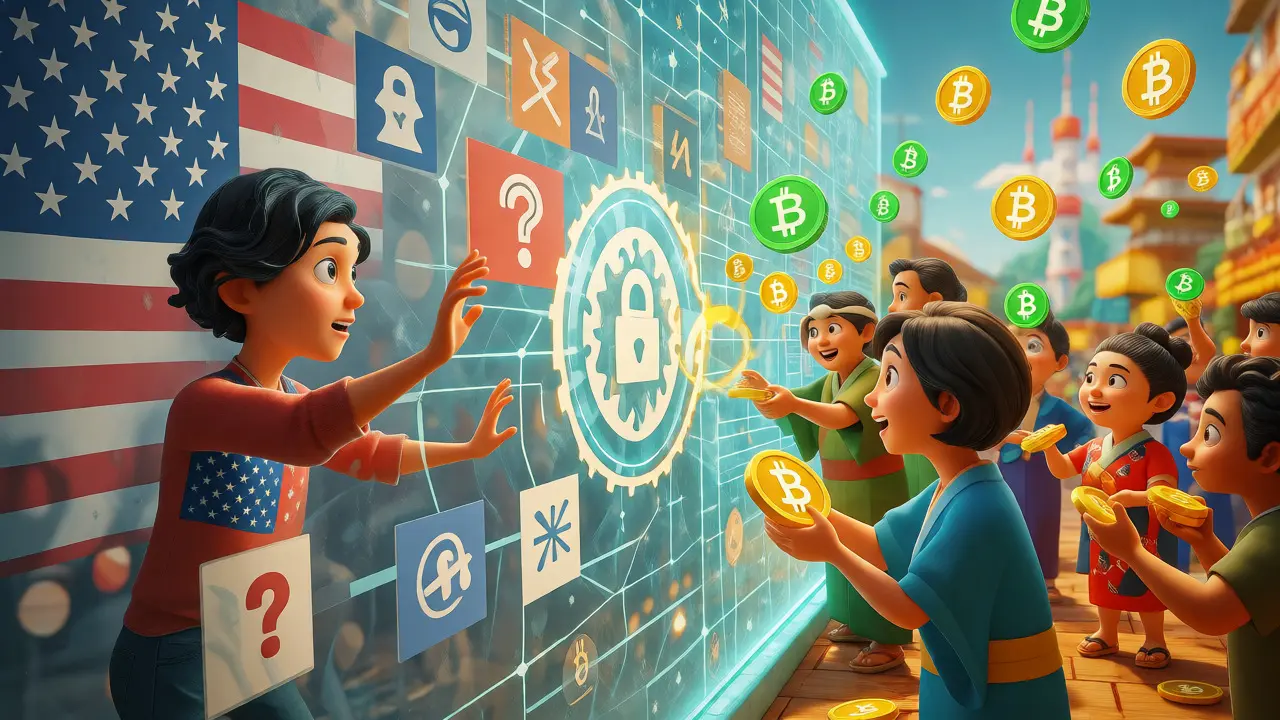
Tier 1: Complete Service Bans. This is the hard stop. If you reside in these countries, you cannot create an account, deposit funds, or trade. Period. The primary reason is usually strict sanctions regimes or outright bans on cryptocurrency trading. Countries in this category include the United States, Canada, Malaysia, Singapore (for the global entity), the Bahamas, the United Kingdom, Cuba, Iran, North Korea, Syria, and regions like Crimea, Donetsk, and Luhansk. If you try to bypass this with a VPN, be careful-OKX uses sophisticated device fingerprinting and IP geolocation with 99.2% accuracy to detect mismatches between your physical location and your declared residence.
Tier 2: Limited or Conditional Access. Here, things get tricky. Some U.S. territories like Puerto Rico, Guam, and the U.S. Virgin Islands fall into this bucket, along with countries like Bangladesh, Bolivia, and Malta. In these places, you might be able to register, but certain services could be restricted, or the verification process might require additional documentation compared to Tier 3 nations. For example, while Singapore is on the general prohibited list for the global OKX platform, there is a separate entity, OKX Singapore, regulated by the Monetary Authority of Singapore (MAS). This entity serves only Singaporean residents who meet specific criteria, creating a confusing situation where "Singapore" appears on both the banned list and the allowed list depending on which version of OKX you are looking at.
Tier 3: Feature-Specific Restrictions. This is the most common scenario for major economies. You can use OKX, but you can’t use *all* of it. Spot trading is usually open, but derivatives (futures, perpetual contracts) are often blocked. Australia, Brazil, South Korea, and the United Kingdom (via specific regulatory adjustments) have seen restrictions on derivatives trading while keeping spot markets accessible. This approach allows OKX to maintain a presence in lucrative markets without violating local laws regarding leveraged products. A recent CoinTelegraph study found that 63% of users in these partially restricted countries were confused about which features they could actually use, leading to frequent support tickets.
Why Is the US Still Blocked?
If you’re reading this from Boulder, Colorado, or anywhere else in the States, you know the pain. The United States remains firmly in the Tier 1 ban list. Why? It comes down to the Bank Secrecy Act and the Office of Foreign Assets Control (OFAC) sanctions. The SEC has also been aggressive with enforcement actions against exchanges like Binance, creating a chilling effect for other non-US entities seeking American market entry.
There was talk recently about OKX launching a US-compliant entity. Following discussions with regulators reported in October 2025, OKX announced plans to establish a compliant arm. However, as of November 2026, widespread US access hasn't materialized for the average trader. The company has invested heavily-over $230 million since early 2025-in regulatory infrastructure, focusing on Switzerland and the UAE first. Industry analysts predict that while OKX will expand into more restricted markets through local partnerships, the US remains a high-barrier environment due to its fragmented state-level and federal regulations. Until a dedicated US entity is fully operational and licensed, Americans are effectively locked out of the main OKX platform.
KYC Requirements and Verification Tiers
Even if you’re in a permitted country, you can’t just throw money at OKX anonymously anymore. Mandatory Know Your Customer (KYC) verification became standard in January 2023. This isn't optional; it’s the gatekeeper for all core functions, including trading and deposits.
Your verification level dictates your limits. Think of it as unlocking levels in a game:
- Level 1: Basic identity verification. Daily withdrawal limit is typically around $10,000. This is enough for casual traders but restrictive for active ones.
- Level 2: Requires proof of address and sometimes source of funds. Limits increase significantly.
- Level 3: Full comprehensive verification. Daily withdrawal limits can scale up to $1,000,000. This level is crucial for institutional investors or high-net-worth individuals.
The process takes 2-4 hours on average, according to user data tracked in late 2025. However, if your documents don't match your IP address or if you’re flagged for a manual review, it can take days. One common pitfall: using a utility bill from a different country than your passport. OKX’s system flags this inconsistency immediately, leading to rejections that feel arbitrary but are strictly enforced.
How OKX Compares to Other Exchanges
It helps to see how OKX stacks up against competitors when it comes to accessibility. While OKX restricts access in many key Western markets, it maintains a strong foothold in Asia and emerging economies. Here’s a quick comparison of restriction strategies among top exchanges as of late 2025:
| Exchange | US Access | EU Access | Key Restricted Regions | Regulatory Approach |
|---|---|---|---|---|
| OKX | No (Global Entity) | Limited (Derivatives restricted in some areas) | US, Canada, UK, Singapore (Global) | Multi-entity structure (OKX Europe, OKX Japan) |
| Binance | No (Binance.US separate) | Restricted (MiCA compliance issues) | US, UK, France, Belgium | Reactive compliance, facing heavy fines |
| Coinbase | Yes (Primary Market) | Yes (Fully Compliant) | China, India, Vietnam | Proactive, US-centric regulation |
| Kraken | Yes (Limited states) | Yes | Iran, North Korea, Syria | Conservative, long-standing compliance |
Coinbase dominates the US market because it built its business around US regulations from day one. Kraken is similar but more global. Binance and OKX took a "grow fast, comply later" approach, which worked until regulators caught up. Now, OKX’s strategy of creating separate regulated entities (like OKX Europe) allows them to navigate EU laws like MiCA (Markets in Crypto-Assets) more effectively than Binance, though it creates a fragmented user experience. If you move from Germany to France, you might need to migrate your assets to a different regional entity.
Common Workarounds and Their Risks
People hate being told "no." So, what do users in restricted countries do? Two main tactics emerge from Reddit threads and Trustpilot reviews: VPNs and third-country accounts.
Using a VPN: About 68% of troubleshooting threads mention using a Virtual Private Network to mask your IP address. You connect to a server in a permitted country, say, Switzerland, and pretend to be there. Does it work? Sometimes. But OKX employs device fingerprinting. If your phone’s GPS says you’re in Texas but your IP says Zurich, their system flags the discrepancy. In September 2025 alone, OKX closed 14,382 accounts for "geolocation fraud." If you get caught, you risk losing access to your funds until you provide extensive proof of residence, and in worst-case scenarios, funds may be frozen.
Third-Country Accounts: Some users create accounts using passports from friends or relatives in permitted countries. This violates Section 4.2 of OKX’s User Agreement. If OKX detects that the person logging in doesn’t match the verified ID holder-perhaps through biometric checks or inconsistent login patterns-they can terminate the account. Remember, crypto exchanges hold custody of your keys. If they shut down your account, retrieving your assets can take months of legal back-and-forth.

Recent Regulatory Shifts Impacting Access
The landscape isn't static. In 2025, several significant changes occurred that affect who can use OKX today.
In the European Union, the full implementation of MiCA regulations forced OKX to restrict derivatives trading for all EU residents initially. Over time, as OKX Europe obtained necessary licenses, some features returned, but not all. Similarly, France’s AMF added OKX to its restricted platform list in September 2025, signaling tighter scrutiny in Western Europe.
Conversely, OKX expanded derivatives access to 18 additional countries, including Thailand and Vietnam, in late 2025. This shows a strategic pivot toward Asian growth markets where regulations are becoming clearer and more favorable for crypto exchanges. Meanwhile, new restrictions hit Bangladesh and Nepal following local regulatory directives. These shifts highlight that OKX is actively managing its footprint, exiting difficult jurisdictions and entering promising ones.
What Should You Do Next?
If you’re unsure about your eligibility, don’t guess. Check the official OKX Risk & Compliance Disclosure, specifically Section 3, which lists current prohibited jurisdictions. Note that this document is updated regularly, so check the date stamp.
If you are in a restricted country like the US, keep an eye on news regarding OKX’s potential US entity launch. Until then, consider alternatives like Coinbase or Kraken, which offer robust domestic options. If you are in a Tier 3 country, verify exactly which products are available before depositing large sums. Don’t assume that because you can buy Bitcoin, you can trade futures.
Finally, ensure your KYC documents are pristine. Clear scans, matching addresses, and valid expiration dates save you headaches. If you encounter false positives-where you’re in a permitted country but still blocked-contact support immediately with proof of residence. Support response times vary wildly, averaging 8 hours in Europe but nearly 25 hours in developing markets, so patience is required.
Can I use OKX in the United States?
No, the global OKX platform does not serve US residents due to regulatory restrictions. While there have been announcements about a potential US-compliant entity, as of late 2025/early 2026, widespread access for US citizens remains unavailable on the main platform.
Why is my OKX account restricted if I live in a permitted country?
This often happens due to IP address mismatches, incomplete KYC verification, or device fingerprinting discrepancies. If your IP location differs from your registered address, or if your documents are unclear, OKX may flag your account for security reasons. Contact support with proof of residence to resolve this.
Is it safe to use a VPN to access OKX?
It is risky. OKX’s terms of service prohibit bypassing geographic restrictions. Using a VPN can lead to account suspension or termination if detected via device fingerprinting or behavioral analysis. Thousands of accounts were closed in 2025 for geolocation fraud, so proceed with caution.
Which countries have complete bans on OKX?
Countries with complete bans include the United States, Canada, Malaysia, Singapore (global entity), the Bahamas, the United Kingdom, Cuba, Iran, North Korea, Syria, and regions such as Crimea, Donetsk, and Luhansk. Always check the latest compliance disclosure for updates.
What are the KYC limits on OKX?
Limits depend on your verification level. Level 1 typically allows up to $10,000 in daily withdrawals. Higher levels (Level 2 and 3) require more documentation and allow significantly higher limits, potentially up to $1,000,000 per day for fully verified users.
