
Ever tried swapping tokens on a slow, expensive network and wondered if there’s a better way? Enter SwapX, the native decentralized exchange (DEX) built specifically for the high-speed Sonic Blockchain. If you’re tired of gas fees eating your profits or transactions taking forever to confirm, SwapX promises a solution. It’s not just another copy-paste Uniswap clone; it uses advanced tech like Algebra Finance V4 to offer concentrated liquidity that actually makes sense for modern traders.
But is it worth your time and capital? We dug into the mechanics, the tokenomics, and the user experience to see if this new player on the block lives up to the hype. Whether you’re a liquidity provider looking for higher yields or a trader wanting faster swaps, here’s what you need to know about SwapX in late 2026.
What Exactly Is SwapX?
SwapX is a decentralized exchange operating on the Sonic Layer-1 blockchain, utilizing Algebra Finance V4 technology to provide concentrated liquidity automated market making (CLAMM). Unlike older exchanges where your money sits idle in broad price ranges, SwapX lets you pinpoint exactly where you want to trade. This means less wasted capital and more efficient trading.
The platform isn’t trying to compete with Ethereum-based giants directly. Instead, it leverages the specific strengths of the Sonic Blockchain, which is designed for speed and low costs. Think of it as the primary liquidity hub for the entire Sonic ecosystem. If you’re building a project on Sonic, SwapX is likely where your users will go to swap tokens. It’s integrated deeply into the chain’s infrastructure, offering seamless interactions that feel almost centralized in their smoothness, but remain fully decentralized under the hood.
The Tech Behind the Speed: Algebra V4 and Sonic
You might ask, "Why should I care about Algebra Finance V4?" Here’s the deal: traditional AMMs (Automated Market Makers) like Uniswap V2 spread your liquidity across an infinite price range. Most of that capital never gets used because prices rarely hit those extremes. SwapX fixes this by using Algebra Finance V4, a sophisticated protocol that allows for active liquidity management within specific price bounds.
This setup dramatically increases capital efficiency. For example, if ETH trades between $2,500 and $3,000, you don’t need to fund a pool from $0 to infinity. You can concentrate your funds right in that sweet spot. On top of that, the Sonic Blockchain provides the raw horsepower needed to make these complex calculations fast and cheap. While Ethereum struggles with congestion during peak times, Sonic handles transactions with minimal latency. This combination means you get the precision of professional-grade trading tools without the headache of skyrocketing gas fees.
| Feature | Traditional DEX (e.g., Uniswap V2) | SwapX (Sonic + Algebra V4) |
|---|---|---|
| Liquidity Model | Uniform distribution across all prices | Concentrated liquidity in custom ranges |
| Capital Efficiency | Low (much capital unused) | High (capital focused on active trading zones) |
| Transaction Speed | Variable (depends on network congestion) | Very Fast (Sonic L1 architecture) |
| Gas Fees | Can be high during peaks | Negligible to very low |
| Governance | Often limited or off-chain | On-chain voting via veSWPx |
Understanding the Tokenomics: SWPx and veSWPx
The heart of any DeFi protocol is its economy, and SwapX doesn’t disappoint here. The native utility token is SWPx, an ERC-20 token that powers the entire ecosystem. But simply holding SWPx isn’t enough to maximize rewards. SwapX adopts the popular ve(3,3) model, originally popularized by protocols associated with Andre Cronje, to align incentives between long-term holders and the protocol’s growth.
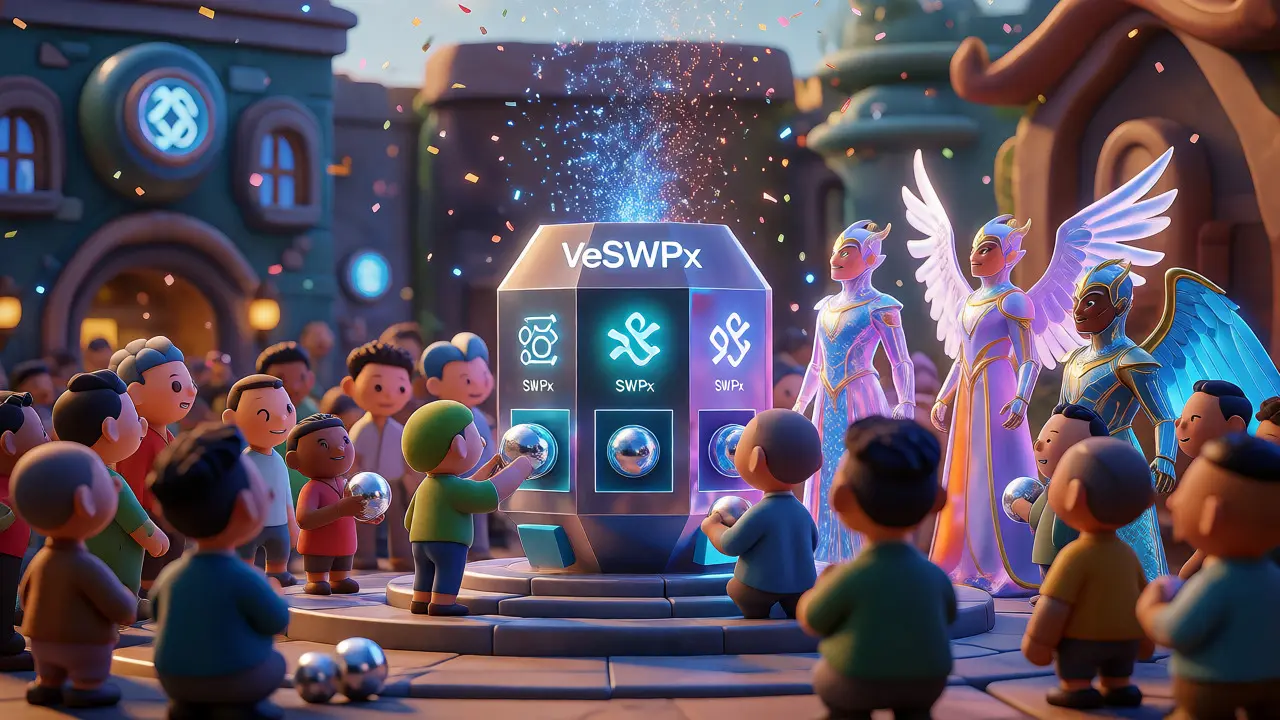
Here’s how it works in plain English: You lock your SWPx tokens to receive veSWPx, which are non-transferable NFTs representing your voting power and claim on future emissions. The longer you lock them (up to two years), the more voting power you get. This isn’t just for bragging rights. VeSWPx holders direct weekly emissions of new SWPx tokens toward specific liquidity pools. Essentially, the community decides where the inflation goes, rewarding pools that bring real volume and activity.
The emission schedule starts strong with an initial supply boost but includes a 1% decay rate to prevent runaway inflation. Liquidity providers currently capture the lion’s share of these emissions-initially up to 87%, tapering down over time. This structure encourages early participation while ensuring sustainability as the platform matures.

User Experience: Is It Actually Easy to Use?
Technical jargon is great for developers, but what about regular users? SwapX aims to bridge that gap. The interface is clean and intuitive, hiding the complexity of Algebra V4 behind simple sliders and buttons. When you connect your wallet, you’ll notice immediate differences compared to Ethereum-based DEXs. Swaps execute almost instantly. There’s no waiting around for blocks to confirm. This responsiveness makes day-trading or quick arbitrage opportunities much more viable.
For newcomers, the learning curve is manageable. The platform guides you through adding liquidity, suggesting optimal price ranges based on current volatility. However, experienced traders will appreciate the granular control they have over their positions. You can adjust your liquidity ranges dynamically, though keep in mind that concentrated liquidity requires active management. If the price moves outside your set range, you stop earning fees until you rebalance. It’s a trade-off: higher potential returns for more hands-on attention.
Risks and Considerations Before You Dive In
No review would be honest without addressing the risks. First, SwapX is relatively new. While the underlying tech (Algebra V4) is battle-tested elsewhere, the specific integration with Sonic is still evolving. Smart contract bugs, while rare in audited protocols, are always a possibility in DeFi. Always check for recent audit reports before depositing significant amounts.
Second, the token value itself has been volatile. As of late 2026, SWPx trades at fractions of a cent, reflecting its early-stage status. High inflation rates from emissions can dilute the token price if demand doesn’t keep pace. The ve(3,3) model helps mitigate this by locking supply, but it relies heavily on community engagement. If people stop locking tokens, the flywheel effect weakens.
Finally, bridging assets to Sonic can be tricky for beginners. You’ll need to move funds from major chains like Ethereum or BSC to Sonic. While bridges are improving, they remain a common point of failure or delay in cross-chain operations. Make sure you understand the withdrawal processes on both ends before moving large sums.
Who Should Use SwapX?
SwapX isn’t for everyone, but it shines for specific types of users:
- Active Traders: If you hate waiting for transactions or paying high gas fees, the Sonic blockchain’s speed is a game-changer.
- Strategic LPs: If you understand market trends and want to earn higher fees by concentrating your capital, SwapX offers tools that uniform AMMs can’t match.
- Sonic Ecosystem Builders: Developers launching projects on Sonic should list their tokens here to access the primary liquidity layer.
- Long-Term Believers: Those who believe in the Sonic ecosystem’s growth may find value in locking SWPx for governance rewards and fee sharing.
Conversely, passive investors who prefer "set it and forget it" strategies might find the active management required for concentrated liquidity frustrating. Similarly, if you’re uncomfortable with newer, less-proven networks, sticking to established Ethereum DEXs might feel safer despite the higher costs.
Final Verdict
SwapX represents a logical next step in DEX evolution. By combining the proven concentrated liquidity model of Algebra V4 with the performance benefits of the Sonic blockchain, it solves real pain points for traders and liquidity providers. The tokenomics are sophisticated, designed to reward loyalty and active participation rather than just speculation.
Is it perfect? No. It requires some technical understanding to navigate effectively, and the ecosystem is still growing. But for those willing to climb the slight learning curve, SwapX offers a compelling alternative to legacy exchanges. If you’re already exploring the Sonic ecosystem, ignoring SwapX means missing out on the most efficient way to trade and earn within that network.
What is SwapX?
SwapX is a decentralized exchange (DEX) built on the Sonic blockchain. It uses Algebra Finance V4 technology to provide concentrated liquidity, allowing users to swap cryptocurrencies quickly and with lower fees compared to traditional Ethereum-based DEXs.
How does SwapX differ from Uniswap?
While both use automated market makers, SwapX runs on the Sonic blockchain, which offers faster speeds and lower gas fees. Additionally, SwapX implements the ve(3,3) tokenomics model, giving locked token holders voting power over emissions, whereas standard Uniswap versions typically do not offer this level of on-chain governance integration for liquidity incentives.
What is the SWPx token used for?
SWPx is the native utility token of SwapX. Users can lock SWPx to receive veSWPx, which grants voting rights on protocol emissions and access to fee-sharing rewards. It also serves as a medium of exchange within the platform’s ecosystem.
Is SwapX safe to use?
SwapX utilizes Algebra Finance V4, which is a well-audited and widely used AMM framework. However, as with any DeFi protocol, smart contract risks exist. Users should always verify the latest audit reports and start with small amounts when testing new platforms.
Do I need to pay gas fees on SwapX?
Yes, but they are significantly lower than on Ethereum due to the Sonic blockchain’s architecture. Transactions are processed quickly and cost only fractions of a cent, making frequent trading and liquidity management economically viable.
