Aave Crypto: Understanding Decentralized Lending and Borrowing in DeFi
When you think of Aave, a decentralized finance protocol that lets users lend and borrow cryptocurrency without intermediaries. Also known as the Aave protocol, it powers one of the most used lending platforms in crypto, handling billions in assets across Ethereum and other chains. Unlike banks, Aave doesn’t ask for your ID, credit score, or proof of income. You lock up your crypto as collateral, and instantly get a loan in another token—or you lend your idle crypto to earn interest, all automated by smart contracts.
Aave doesn’t just let you borrow—it lets you earn by supplying assets. If you hold ETH, DAI, or USDC and aren’t using them, you can deposit them into Aave’s liquidity pools. In return, you get interest paid in real-time, every block. That’s not speculation. That’s yield from actual usage. And unlike centralized platforms that can freeze your funds, Aave’s code runs on open blockchain networks. No one turns off the lights. No one changes the rules overnight. This is why users trust it with over $5 billion in deposits.
Aave also introduced flash loans, a unique feature that lets you borrow any amount of crypto without collateral—as long as you pay it back in the same transaction. It sounds wild, but it’s used daily by traders to arbitrage prices, collateral swap, and execute complex strategies. It’s not for beginners, but it’s a core reason why Aave is the backbone of so many DeFi apps. And then there’s the AAVE token, the governance token that lets holders vote on protocol upgrades, fee structures, and risk settings. Owning AAVE isn’t just about speculation—it’s about having a say in how the system evolves.
But it’s not perfect. Aave’s smart contracts are secure, but user mistakes still cost money. Deposit too little collateral? Your position gets liquidated. Use the wrong token? You might lose interest. And while Aave is open to everyone, the real winners are those who understand how interest rates shift with supply and demand—sometimes within minutes.
Below, you’ll find real posts from users who’ve navigated Aave’s system: some earned steady income, others got burned by poor collateral choices. You’ll see how flash loans are actually used in practice, how AAVE token holders influence the protocol, and what happens when markets crash and liquidations spike. No fluff. No hype. Just what works, what doesn’t, and what you need to know before touching your first dollar in Aave.
How Interest Rate Models Work in DeFi Lending Protocols
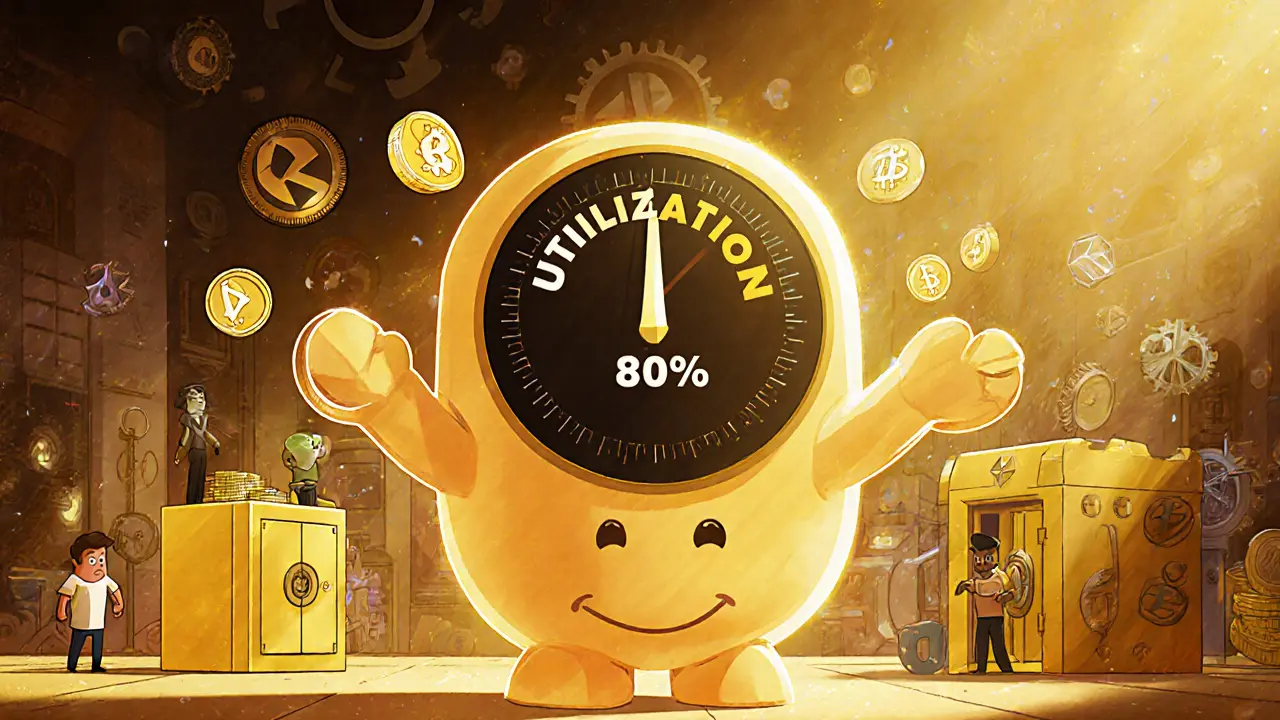
DeFi lending uses algorithmic interest rate models based on utilization rates to balance supply and demand. Learn how Aave, Compound, and MakerDAO calculate rates, why they spike, and how to use them safely.
- August 27 2025
- Terri DeLange
- 11 Comments
Top DeFi Protocols by Total Value Locked in 2025

Discover the top DeFi protocols by Total Value Locked (TVL) in 2025, including Lido, Aave, MakerDAO, Uniswap, and Curve. Learn what TVL really means, how it's calculated, and why it's not the whole story behind DeFi's health.
- January 23 2025
- Terri DeLange
- 10 Comments