BFT Systems Explained: How Blockchain Networks Stay Secure and Reliable
When you send Bitcoin or swap tokens on a decentralized exchange, you’re trusting a network of computers to agree on what’s true—even if some of them are broken, hacked, or lying. That’s where BFT systems, Byzantine Fault Tolerance is a protocol design that allows distributed systems to reach agreement even when some components fail or act maliciously. Also known as Byzantine Fault Tolerance, it’s the invisible backbone of most serious blockchains today. Without it, your transaction could get lost, duplicated, or reversed by bad actors. It’s not magic. It’s math, logic, and smart design working together to keep things honest.
BFT systems are used in networks where trust can’t be assumed. That’s why they show up in projects like Bitcoin (though Bitcoin uses a simpler version called Proof of Work), Ethereum’s newer consensus layers, and private chains used by banks and enterprises. They’re not just for crypto. Airlines, voting systems, and stock exchanges use similar logic to keep operations running when parts of the system go offline. What makes BFT special is how it handles betrayal. If one node sends conflicting data, the rest of the network detects it and ignores it. No central authority needed. Just rules that force honesty.
Related concepts like blockchain consensus, the method by which distributed nodes agree on the state of the ledger and distributed networks, systems where computing power is spread across many independent machines are built around BFT. You can’t have a secure blockchain without one. And you can’t have a reliable exchange or DeFi protocol without nodes that can still function even when some are compromised. That’s why every major blockchain today—whether it’s using Proof of Stake, Practical BFT, or a hybrid—has BFT principles baked in.
Some of the posts below dig into real-world cases: how QBT tokens were distributed across Binance Smart Chain nodes, why Shadow Exchange v2 can process trades in under a second thanks to its underlying consensus design, and how ZK-rollups rely on fault-tolerant verification to keep Ethereum fast and cheap. You’ll also see how regulatory frameworks like MiCA require crypto services to use reliable, auditable systems—many of which are BFT-based. These aren’t abstract ideas. They’re the reason your crypto doesn’t vanish when someone tries to cheat the system.
What you’ll find here isn’t theory. It’s the practical side of blockchain security—the hidden rules that keep your assets safe, your trades confirmed, and your data unchanged. Whether you’re tracking airdrops, checking exchange reviews, or learning how hashing works, you’re interacting with BFT systems every time you use crypto. Understanding them helps you spot the real projects from the scams.
How Many Faulty Nodes Can BFT Systems Tolerate? The Math Behind Blockchain Consensus
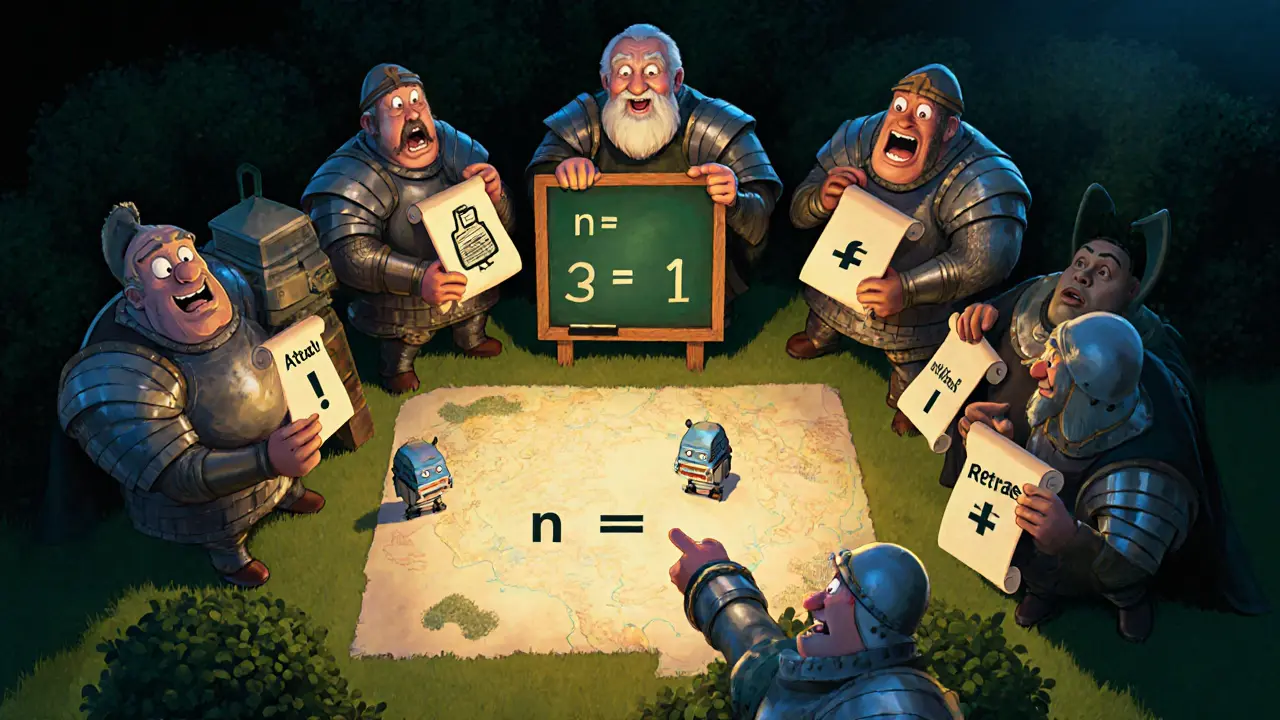
BFT systems can tolerate up to one-third of nodes being faulty, governed by the formula n ≥ 3f + 1. Learn how many nodes you need to handle 1, 2, or 3 faults - and why running the minimum is often a dangerous mistake.
- October 20 2025
- Terri DeLange
- 10 Comments