Block Reward: How Miners Get Paid and Why It Shapes Crypto Markets
When you hear about block reward, the fixed amount of cryptocurrency awarded to miners for validating a new block on the blockchain. It's the engine that keeps networks like Bitcoin alive — no reward, no miners, no security. This isn’t a bonus. It’s the core incentive. Without it, no one would spend thousands of dollars on hardware and electricity just to verify transactions. The proof-of-work, the consensus mechanism that forces miners to solve complex puzzles to add blocks is what makes this system secure, and the block reward is what makes it worth the effort.
Every time a new block is added, miners get paid in new coins. For Bitcoin, that started at 50 BTC per block in 2009. That number cuts in half roughly every four years — a process called the halving, the scheduled reduction of the block reward that controls Bitcoin’s inflation rate. The next one’s coming in 2028. This isn’t just a technical detail — it’s a supply shock. Less new BTC entering circulation means scarcity goes up. That’s why prices often rise before and after halvings. It’s not magic. It’s math. And it’s built into the code.
But the block reward isn’t the only thing miners care about. As it shrinks, transaction fees, small payments users add to their transactions to get them processed faster become more important. Right now, Bitcoin miners still make most of their money from the block reward. But in 2040, that could flip. Fees might become the main income. That’s why networks like Bitcoin are watching how users behave. If fees stay too low, miners might quit. If they get too high, users leave. It’s a tightrope walk.
And it’s not just Bitcoin. Other coins like Litecoin and Bitcoin Cash use the same model. Even newer chains that still rely on proof-of-work — like Ravencoin or Zcash — have their own block reward schedules. Some are designed to last decades. Others burn out fast. The pattern is always the same: start high to attract miners, then reduce to control supply. It’s a deliberate trade-off between security and inflation.
That’s why you’ll see so many posts here about mining difficulty, hash rate, and coin burns. They’re all connected. When the block reward drops, miners get less income. If electricity costs stay the same, some go offline. That lowers the network’s hash rate, the total computing power securing the blockchain. Lower hash rate means less security. So the network adjusts — it makes mining harder. That’s the mining difficulty, the automatic adjustment that keeps block times steady despite changing computing power. It’s a self-correcting system. And it’s why you can’t just plug in a laptop and start mining Bitcoin today.
What you’ll find below are real stories from people who’ve chased these rewards — the ones who earned tokens from early airdrops tied to mining activity, the ones who got burned when block rewards vanished, the ones who built tools to track when the next cut comes. Some posts show you how mining worked on Binance Smart Chain. Others explain why certain coins died when rewards dried up. You’ll see how the same concept — block reward — plays out differently across networks, and why it’s the single most important factor in determining a coin’s long-term survival.
How Mining Hash Rate Calculation Works in 2026

Discover what mining hash rate really means for cryptocurrency security and profitability. Learn how to calculate network power using proven methods and avoid common mistakes.
- March 26 2026
- Terri DeLange
- 7 Comments
Block Reward Economics: How Bitcoin and Ethereum Incentivize Network Security
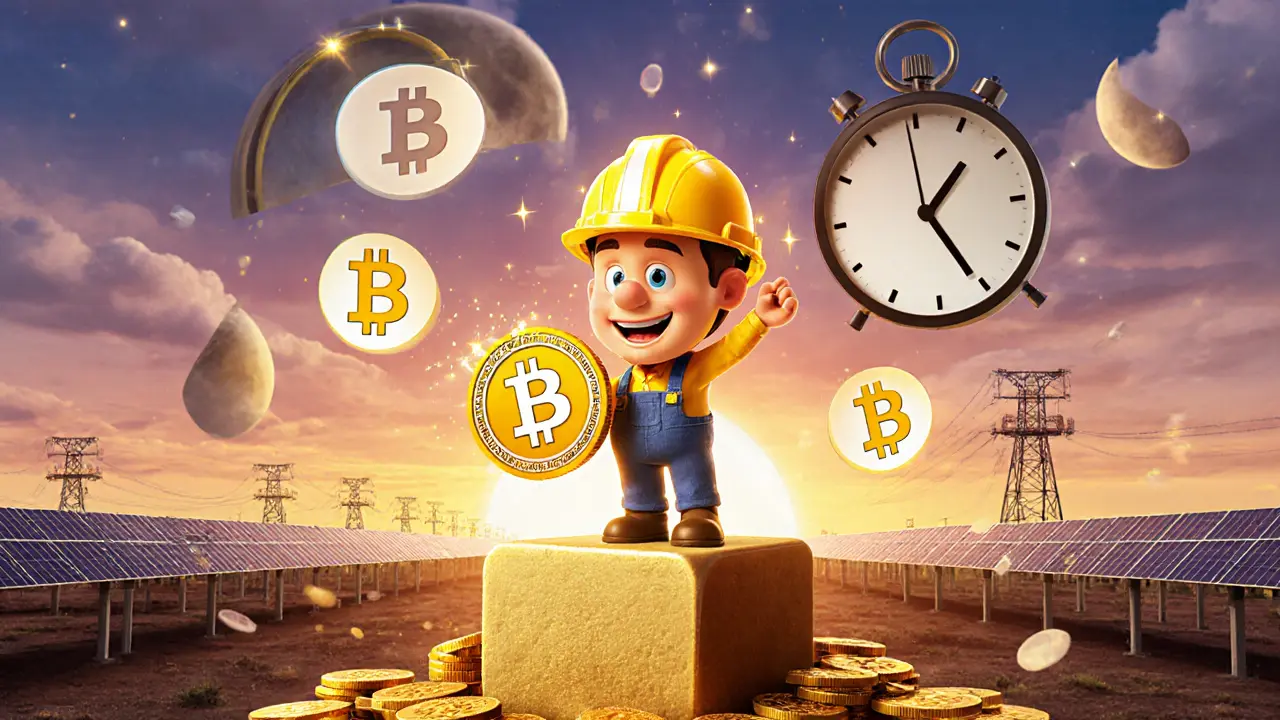
Block reward economics power blockchain security through cryptocurrency incentives. Bitcoin uses halvings to control supply; Ethereum uses staking and fee burns. Understanding how rewards work is key to knowing why blockchains stay secure.
- January 14 2025
- Terri DeLange
- 13 Comments