Blockchain Events: What They Are and Why They Matter in Crypto
When you hear blockchain events, real-world occurrences on a distributed ledger that trigger changes in token distribution, network rules, or user behavior. Also known as on-chain events, these aren’t just announcements—they’re moments that move markets, reward users, or break systems. Think of them like traffic lights for crypto: some tell you when to move (like a new token launch), others tell you to stop (like a regulatory crackdown). They’re not random. Every airdrop, hard fork, exchange listing, or regulatory update is a deliberate signal in the blockchain ecosystem.
These events often connect directly to crypto airdrops, free token distributions tied to specific actions like holding a coin, using a wallet, or participating in a network test. Also known as token giveaways, they’re meant to bootstrap communities—but most fail. Only those tied to real usage, like TripCandy’s travel rewards or HUSL’s music voting, last beyond the hype. Then there’s DeFi protocols, smart contract systems that let you lend, borrow, or trade without banks. Also known as decentralized finance platforms, they’re often the engine behind blockchain events. When Lido or Aave changes its interest rate model, it’s not just code—it’s a financial event that affects thousands of wallets overnight.
Not all blockchain events are technical. Many are legal. cryptocurrency regulations, government rules that define how tokens can be issued, traded, or taxed. Also known as crypto legal frameworks, they’ve become the biggest trigger for user behavior in 2025. MiCA in the EU, for example, forced dozens of exchanges to shut down or restructure. In India, rules around UPI crypto purchases changed how millions buy Bitcoin. These aren’t distant policies—they’re daily realities that determine whether you can trade, earn, or even hold a coin. And then there’s blockchain scaling, the technical efforts to make networks faster and cheaper, like ZK-rollups on Ethereum. Also known as Layer 2 solutions, they’re the silent heroes behind every smooth transaction. When zkSync or Starknet reduces fees from $10 to $0.05, that’s a blockchain event too—because suddenly, millions of small trades become possible.
These events don’t happen in isolation. A regulatory change can kill an airdrop. A scaling upgrade can revive a dead DeFi protocol. A whale alert might spark a token launch. What you see as separate news items are actually threads in the same fabric. The posts below cover exactly that: the real stories behind the headlines. You’ll find deep dives into failed airdrops like QBT, why some exchanges vanish overnight, how new regulations lock out users, and which scaling tech actually works. No fluff. No hype. Just what happened, who got left behind, and what you can learn from it.
Proof of Attendance Protocol (POAP) Explained: How Digital Badges Are Changing Event Memory on Blockchain
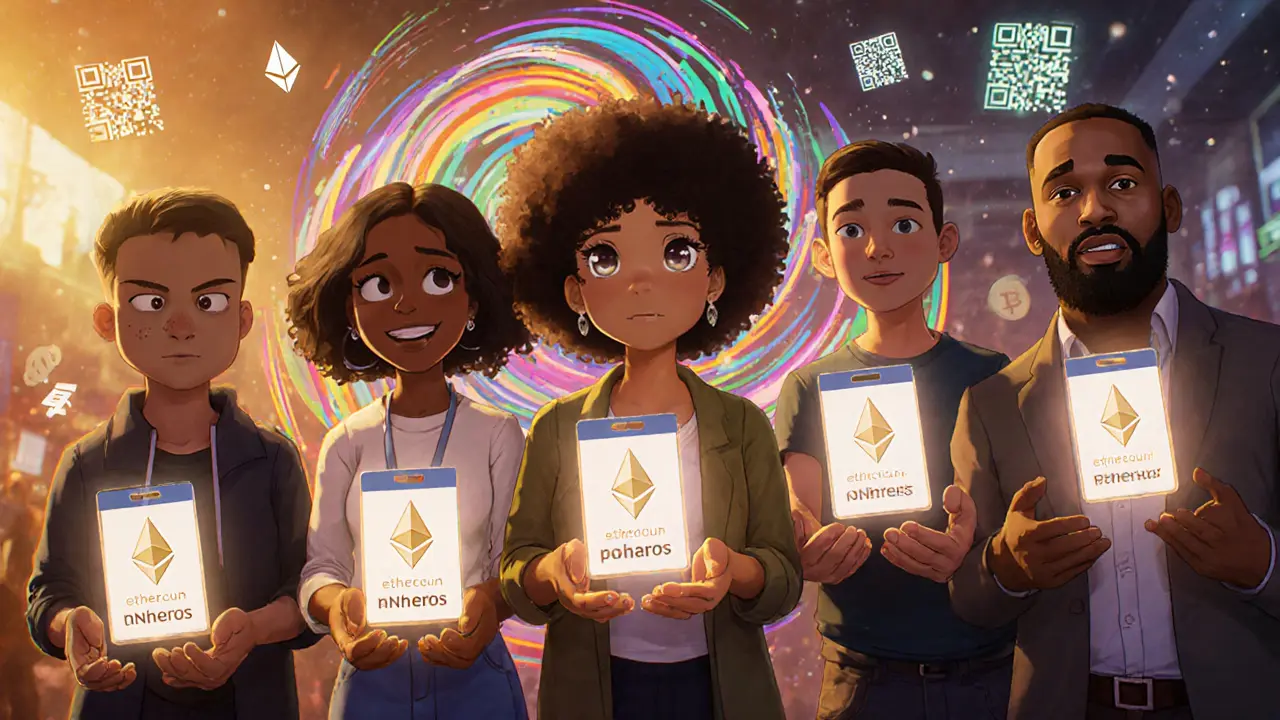
POAPs are blockchain-based digital badges that prove you attended real-world or virtual events. Unlike trading NFTs, they're meant to be kept as personal memorabilia - a permanent, verifiable record of your experiences in the crypto world and beyond.
- April 6 2025
- Terri DeLange
- 16 Comments