Blockchain Identity: What It Is and Why It Matters for Crypto Users
When you use crypto, you’re not just sending money—you’re building a blockchain identity, a digital profile tied to your wallet that proves who you are without needing a bank or government. Also known as self-sovereign identity, it’s the foundation of Web3, letting you own your data, prove your history, and interact with apps without handing over your personal info. Unlike traditional logins, your blockchain identity doesn’t live on a server. It lives on the chain—in your wallet address, signed messages, and verified credentials. This isn’t theory. It’s how you prove you’re eligible for an airdrop, access a DeFi protocol, or claim ownership of an NFT without revealing your real name.
Blockchain identity isn’t just about wallets. It connects to digital identity, the broader system of online credentials you use across platforms. In crypto, this means using signed messages to verify you own a wallet, or linking your identity to a verified profile on a platform like ENS or Polygon ID. It also ties into self-sovereign identity, a model where you control your identity data instead of letting corporations store it. Think of it like having a digital passport you carry in your wallet, not one locked in a corporate database. That’s why platforms like Qubit and TripCandy use blockchain identity to reward users based on real activity—like booking travel or staking tokens—not fake social media clicks.
And it’s not just for rewards. Web3 identity, the layer that lets users authenticate across decentralized apps using one identity is what makes cross-chain interactions possible. You can prove you’ve held a token for 90 days to unlock a new airdrop, or show you’re a verified user of a specific exchange without logging in. That’s why MiCA regulation in the EU now requires crypto services to verify user identities—not through your driver’s license, but through cryptographically signed proofs. This shift is why scams like fake "Grok Girl" or dead tokens like "real fast" can’t hide behind anonymous accounts—they’re easier to track when identity is tied to on-chain behavior.
What you’ll find below isn’t a list of buzzwords. It’s real examples of how blockchain identity shapes what you can do in crypto today. From airdrops that reward real usage to exchanges that verify users without collecting your ID, these posts show how identity isn’t just a feature—it’s the backbone of trust in decentralized systems. Whether you’re trying to claim a token, avoid scams, or understand why some platforms ask for more than just a wallet address, the answers are all tied to how identity works on-chain.
How Blockchain Prevents Identity Theft: A Clear Breakdown of the Technology That’s Changing Digital Security
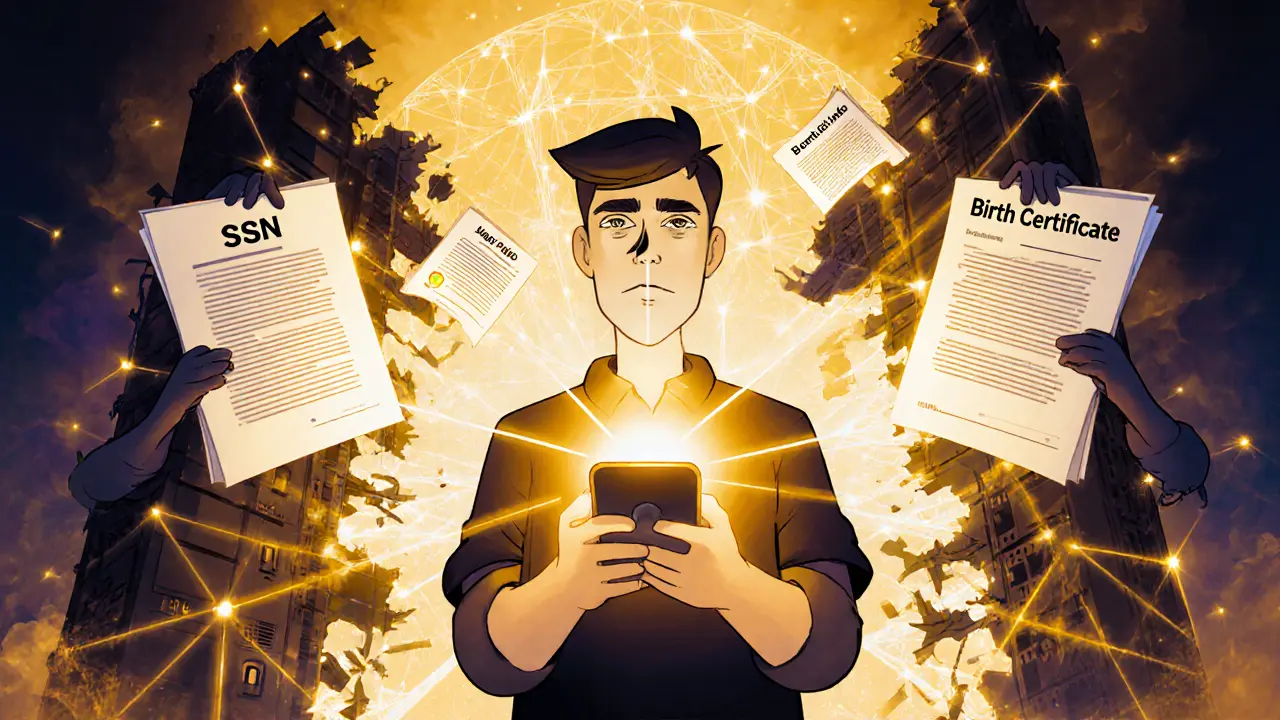
Blockchain prevents identity theft by giving users control over their data, eliminating centralized databases that hackers target. With cryptographic proofs and decentralized storage, it stops fraud before it starts - and already cuts losses by billions annually.
- December 27 2024
- Terri DeLange
- 19 Comments