Coin Burning Explained: How Token Destruction Shapes Crypto Value
When a project coin burning, the intentional removal of cryptocurrency tokens from circulation to reduce total supply. Also known as token burn, it’s a deliberate move to make a coin scarcer—and potentially more valuable over time. It’s not magic. It’s economics. If you own 1% of a coin with 1 billion tokens, and 200 million get burned, your share jumps to about 1.25%—without buying more. That’s the core idea.
But not all burns are equal. Some are one-time events. Others happen automatically every quarter. Some are just marketing. Real deflationary crypto, a token model where supply shrinks over time to create scarcity works like a slow-release valve: fewer tokens in play, same demand, higher price pressure. Ethereum’s blockchain tokenomics, the system of incentives, supply rules, and economic design behind a cryptocurrency uses fee burns to reduce its supply every time someone sends ETH. That’s not hype—it’s code. Binance’s BNB burns cut supply by 20% over five years. These aren’t guesses. They’re public, verifiable actions.
Here’s the catch: burning tokens doesn’t fix a broken project. If no one uses the coin, burning 90% of it won’t bring buyers back. Look at tokens that actually have usage—like those powering DeFi protocols or real-world apps. Those burns mean something. Meme coins with quadrillions of tokens? Burning a few zeros doesn’t help if there’s zero utility. The coin burning you care about is the kind tied to real demand, not hype.
What you’ll find below are real examples—some successful, some cautionary. You’ll see how airdrops, exchange listings, and tokenomics all connect to burn events. Some posts show you exactly how burns affected prices. Others warn you about fake burns disguised as rewards. No fluff. Just what happened, why it mattered, and what it tells you about the token’s future.
How Coin Burning Affects Cryptocurrency Prices
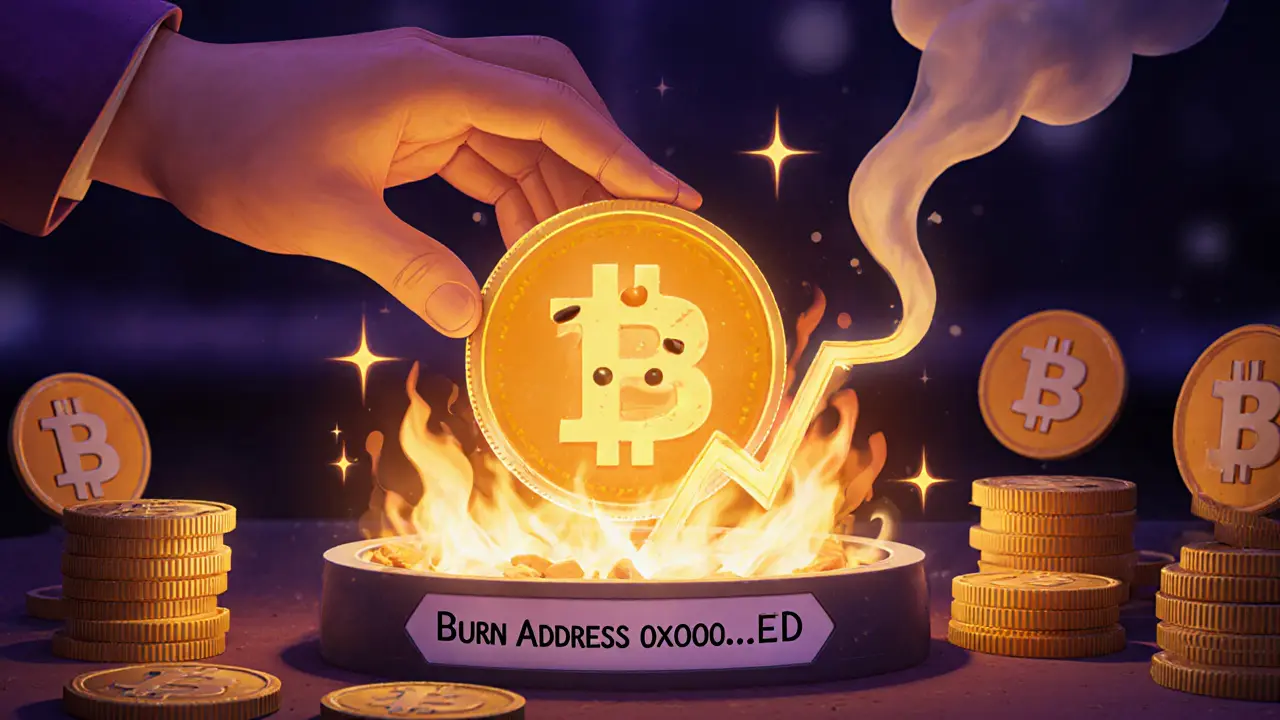
Coin burning reduces cryptocurrency supply, which can increase price-but only if the burn is meaningful, transparent, and backed by real project growth. Not all burns work. Here’s what actually moves the market.
- November 3 2025
- Terri DeLange
- 11 Comments