Crypto Exchange Scams: How to Spot and Avoid Fake Platforms
When you hear crypto exchange scams, fraudulent platforms designed to steal your funds by pretending to be legitimate trading sites. Also known as fake crypto exchanges, these operations look real—until your money disappears and support vanishes. They don’t just copy logos or steal domain names. They build entire websites, fake reviews, even customer service chatbots. And they target people who are new to crypto, scared of missing out, or desperate to bypass strict local regulations.
These scams thrive on urgency and confusion. You’ll see pop-ups promising 500% returns in 24 hours, or ads claiming a platform is "officially approved"—but there’s no such thing as official approval for most crypto exchanges. Legit ones like Coinbase or Kraken are regulated and audited. Scam exchanges? They avoid audits, hide their team, and use anonymous domains. If you can’t find a physical address, a real company registration, or independent security reviews, walk away. unregulated crypto platforms, exchanges operating without legal oversight or financial compliance. Also known as shady crypto platforms, they often appear in search results after you type "best crypto exchange for India" or "high leverage trading without KYC"—exactly where people looking for loopholes end up. These are the same platforms that vanish after a few months, leaving users with empty wallets and no recourse.
And it’s not just about fake websites. Some scams mimic real ones—like scam exchanges, platforms that steal funds by blocking withdrawals or freezing accounts under false pretenses. Also known as rug pull exchanges, they let you deposit, trade a little, then suddenly disable withdrawals. You’ll see posts like "I deposited $10,000 and now I can’t withdraw"—and the platform’s social media is gone. No Twitter. No Telegram. No email replies. That’s not a glitch. That’s the plan. Wavelength, BiKing, and Sistemkoin aren’t random names—they’re case studies in how these scams operate. They promise low fees, fast trades, and no KYC, but the real cost is your capital.
Don’t fall for the "too good to be true" trap. If a platform offers leverage higher than 100x, no withdrawal limits, or free tokens just for signing up, it’s a red flag. Real exchanges don’t give away money—they make money from trading fees and volume. And they don’t hide behind anonymous Telegram groups or unverified YouTube influencers. The best defense? Check CoinMarketCap or CoinGecko for listing status. Look for third-party audits. Search for user complaints on Reddit or Trustpilot. If you see the same warning from ten different people, believe them.
There’s a reason why so many of the posts here focus on fake platforms: people keep getting burned. Moonbase Alpha isn’t an exchange. Shadow Exchange v2 is real—but only if you’re in the Sonic ecosystem. And if you’re in India, Iran, or Turkey, the risks are even higher because local regulations are unclear or restrictive. Scammers exploit that uncertainty. They know you’re looking for a way to trade safely, and they offer a fake version of safety. Don’t let them win. Learn the signs. Check the facts. And never, ever deposit funds on a platform you can’t verify.
Below, you’ll find real reviews of exchanges that have been exposed as scams, deep dives into how these frauds work, and guides to spot the next one before it traps you. This isn’t theory—it’s what’s happening right now, to real people. Know the signs. Stay safe.
Certified Coins Crypto Exchange Review: Does It Even Exist?
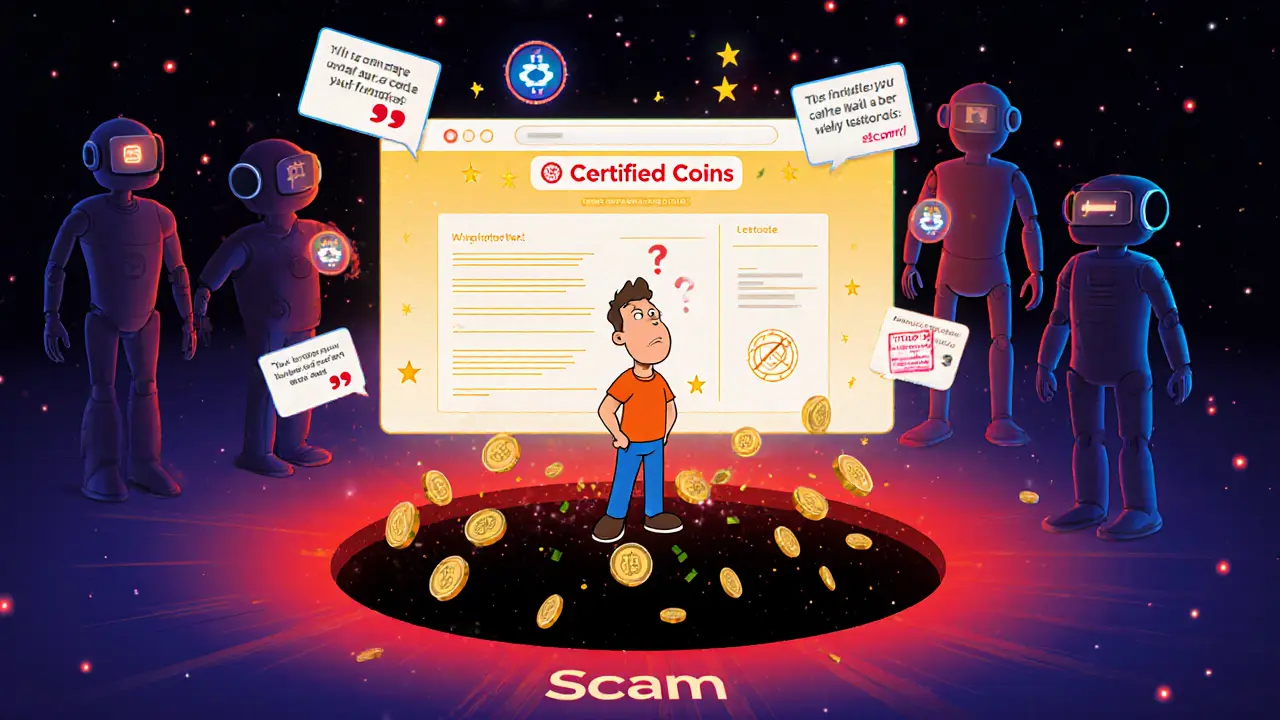
There is no legitimate crypto exchange called Certified Coins. This review exposes it as a scam and lists real, regulated alternatives like Coinbase, Kraken, and Gemini that you can trust.
- November 23 2025
- Terri DeLange
- 19 Comments