Crypto Legal Status: What’s Allowed, Banned, and Regulated Around the World
When you hear crypto legal status, the set of laws and rules that determine whether you can buy, trade, or use digital currencies in a given country. Also known as cryptocurrency regulation, it’s not just about legality—it’s about taxes, exchanges, mining, and whether your money is protected or at risk. In some places, crypto is treated like cash. In others, it’s banned outright. And in most, it’s somewhere in between—regulated but confusing.
The MiCA regulation, a comprehensive EU framework that standardizes how crypto services operate across all member states. Also known as Crypto-Asset Market Regulation, it’s the first real attempt to create one rulebook for the whole bloc forces exchanges, wallet providers, and token issuers to get licensed. If you’re in the EU, this means your exchange must now follow strict rules on transparency, security, and consumer protection. Outside the EU, countries like India, the U.S., and Japan have their own patchwork of rules. India doesn’t ban crypto but taxes it heavily. The U.S. treats it as property for tax purposes and lets agencies like the SEC go after projects they call securities. Japan requires exchanges to register and keeps a tight watch on stablecoins.
Then there’s the crypto taxes, how governments track and charge you for buying, selling, or earning crypto. Also known as digital asset taxation, it’s where most people get tripped up. Selling Bitcoin for profit? That’s a taxable event. Getting airdrops? Often treated as income. Staking rewards? Taxable too. The IRS, HMRC, and other agencies now demand records—transaction history, dates, values. If you don’t keep track, you’re not just risking fines—you’re risking audits. And if you’re using an unregulated exchange like BiKing or Wavelength, you’re not just exposed to scams—you’re exposed to legal gray zones where no one can help you if things go wrong.
What you’ll find below isn’t a list of opinions. It’s a collection of real cases, real rules, and real consequences. You’ll see how MiCA changed cross-border crypto services in Europe, how Indian users navigate UPI-based trading under strict tax laws, and why some tokens—like SPEED or GROKGIRL—are better ignored because they exist in legal limbo. You’ll learn which exchanges are safe to use, what happens when a country cracks down, and why your crypto legal status depends more on where you live than what you own.
Global Cryptocurrency Regulations Overview: What’s Legal Where in 2025
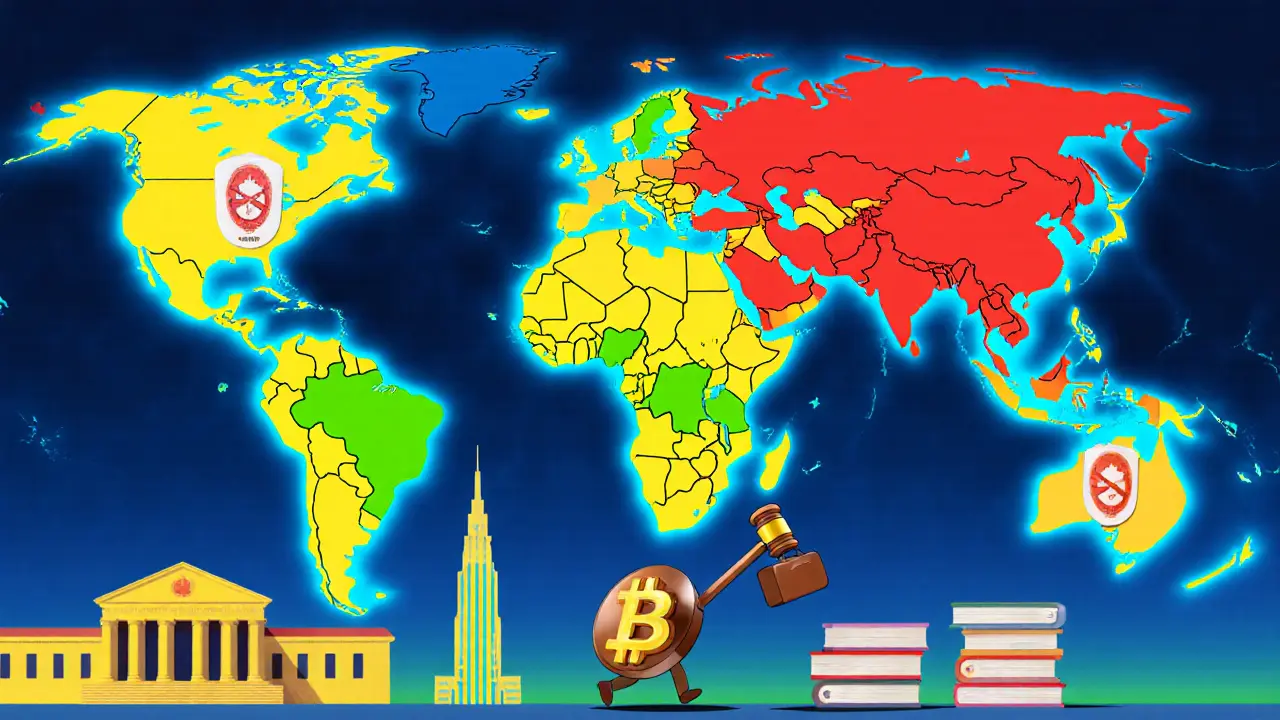
In 2025, global crypto regulations are clearer than ever-but wildly different by country. From the EU's MiCA to the U.S. GENIUS Act, learn how laws shape what you can do with Bitcoin, stablecoins, and DeFi.
- July 12 2025
- Terri DeLange
- 19 Comments