Crypto Scam: How to Spot Fake Airdrops, Fake Exchanges, and Dead Tokens
When you hear "free crypto," be careful. A crypto scam, a deceptive scheme designed to steal your funds by pretending to offer real rewards or services. Also known as crypto fraud, it thrives on hype, urgency, and confusion—especially around airdrops, new exchanges, and trending tokens. These aren’t theoretical risks. Real people lose thousands every month because they didn’t know the difference between a real token and a ghost asset.
One of the most common tricks is the fake airdrop, a fraudulent campaign that tricks users into connecting wallets or paying fees to claim non-existent tokens. Look at the CANDY airdrop claim from TripCandy—there’s no official one. Yet, scammers run ads promising free tokens if you sign up or pay a gas fee. Same with QBT: the real airdrop ended in 2021. Today, anyone claiming to distribute it is lying. Then there’s SPEED, a token with $0 volume, no exchange listings, and no codebase. It’s not inactive—it’s dead. And people still search for it, hoping to get rich.
Then come the unregulated crypto exchange, a platform with no oversight, no audits, and no accountability that takes your funds and disappears. BiKing stole $8 million. Wavelength has zero public records. Sistemkoin hasn’t been tracked by CoinMarketCap since 2019. Moonbase Alpha isn’t even an exchange—it’s a testnet. Yet users send funds there, thinking they’re trading on a real platform. These aren’t bugs. They’re features of scams. They rely on you not checking who runs it, what audits they’ve done, or if anyone else has complained.
And it’s not just about money. Fake projects eat your time, your trust, and sometimes your security. Connecting a wallet to a scam site can leak your private keys. Entering your ID for a "KYC airdrop" that doesn’t exist can lead to identity theft. Even when a token looks real—like a meme coin with a flashy website—it might just be a pump-and-dump with no team, no roadmap, and no future.
Here’s what you can do: if it sounds too good to be true, it is. If you’re asked to pay to get free crypto, walk away. If the exchange has no reviews, no transparency, and no history, avoid it. If a token has zero trading volume and no GitHub activity, it’s a ghost. You don’t need to be a developer to spot these signs. You just need to ask one question: "Why would they give this away for free?"
The posts below aren’t just lists—they’re case studies. You’ll see real examples of scams that fooled people, the red flags they missed, and how to protect yourself. From dead tokens to fake exchanges, we show you exactly what to look for so you don’t become the next victim.
What is Grok Girl (GROKGIRL) crypto coin? The truth behind the meme coin with 420 quadrillion tokens
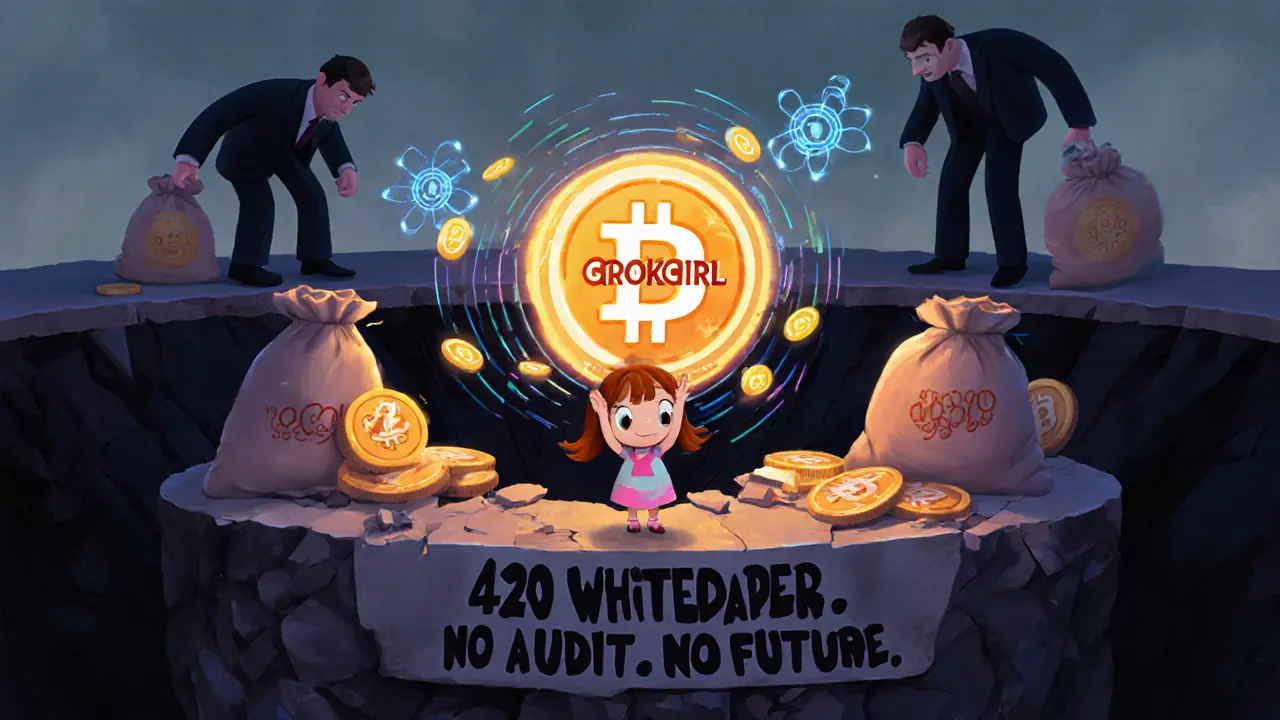
Grok Girl (GROKGIRL) is a meme coin with 420 quadrillion tokens and almost no value. It has no real tech, no community, and no future. Learn why this crypto is a trap - not an opportunity.
- November 14 2025
- Terri DeLange
- 15 Comments