Crypto Supply Reduction: How Token Limits Shape Value and Market Behavior
When we talk about crypto supply reduction, the deliberate decrease in the total or circulating supply of a cryptocurrency to create scarcity. Also known as tokenomics tightening, it’s not just a marketing tactic—it’s a core economic mechanism that separates sustainable projects from hype-driven tokens. Think of it like gold mining: if new gold stopped appearing every year, the existing stock would become more valuable. That’s exactly what happens when Bitcoin cuts its block reward in half, or when a token burns millions of coins forever.
Bitcoin halving, a scheduled event that cuts the number of new bitcoins created every 10 minutes in half. Also known as block reward reduction, it’s the most predictable and impactful form of supply reduction in crypto. It’s happened four times so far, and each time, the market reacted with price spikes months later—not because of news, but because fewer new coins entered circulation while demand stayed steady or grew. Then there’s token burn, the process of permanently removing tokens from circulation by sending them to an unusable wallet address. Also known as supply destruction, it’s used by Binance, Ethereum, and dozens of DeFi protocols to reduce inflation and signal commitment to long-term value. Projects that burn tokens regularly—like burning a portion of trading fees—don’t just look good on paper; they create real scarcity. Meanwhile, circulating supply, the number of coins actually available and trading in the market. Also known as active supply, it’s what matters most to traders—not total supply, which can include locked or reserved coins. A coin with a high total supply but low circulating supply can still be scarce and valuable. That’s why some tokens lock up 80% of their supply for years, making the real available amount tiny.
What you’ll find in the posts below aren’t just random articles—they’re real-world examples of how supply reduction works, fails, or gets abused. You’ll see how the crypto supply reduction strategy played out in QBT’s failed airdrop, why Grok Girl’s 420 quadrillion tokens have zero scarcity, and how Ethereum’s fee burns are quietly reshaping its economic model. You’ll also learn how Bitcoin’s upcoming halving could change mining dynamics, why some exchanges manipulate supply data, and how locked tokens in DeFi protocols create invisible scarcity. No fluff. No speculation. Just what’s actually happening, and why it matters to your portfolio.
How Coin Burning Affects Cryptocurrency Prices
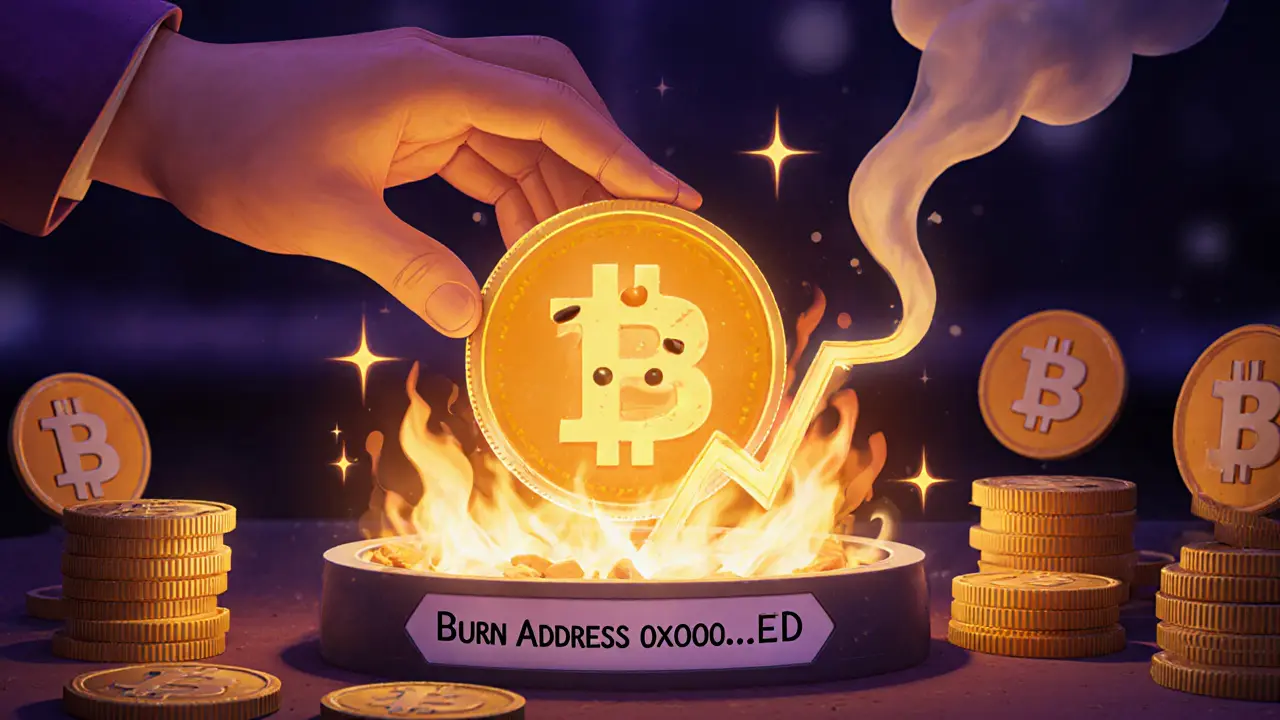
Coin burning reduces cryptocurrency supply, which can increase price-but only if the burn is meaningful, transparent, and backed by real project growth. Not all burns work. Here’s what actually moves the market.
- November 3 2025
- Terri DeLange
- 11 Comments