Cryptocurrency Scarcity: Why Limited Supply Drives Value in Crypto
When we talk about cryptocurrency scarcity, the deliberate limitation of a digital asset’s total supply to create value through rarity. Also known as digital scarcity, it’s the reason Bitcoin can’t be printed like dollars—it’s coded to max out at 21 million coins. This isn’t just a technical detail; it’s the core economic engine behind most serious cryptocurrencies.
Think of it like gold. Gold is valuable not because it’s pretty, but because it’s hard to find and impossible to make more without massive effort. Bitcoin, the first and most widely recognized cryptocurrency with a fixed supply cap works the same way. Its block reward, the new coins miners earn for securing the network cuts in half every four years, slowing down new supply until it hits zero. That’s not a bug—it’s the whole point. This design forces users to think long-term. If you believe in Bitcoin’s future, you don’t sell every time the price dips—you hold, because you know there won’t be more coming.
But scarcity isn’t just about Bitcoin. tokenomics, the economic design of a crypto asset including supply, distribution, and usage incentives shapes every project. Some tokens, like CANDY, a travel rewards token tied to real-world usage, don’t rely on scarcity alone—they need adoption. Others, like GROKGIRL, a meme coin with 420 quadrillion tokens, break the rules. Too much supply kills value. That’s why projects with real staying power avoid flooding the market. They control issuance, burn tokens, or lock supply to maintain scarcity.
When you see a crypto with no supply limit, ask: why? Is this just a copy-paste project hoping to ride hype? Or does it have a plan to make its tokens meaningful over time? The most successful cryptos don’t just promise growth—they build scarcity into their DNA. That’s why you’ll find posts here about Bitcoin’s future hash rate, how block rewards keep networks secure, and why tokens like QBT and SPEED failed—they had no real limits, no real use, and no reason to hold.
What follows is a curated collection of real-world examples—some successful, some cautionary—showing how scarcity works in practice. You’ll see how supply limits affect price, how bad designs collapse, and how smart projects use scarcity to create lasting value. No fluff. Just the facts behind what makes digital money worth anything at all.
How Coin Burning Affects Cryptocurrency Prices
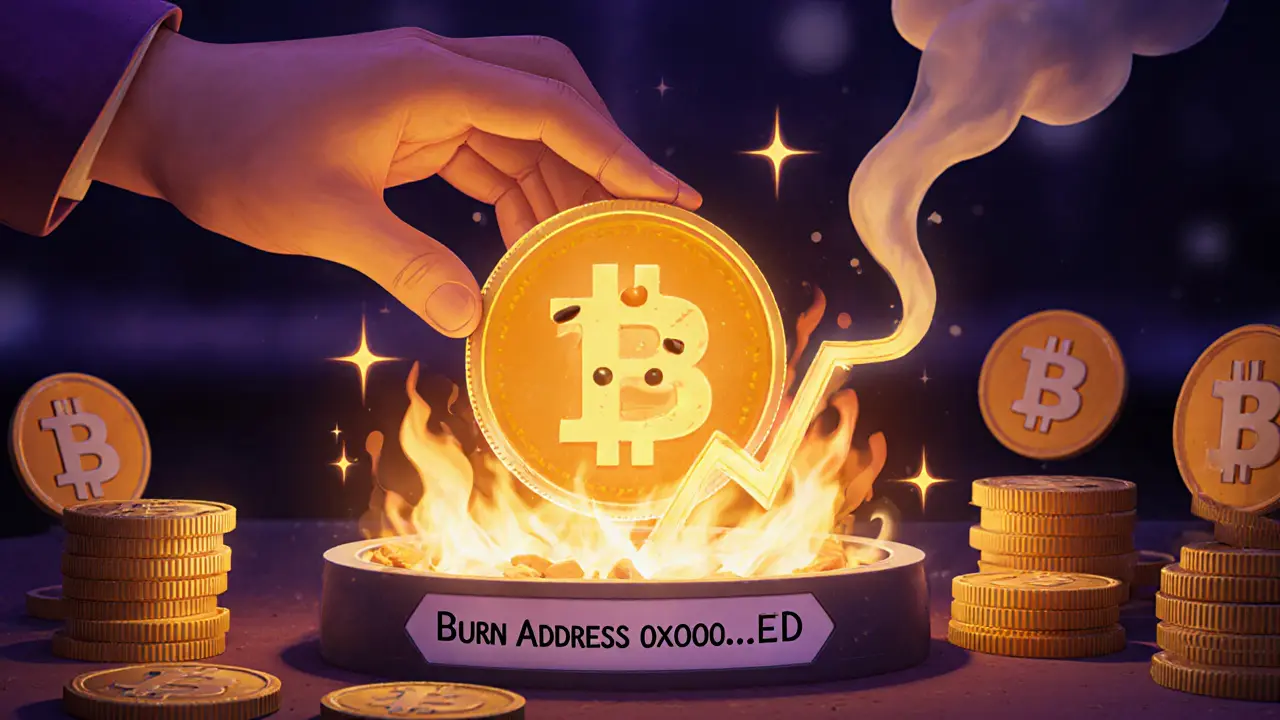
Coin burning reduces cryptocurrency supply, which can increase price-but only if the burn is meaningful, transparent, and backed by real project growth. Not all burns work. Here’s what actually moves the market.
- November 3 2025
- Terri DeLange
- 11 Comments