Decentralized Identity: What It Is and How It Changes Crypto Privacy
When you log into a website, you’re usually handing over your name, email, and sometimes even your phone number to a company that may sell it or get hacked. Decentralized identity, a system where you own and control your digital identity using blockchain technology. Also known as self-sovereign identity, it lets you prove who you are without giving up your data. No more sharing your driver’s license with every app. No more forgotten passwords. Just a secure, portable identity you control.
This isn’t science fiction. It’s already being built into crypto wallets, DeFi platforms, and even government pilot programs. DID, a standard for decentralized identifiers that works across blockchains lets you create a unique digital ID tied to your wallet. Blockchain identity, the use of immutable ledgers to verify claims like age, citizenship, or credentials means your proof of education or work history can’t be faked. And digital identity, the broader term for how you’re recognized online is shifting from something companies manage to something you own.
Why does this matter for you? If you’ve ever lost access to a crypto exchange account, got scammed because someone stole your email, or been blocked from a service because of your location—you’ve felt the cracks in the old system. Decentralized identity fixes that. You don’t need to trust a middleman. You don’t need to wait for customer support. You just present what’s needed—like proving you’re over 18 to join a platform—without revealing your full name, birthdate, or address.
Some projects are already using this. Think of it like a digital passport you carry in your wallet. You can use it to log into apps, claim airdrops, or even rent a car—all without handing over your personal details. And as regulations like MiCA push for better user control, decentralized identity isn’t just a nice feature—it’s becoming a requirement.
Below, you’ll find real-world examples of how this tech is being used, what’s working, what’s failed, and what to watch out for. No fluff. No hype. Just what you need to know to protect your identity in crypto—before someone else controls it for you.
How Blockchain Prevents Identity Theft: A Clear Breakdown of the Technology That’s Changing Digital Security
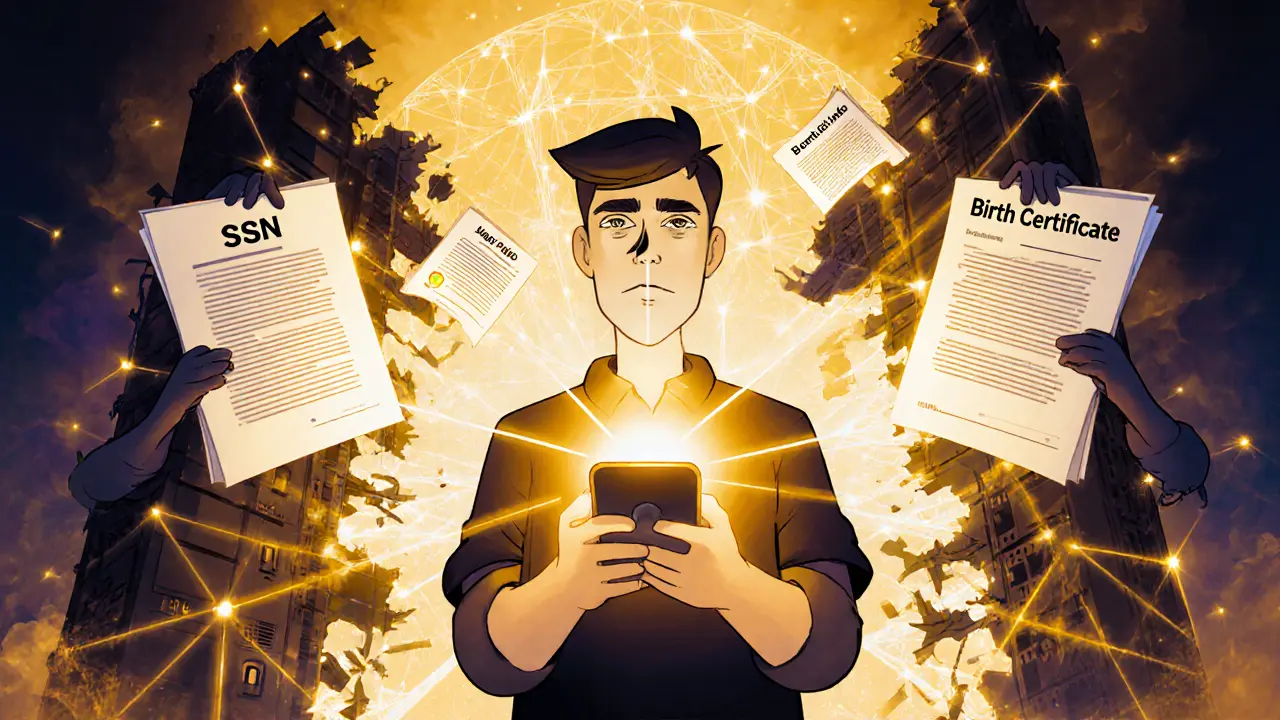
Blockchain prevents identity theft by giving users control over their data, eliminating centralized databases that hackers target. With cryptographic proofs and decentralized storage, it stops fraud before it starts - and already cuts losses by billions annually.
- December 27 2024
- Terri DeLange
- 19 Comments