DeFi Lending: How Borrowing and Lending Crypto Works in 2025
When you lend your crypto through DeFi lending, a system that lets people lend and borrow digital assets without banks or middlemen. Also known as crypto lending, it runs on smart contracts—self-executing code on blockchains like Ethereum and Binance Smart Chain—that automatically match lenders with borrowers. Unlike traditional banks, there’s no credit check. You lock your crypto into a protocol, earn interest, and someone else borrows it—often using their own crypto as collateral.
DeFi lending isn’t just about earning passive income. It’s also about access. If you hold Bitcoin or Ethereum but need cash for rent or a car, you can lock your coins as collateral and borrow stablecoins like USDC or DAI. That’s the core idea: use your crypto as collateral, not as a gamble. Protocols like Aave, a leading DeFi lending platform that supports dozens of tokens and offers variable and fixed rates and MakerDAO, the system behind the DAI stablecoin that lets users mint loans against crypto holdings handle this automatically. The interest you earn? It’s paid in the same token you lent—or sometimes in the protocol’s native token, like AAVE or MKR. But here’s the catch: if the value of your collateral drops too fast, your loan gets liquidated. That’s why most users keep their collateral ratio well above the minimum.
DeFi lending is part of a bigger ecosystem. It works with liquidity pools, reservoirs of crypto funds that power decentralized exchanges and lending protocols, and relies on oracles, external data feeds that report real-time crypto prices to smart contracts to trigger liquidations. You don’t need to understand all of it to use it—but knowing how these pieces connect helps you avoid losing money. This isn’t theory. In 2025, over $50 billion is locked in DeFi lending protocols. People are using it to fund businesses, cover emergencies, or just grow their crypto holdings without selling. But it’s not risk-free. Flash crashes, buggy code, and rug pulls still happen. That’s why the best users stick to well-audited platforms, diversify their assets, and never lend more than they can afford to lose.
Below, you’ll find real reviews, breakdowns, and warnings about the protocols, tokens, and platforms that actually work in DeFi lending today. Some posts show you how top protocols like Aave and Lido earn interest. Others warn you about dead tokens and fake yields. There’s no fluff—just what you need to know before you lock your crypto in.
How Interest Rate Models Work in DeFi Lending Protocols
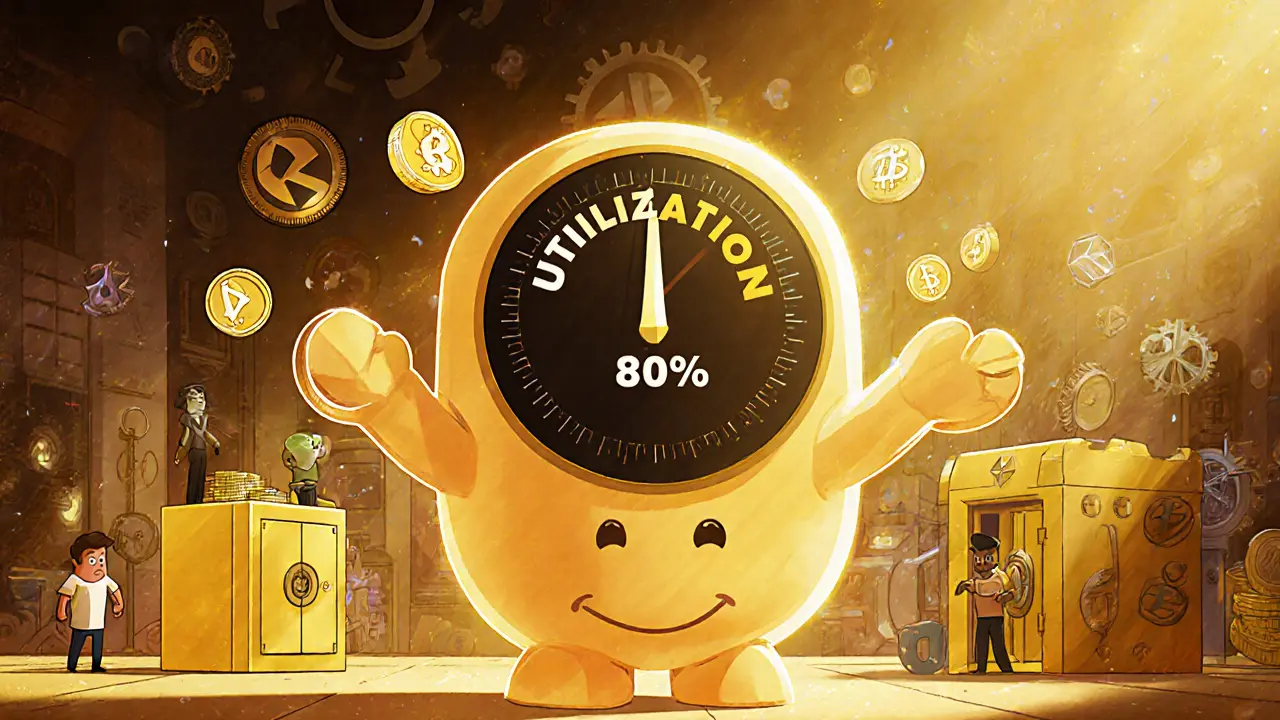
DeFi lending uses algorithmic interest rate models based on utilization rates to balance supply and demand. Learn how Aave, Compound, and MakerDAO calculate rates, why they spike, and how to use them safely.
- August 27 2025
- Terri DeLange
- 11 Comments