Digital Identity Theft: How Crypto Users Get Targeted and How to Stop It
When you use crypto, you’re not just managing money—you’re managing your digital identity, the collection of online data that proves who you are, from email addresses and wallet addresses to private keys and two-factor codes. Also known as online identity, it’s the one thing no exchange, wallet, or app can fully protect for you. If someone steals it, they can drain your funds, impersonate you on social media, or lock you out of your own accounts—even if you never clicked a link.
Phishing attacks, fraudulent messages designed to trick you into giving up your login info or private keys are the most common way this happens. Scammers send fake emails that look like they’re from Coinbase, MetaMask, or Binance. They create fake websites that copy the real ones down to the logo. They even DM you on Twitter claiming to be from "support" and ask for your seed phrase. Once you give it up, your crypto is gone—no chargebacks, no recovery, no second chances. Blockchain security, the system of cryptography and decentralized verification that keeps transactions safe doesn’t stop you from handing over your keys. It only works if you don’t give them away.
It’s not just about passwords. Personal data breach, when your name, phone number, or email gets leaked from a website you signed up for is often the first step. That data gets sold on dark web marketplaces. Then, scammers use it to guess your passwords, answer security questions, or even call your phone carrier to port your number. Once they control your phone, they bypass SMS-based 2FA and take over your crypto accounts. You didn’t get hacked—you were targeted, and the trail started with a free NFT giveaway you signed up for last year.
Most people think they’re safe because they don’t hold much crypto. But that’s exactly what scammers count on. Small wallets are easier to clean out quietly. And once they have your identity, they use it to target your friends, join crypto Discord groups as you, and scam others using your reputation. It’s not just your money at risk—it’s your trust, your reputation, and your ability to move freely in the space.
You can’t stop every attack, but you can make yourself a hard target. Use hardware wallets. Never type your seed phrase anywhere online. Enable app-based 2FA, not SMS. Check URLs before logging in. And if something feels off—like a "limited-time airdrop" or a "verified support agent"—it probably is. The best security isn’t a tool. It’s skepticism.
Below, you’ll find real stories of how people lost their crypto to identity theft, what they did wrong, and how to avoid the same traps. No theory. No fluff. Just what actually happened—and how to keep it from happening to you.
How Blockchain Prevents Identity Theft: A Clear Breakdown of the Technology That’s Changing Digital Security
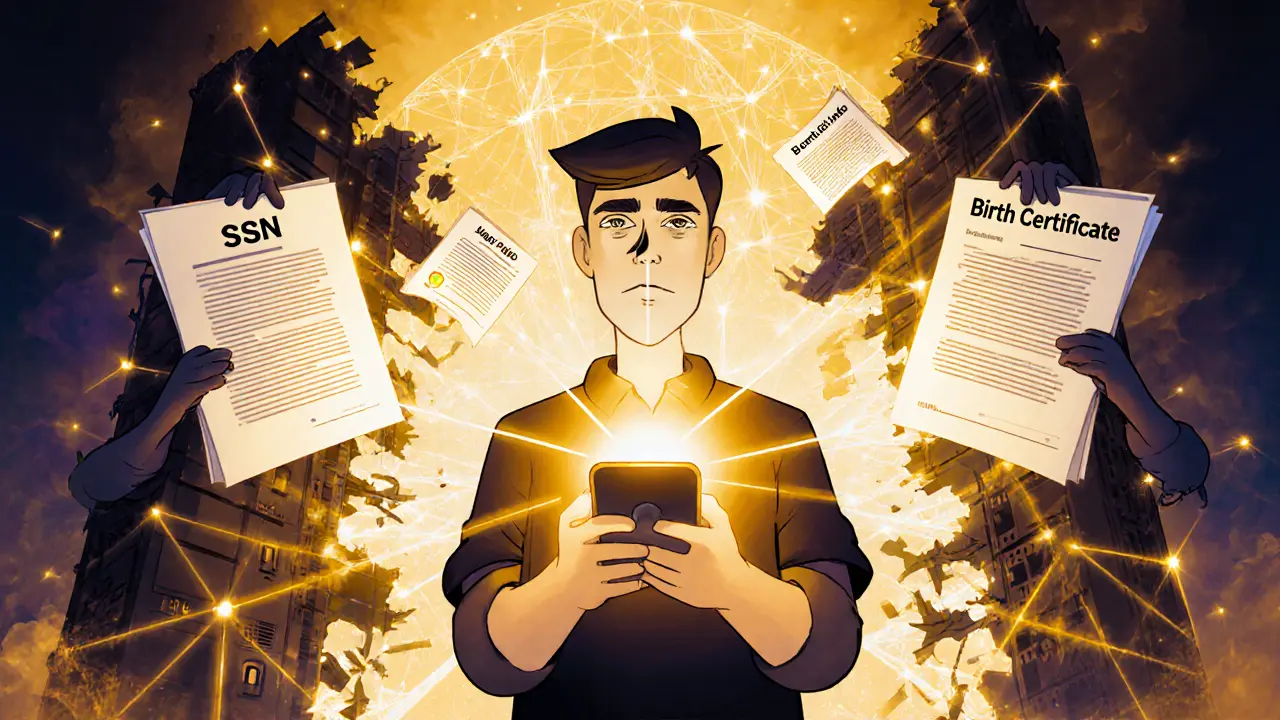
Blockchain prevents identity theft by giving users control over their data, eliminating centralized databases that hackers target. With cryptographic proofs and decentralized storage, it stops fraud before it starts - and already cuts losses by billions annually.
- December 27 2024
- Terri DeLange
- 19 Comments