ECDSA: What It Is and Why It Keeps Your Crypto Safe
When you send Bitcoin or sign into a crypto wallet, you’re using something called ECDSA, Elliptic Curve Digital Signature Algorithm, a cryptographic method that proves you own your crypto without revealing your private key. Also known as Elliptic Curve Cryptography, it’s the quiet hero behind every transaction you make on Ethereum, Bitcoin, and most blockchains. Without ECDSA, your crypto would be as easy to steal as cash left on a park bench.
ECDSA works by turning your private key—a long random number—into a public key that others can verify, but never reverse-engineer. Think of it like a signature you can’t copy, but anyone can check is yours. This is why you never need to share your private key to send funds. The math behind it relies on elliptic curves, which are complex enough to stop hackers, but simple enough for computers to process fast. That’s why it replaced older systems like RSA in crypto: smaller keys, same security, less power used. It’s the reason your hardware wallet can sign a transaction in under a second.
ECDSA isn’t just theory—it’s what makes real-world crypto actions possible. When you claim an airdrop like QBT or sign up for a DeFi protocol like Aave, ECDSA is silently verifying your identity. It’s also why scams like fake exchanges (BiKing, Wavelength) fail: they can’t generate valid signatures without your private key. Even when a project like TripCandy says you can earn CANDY tokens, ECDSA ensures only the real owner of the wallet gets them. And when Bitcoin’s hash rate hits 1 ZH/s, ECDSA is still the layer that makes every block’s signature trustworthy.
But ECDSA isn’t perfect. Quantum computers could break it one day, which is why some chains are already testing alternatives like EdDSA. Still, for now, it’s the gold standard. Every time you trade on Shadow Exchange v2, stake with Lido, or even just check your balance on a DEX aggregator like Orion Protocol, ECDSA is working behind the scenes to make sure it’s really you.
Below, you’ll find real-world examples of how ECDSA connects to crypto security, scams, and tools you actually use. No theory. No fluff. Just what matters to your wallet.
Cryptographic Hashing vs Encryption in Blockchain: What You Actually Need to Know
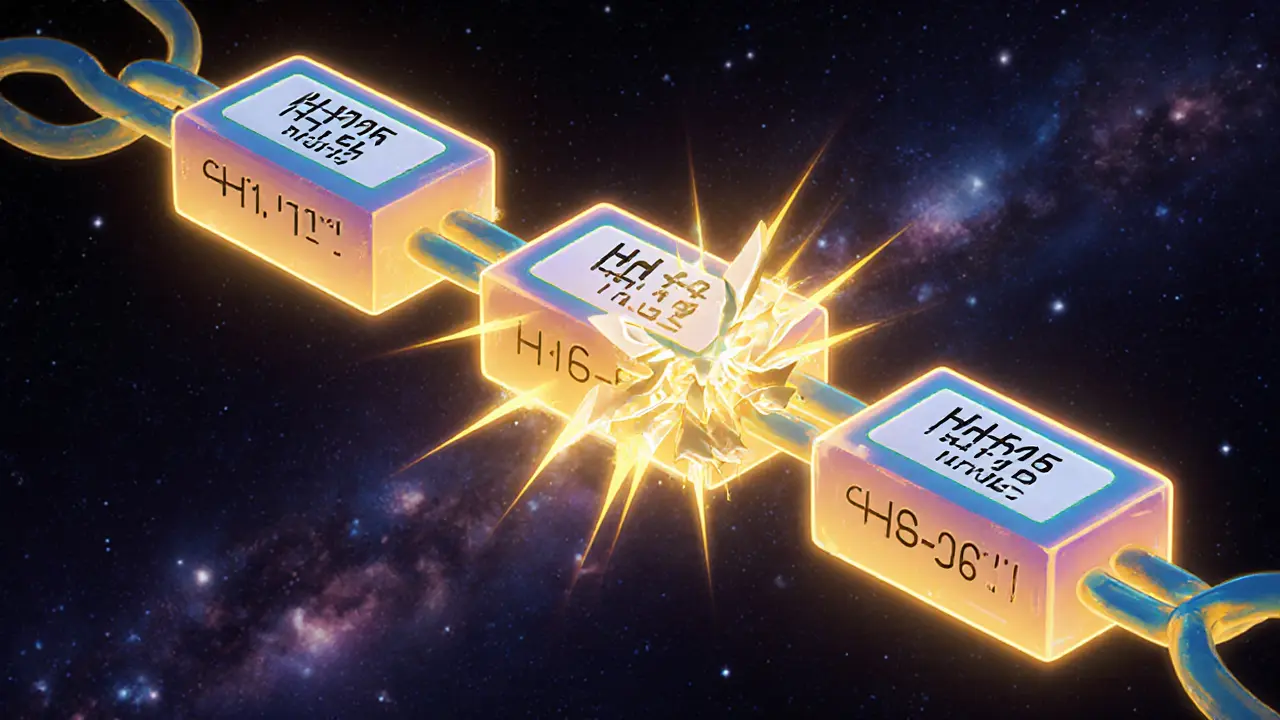
Cryptographic hashing secures blockchain structure by verifying data integrity, while encryption proves ownership through digital signatures. Understanding both is key to using crypto safely.
- October 11 2025
- Terri DeLange
- 0 Comments