Interest Rate Models in Crypto: How They Shape Token Value and DeFi Rewards
When you stake, lend, or borrow in crypto, you're not just interacting with a wallet—you're entering a system governed by interest rate models, mathematical rules that determine how rewards and costs are calculated on blockchain networks. These models decide whether your $100 in ETH earns 2% or 15% a year, and whether a new token’s supply gets inflated or burned to keep value stable. Unlike banks that tweak rates once a quarter, crypto protocols adjust rates in real time based on usage—borrow more, rates go up; lend more, rates drop. This isn’t guesswork. It’s code.
These models are the hidden engine behind DeFi protocols, decentralized platforms that let you lend, borrow, and earn without intermediaries. yield farming only works because of them. Take Aave or Compound: they use linear or curve-based models to balance supply and demand. When too many people want to borrow USDC, the borrowing rate spikes to discourage overuse and reward lenders. That’s how the system stays healthy. But not all models are built right. Some tokens crash because their rate logic rewards early users too aggressively, flooding the market and killing long-term value.
token economics, the design of how a crypto asset is distributed, used, and valued can’t be separated from interest rate models. A token that pays 50% APY might look amazing—but if the model doesn’t account for inflation, it’s a Ponzi in disguise. Real projects tie rewards to actual usage: liquidity provision, trading volume, or protocol fees. Look at Lido or Curve—they don’t just hand out tokens. They reward participation in a functioning system. And that’s why their models last.
It’s not just about earning more. It’s about understanding why you earn it. If a project hides its rate model behind jargon or changes it without warning, that’s a red flag. The best crypto projects make theirs public, transparent, and predictable. You can check how rates shift on-chain. You can see if borrowing spikes after a token launch. You can track whether rewards are sustainable—or just a short-term hype.
Below, you’ll find real examples of how interest rate models play out in practice. Some tokens used smart models to build lasting value. Others? They burned out fast. You’ll see how QBT’s airdrop failed because its incentives didn’t align with usage. How BAKE’s rewards were tied to real DeFi activity, not speculation. And how even Bitcoin’s block reward model—though not a traditional interest rate—follows the same logic: reduce supply over time to maintain scarcity. These aren’t abstract theories. They’re the rules that decide who wins and who loses in crypto.
How Interest Rate Models Work in DeFi Lending Protocols
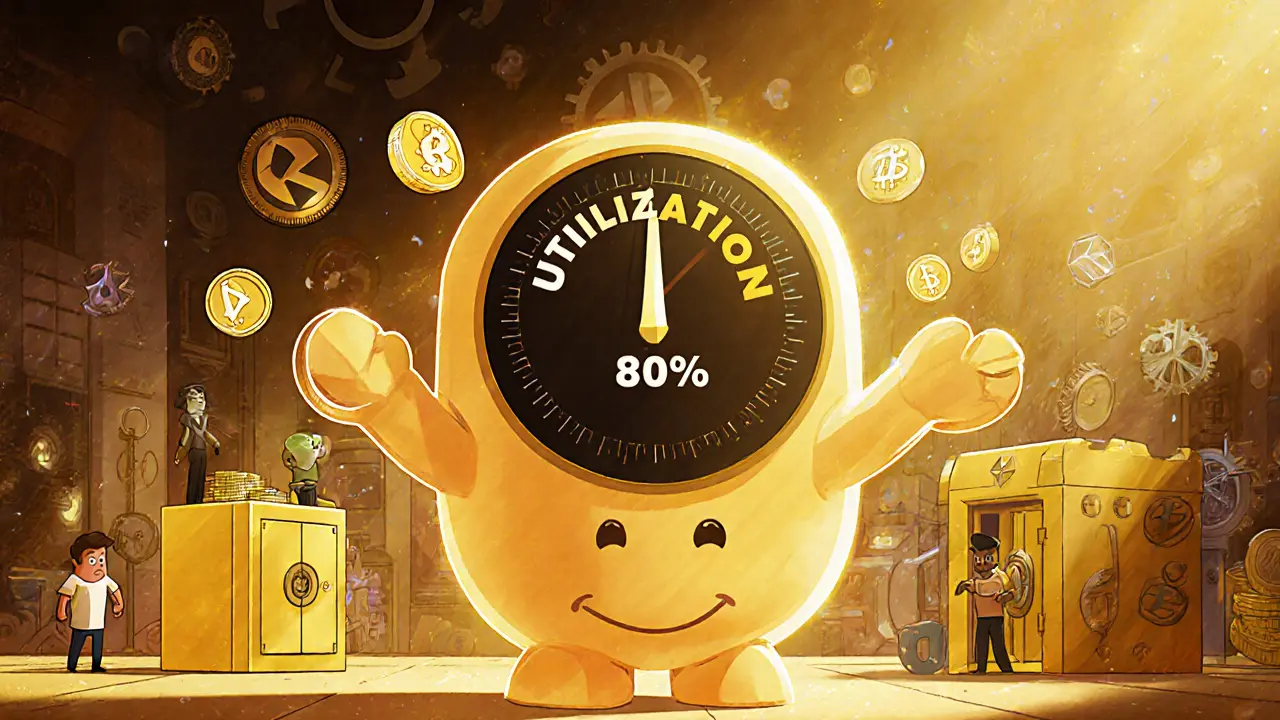
DeFi lending uses algorithmic interest rate models based on utilization rates to balance supply and demand. Learn how Aave, Compound, and MakerDAO calculate rates, why they spike, and how to use them safely.
- August 27 2025
- Terri DeLange
- 11 Comments