SHA-256 Explained: How This Hash Function Secures Bitcoin and Crypto
When you hear about SHA-256, a cryptographic hash function that turns any input into a fixed 256-bit string. Also known as Secure Hash Algorithm 256-bit, it's the backbone of Bitcoin’s security and the reason your coins don’t just vanish into thin air. It doesn’t store data—it fingerprints it. Give it a sentence, a file, or a block of transactions, and it spits out a unique 64-character code. Change one letter, and the whole output flips. That’s what makes it perfect for blockchains.
SHA-256 is what makes Bitcoin mining, the process of validating transactions and adding them to the blockchain possible. Miners race to solve a SHA-256 puzzle—finding a number that, when hashed with the block data, produces a result starting with enough zeros. It’s not magic. It’s brute force, powered by hardware and electricity. The first to solve it gets the block reward. This system, built on SHA-256, is why Bitcoin has never been hacked at the protocol level.
It’s also why blockchain security, the trustless system that keeps crypto ledgers tamper-proof works. Every block links to the one before it through its SHA-256 hash. Alter a single transaction? You’d need to recalculate every single hash after it—which would take more computing power than the entire Bitcoin network. That’s not just hard. It’s economically impossible.
You won’t see SHA-256 directly in your wallet, but it’s in every transaction you make, every address you send to, and every coin you mine. It’s the silent guard at the gate. That’s why posts about Bitcoin hash rate matter—more miners mean more SHA-256 processing power, which means a stronger, more secure network. And when you read about cryptographic hash function, a one-way mathematical tool used to verify data integrity in other blockchains, chances are they’re using SHA-256 or a close cousin like SHA-3.
Some tokens use SHA-256 for their own blockchains, like Bitcoin Cash or Litecoin. Others, like Ethereum, moved to different systems. But SHA-256 remains the gold standard for proof-of-work. It’s not flashy. It’s not trendy. But it’s proven. And that’s why you’ll find it referenced in guides about mining, transaction verification, and even scam alerts—because if a project claims to be "SHA-256 secured" but doesn’t explain how, it’s probably lying.
Below, you’ll find real-world examples of how SHA-256 shows up in crypto—whether it’s in Bitcoin’s hash rate projections, the math behind mining rewards, or why certain exchanges and tokens rely on it for security. No theory. No fluff. Just how it actually works in the projects you care about.
Cryptographic Hashing vs Encryption in Blockchain: What You Actually Need to Know
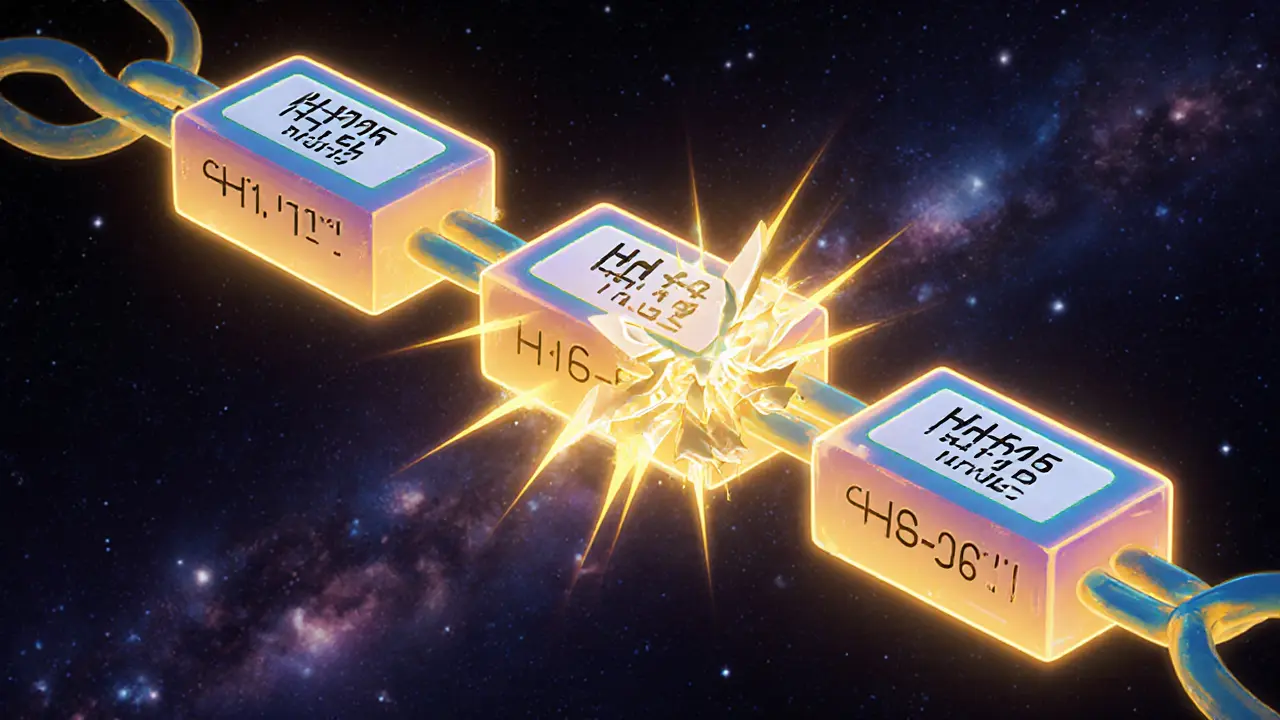
Cryptographic hashing secures blockchain structure by verifying data integrity, while encryption proves ownership through digital signatures. Understanding both is key to using crypto safely.
- October 11 2025
- Terri DeLange
- 0 Comments
Nonce Range and Mining Difficulty: How Bitcoin's Proof-of-Work Really Works

Bitcoin's security relies on the nonce range and mining difficulty-two mechanics that force miners to solve a constantly changing puzzle. Learn how they work, why they matter, and what the future holds.
- September 5 2025
- Terri DeLange
- 10 Comments