Stablecoin Rules: What You Need to Know About Stability, Regulation, and Real-World Use
When you hold a stablecoin, a cryptocurrency designed to maintain a stable value, usually tied to a fiat currency like the US dollar. Also known as digital dollar tokens, they’re meant to be the bridge between volatile crypto and everyday money. But stablecoin rules aren’t just technical—they’re legal, financial, and sometimes life-or-death for your assets.
Not all stablecoins are the same. USDT, Tether’s flagship token, is the most traded but has faced years of scrutiny over reserve transparency. USDC, issued by Circle and Coinbase, is fully backed by cash and short-term U.S. Treasuries, and is subject to regular audits. The difference isn’t just branding—it’s trust. If a stablecoin’s reserves aren’t real, your $1 could vanish overnight. That’s why regulators in the EU, U.S., and beyond are pushing for clear rules: reserves must be 1:1, audited monthly, and held in safe, liquid assets. No fancy derivatives. No risky loans. Just cash and government bonds.
Stablecoin rules also affect how you use them. If you’re trading on a decentralized exchange, you might be relying on a stablecoin that’s not compliant with MiCA or U.S. state laws. That could mean frozen withdrawals, delisting, or worse. Even if a token claims to be stable, if it’s not backed properly or isn’t regulated, it’s just a promise—and promises break. The biggest stablecoins now have to prove they’re safe before they can operate across borders. That’s why USDC and DAI are growing, while shady clones disappear.
And it’s not just about reserves. Stablecoin rules now include how they’re issued, how they’re redeemed, and who can access them. Some platforms restrict U.S. users. Others freeze accounts if they detect suspicious activity. You can’t just assume your stablecoin is safe because it’s on a popular exchange. You need to know who backs it, where the money is, and what happens if the issuer gets hit by a lawsuit or a bank run.
What you’ll find below isn’t a list of every stablecoin ever made. It’s a collection of real cases—some that worked, some that failed, and some that still haunt investors. You’ll see how airdrops tied to unstable tokens turned into losses, how exchanges got caught using unregulated stablecoins, and why even a simple transaction can go wrong if the rules aren’t clear. This isn’t theory. It’s what’s happening right now—and what you need to avoid.
Global Cryptocurrency Regulations Overview: What’s Legal Where in 2025
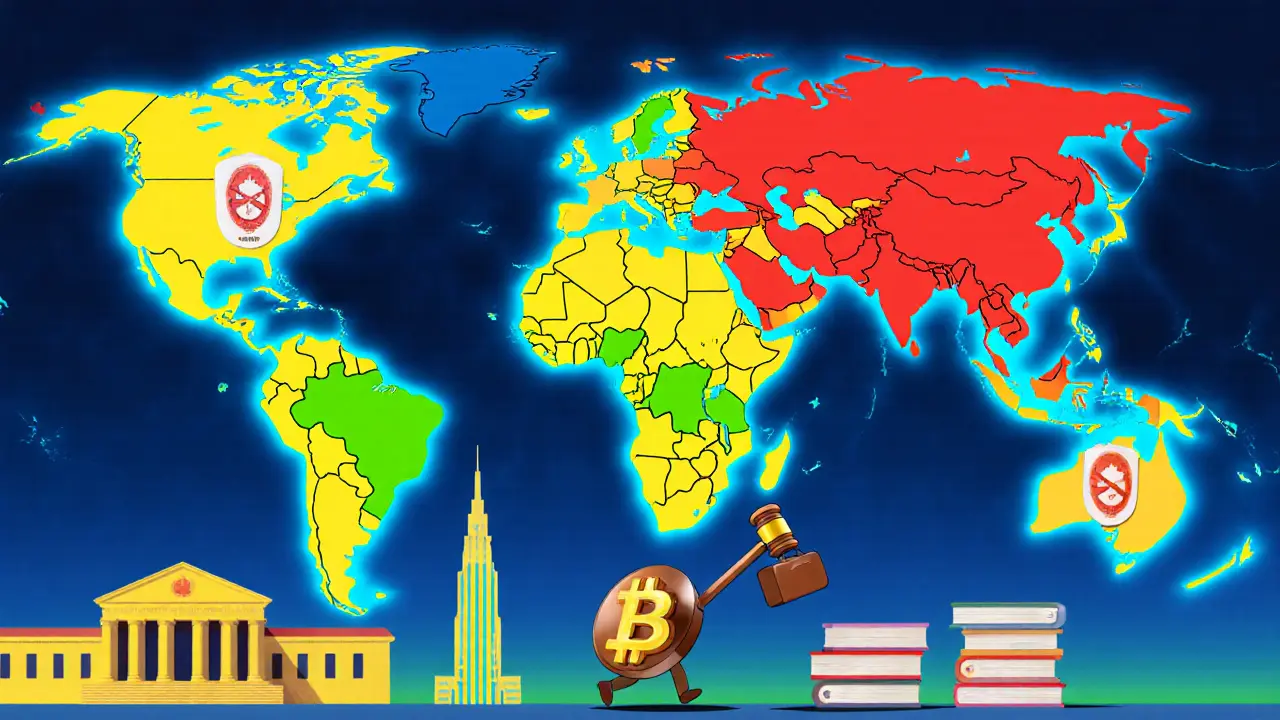
In 2025, global crypto regulations are clearer than ever-but wildly different by country. From the EU's MiCA to the U.S. GENIUS Act, learn how laws shape what you can do with Bitcoin, stablecoins, and DeFi.
- July 12 2025
- Terri DeLange
- 19 Comments