Token Burn Effect: How Destroying Crypto Supply Impacts Price and Trust
When a project token burn, the intentional destruction of cryptocurrency tokens to reduce total supply, it’s not just a marketing stunt—it’s a direct tweak to the economic rules of the asset. Think of it like removing seats from a crowded bus: fewer seats mean each remaining seat becomes more valuable, assuming demand stays the same. That’s the core idea behind the token burn effect, the price and perception shift that follows when tokens are permanently removed from circulation. But not all burns work the same. Some move markets. Others are ignored. And a few are outright scams hiding behind technical jargon.
The tokenomics, the economic design behind a cryptocurrency’s supply, distribution, and incentives of a coin decides whether a burn matters. Projects like Binance regularly burn BNB tokens quarterly, cutting supply by millions—each burn is announced, verified on-chain, and tied to real revenue. That builds trust. Contrast that with a meme coin that burns 1% of its 420 quadrillion tokens—no one can even track it, and the supply is so bloated that the burn is meaningless. The crypto supply reduction, the act of permanently decreasing the number of tokens available for trading or holding only works if the total supply was ever realistic to begin with. And it only impacts price if traders believe the burn is real, permanent, and tied to project health.
Some tokens, like those in DeFi protocols, burn fees automatically with every transaction—this is called token burn effect in action. Others, like Ethereum after the Merge, burn transaction fees to offset new coin issuance, creating a deflationary pressure. But if a project burns tokens just to hype a launch, then vanishes, the effect fades fast. You’ll see this in posts about dead tokens like SPEED or GROKGIRL—no one cares about their burns because there’s no ecosystem left to support them. Meanwhile, successful burns are tied to real usage: trading volume, staking rewards, or platform revenue. That’s why you’ll find deep dives on QBT, BAKE, and other tokens that burned supply—but only when the burn was part of a functioning economy.
What you’ll find below isn’t just a list of burns. It’s a collection of real cases—some smart, some silly—where token destruction either moved markets or collapsed under its own weight. You’ll see which projects burned for trust, which burned for show, and how to spot the difference before you invest. No fluff. No hype. Just what actually happened when tokens were destroyed—and what it meant for the people holding them.
How Coin Burning Affects Cryptocurrency Prices
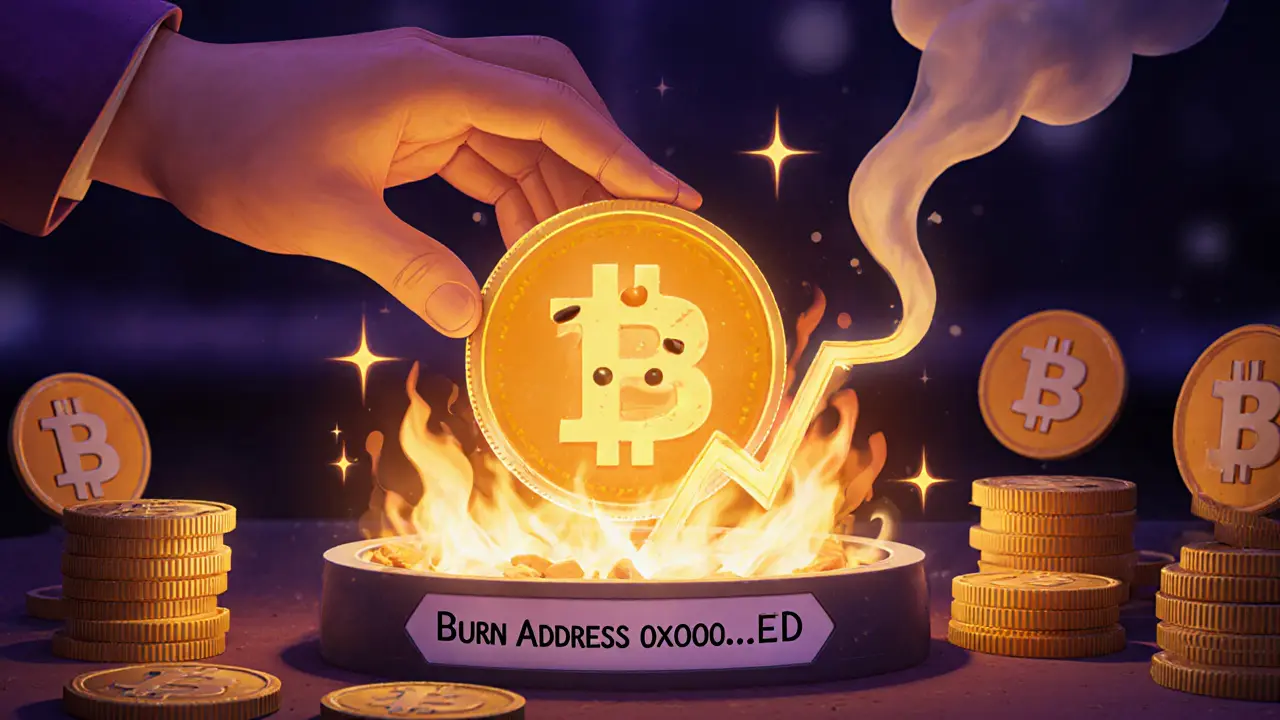
Coin burning reduces cryptocurrency supply, which can increase price-but only if the burn is meaningful, transparent, and backed by real project growth. Not all burns work. Here’s what actually moves the market.
- November 3 2025
- Terri DeLange
- 11 Comments