TVL Explained: What Total Value Locked Means for Crypto and DeFi
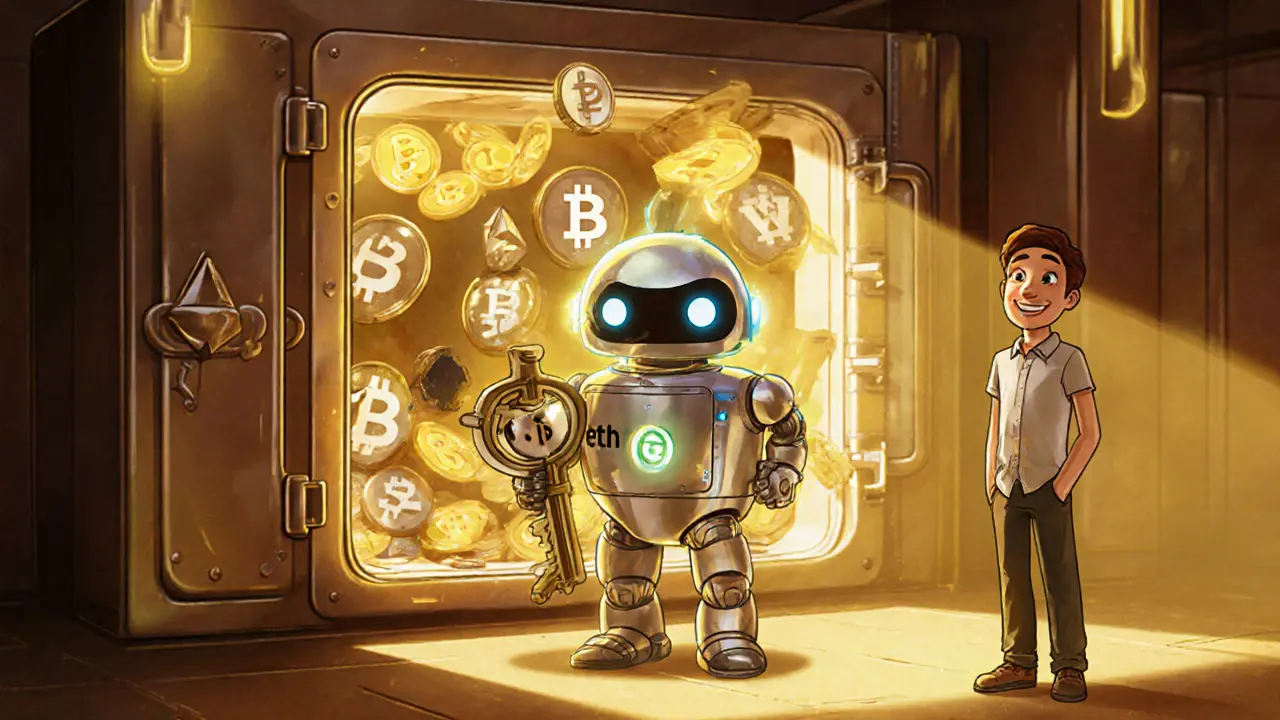
When you hear TVL, Total Value Locked, a metric that measures the amount of cryptocurrency deposited into decentralized finance protocols. It's not just a number—it's a live pulse check on how much real money people are trusting a blockchain project with. If a DeFi app has $500 million in TVL, that means users have locked up half a billion dollars in crypto—whether it's lending, staking, or providing liquidity. No marketing hype, no fake followers. Just cold, hard crypto sitting in smart contracts.
TVL doesn’t care about tweets or influencer posts. It only responds to what people actually do. That’s why it’s the go-to metric for spotting real DeFi adoption versus vaporware. Projects like Aave, Compound, and Curve don’t just talk about being decentralized—they prove it by how much cash flows into their contracts. And when TVL drops? That’s not a market dip. That’s users pulling out because they lost trust.
TVL is tied to crypto liquidity, the ease with which assets can be swapped in and out of a protocol without causing price swings. High liquidity means deeper pools, better rates, and fewer slippage surprises. It’s why you see TVL spikes when new tokens launch on Uniswap or when a yield farm offers insane APYs—people rush in to earn, and TVL climbs. But when the rewards dry up, or the code gets hacked, TVL crashes. It’s that simple.
Don’t confuse TVL with market cap. Market cap is about token price times supply—often speculative. TVL is about actual deposits. A token can have a $10 billion market cap and $2 million in TVL. That’s a red flag. Or it can have a $50 million market cap and $40 million in TVL. That’s a signal.
TVL also depends on the blockchain protocols, the underlying networks like Ethereum, Solana, or BSC that host DeFi apps and enforce their rules. A protocol running on Ethereum might have higher TVL because of its security and user base—even if its APY is lower than a newer chain. But if a new chain suddenly pulls in $1 billion in TVL overnight, that’s a sign developers and users are betting on its future.
And here’s what you need to watch: TVL isn’t static. It moves with incentives, hacks, regulations, and even macro trends. When interest rates rise, people pull money out of DeFi to chase safer yields. When a new ZK-rollup launches with lower fees, TVL can shift overnight from Ethereum to its Layer 2. That’s why looking at TVL trends over weeks—not just today’s number—is what matters.
You’ll see TVL in every post below: from the QBT airdrop that tried to boost BSC usage, to Shadow Exchange v2’s low fees attracting traders, to how MiCA regulations might shift where DeFi money flows in Europe. Some of these projects had massive TVL and crashed. Others had low TVL but real utility. You’ll learn how to tell the difference.
TVL doesn’t lie. But people do. So when you’re checking out a new DeFi app, skip the hype. Look at the TVL. Ask: Who put their money here? Why? And what happens when they walk away?
Top DeFi Protocols by Total Value Locked in 2025
Discover the top DeFi protocols by Total Value Locked (TVL) in 2025, including Lido, Aave, MakerDAO, Uniswap, and Curve. Learn what TVL really means, how it's calculated, and why it's not the whole story behind DeFi's health.
- January 23 2025
- Terri DeLange
- 10 Comments