You’ve probably seen the ticker DPIN popping up on your exchange app or scrolling through crypto Twitter. But what exactly is it? Is it just another meme coin trying to catch a wave, or does it have actual utility? If you’re looking for a clear answer without the hype, you’re in the right place. We’ll break down what DPIN is, how it fits into the booming Decentralized Physical Infrastructure Network (DePIN) sector, and whether it’s worth your attention in 2026.
What Exactly Is DPIN?
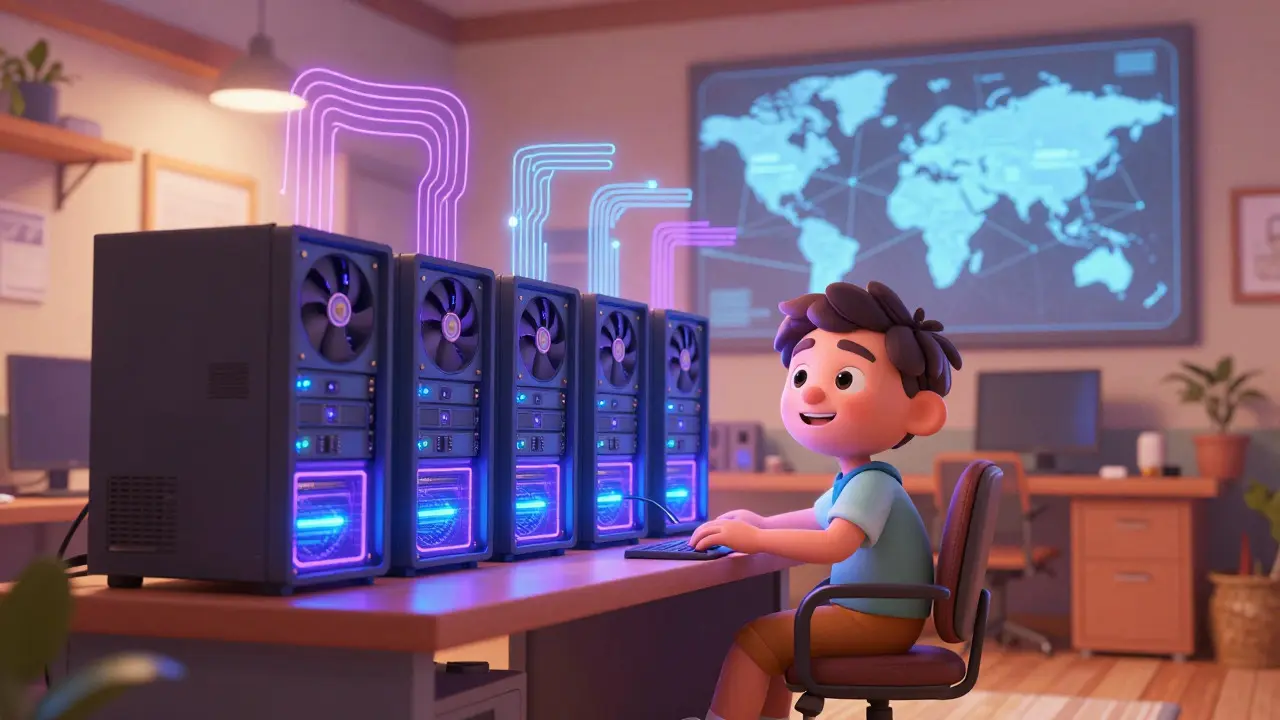
At its core, DPIN is a cryptocurrency token built on the BNB Smart Chain that aims to democratize access to high-performance computing (HPC). Think of it as a marketplace where people with powerful computers can rent out their processing power to others who need it-like AI researchers, gamers, or data analysts-who might not want to spend thousands on expensive hardware.
The project operates within the Decentralized Physical Infrastructure Networks (DePIN) sector, which uses blockchain incentives to build real-world infrastructure like wireless networks, storage, and computing power. Instead of one giant company owning all the servers, DPIN encourages a global network of individuals to contribute their resources. In return, they earn DPIN tokens. It’s a peer-to-peer model designed to make computing cheaper and more accessible than traditional centralized providers.
How Does the DPIN Ecosystem Work?
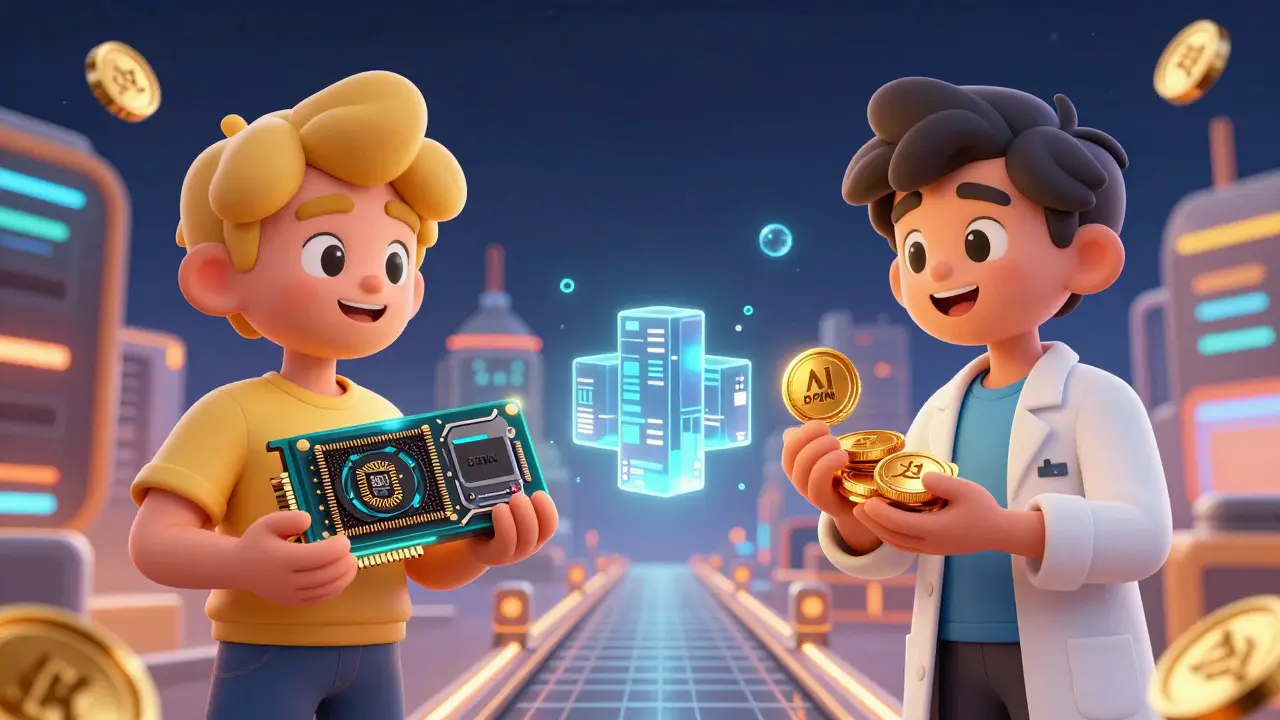
To understand DPIN, you need to look at the two sides of its marketplace:
- Providers: These are users who own high-end GPUs or servers. They connect their hardware to the DPIN network and list their available computing hours. For example, someone with an Nvidia H100 GPU can rent out idle time when they aren’t using it for gaming or rendering.
- Consumers: These are developers, AI startups, or researchers who need massive computing power but don’t want to pay premium prices from big tech clouds. They use DPIN tokens to pay for these services directly from providers.
The BNB Smart Chain serves as the blockchain platform that powers DPIN transactions, offering low fees and fast settlement times compared to Ethereum. This choice makes micro-transactions viable. If you’re renting ten minutes of GPU power, you don’t want to pay $50 in gas fees. By staying on BSC, DPIN keeps costs down, which is crucial for a service-based economy.
Tokenomics: Supply, Price, and Market Data
Let’s talk numbers, because this is where things get interesting-and slightly confusing. As of early 2026, here is the snapshot of DPIN’s financials:
| Metric | Value |
|---|---|
| Total Supply | 210,000,000 DPIN |
| Max Supply | 210,000,000 DPIN (Fixed, non-inflationary) |
| All-Time High | $8.14 (June 10, 2025) |
| All-Time Low | $3.36 (March 10, 2025) |
| Fully Diluted Valuation (FDV) | ~$889 million |
| Primary Exchange | PancakeSwap (DEX) |
The fixed supply of 210 million tokens means there’s no inflation; new tokens won’t be printed to dilute holders. However, you’ll notice a major red flag in the data above: the circulating supply. Major aggregators like Coinbase have reported "0 DPIN" in circulation at various points, leading to a market cap of $0.00 despite active trading volumes exceeding $90,000 daily. This discrepancy often confuses new investors. It usually happens when liquidity is locked in decentralized exchanges rather than being freely traded on centralized order books, or due to reporting errors by data providers. Always check multiple sources like CoinGecko and BscScan to verify true liquidity.
Is DPIN Legit? Addressing Community Concerns
If you’ve been lurking in Reddit threads or Telegram groups, you’ve likely seen skepticism. Users have questioned how a token can trade with significant volume if the circulating supply appears zero. Some commenters have even labeled it a potential scam. Let’s look at the facts objectively.
On one hand, there is genuine activity. The official DPIN Telegram channel reports successful transactions, with users claiming they rented GPU hours for significantly less than centralized alternatives. One user noted saving 60% on compute costs compared to traditional cloud providers. On the other hand, trust metrics are weak. Trustpilot shows only three reviews with an average rating of 2.7 out of 5, primarily citing a lack of transparent team information and outdated documentation.
The developer activity has also slowed. According to CryptoQuant data from January 2026, GitHub commits dropped by 42% since September 2025. While the roadmap promises multi-chain expansion to Ethereum and Polygon in Q1 2026, past delays have made the community wary. It’s not necessarily a scam, but it is a high-risk, early-stage project with inconsistent communication.
DPIN vs. Other DePIN Giants
DPIN isn’t alone in this space. The DePIN sector exploded in 2025, growing 327% in total market cap. To see where DPIN stands, we need to compare it to established players.
| Project | Focus Area | Market Cap (Approx.) | Key Advantage |
|---|---|---|---|
| Render Network (RNDR) | GPU Rendering & AI | $4.2 Billion | Strong enterprise partnerships, high adoption |
| Filecoin (FIL) | Decentralized Storage | $2.1 Billion | Proven technology, massive storage capacity |
| Akash Network (AKT) | Decentralized Cloud Compute | $1.5 Billion | High number of active wallet addresses (142k+) |
| DPIN | High-Performance Computing (HPC) | Data Discrepancy (~$889M FDV) | Niche focus on HPC, lower entry cost via BSC |
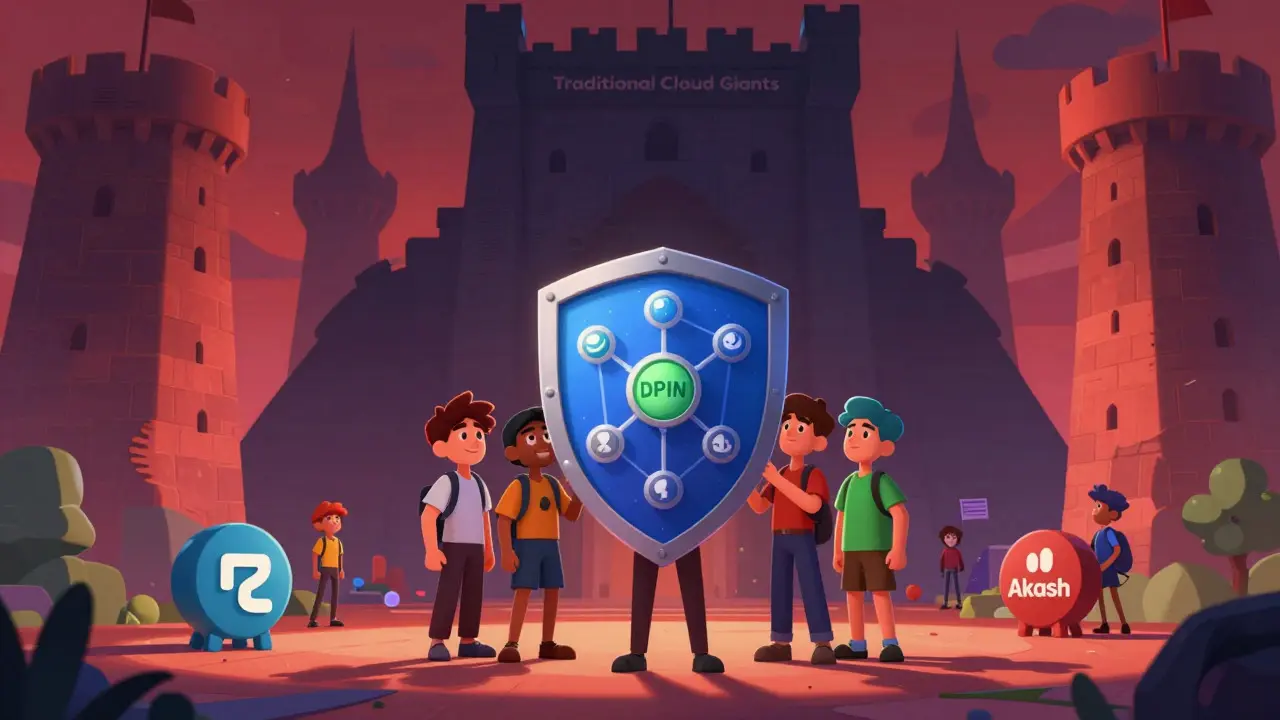
While giants like Render and Akash have billions in market cap and hundreds of thousands of active users, DPIN is still finding its footing. Its unique selling point is focusing specifically on High-Performance Computing (HPC) rather than general cloud storage or basic rendering. However, with only 1,842 unique wallet addresses holding tokens, adoption is minuscule compared to competitors. You are betting on future growth, not current dominance.
How to Buy and Store DPIN Tokens
If you decide the risk/reward ratio works for you, here is how you actually get your hands on DPIN. Since it trades primarily on decentralized exchanges, the process is slightly different from buying Bitcoin on Coinbase.
- Set Up a Wallet: Download a BSC-compatible wallet like MetaMask. Make sure you switch the network to BNB Smart Chain.
- Get BNB: Buy BNB (Binance Coin) on a centralized exchange like Binance or Coinbase and withdraw it to your MetaMask address. You will need BNB to pay for gas fees and to swap for DPIN.
- Connect to PancakeSwap: Go to the official PancakeSwap website and connect your wallet. Double-check the URL to avoid phishing sites.
- Swap for DPIN: Search for the DPIN token contract address. Paste it carefully. Select the amount of BNB you want to swap and confirm the transaction.
- Verify Receipt: Once the transaction confirms, you should see DPIN in your MetaMask wallet. You can add it manually using the contract address if it doesn’t appear automatically.
Always start with a small amount to test the waters. Slippage on DEXs can be high for smaller tokens, so set your slippage tolerance appropriately (usually 1-5%) in PancakeSwap settings.
Risks and Future Outlook
Before you commit funds, keep these risks in mind. The SEC issued a statement in January 2026 noting that DePIN projects could face heightened scrutiny if their token distribution models resemble unregistered securities. This regulatory uncertainty hangs over many utility tokens.
Additionally, DPIN’s valuation seems disconnected from its current usage. Analysts from Bernstein warned of "extreme valuation risk" given the high Fully Diluted Valuation relative to minimal revenue generation. Conversely, Delphi Digital suggests DPIN could capture 3-5% of the $120 billion HPC market by 2027 if adoption accelerates. That’s a huge range of possibilities.
The project’s roadmap includes adding support for Nvidia H100 GPUs and expanding to Ethereum and Polygon. If they deliver on these promises and fix their transparency issues, DPIN could grow. If developer activity continues to decline, it may fade into obscurity. Do your own research, monitor the GitHub repo for updates, and never invest more than you can afford to lose.
What is the main purpose of the DPIN token?
The DPIN token is used to pay for high-performance computing (HPC) services on a decentralized network. Providers earn DPIN by renting out their GPU or server power, while consumers spend DPIN to access these resources at potentially lower costs than centralized cloud providers.
Which blockchain does DPIN operate on?
DPIN operates on the BNB Smart Chain (BSC). This allows for low transaction fees and fast processing times, which is essential for a marketplace involving frequent micro-transactions for computing power.
Why is the circulating supply of DPIN sometimes listed as zero?
This is a common reporting issue with newer tokens on decentralized exchanges. Data aggregators like Coinbase may show zero circulating supply if the token isn't actively traded on their centralized order book, even though liquidity exists on DEXs like PancakeSwap. Always cross-reference with CoinGecko or BscScan for accurate data.
Is DPIN a safe investment?
Like most crypto assets, DPIN carries high risk. It has a small user base, inconsistent developer activity, and regulatory uncertainties surrounding DePIN tokens. While the technology has promise, the market position is weak compared to competitors like Render or Akash Network. Treat it as a speculative investment.
How do I store DPIN tokens securely?
You can store DPIN in any wallet that supports BEP-20 tokens, such as MetaMask, Trust Wallet, or Ledger (via hardware integration). Ensure you are connected to the BNB Smart Chain network to view and manage your tokens correctly.
Who are DPIN's main competitors?
DPIN competes with other DePIN projects focused on computing and infrastructure, including Render Network (RNDR), Filecoin (FIL), Akash Network (AKT), and Bittensor (TAO). These projects generally have larger market caps and more established user bases.

Qolbina Islami
August 11, 2026 AT 11:16THIS IS ABSOLUTELY RIDICULOUS!!! Who in their right mind trusts a token with ZERO circulating supply?! It is a complete scam!! The American people are being fleeced by these crypto grifters again!!! We need regulation NOW!!! Stop buying garbage DPIN and wake up!!!
Alex Di Mango
August 11, 2026 AT 16:43I think it's important to look at the technology behind DePIN rather than just the hype. While the current metrics are shaky, the concept of democratizing HPC access is genuinely exciting for researchers who can't afford enterprise-grade GPUs. Let's give it some time to mature.
Lorraine Surringer
August 12, 2026 AT 03:55honestly this feels like such a waste of energy. why do we keep falling for these schemes? it’s just so sad how easily everyone gets manipulated by shiny new tokens. you’d think after all these years people would learn better but no here we go again chasing ghosts. it really makes me question the collective intelligence of this community sometimes.
Nick Darring
August 12, 2026 AT 11:07Oh, please, spare me the doom and gloom because I’ve seen worse projects survive and thrive despite having absolutely zero initial traction or credible backing from anyone who actually matters in the traditional finance world which is exactly why these decentralized networks are so revolutionary in their ability to bypass the gatekeepers who have held us back for decades by charging exorbitant fees for basic computing resources that should be freely accessible to anyone with an internet connection and a decent graphics card sitting idle on their desk gathering dust while they sleep.
Kat Bennett
August 12, 2026 AT 11:08I’ve been following the DePIN space closely since 2024 and what strikes me most about DPIN is its specific focus on High-Performance Computing rather than general storage or rendering which sets it apart from giants like Filecoin or Render Network even though those projects have much larger market caps and more established user bases which raises interesting questions about niche specialization versus broad adoption strategies in the long term especially considering how rapidly AI workloads are evolving and requiring more specialized hardware configurations that general purpose cloud providers might not optimize for efficiently enough to satisfy the growing demand from independent researchers and small startups looking for cost effective solutions without compromising on performance metrics significantly.
Namrata Mapgaonkar
August 13, 2026 AT 06:52hehe i am from india and we use lots of gpu for ai training too.. dpin sounds cool but price is very volatile :/ maybe wait and see what happens next year before investing anything serious.. good luck everyone!
Sean Rowland
August 14, 2026 AT 07:51The fundamental flaw in this entire paradigm lies within the inherent lack of regulatory oversight coupled with the opaque nature of decentralized governance structures which inevitably leads to market manipulation by sophisticated actors who exploit information asymmetries to liquidate retail positions thereby rendering the purported 'democratization' of compute resources a mere illusion designed to extract value from unsuspecting participants under the guise of technological innovation while simultaneously undermining the stability of broader financial ecosystems through unchecked speculative fervor driven by fear of missing out rather than any tangible underlying economic utility or sustainable revenue generation models that could withstand rigorous scrutiny by competent auditors familiar with standard accounting practices applicable to traditional infrastructure assets.
Eric Zehr
August 15, 2026 AT 10:10You make valid points about the risks, but remember that early-stage tech always carries uncertainty. The key is diversification. If you believe in the long-term vision of decentralized compute, allocating a small percentage of your portfolio to high-risk assets like DPIN can be a strategic move, provided you've done your due diligence on the team's roadmap and GitHub activity trends.
Amor Jordan
August 17, 2026 AT 07:36I feel like we’re all just waiting for someone to step up and provide real transparency. It’s frustrating when developer activity drops like that without explanation. We deserve better communication from projects asking for our trust and money. It’s not just about profit; it’s about integrity in this space.
Eden Tadesse
August 18, 2026 AT 02:37i tried buying it last week and the slippage was crazy! almost lost half my bnb on gas fees trying to swap on pancake. be carful guys!!
Paul Smith
August 18, 2026 AT 11:11Hey folks! 👋 Just wanted to share that I successfully rented out my RTX 4090 via DPIN last month. The process was surprisingly smooth once I got MetaMask set up correctly. 💻⚡️ Earning passive income while my rig sits idle during the day is pretty neat. Don’t let the noise scare you off if you have the hardware! 🚀🔥
Phil Babb
August 18, 2026 AT 19:58LISTEN UP!!! You need to check the contract address TWICE!!! There are fake tokens everywhere!!! Always verify on BscScan!!! Do not trust links in DMs!!! Protect your bags!!! Stay safe out there!!! This is critical advice!!!
Ethan Yuwono
August 20, 2026 AT 05:12it is what it is. the tech exists the risk is real. decide for yourself.
Joy Kwant
August 20, 2026 AT 05:38It is morally questionable to invest in something with such poor transparency. Where is the accountability? The low Trustpilot rating isn't just a number; it represents real people who felt unheard. Until the team addresses these concerns with genuine empathy and clear communication, supporting this project feels like endorsing negligence over responsibility.