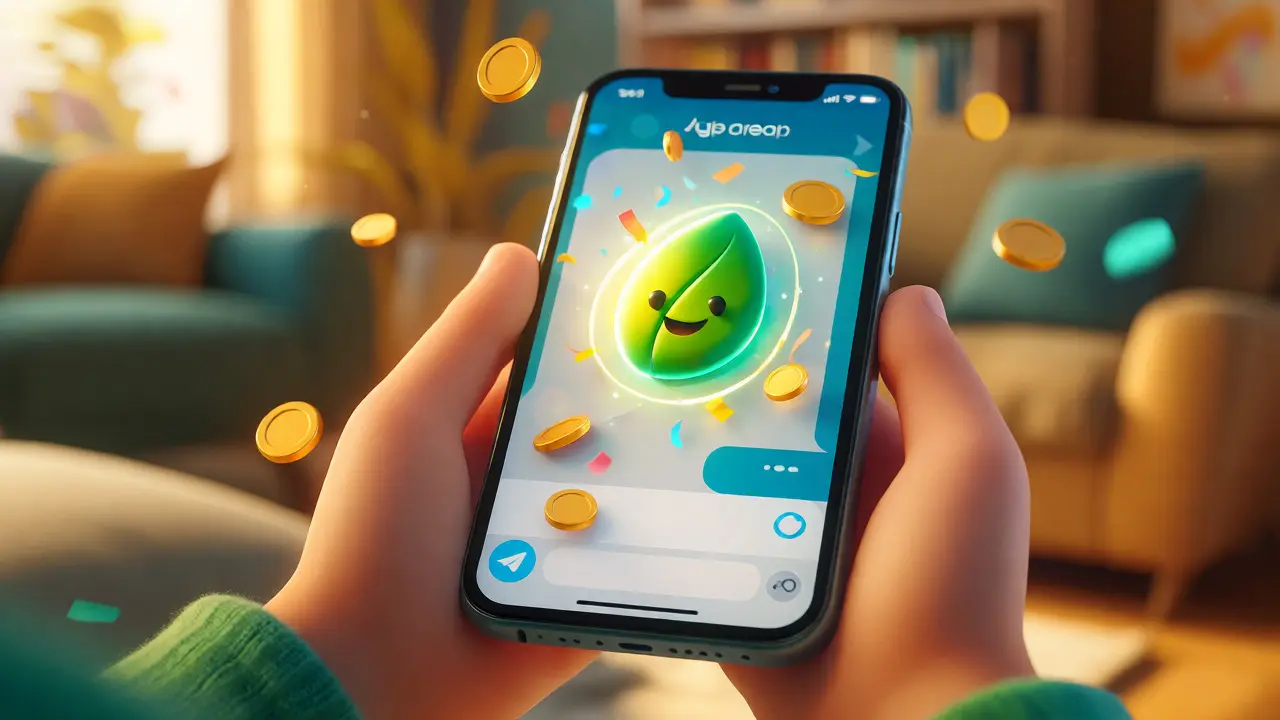
You probably saw the notification pop up in your Telegram chat. A tiny icon, a promise of free tokens, and a game that looks suspiciously like a clicker from ten years ago. That’s SEED, a cryptocurrency token that started as a viral Telegram Miniapp with over 60 million users and is now trying to prove it’s more than just a fad. It’s currently migrating to the Sui blockchain, aiming to become the first Web3 gaming ecosystem to hit 100 million users. But here’s the catch: while the user base is massive, the token value is microscopic. Is this the future of mass-adoption crypto, or just another hype cycle waiting to burst?
The Core Concept: Why SEED Exists
SEED is a utility token powering a decentralized gaming ecosystem that blends social interaction, play-to-earn mechanics, and VR/AR technologies. Unlike traditional cryptocurrencies that require you to understand wallets, gas fees, and private keys before you can even start, SEED leverages the existing infrastructure of Telegram. With 800 million monthly active users on Telegram, SEED bypasses the biggest barrier to crypto adoption: friction. You don’t need to download a new app or create a MetaMask wallet. You just open a chat window and start playing.
The project launched in 2022 but gained significant traction when backed by the Sui Foundation. This backing isn’t just for show. Sui is known for its high throughput-capable of handling 124,500 transactions per second-and sub-second finality. For a game where millions of people might be tapping a screen simultaneously, this speed is non-negotiable. Ethereum would choke; Sui won’t. This technical foundation allows SEED to scale in a way that older blockchains simply cannot.
How the Game Actually Works
If you’ve played games like Pokémon Go or Axie Infinity, you’ll recognize the DNA here. But SEED strips away the complexity. The core mechanic is virtual planting. You plant a seed, wait, and harvest tokens. It sounds simple because it is. However, there’s a layer of strategy involved through three upgradeable components:
- Tree: Increases your planting speed. Faster trees mean more frequent harvests.
- Holy Water: Boosts efficiency and can be accelerated through special missions, adding a time-limited incentive to stay engaged.
- Storage: Determines how long tokens accumulate before you need to claim them. Larger storage means less downtime but requires more attention.
This isn’t just idle clicking. Users report earning between 50 and 200 SEED tokens daily through consistent engagement. At current prices, that’s pennies, but for someone new to crypto, it’s a tangible introduction to digital assets without the risk of losing real money upfront.
Tokenomics: Supply, Distribution, and Value
Understanding the numbers helps separate hope from reality. SEED has a total supply of 1 billion tokens. As of late 2023, about 360 million were circulating. The allocation heavily favors the community: 62% (620 million tokens) are designated for rewards, including play-to-earn incentives and event participation. This ensures that the majority of value flows back to users rather than staying locked in investor hands.
| Metric | Value | Context |
|---|---|---|
| Total Supply | 1,000,000,000 SEED | Fixed cap prevents infinite inflation |
| Circulating Supply | ~360,000,000 SEED | Approximately 36% of total supply |
| Community Allocation | 62% | Focused on user rewards and growth |
| Blockchain | Sui Network | High-speed, low-cost transactions |
The price point is where things get tricky. Trading at fractions of a cent ($0.000477 USD), SEED feels accessible. You can buy thousands of tokens for a dollar. But low price doesn’t equal cheap valuation. With a market cap hovering around $400,000, SEED ranks roughly #5,146 among all cryptocurrencies. Compare this to Axie Infinity’s AXS, which peaked at an $8.3 billion market cap, and you see the gap SEED needs to close. It’s early days, but the road to billions is steep.

SEED vs. Competitors: Where Does It Fit?
The Web3 gaming space is crowded. To understand SEED’s position, we need to look at who else is fighting for attention.
| Feature | SEED | Axie Infinity (AXS) | StepN (GMT) |
|---|---|---|---|
| Primary Platform | Telegram Miniapp / Sui | Dedicated App / Ronin Chain | Dedicated App / Solana & BSC |
| User Onboarding | Frictionless (No Wallet Needed Initially) | Complex (Wallet + NFT Purchase) | Moderate (Wallet Required) |
| Peak Market Cap | N/A (Early Stage) | $8.3 Billion | $3.5 Billion |
| Main Draw | Social Viral Growth | Deep Gameplay & Breeding | Fitness Integration |
SEED’s biggest advantage is distribution. While Axie Infinity required users to buy expensive NFTs to start, SEED lets anyone join via Telegram. This mirrors the success of apps like Wordle or Flappy Bird-simple entry points that go viral. However, critics argue this simplicity comes at the cost of depth. Games like Axie offer complex economies and strategic gameplay. SEED is currently closer to a casual mobile game with crypto rewards. If the team fails to deepen the gameplay, users might churn once the novelty wears off.
Risks and Challenges
It’s not all sunshine and virtual gardens. Several red flags warrant caution.
First, utility limitations. Currently, SEED tokens are primarily used within the gaming ecosystem. They don’t govern major protocols or power multiple projects like ApeCoin (APE), which spans gaming, NFTs, and metaverse experiences. If the game loses popularity, what holds the token’s value?
Second, technical hurdles. While Sui is fast, network congestion still happens. During peak hours, transaction delays have averaged 47 seconds. For a game reliant on instant feedback, this lag breaks immersion. Additionally, withdrawal options are limited. Only three centralized exchanges-MEXC, Kucoin, and Gate.io-currently support SEED trading. This lack of liquidity makes it hard to cash out quickly if you want to sell during a spike.
Third, regulatory scrutiny. The SEC has been cracking down on play-to-earn models. Since SEED functions as a utility token, it’s safer than pure securities, but the line is blurry. If regulators decide that buying SEED is an investment contract, compliance costs could skyrocket.

Future Roadmap: What’s Next for SEED?
The team isn’t resting on their laurels. The roadmap outlines aggressive expansion plans designed to transition SEED from a Telegram gimmick to a sustainable ecosystem.
- Phase 2 (Q1 2024): Cross-Chain Interoperability. SEED aims to connect with Ethereum and Polygon. This would allow users to move assets across different chains, increasing liquidity and utility.
- Phase 3 (Q3 2024): DAO Governance. Token holders will gain voting rights on ecosystem development. This decentralizes control and gives the community a say in the project’s direction.
- Developer Ecosystem: The SEED Combinator Program supports developers building on the platform, offering 47 tutorial videos and 12 technical guides. More third-party games mean more demand for the SEED token.
Analysts are split. Some see unmatched distribution potential, rating SEED’s viability at 7.8/10 due to its Telegram reach. Others remain skeptical, citing uncertain long-term utility and giving it a 6.2/10 score. Price predictions vary wildly too. CoinCodex forecasts a potential 22% decrease by late 2025, while the Sui Foundation suggests 10x growth is possible if daily active users hit 1 million.
Is SEED Worth Your Time?
If you’re already on Telegram, trying SEED costs nothing but time. It’s an excellent educational tool for understanding how crypto works without risking capital. You learn about wallets, transactions, and token economics in a low-stakes environment.
However, if you’re looking for serious investment returns, proceed with caution. The token’s value is tied entirely to the game’s retention rates. Without deeper gameplay mechanics or broader utility, SEED risks becoming another forgotten experiment in the graveyard of failed Web3 projects. Keep an eye on the migration to Sui and the rollout of DAO governance. Those milestones will determine whether SEED grows up or fades away.
Where can I buy SEED tokens?
Currently, SEED is available on a limited number of centralized exchanges, specifically MEXC, Kucoin, and Gate.io. Because it is a newer token, it may not be listed on major platforms like Coinbase or Binance yet. Always verify the contract address before purchasing to avoid scams.
Do I need a crypto wallet to play SEED?
Not initially. One of SEED's main selling points is its integration with Telegram, allowing users to play directly within the messenger app without setting up a traditional crypto wallet. However, to withdraw tokens or trade them on exchanges, you will eventually need to connect to a compatible wallet supported by the Sui blockchain.
Why did SEED migrate to the Sui blockchain?
SEED migrated to Sui to handle high transaction volumes efficiently. Sui offers high throughput (up to 124,500 TPS) and low fees, which are essential for a game with millions of users making frequent small transactions. Older blockchains like Ethereum often suffer from congestion and high gas fees, which would make micro-transactions in a game impractical.
Is SEED a good investment?
This depends on your risk tolerance. SEED has strong backing from the Sui Foundation and a massive potential user base via Telegram. However, its current market cap is small, and its utility is mostly limited to the gaming ecosystem. It is considered a high-risk, high-reward speculative asset rather than a stable store of value.
How much can I earn playing SEED?
Earnings vary based on activity and upgrades. Active players report earning between 50 and 200 SEED tokens daily. Given the low token price, this translates to only a few cents per day for most users. Significant earnings usually require substantial time investment or successful speculation on token price appreciation.
