
You trust your bank to keep your money safe. But do you trust them to keep your transaction history exactly as it happened? What if a rogue employee decided to tweak a few zeros in the ledger last Tuesday? In traditional databases, that change is easy to make and hard to detect. Blockchain immutability solves this by making data permanent once written. It’s not just a buzzword; it’s the technical backbone that stops bad actors from rewriting history.
Think of immutability as a digital concrete slab. Once a block is added to the chain, it’s locked in. You can add new blocks on top, but you can’t chisel away the old ones without breaking the whole structure. This feature isn't useful for every app-updating a social media post doesn't need blockchain-but it is critical where trust is scarce and errors are expensive. Let's look at where this permanence actually saves the day.
The Core Mechanism: Why Data Can't Be Changed
Before we dive into use cases, let's clear up how this works. Immutability isn't magic; it's math. Each block contains a cryptographic hash of the previous block. If someone tries to alter data in Block A, its hash changes. That breaks the link to Block B, which expects Block A's original hash. To fix it, you'd have to recalculate every subsequent block. And since the network is distributed across thousands of computers (nodes), you'd need to overpower more than half the network simultaneously to accept your fake version. That’s why it’s practically impossible to tamper with confirmed records.
Healthcare: Protecting Patient Histories
Your medical record is one of the most sensitive documents you own. Yet, current systems are fragmented. Your dentist, your primary care physician, and the ER all have different versions of your history. Worse, they’re often stored in siloed, centralized databases vulnerable to hacks or accidental overwrites.
Electronic Medical Records (EMRs) on a blockchain create a single source of truth. When a doctor updates your chart, that entry becomes immutable. No one-not even the hospital administrator-can quietly delete a diagnosis or alter a dosage log after the fact. This ensures accuracy. For patients, it means confidence that their treatment history hasn't been manipulated. For providers, it reduces liability. If a dispute arises, the blockchain provides an indisputable timeline of who saw what and when.
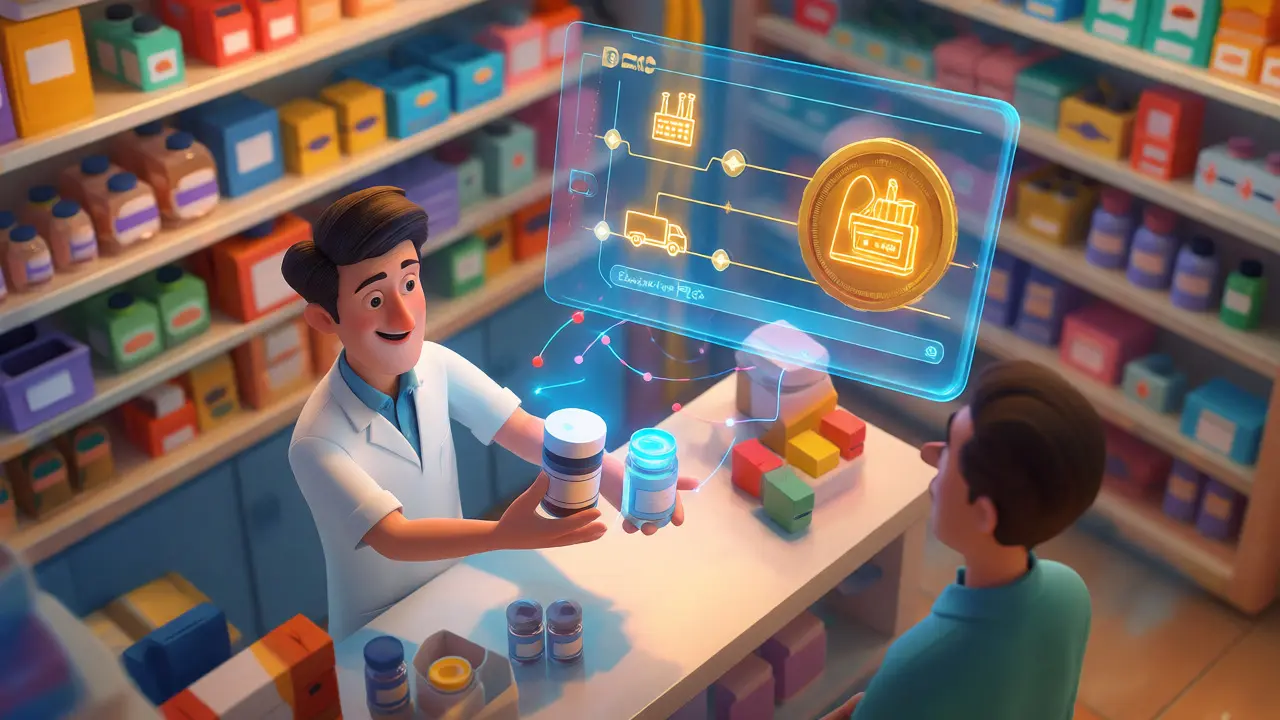
Beyond individual records, immutability fights counterfeit drugs. The pharmaceutical industry loses billions annually to fakes. By logging every step of a drug’s journey-from manufacturer to pharmacy-on an immutable ledger, stakeholders can verify authenticity. If a box claims to be Pfizer but the blockchain shows no matching production batch, it’s flagged immediately. This traceability protects patient safety in a way paper logs never could.
Audit Trails: The End of "He Said, She Said"
In finance and compliance, audits are painful. Auditors spend weeks digging through spreadsheets, trying to reconstruct events. They rely on trust that the data provided hasn't been massaged. Blockchain audit trails eliminate this uncertainty. Every transaction, approval, or system change is timestamped and hashed. Once recorded, it cannot be deleted or modified.
This is huge for cybersecurity. Imagine a security breach. In a standard database, attackers might wipe logs to cover their tracks. On a blockchain, those attack attempts remain visible forever. Forensic analysts can see exactly what was accessed, even if the data itself wasn't changed. It creates a robust defense against malicious activities because the evidence survives the crime.
Regulatory bodies love this. Financial institutions facing strict Know Your Customer (KYC) and Anti-Money Laundering (AML) rules can prove compliance instantly. Instead of compiling reports, they point to the public or permissioned ledger. The immutability guarantees that the report reflects reality, not a curated narrative.
Supply Chain: From Farm to Fork
You want to know your organic spinach really came from that farm in California. Traditional supply chains rely on paperwork that can be forged, lost, or mislabeled. Immutable supply chain records track goods end-to-end. Each handoff-from grower to distributor to retailer-is a transaction on the blockchain.
Consider food safety. When E. coli outbreaks hit, tracing the source takes days. With blockchain, retailers like Walmart use platforms like IBM Food Trust to trace produce back to the source in seconds. Because the records are immutable, suppliers can’t retroactively change shipping dates or storage temperatures to hide spoilage. If the sensor data says the truck ran hot, that fact stays on the ledger. This transparency builds consumer trust and reduces waste by pinpointing exactly where things went wrong.
| Sector | Problem Solved | Benefit of Immutability |
|---|---|---|
| Healthcare | Data fragmentation & tampering | Accurate EMRs; counterfeit drug prevention |
| Finance | Opaque audit trails | Real-time compliance; fraud detection |
| Supply Chain | Lack of traceability | Faster recalls; verified provenance |
| Identity | Centralized data breaches | User-controlled credentials; KYC efficiency |
Digital Identity: Owning Your Credentials
We currently surrender our identity to tech giants. Facebook, Google, and banks hold our data. If they get hacked, your info leaks. If they go bankrupt, your access might vanish. Self-sovereign identity uses blockchain to flip this model. Your credentials-like a degree or driver’s license-are issued as verifiable claims on an immutable ledger.
You don’t store the actual data on the chain (that would violate privacy laws). Instead, you store the proof that the data exists and hasn't been altered. When you apply for a job, you share a cryptographic proof. The employer checks the blockchain to ensure the credential is valid and unrevoked. Since the issuance event is immutable, no one can fake the degree later. This reduces reliance on intermediaries and gives users control over who sees their data.
Intellectual Property: Proving Who Created It First
Proving ownership of digital art, music, or code is tricky. Files can be copied infinitely. Who made it first? Blockchain timestamps provide a fixed point in time. When an artist registers their work on-chain, the hash of the file is recorded. This serves as undeniable proof of existence at that specific moment.
This is critical for licensing. Smart contracts can automate royalty payments based on usage, recorded immutably. Artists bypass middlemen and see exactly how much they earned. If a platform underreports streams, the immutable ledger holds them accountable. It transforms IP management from a legal nightmare into a transparent, automated process.

Governance: DAOs and Fair Rules
Decentralized Autonomous Organizations (DAOs) run on code. Their rules are smart contracts. But what happens if the team wants to change the rules halfway through? Without immutability, leaders could manipulate governance to benefit themselves.
Blockchain immutability locks these rules in place until a formal vote changes them. Every proposal, vote, and execution is recorded permanently. Members can audit the organization’s actions anytime. This transparency prevents corruption and bureaucratic drift. Platforms like MakerDAO rely on this to manage billions in collateral. If the governance history could be rewritten, trust in the system would collapse.
When Immutability Isn't Enough
Don't assume blockchain fixes everything. Immutability means garbage in, garbage out forever. If a user enters wrong data, it’s stuck there unless a correction transaction is added. Also, storing large files directly on-chain is expensive. Most solutions use off-chain storage with on-chain hashes. Understanding these limits helps you decide if immutability is truly critical for your project.
Key Takeaways
- Data Integrity: Immutability prevents unauthorized alterations, ensuring historical accuracy.
- Trust Reduction: Removes the need to trust central authorities, shifting trust to cryptography.
- Compliance Efficiency: Simplifies audits and regulatory reporting with tamper-proof logs.
- Provenance: Verifies origin and ownership in supply chains and IP rights.
Can blockchain data ever be deleted?
Technically, yes, via a 'hard fork' where the community agrees to rewrite the chain. However, this is rare and controversial, often seen as breaking the core promise of immutability. For practical purposes, confirmed transactions are considered permanent.
Is blockchain immutability good for GDPR compliance?
It’s complex. GDPR grants the 'right to be forgotten,' which conflicts with immutability. Solutions include storing personal data off-chain and keeping only hashes on-chain, allowing the raw data to be deleted while maintaining the integrity proof.
Why is immutability important for supply chains?
It prevents fraud. Suppliers can’t falsify shipping dates or origins after the fact. This builds consumer trust and speeds up recalls by providing a reliable, unalterable history of product movement.
Does immutability mean I can't correct mistakes?
No. You can’t edit the original entry, but you can append a new transaction that corrects it. This leaves a transparent trail of the error and the fix, unlike traditional databases where edits erase history.
Which industries benefit most from blockchain immutability?
Industries with high stakes for data integrity, such as healthcare, finance, legal services, and luxury goods supply chains. These sectors face heavy regulation and significant financial risk from data tampering.
