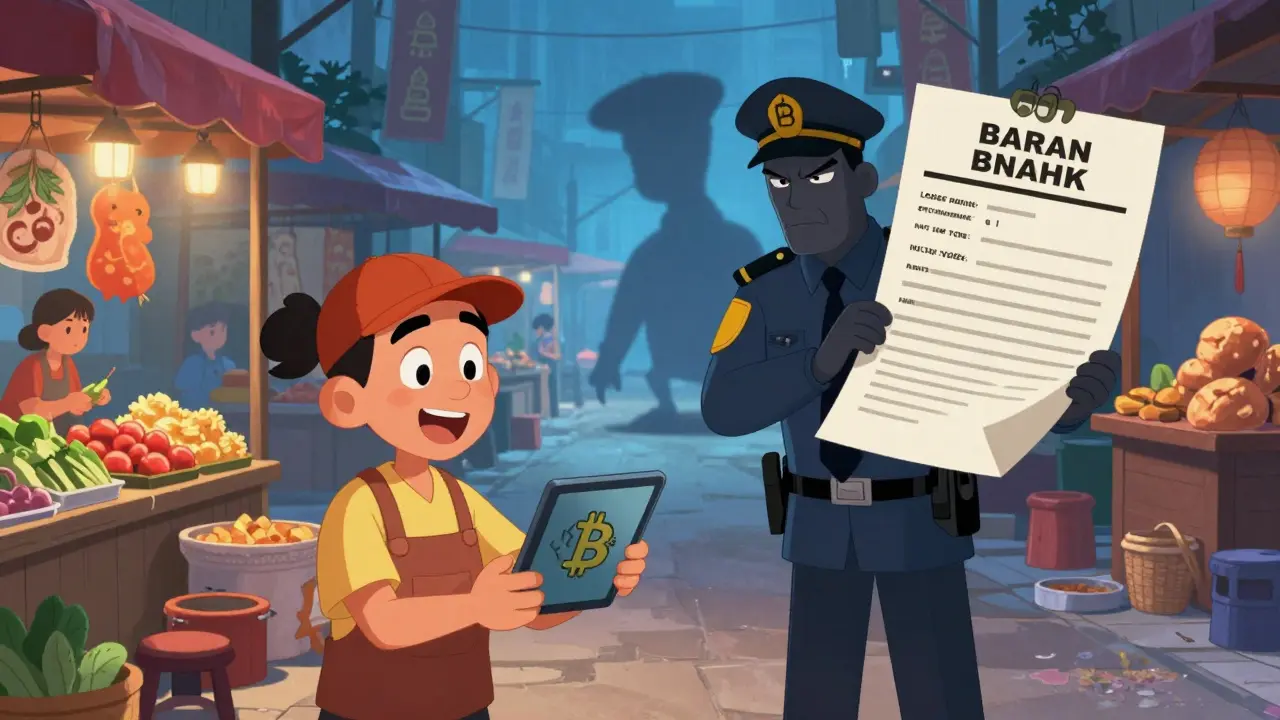
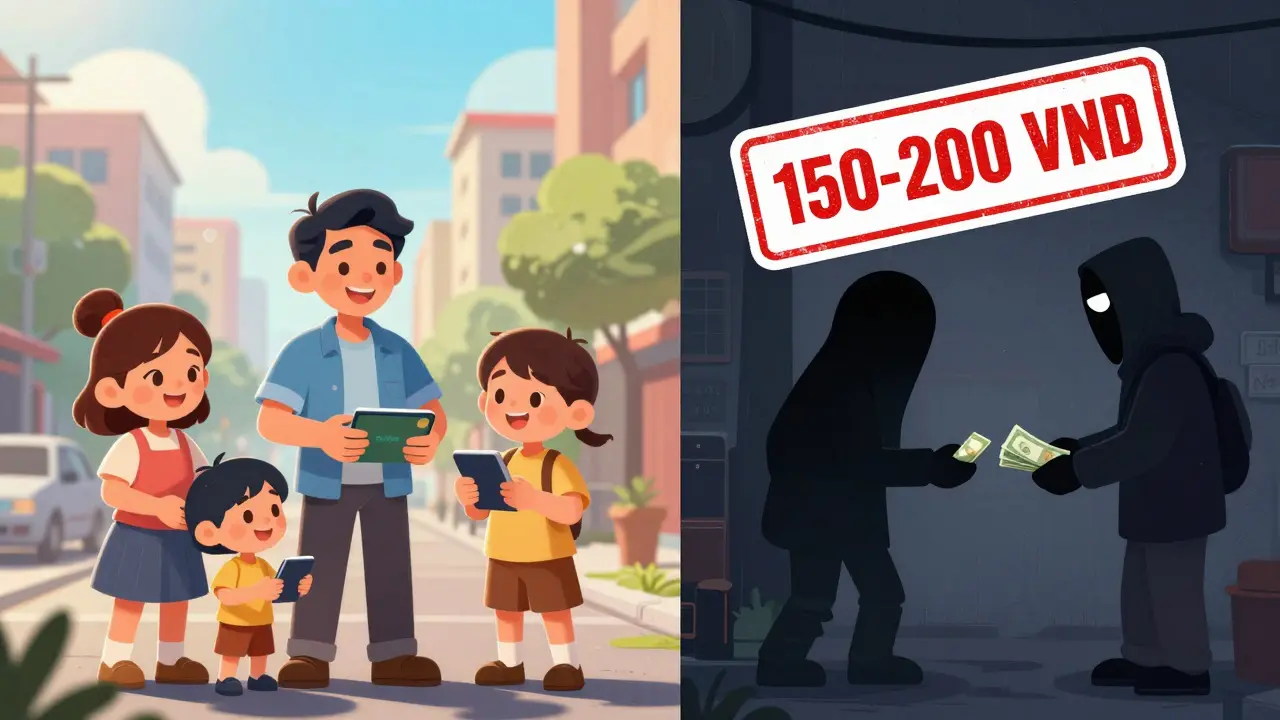
On January 1, 2018, Vietnam made it clear: using cryptocurrency to pay for goods or services is illegal. If you do it, you could face a fine between 150 million and 200 million Vietnamese Dong - roughly $6,500 to $8,900 USD. That’s not a warning. That’s a law. And it’s still in effect today.
Why Does Vietnam Ban Crypto Payments?
Vietnam’s central bank, the State Bank of Vietnam (SBV), didn’t ban crypto because it hates technology. It banned it because it doesn’t want to lose control. Think about how money works in most countries: the government prints it, tracks it, taxes it, and regulates how it moves. Bitcoin and other cryptocurrencies operate outside that system. They’re anonymous. They cross borders instantly. There’s no central authority keeping tabs on who sent what to whom. The SBV worried this would make tax evasion easier, let criminals move money undetected, and undermine Vietnam’s ability to manage its own economy. Le Truong Tung, president of FTP University, explained it plainly: “Accepting bitcoin as payment will make the economy quite complex and difficult to control.” The law doesn’t say you can’t own Bitcoin. You can buy it. You can hold it. You can even trade it on peer-to-peer platforms. But if you use it to pay for coffee, rent, tuition, or a smartphone - that’s where you cross the line.What Exactly Is Illegal?
The key phrase in Vietnam’s regulations is “use as a means of payment.” That’s it. Nothing else. - ✅ You can buy Bitcoin on a local exchange.- ✅ You can hold it in a wallet.
- ✅ You can sell it for Vietnamese Dong.
- ❌ You can’t pay a restaurant bill with Bitcoin.
- ❌ You can’t use Ethereum to buy a car.
- ❌ You can’t accept Litecoin as payment for your freelance design work. This distinction matters. It’s not about the technology. It’s about the transaction. The law targets the act of using crypto to exchange value for goods or services - not holding it as an investment. The legal basis comes from Decree No. 96/2014/ND-CP, which lists prohibited activities in banking and monetary systems. Clause 6, Article 27, specifically bans the “issuance, supply, and use of bitcoin and other similar virtual currencies as a means of payment.” Even earlier laws like Decree 101/2012/ND-CP (amended in 2016) only recognize official payment tools: bank cards, payment orders, checks. Everything else? Illegal.
Who Gets Fined - and How Often?
The fines are steep: 150 to 200 million VND. That’s enough to buy a decent motorcycle in Hanoi. But how many people actually pay them? Officially, enforcement has been rare. The SBV doesn’t publish exact numbers of fines issued. But there are signs it’s not a daily crackdown. In 2017, a university in Vietnam announced it would accept Bitcoin for tuition. Within days, the SBV stepped in and forced them to cancel the plan. That was a high-profile warning. Since then, most businesses that try to accept crypto get shut down quietly - no headlines, no fines, just a visit from regulators. The General Department of Vietnam Customs reported in 2017 that Bitcoin transactions were growing rapidly, with daily values in the thousands of dollars. That means people are still using it - just behind the scenes. Most users avoid formal merchant payments. Instead, they use peer-to-peer platforms like LocalBitcoins or Paxful to trade crypto for cash. Then they use that cash to pay for things. It’s not perfect, but it avoids triggering the fine.Why Is Vietnam Still Banning Crypto When Everyone Else Is Regulating It?
Compare Vietnam to its neighbors. Thailand lets crypto exchanges operate under strict licenses. Singapore created a full regulatory framework for digital payment tokens. Even Indonesia, which once banned crypto payments, now allows licensed exchanges. Vietnam hasn’t changed course. Why? It’s not about fear of innovation. It’s about control. The SBV sees crypto as a threat to its authority over money - not a tool to improve it. Dr. Nguyen Xuan Thanh from Harvard’s Kennedy School pointed out in 2018: “Vietnam’s approach reflects traditional central banking concerns about monetary sovereignty, but fails to recognize cryptocurrency’s potential as a technological innovation.” That’s the core tension. Vietnam wants digital payments - it just wants them to go through banks it controls. That’s why it’s pushing digital wallets, QR code payments, and mobile banking apps like Momo and ZaloPay. In 2020, 43% of Vietnamese adults used digital payments. That number is growing fast.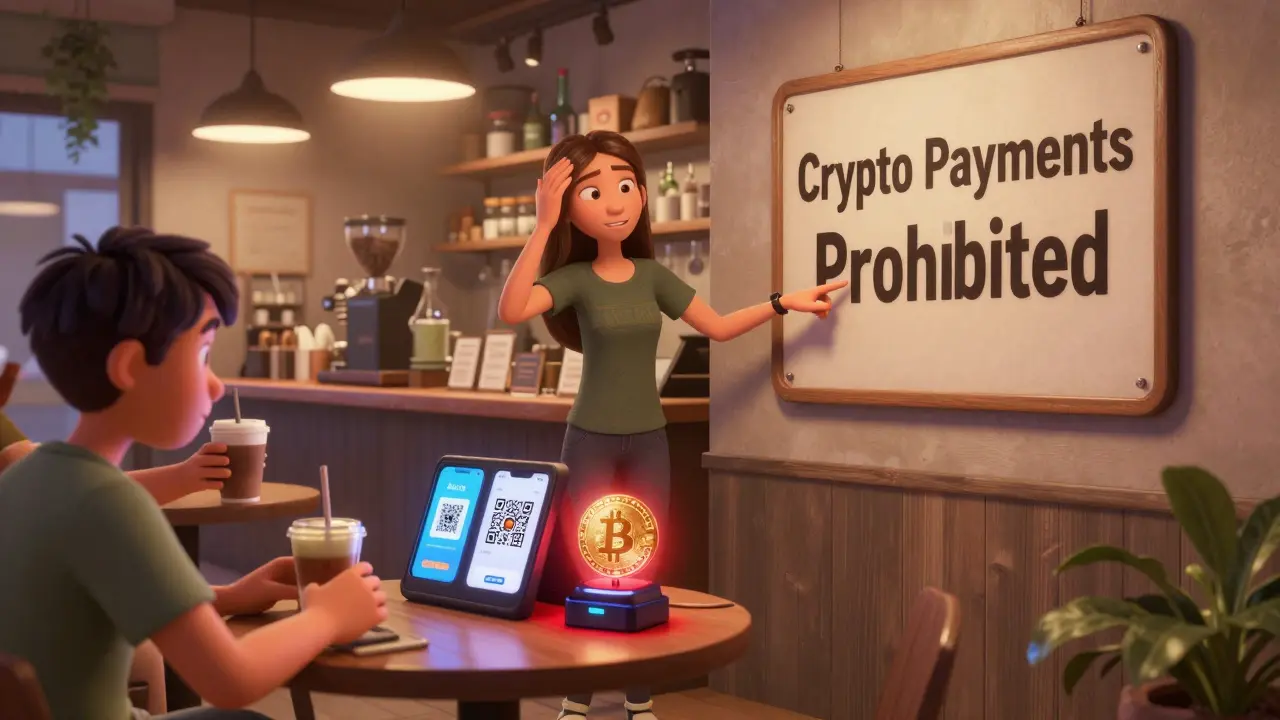
What About the 2021 Draft Decree? Is the Law Changing?
In late 2021, Vietnam circulated a draft decree that proposed treating cryptocurrencies as “virtual assets” - not currency. That sounds like progress. But here’s the catch: it still banned using them as payment. The draft didn’t remove the 150-200 million VND fine. It didn’t legalize crypto payments. It just tried to create a new category: “asset.” That means you could be taxed on crypto gains, but you still can’t use it to buy anything. The Ministry of Finance has signaled it’s open to taxing crypto - which implies recognition. But the SBV? Still firm. Its 2022 Monetary Policy Report repeated: “Cryptocurrencies are not recognized as legal tender or lawful means of payment in Vietnam.” The fine hasn’t gone away. It’s just harder to enforce.What Happens If You Get Caught?
If you’re a small business owner and you accept Bitcoin for your handmade crafts? You might get a warning. Or a visit. Or a fine. If you’re a large company running a crypto payment gateway? You’re in serious trouble. The SBV has shown it will go after infrastructure - not just users. There’s no jail time. This is an administrative fine, not a criminal charge. But 200 million VND is no joke. For a small shop, that’s months of profit gone. And if you’re a foreigner? The law applies to everyone in Vietnam. Tourists, expats, remote workers - if you pay for a hotel room in Bitcoin, you’re breaking the law.How Are People Still Using Crypto in Vietnam?
Despite the ban, Vietnam ranked 8th globally in cryptocurrency adoption in Chainalysis’ 2021 index. That’s higher than Japan, Canada, and the UK. How? Because people are finding workarounds. - Peer-to-peer trading: Buy crypto with cash from a local seller.- Gift cards: Use crypto to buy Amazon or Steam gift cards, then sell them for cash.
- Freelancing: Get paid in crypto overseas, convert to VND via P2P, then spend the cash.
- Remittances: Send crypto to family abroad, they cash out and send money back via traditional channels. It’s messy. It’s risky. But it works.
What’s the Real Risk?
The biggest risk isn’t the fine. It’s the uncertainty. You can’t open a bank account if you’re known to trade crypto. You can’t get a loan. You can’t build credit. The financial system treats crypto users with suspicion. And if you’re a business? Accepting crypto could get your bank account frozen. Your payment processor cut off. Your reputation damaged. That’s why most Vietnamese businesses avoid it entirely - even if they personally hold crypto.Is This Law Going to Change?
Maybe. But not soon. Dr. Tran Ngoc Ca from Vietnam’s Academy of Finance said in 2023: “The 150-200 million VND fine remains technically enforceable but has become increasingly difficult to implement as cryptocurrency usage grows, creating pressure for regulatory modernization.” The demand for alternatives to traditional banking is real. Mobile payments are booming. But the government isn’t ready to let crypto into the system. Until then, the law stays: no crypto payments. No exceptions.What Should You Do?
If you’re in Vietnam: - Don’t accept crypto as payment. Even if you think no one will notice.- Don’t advertise crypto payments. That’s a red flag.
- If you trade crypto, keep it separate from your business. Use P2P to convert to cash.
- Don’t assume “everyone does it” means it’s safe. The SBV can come after you at any time. If you’re a foreigner running a business in Vietnam: - Don’t integrate crypto payments into your checkout. It’s not worth the risk.
- Use local payment gateways like MoMo, ZaloPay, or bank transfers. They’re fast, legal, and trusted. The message is clear: Vietnam wants digital payments - but only the kind it controls.

Michael Richardson
January 10, 2026 AT 06:14Veronica Mead
January 12, 2026 AT 00:41Sarbjit Nahl
January 12, 2026 AT 16:00Paul Johnson
January 13, 2026 AT 06:57Sabbra Ziro
January 14, 2026 AT 09:54Emily Hipps
January 15, 2026 AT 11:15Natalie Kershaw
January 16, 2026 AT 13:21Mujibur Rahman
January 16, 2026 AT 15:57Danyelle Ostrye
January 17, 2026 AT 11:58Jennah Grant
January 17, 2026 AT 13:06Dennis Mbuthia
January 19, 2026 AT 08:05Dave Lite
January 20, 2026 AT 10:37Becky Chenier
January 21, 2026 AT 22:27jim carry
January 23, 2026 AT 08:50Mollie Williams
January 24, 2026 AT 05:47Tiffani Frey
January 25, 2026 AT 08:33Gideon Kavali
January 27, 2026 AT 06:32