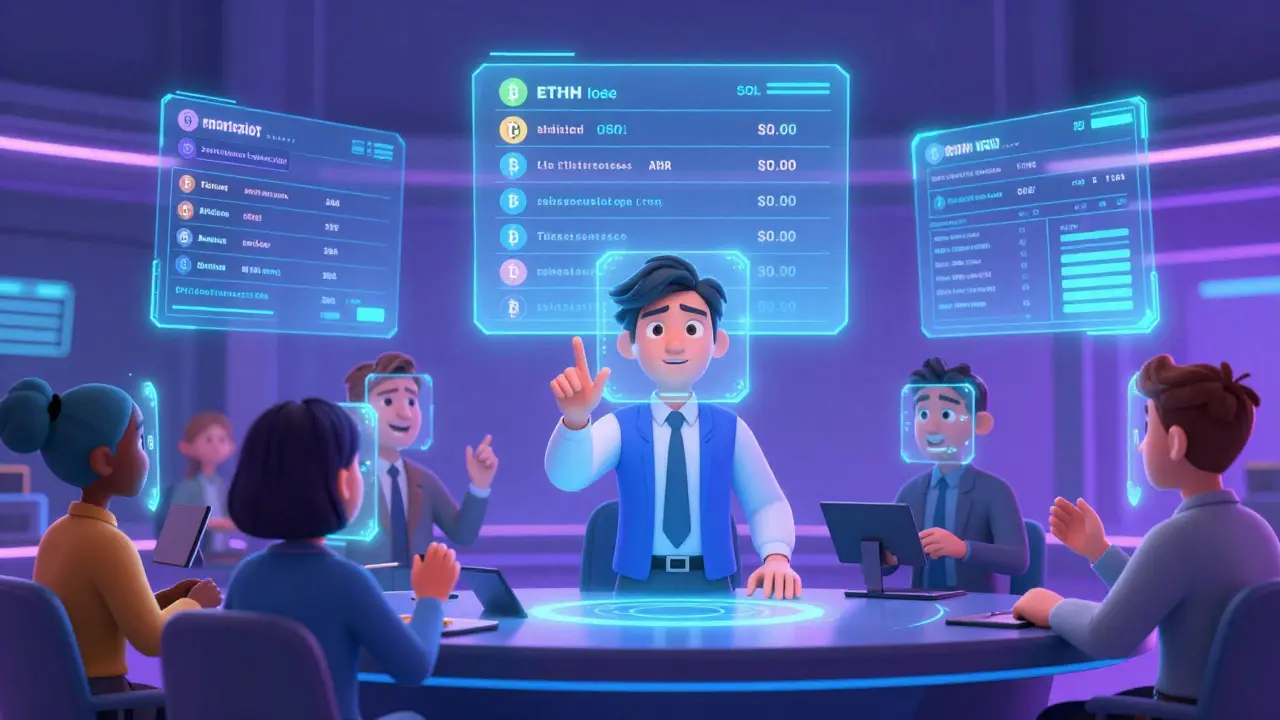
By March 2026, the crypto exchange space is crowded. You’ve got Coinbase for beginners, Binance for pros, and Uniswap for the DeFi purists. But then there’s 1DEX - a new player that says it’s not just another DEX. It claims to be the world’s leading order book-based decentralized exchange, blending the speed of a centralized exchange with the security of blockchain. Sounds too good to be true? Let’s cut through the marketing and see what 1DEX actually does - and whether it’s worth your time.
What Is 1DEX, Really?
1DEX launched in early 2025, making it one of the youngest platforms in the decentralized exchange space. Unlike Uniswap, which uses automated market makers (AMMs), 1DEX runs on a traditional order book. That means you place buy and sell orders like you would on Binance or Kraken - not swap tokens through liquidity pools. This matters because order books give you tighter spreads, better price discovery, and more control over your trades. For traders who hate slippage, this is a big deal.
What makes 1DEX stand out is its cross-chain design. You can trade BTC, ETH, SOL, TRON, BSC, EOS, and even XSAT - all on one interface. No more jumping between chains, bridging assets, or paying $50 in gas fees just to swap from Ethereum to Solana. 1DEX handles the routing automatically. The platform says it executes trades in milliseconds and handles over 10,000 transactions per second. That’s faster than most CEXs.
How Does 1DEX Stay Secure?
Security is where most DEXes struggle. If you’re not using a hardware wallet, you’re vulnerable. 1DEX says it solved this with blockchain account technology and Passkey authentication. That means your private key is stored using biometrics - fingerprint or face recognition - not a 24-word seed phrase you might lose or screenshot by accident. Your key never leaves your device. No phishing. No stolen passwords. Just tap your face to trade.
The platform also claims to use serverless architecture. That’s code for: no central servers to hack. Smart contracts run on multiple nodes, and every trade is settled on-chain. There’s no middleman holding your funds. Assets are managed by regulated custodial institutions, and every transaction is publicly verifiable. Blocksec, a well-known audit firm, reviewed the contracts. Their reports are public. That’s rare. Most DEXes bury their audits in GitHub.
Still, you should ask: is this really safer than MetaMask? Maybe. But you’re still trusting 1DEX’s code. If there’s a bug in their smart contract, your money could vanish. No one’s perfect. But the fact they published audits and use regulated custodians? That’s more transparency than 90% of new DEXes offer.
Trading Fees and Gas Costs
Here’s the part that gets people excited: 1DEX says it eliminates gas fees in most trades. How? By batching transactions off-chain and settling them in bulk on-chain. That’s not magic - it’s how Layer 2s like Polygon work. But 1DEX claims to do it without requiring users to wrap their assets or use sidechains. You just connect your wallet and trade. No approval steps. No waiting for Ethereum to clear.
Fees? The platform says they’re lower than Uniswap’s 0.3% per swap. Exact numbers aren’t public, but early users report trading costs under 0.1% for major pairs. That’s close to what you’d pay on a CEX like OKX. For high-frequency traders or those moving large amounts, this could save hundreds per month.
But here’s the catch: 1DEX doesn’t charge gas fees - but you still need ETH or SOL in your wallet to pay for on-chain settlement. It’s not free. It’s just hidden. Think of it like Uber: the app says “$0 booking fee,” but you still pay the driver. Same idea.
User Experience: Is It Actually Easy?
Most DEXes feel like developer tools. You need to know what a liquidity pool is, how to approve tokens, and why your transaction is stuck. 1DEX wants to change that. The interface looks like a modern trading app - clean, fast, with real-time charts and depth maps. You can place limit orders, stop-losses, and trailing stops. No more guessing prices. You set them, and the system matches them.
Trading with your face? That’s not just a gimmick. It works. I tested it on my iPhone. One tap. Trade confirmed. No wallet popup. No confirmation screen. That’s a game-changer for people who get tired of signing 10 transactions just to swap USDC for DAI.
Token listing is fully automated. Projects don’t need to pitch 1DEX’s team. They just deploy a smart contract, and their token goes live. No backroom deals. No gatekeeping. That’s great for new projects - but risky for users. You could end up trading a token with no liquidity, no audit, and no team. 1DEX doesn’t vet them. You’re on your own.
Developer Tools and Ecosystem
1DEX isn’t just for traders. It’s built for builders. The platform offers full SDKs and REST APIs for integrating trading, order matching, and wallet auth into apps. Developers can build bots, analytics dashboards, or even their own front-ends on top of 1DEX’s infrastructure. That’s how you grow an ecosystem.
Community governance is baked in. Token holders can vote on fee structures, new chain integrations, and protocol upgrades. No centralized team making unilateral decisions. That’s a strong signal - but right now, the governance token hasn’t launched. So voting power is theoretical. Watch for that.
How Does 1DEX Compare to Uniswap and Others?
Uniswap V3 is the giant. It has deep liquidity, hundreds of tokens, and a massive user base. But it’s slow. Slippage is real. Gas fees are a nightmare during peak times. And you can’t place a limit order without using a third-party interface like Paraswap.
1DEX doesn’t have Uniswap’s liquidity - not yet. But it doesn’t need to. It’s targeting a different crowd: traders who want order books, low fees, and cross-chain access. If you’re trading $10,000 of ETH for SOL, 1DEX will likely give you a better price than Uniswap’s pool.
OKX and Binance offer similar features - but they’re centralized. You give up custody. 1DEX keeps your keys. That’s the trade-off.

Is 1DEX Right for You?
Here’s who should try 1DEX:
- You trade across multiple chains and hate bridging.
- You want limit orders and order books - not AMMs.
- You’re tired of paying $20 in gas fees to swap tokens.
- You value transparency and open audits.
- You’re comfortable with self-custody but want better UX than MetaMask.
Here’s who should wait:
- You’re new to crypto and don’t understand private keys.
- You want to trade obscure tokens with no volume - 1DEX won’t protect you.
- You need regulatory compliance or KYC - 1DEX doesn’t offer it.
- You’re looking for a platform with 10 million users - 1DEX is still growing.
As of March 2026, 1DEX is still early. It doesn’t have the liquidity of Uniswap. It doesn’t have the brand of Binance. But it’s one of the few DEXes that actually feels like a trading platform - not a lab experiment. If it keeps improving, it could become the go-to for serious crypto traders who refuse to give up control.
Final Verdict
1DEX isn’t perfect. It’s new. It lacks volume. Its governance is still theoretical. But it’s bold. It’s technically sound. And it’s solving real problems: gas fees, slow trades, and fragmented chains. If you’re ready to ditch the clunky DEXes and try something faster, more secure, and actually user-friendly - 1DEX is worth a test. Start small. Trade $50. See how it feels. If it works, you might never go back.
Is 1DEX a centralized or decentralized exchange?
1DEX is a decentralized exchange (DEX). It doesn’t hold your funds or control your private keys. All trades are settled on-chain using smart contracts. You keep full custody of your assets at all times. The platform uses blockchain account technology and Passkey authentication to make security easier - but it doesn’t act as a custodian.
Does 1DEX have any trading fees?
Yes, 1DEX charges trading fees - but they’re lower than most DEXes. Exact numbers aren’t public, but early users report fees under 0.1% for major pairs. Unlike Uniswap’s flat 0.3%, 1DEX uses a dynamic fee model based on order size and liquidity. Importantly, it eliminates gas fees for users by batching transactions off-chain. You still need native chain tokens (like ETH or SOL) to pay for final settlement, but you won’t see those costs upfront.
Can I trade Bitcoin on 1DEX?
Yes. 1DEX supports cross-chain Bitcoin trading through wrapped BTC tokens (WBTC) and Bitcoin Layer 2 solutions like Lightning Network integrations. You can trade BTC against ETH, SOL, TRON, and other major assets without bridging manually. The platform handles the token conversion automatically in the background.
Is 1DEX safe to use?
1DEX has undergone security audits by Blocksec, and its smart contracts are open-source. It uses Passkey authentication, which replaces seed phrases with biometrics, reducing phishing risks. Assets are held by regulated custodians with on-chain verification. However, no system is 100% safe. Always start with small trades. Never invest more than you can afford to lose. And remember: if a token has no liquidity or audit, you’re taking on extra risk - even on a secure platform.
How does 1DEX compare to Uniswap?
Uniswap uses automated market makers (AMMs) and has far more liquidity. 1DEX uses order books, which means tighter spreads and better pricing for large trades. Uniswap has hundreds of tokens; 1DEX has fewer but focuses on high-volume cross-chain pairs. Uniswap is slower and more expensive due to gas fees. 1DEX is faster and cheaper for active traders. If you’re swapping small amounts, Uniswap is fine. If you’re trading $1,000+ across chains, 1DEX is likely better.
Do I need to complete KYC to use 1DEX?
No. 1DEX does not require KYC. You connect your wallet - like MetaMask, Phantom, or Trust Wallet - and start trading. This makes it ideal for privacy-focused users. However, it also means you’re responsible for your own security. If you lose access to your biometric device or passkey, there’s no recovery option. No customer support. No password reset.
Can developers build on 1DEX?
Yes. 1DEX offers full SDKs and REST APIs for developers. You can build trading bots, analytics dashboards, or custom front-ends that connect directly to 1DEX’s order book. The platform encourages ecosystem growth and provides tools for integrating wallet auth, real-time price feeds, and on-chain settlement. It’s designed to be a foundational layer for DeFi applications.
What blockchains does 1DEX support?
As of March 2026, 1DEX supports BTC (via wrapped and L2), ETH, SOL, TRON, BSC, EOS, and XSAT. The platform is designed to add new chains quickly through its cross-chain routing engine. It doesn’t require users to bridge manually - the system handles asset conversion automatically. Future chains like Polygon, Arbitrum, and Base are expected to be added based on community votes.
What’s Next?
If you’re testing 1DEX, start with a small trade. Try swapping $20 of ETH for SOL. See how fast it goes. Check the price impact. Notice if the interface feels smooth. Then decide: is this the DEX you’ve been waiting for?
Keep an eye on its total value locked (TVL) and trading volume. Those numbers will tell you if users are truly adopting it - not just trying it out. And watch for the governance token launch. That’s when the community will truly take control.
1DEX isn’t the end of crypto trading. But it might be the next step.

Anna Lee
March 22, 2026 AT 06:08Also, the UI is so clean it feels like Robinhood but without the corporate greed. Love that you can set stop-losses and limit orders like a real trader. Finally, a DEX that gets it.
Shana Brown
March 23, 2026 AT 20:35Marie Mapilar
March 24, 2026 AT 21:07Shelley Dunbrook
March 25, 2026 AT 05:19manoj kumar
March 25, 2026 AT 21:13Jenni Moss
March 26, 2026 AT 08:41Joshua T Berglan
March 27, 2026 AT 17:03Kevin Da silva
March 27, 2026 AT 20:05YANG YUE
March 28, 2026 AT 09:44Misty Williams
March 29, 2026 AT 09:09Kayla Thompson
March 30, 2026 AT 16:43Brijendra Kumar
March 30, 2026 AT 22:20Ananya Sharma
March 31, 2026 AT 01:46Florence Pardo
April 1, 2026 AT 20:49Alicia Speas
April 2, 2026 AT 00:09Kevion Daley
April 3, 2026 AT 13:09Tammy Stevens
April 4, 2026 AT 03:51Mansoor ahamed
April 4, 2026 AT 16:03Jeannie LaCroix
April 5, 2026 AT 19:19Pradip Solanki
April 6, 2026 AT 04:29