Bangladesh is a paradox that keeps global crypto analysts awake at night. On paper, the country has one of the strictest cryptocurrency bans in the world. The government explicitly prohibits trading, mining, and even holding digital assets. Yet, despite this complete regulatory wall, millions of people are actively using crypto. How does a nation with such heavy restrictions end up on global adoption leaderboards? The answer isn't rebellion for the sake of it; it's pure economic necessity.
In 2025 and heading into 2026, data reveals that Bangladesh has approximately 3.1 million verified crypto users. This number alone is staggering, but the context makes it even more significant. These aren't just speculative traders chasing Bitcoin price spikes. They are everyday citizens, freelancers, and families using digital assets to survive financial inefficiencies. When traditional banking fails to provide speed or affordability, people find a way. In Bangladesh, that way is through the cracks in the regulatory framework.
The Numbers Behind the Underground Economy
To understand the scale, we have to look at the hard data from reputable tracking firms. According to CoinLaw's 2025 statistics, Bangladesh maintains that steady base of 3.1 million users. But where does this place the country globally? CoinLedger research from May 2025 ranks Bangladesh at number 35 in global cryptocurrency adoption. While this might not seem like the top spot, remember that this ranking includes nations with full legal support for crypto, like the US and UK. Doing well without any legal protection is a different ballgame entirely.
Historical data adds another layer to this picture. Earlier reports from Chainalysis often placed Bangladesh much higher, sometimes between ranks 13 and 15. The shift in ranking methodology over the years reflects how researchers define "adoption." Some metrics count active wallets, while others measure transaction volume or user verification. Regardless of the specific metric, the trend remains consistent: demand for crypto in Bangladesh is resilient. It doesn't vanish when laws change; it goes deeper underground.
This persistence suggests that enforcement mechanisms, while strict on paper, face practical limits. You can ban an asset, but you cannot easily ban the internet connection or the desire to send money home cheaper than traditional banks allow. The 3.1 million figure likely represents only the "verified" users-those who pass identity checks on international platforms. The actual number of people engaging in peer-to-peer (P2P) trades without formal verification could be significantly higher.
Why Stablecoins Are the Real Story
If you think Bangladeshi users are mostly buying volatile coins like Dogecoin or Ethereum for speculation, you’re missing the point. The primary driver of adoption here is utility, specifically stablecoins. For a developing economy, volatility is a risk many cannot afford. What they need is stability and speed.
Stablecoins like USDT (Tether) and USDC serve as crucial alternatives for remittances. Bangladesh relies heavily on remittances from overseas workers, particularly in the Middle East and Southeast Asia. Traditional channels like Western Union or bank wires come with high fees and slow processing times. By converting fiat currency into stablecoins, sending them digitally, and then cashing out locally via P2P networks, users save significant percentages on every transfer. This isn't about getting rich; it's about keeping more of your hard-earned money.
This focus on utility aligns with broader trends in emerging markets. In countries where inflation erodes savings or banking infrastructure is underdeveloped, stablecoins offer a lifeline. They provide a store of value pegged to stronger currencies, protecting users from local currency devaluation. For the average person in Dhaka or Chittagong, holding dollars in digital form is a rational financial decision, regardless of what the central bank says.

Regional Context: South Asia’s Crypto Surge
You can’t look at Bangladesh in isolation. It sits in a region that is currently exploding with crypto activity. According to the Coinpedia Global Crypto Adoption Report 2025, the Asia-Pacific region led global growth with a 69% expansion. Neighboring India dominates the charts with an adoption index of 1.000, while Pakistan follows closely with a 0.619 index and 18.2 million users. Pakistan added 5.4 million new users in 2025 alone, driven by similar factors: cross-border earnings and freelance payments.
Bangladesh shares these economic pressures. Freelancers working for global clients often struggle to receive payments due to banking restrictions. Crypto offers a direct line to their income. The regional spillover effect is real. As neighboring countries normalize certain aspects of crypto usage, knowledge and tools flow across borders. A freelancer in Dhaka sees a colleague in Lahore successfully using crypto and adopts similar methods. This cultural and economic connectivity fuels adoption even in restrictive environments.
| Country | Global Rank / Index | Estimated Users | Primary Driver | Regulatory Status |
|---|---|---|---|---|
| India | #1 (Index 1.000) | High (Leading Global) | Investment & Tech | Strict Taxation, No Ban |
| Pakistan | #3 (Index 0.619) | 18.2 Million | Freelance Payments | Restricted/Banned |
| Bangladesh | #35 (CoinLedger) | 3.1 Million Verified | Remittances/Stablecoins | Complete Ban |
| Cambodia | N/A | 740,000 | Hybrid Wallets | Complex/Partial |
Note Cambodia in the table above. Even there, with its own complex regulatory mix, hybrid wallets like Bakong keep hundreds of thousands engaged. This proves that in Southeast and South Asia, technology often outpaces policy. People adapt faster than governments do.
How Do They Actually Use It?
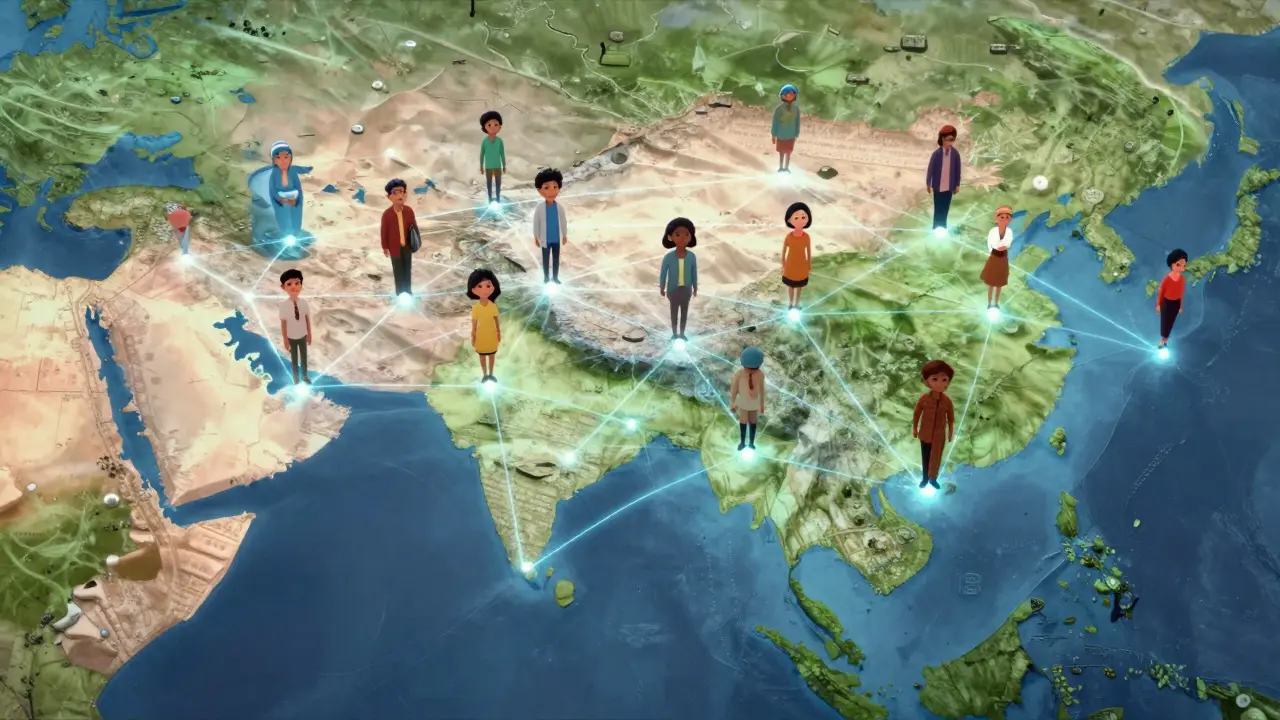
If exchanges are banned, how do these 3.1 million users trade? The ecosystem relies on alternative access methods. Most users bypass local restrictions through Virtual Private Networks (VPNs) to access international exchanges like Binance or Kraken. Others use decentralized finance (DeFi) protocols that don't require identity verification at all.
Peer-to-Peer (P2P) markets are the backbone of this underground economy. On these platforms, users buy and sell crypto directly with each other, using local bank transfers or mobile money services for the fiat side of the transaction. The exchange happens off-chain from a regulatory perspective, making it harder for authorities to track. This creates a shadow liquidity network that operates parallel to the official banking system.
However, this comes with risks. Without legal protection, users are vulnerable to scams, fraud, and platform freezes. If an international exchange decides to block IP addresses from Bangladesh, users can lose access to their funds instantly. This precariousness forces users to be tech-savvy and cautious, further filtering the user base toward those who truly need the service rather than casual speculators.
The Future: Will the Crackdown Tighten?
Looking ahead to late 2026 and beyond, the situation remains tense. The persistence of 3.1 million users suggests that demand will not disappear. In fact, if traditional financial services fail to improve efficiency or reduce costs, adoption may increase. Economic pressure is a powerful motivator. When the cost of living rises or the local currency weakens, the appeal of holding assets in USD-pegged stablecoins grows stronger.
Regulatory evolution is possible but unlikely to be sudden. Governments rarely lift bans overnight. More likely, we will see incremental changes or targeted enforcement campaigns followed by periods of laxity. Regional trends also play a role. As neighbors like India navigate their own complex crypto policies, Bangladesh may eventually feel pressure to reconsider its stance, especially if it wants to attract foreign investment or integrate further into the global digital economy.
For now, the message from Bangladesh is clear: you can ban the technology, but you can't ban the problem it solves. Until the underlying issues of remittance costs, financial inclusion, and currency stability are addressed, the crypto market in Bangladesh will continue to thrive in the shadows.
Is cryptocurrency illegal in Bangladesh?
Yes, the government of Bangladesh has imposed a complete ban on cryptocurrency activities, including trading, mining, and holding digital assets. However, enforcement is challenging, leading to widespread underground usage.
What is the main reason for crypto adoption in Bangladesh?
The primary driver is remittances. Users leverage stablecoins to send and receive money across borders more cheaply and quickly than traditional banking methods. Freelancers also use it to receive international payments.
How many crypto users are in Bangladesh?
As of 2025, there are approximately 3.1 million verified crypto users in Bangladesh, according to CoinLaw data. This number likely excludes unverified P2P participants.
Where does Bangladesh rank globally in crypto adoption?
CoinLedger ranks Bangladesh at #35 globally in 2025. Historical data from Chainalysis has shown rankings as high as #13-15, depending on the metrics used for calculation.
Are stablecoins popular in Bangladesh?
Yes, stablecoins are the dominant form of crypto usage. They offer stability against local currency inflation and facilitate low-cost remittances, making them more practical than volatile assets like Bitcoin for daily needs.
How do users access crypto despite the ban?
Users typically rely on VPNs to access international exchanges, engage in Peer-to-Peer (P2P) trading networks, and utilize decentralized finance (DeFi) platforms that do not require strict identity verification.
