
If you're looking for a standard centralized exchange where you can deposit dollars and trade Bitcoin easily, Belt Finance might not be the place for you. There is a major misunderstanding buzzing around the community right now regarding what this platform actually is. It's not Coinbase or Binance. It belongs to the world of decentralized finance, and understanding that distinction is your first step toward not losing money.
We are in late March 2026, and the landscape for digital assets has shifted dramatically compared to just a year ago. Belt Finance, launched back in 2020, has survived several market cycles. It operates primarily as an automated market maker rather than a traditional order book exchange. For those of us who have been watching the space since the early days, the difference matters immensely when it comes to how you access liquidity and manage risk.
Understanding the Core Technology
Belt Finance is a decentralized finance (DeFi) protocol functioning as an automated market maker (AMM) and yield farming platform.
To put it plainly, you don't sign up with an email and password. Instead, you connect your own digital wallet directly to their software. This means you retain full custody of your funds at all times. In 2025, Slashdot reported that the protocol integrates with twelve major wallets including MetaMask, WalletConnect, Ledger, and Phantom. If you prefer hardware security, Ledger compatibility is a massive plus. For mobile users, there are applications available for iPhone, iPad, and Android devices, though desktop support covers Windows, Mac, and Linux systems effectively.
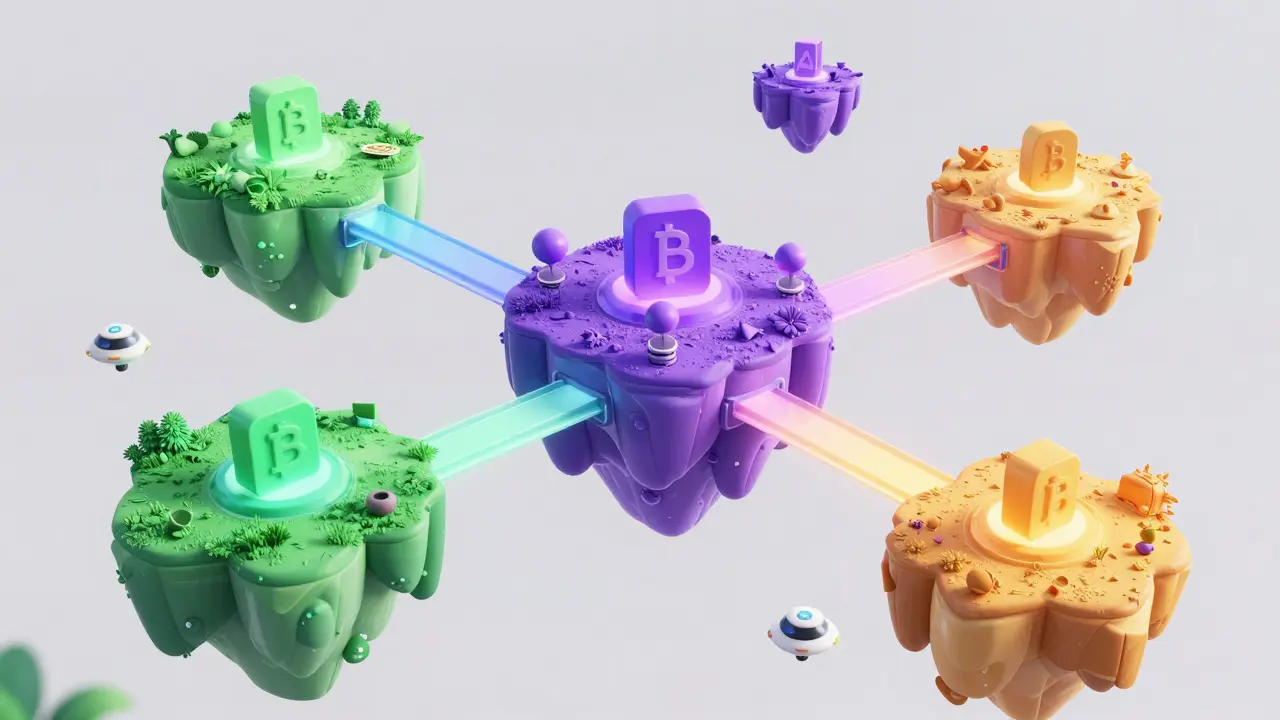
The technical backbone relies heavily on blockchain networks outside of Ethereum's mainnet due to cost efficiency. Currently, the system supports BNB Smart Chain (BSC), Solana, Klaytn, and 1Sol. This multi-chain architecture allows the platform to aggregate liquidity across different ecosystems. When you swap tokens here, you aren't just buying from one pool; the protocol searches for the best rate across these connected chains.
Evaluating the User Experience
Here is the honest truth about usability: finding professional ratings for Belt Finance is surprisingly difficult. Major review platforms like G2 or Trustpilot show virtually zero ratings in comparative analyses from 2025. This scarcity suggests limited adoption compared to mainstream giants. Most feedback comes from specialized DeFi forums or Reddit threads where experienced traders discuss the mechanics rather than customer service.
You can expect a learning curve similar to other AMM-based protocols. Beginners typically spend two to three hours learning to execute their first transactions successfully. This involves configuring network settings on your browser extension and ensuring you have enough native gas tokens (like BNB or SOL) to pay for transaction fees. Unlike centralized apps where fees are often bundled, here you pay the network directly.
On the bright side, support options exist. Documentation, webinars, and live training are listed features in recent comparison data. Since it is a web-based decentralized application, system requirements are minimal-you just need a compatible wallet and a stable internet connection. However, during periods of high network congestion, transaction failures remain a common complaint across the industry, not just with this specific platform.
| Feature | Belt Finance | Saber | Stobix |
|---|---|---|---|
| Type | Decentralized Exchange | Decentralized Exchange | Decentralized Exchange |
| Founded Year | 2020 | 2020 | 2024 |
| Primary Chain | BNB Smart Chain | Solana | Multi-Chain |
| Wallet Support | MetaMask, Ledger, Phantom | Metamask, WalletConnect | Standard DeFi Wallets |
| User Reviews | Limited / Niche | Limited / Niche | Emerging |
The Role of the BELT Token
BELT Token serves as the native utility token for governance and staking within the ecosystem.
Holding the token gives you voting rights on protocol upgrades. In DeFi, governance tokens often dictate the direction of future development. However, price stability is another story entirely. We are seeing contradictory signals in the market analysis for 2025 and 2026. Some prediction models from late 2025 forecasted a decline toward $2.74, while others pointed toward bullish signals reaching $0.50. Wait-didn't I just see prices move differently? Exactly. This volatility shows why you shouldn't treat this solely as an investment vehicle.
SwapSpace analysis from January 2025 emphasized that price predictions for BELT are mostly pessimistic without a universal consensus. Growth potential depends heavily on announcements, new technological solutions, and the general crypto environment. Institutional attention remains low compared to top-tier protocols. Notably, Finder's review of exchanges did not list Belt among its top eight recommendations, suggesting it sits in a secondary market position.
Regulatory pressure is also a factor. As we move through 2026, the U.S. Securities and Exchange Commission continues to scrutinize DeFi token models. Legal positioning can affect availability suddenly. Always do your own research before committing significant capital to any volatile asset like this one.

Security and Risk Factors
When dealing with smart contracts, security is non-negotiable. Belt Finance claims to offer MEV protection, which stands for Maximal Extractable Value protection. In simpler terms, this helps prevent bots from front-running your trades to steal profit margins. This was noted in Finder's 2025 crypto exchange review referencing similar platforms.
However, standard DeFi security measures apply. There is a presumption of audits given its integrations, but specific public audit reports aren't always easy to locate in search results. Standard issues include gas fee fluctuations and transaction slippage during peak usage times. Because you are connecting personal wallets, the responsibility for private key security rests 100% on you. If you lose your seed phrase, there is no customer support line to recover your account.
Market volatility adds another layer of risk. Price movements can be sharp. The protocol occupies a niche segment representing roughly 15% of total cryptocurrency trading volume alongside similar DEX structures. While newer entrants like Stobix challenge established players, competition compresses market share and pushes users toward platforms with higher liquidity depth.
Getting Started: A Practical Checklist
If you decide to proceed, follow these logical steps to minimize errors:
- Set up a reputable wallet extension like MetaMask on your browser or download the mobile app.
- Acquire some BNB or SOL to cover network transaction fees (gas).
- Navigate to the official interface and ensure the URL is correct to avoid phishing sites.
- Connect your wallet using the authentication pop-up.
- Verify the network chain configuration matches the token you intend to swap.
- Execute a small test transaction before moving larger amounts.
Documentation quality appears moderate with "Training Docs" available. Community size metrics are sparse, but the presence of multiple support channels mitigates onboarding challenges slightly. Remember that support is 24/7, but response quality varies since there are few centralized staff members compared to huge corps.
Is Belt Finance safe to use?
Like most DeFi protocols, safety depends on your wallet security and the code auditing of the smart contract. It offers MEV protection, but you are responsible for your own private keys.
Does Belt charge transaction fees?
The usage model is generally free with optional premium features, but you must pay network gas fees to the blockchain (BSC or Solana) for every action.
Can I buy BELT on Coinbase?
As of early 2025 data, BELT lacks broad institutional exchange listings. You may need to acquire it through decentralized swaps first.
Which blockchains does it support?
It integrates with BNB Smart Chain, Solana, Klaytn, and 1Sol networks, offering cross-chain liquidity aggregation.
Is it better than a centralized exchange?
If you prioritize privacy and self-custody, yes. If you want fiat on-ramps and customer support chat, a centralized exchange like Binance is likely better suited.

Leah Lara
March 29, 2026 AT 13:46Honestly this feels like more crypto hype that will fail in a month.
Justin Smith
March 31, 2026 AT 07:44The distinction regarding automated market makers versus order books is technically accurate here. Most retail traders still confuse liquidity pools with traditional matching engines.
Katrina Tate
April 1, 2026 AT 16:13You sound like you read the whitepaper but missed the audit red flags. Liquidity depth doesn't guarantee safety against smart contract exploits.
Justin Garcia
April 2, 2026 AT 04:36Stop spreading fear uncertainty and doubt just because you lost your principal. The tech works better than centralized garbage most of you worship.
Liam Robertson
April 3, 2026 AT 01:16If you are new just take your time and learn the wallet settings first. It really helps to stay calm when gas fees spike unexpectedly during high traffic times.
Shaira Vargas
April 4, 2026 AT 09:24I am so scared about losing my seed phrase forever and then being stuck with nothing online.
Cara Boyer
April 4, 2026 AT 17:29They are watching us all through the blockchain data mining :) The govement wants total control over our digital assets soon enough.
Addy Stearns
April 6, 2026 AT 12:58We often forget that money is merely a consensus mechanism backed by trust in the underlying protocol structure. The transition from centralized banking to decentralized autonomous organizations represents a fundamental shift in human interaction with value exchange networks. Belt Finance attempts to bridge this gap but relies heavily on the assumption that users understand their own custody responsibilities fully without guidance from intermediaries. Security in these systems is not provided by a server farm somewhere in Delaware but rather distributed across nodes validating transactions constantly. This means the burden of verification falls entirely upon the individual operator of the private key infrastructure required to access funds stored on chain. When we consider historical precedents regarding asset storage we see repeated failures due to poor key management practices among the general populace. Education becomes the primary line of defense against loss rather than insurance policies offered by regulated entities in traditional finance sectors today. Volatility remains a constant factor yet adoption rates continue to rise despite regulatory headwinds pushing back hard against anonymity features specifically. Governance tokens distribute power away from corporate boards down to small holders who might lack technical expertise necessary to vote wisely on proposals. The future depends on how well communities self organize around core development teams maintaining code bases open for public scrutiny regularly. If trust breaks down completely then adoption stalls until new confidence mechanisms emerge from improved tooling standards across the industry landscape. We must question whether current incentive structures align truly with long term sustainability goals of the network itself. Centralization risks persist wherever large token holders dominate governance voting outcomes in practice. Smaller participants need better tools to aggregate influence effectively without sacrificing privacy principles. Interoperability remains the holy grail yet implementation lags behind marketing promises consistently. We stand at a precipice where either mass adoption occurs or fragmentation leaves many isolated in niche ecosystems fighting for relevance. History shows technology always matures but humans struggle with adapting behavioral changes quickly enough to keep up with the pace.
Raymond K
April 7, 2026 AT 20:06That is such a beautiful way to think about self custody being empowering instead of scary sometimes. You really have a gift for seeing teh big picture beyond just the price action charts alone.
Jamie Riddell
April 8, 2026 AT 13:38feeling anxious about security is normal but remember you hold the keys not the platform
Chris R
April 9, 2026 AT 01:43In Nigeria we use local stablecoins mostly but cross chain bridges are gaining traction slowly for remittance purposes globally.
Markus Church
April 9, 2026 AT 22:46Thank you for sharing your regional perspective on adoption patterns there. It is fascinating to see how utility varies based on local economic conditions significantly.
Wade Berlin
April 11, 2026 AT 00:26Crypto bros always act like they discovered something new when it was invented decades ago by cypherpunks.
Colin Finch
April 12, 2026 AT 21:28The spirit of innovation never dies even if the packaging looks exactly the same as last year cycles suggest.
Lisa Walton
April 14, 2026 AT 15:34Everyone ignores the slippage mechanics which destroy profits before you even realize the trade executed.
Shubham Maurya
April 14, 2026 AT 16:23Bro you are missing the point again 🤡 just try once and see 🔥