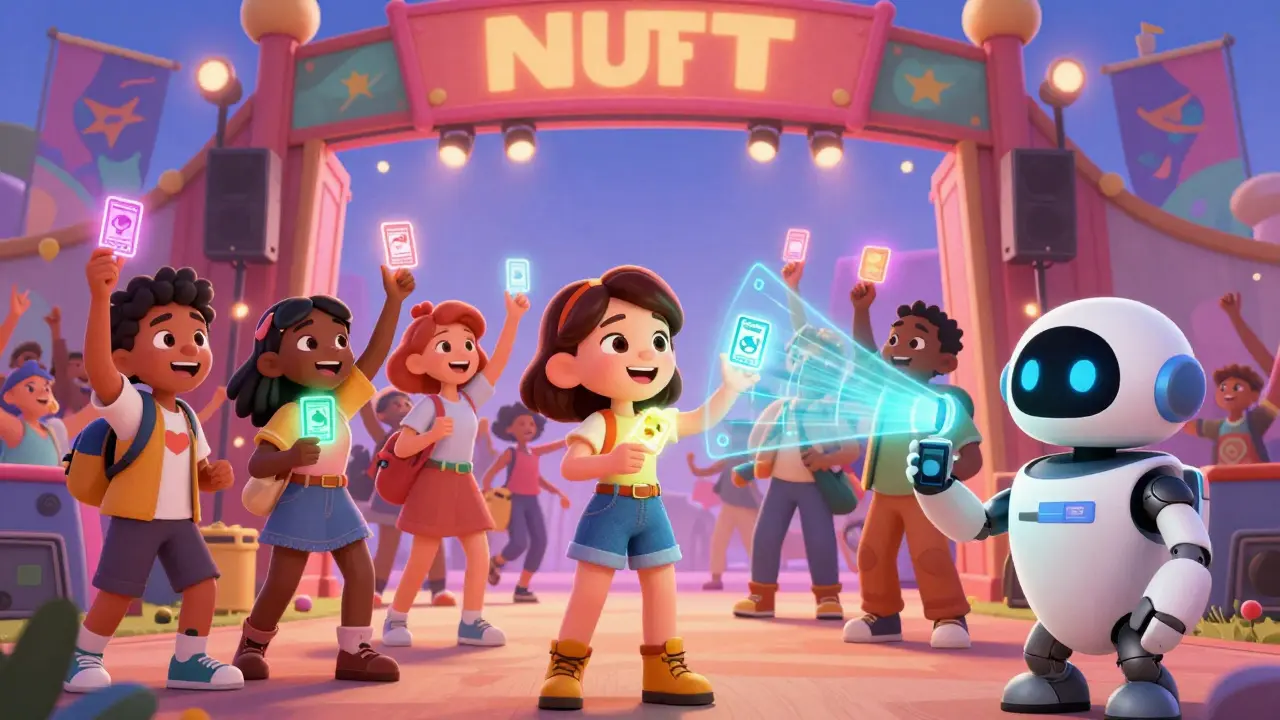
Imagine buying a concert ticket and knowing for sure it’s real-no fake tickets, no scalpers jacking up the price, and no last-minute surprises at the gate. That’s what blockchain ticketing with NFTs delivers today. It’s not science fiction. It’s already happening at festivals, sports events, and live shows across the U.S. and beyond. Instead of a PDF or a barcode you print out, your ticket becomes a unique digital asset stored in your crypto wallet. And unlike old-school tickets, this one can’t be copied, resold illegally, or lost in your junk drawer.
Why NFTs Are Perfect for Tickets
Traditional tickets are just numbers on a screen or paper. Anyone can screenshot, print, or fake them. Scalpers buy hundreds of tickets the second they go on sale, then flip them for triple the price. Organizers lose money. Fans get ripped off. And there’s nothing you can do about it.
NFT tickets fix this. Each one is a unique token on the blockchain. Think of it like a digital collectible-only instead of a pixel art ape, it’s your entry to a festival. Because every NFT has a unique ID tied to a blockchain like Ethereum or Polygon, it can’t be duplicated. If someone tries to sell a fake, the system instantly flags it. No guessing. No loopholes.
Plus, every time that ticket changes hands, the transaction is recorded. You can see who owned it before. Was it the original buyer? Or did it get passed through three scalpers? With NFTs, you know. And organizers know too.
Organizers Keep Control-And Make More Money
Here’s the game-changer: smart contracts. These are self-executing codes on the blockchain that follow rules you set. Want to cap resale prices at 20% above face value? Done. Want to block resales entirely? Easy. Want to earn 10% every time someone resells your ticket? That’s built in.
Traditional ticketing platforms take 15-30% per sale. And once the ticket leaves your hands, you never see another penny. With NFT ticketing, you cut out the middleman. You sell directly to fans. And when that fan resells it later? You get a cut. Automatically. No paperwork. No chasing down payments. Just code doing the work.
Organizers at Coachella and Lollapalooza have already tested this. One festival saw a 22% increase in secondary revenue just by enabling royalties on resale. That’s money that used to go straight into scalper pockets-now it’s going back to the artists and promoters who made the event possible.
Attendees Get Real Value
It’s not just about stopping fraud. NFT tickets give fans something they actually want: perks.
Because your ticket is stored in your wallet, it’s always with you. No need to dig through emails or worry about losing a printed copy. Want to upgrade to VIP access? Just tap a button in the event app. Got a ticket from last year? Maybe you unlock early entry or a free merch discount. Some events even let you use your NFT ticket to buy food, drinks, or merch at the venue-no cash needed. It all works through your wallet.
And if you’re a loyal fan? Your history matters. If you’ve bought five tickets to the same artist’s shows over the years, the system can recognize that. You might get first pick on next year’s tickets. Or access to an exclusive livestream. It’s loyalty, but automated. No punch cards. No apps to download. Just your wallet doing the talking.
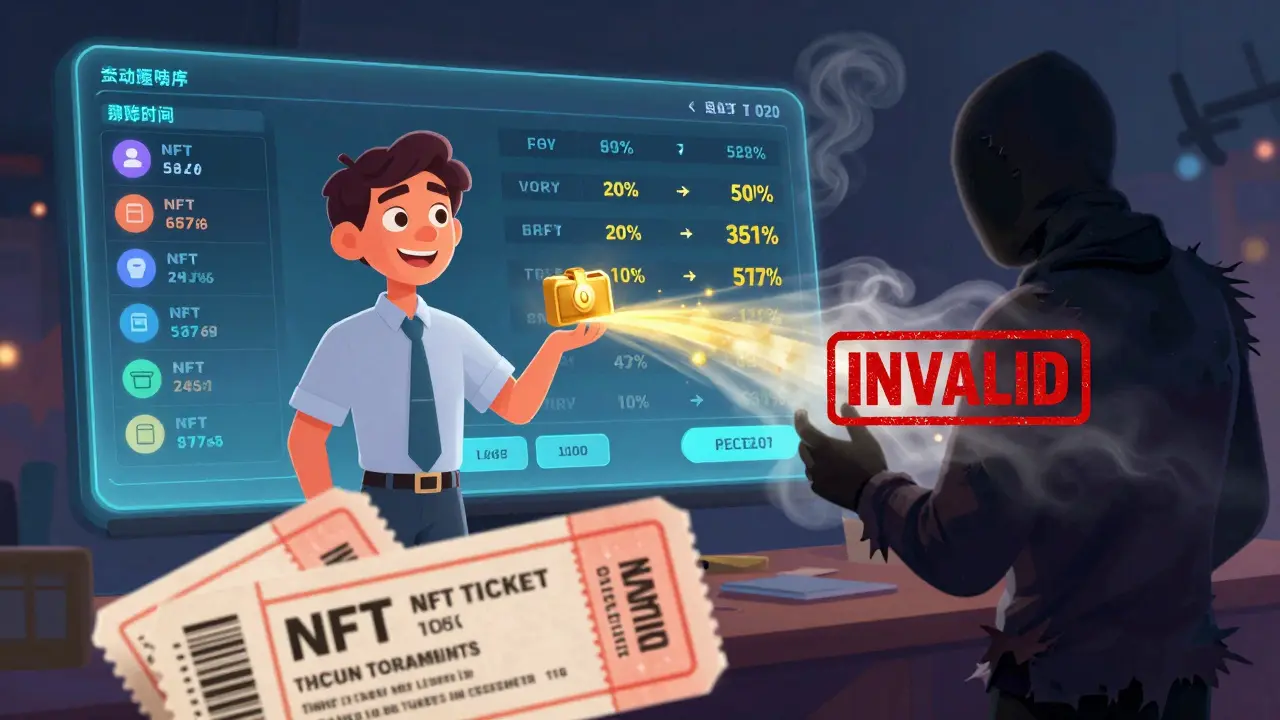
Fraud? Gone.
Counterfeit tickets cost event organizers over $2 billion a year globally. That’s not a guess. That’s from industry reports. Fake tickets mean angry fans, bad reviews, and sometimes even lawsuits.
NFTs eliminate this. Each ticket has a cryptographic signature that’s impossible to forge. Even if someone screenshots your ticket, it won’t work at the gate. The venue’s scanner checks the blockchain in real time. Is this token valid? Is it linked to the right person? Is it being used for the first time? If any part fails, entry is denied.
And scalping? It’s not just harder-it’s designed to be unprofitable. Smart contracts can block resale entirely. Or require the original buyer to approve any transfer. Or cap prices so no one can charge $2,000 for a $100 ticket. Some platforms even let organizers require ID verification at entry-using facial recognition linked to your wallet. No more “I bought this from my cousin” excuses.
What About the Tech Hurdles?
Yes, you need a crypto wallet. Yes, some older fans might find that intimidating. But the barrier is dropping fast.
Platforms like Ticketmaster, Eventbrite, and smaller specialists like Arianee and VeVe now offer one-click wallet setup. You don’t need to understand blockchain. You just need to download an app, create a password, and you’re in. Many systems even let you pay with a credit card to get your NFT ticket-no crypto needed upfront.
And once you have it? It’s easier than managing five different event apps. One wallet. One ticket. One place for everything.
For large events-think music festivals, NBA games, or Broadway shows-the ROI is clear. Lower fraud. Higher revenue. Happier fans. The tech isn’t perfect yet, but it’s good enough to beat the old system by miles.

It’s More Than Just Entry
Here’s the next step: your ticket isn’t just a pass. It’s a key.
Imagine going to a concert and your NFT ticket gives you access to a private Discord channel with the band. Or unlocks a limited-edition digital poster you can display in your virtual home. Or lets you vote on the setlist for next year’s show. That’s not fantasy. It’s already being tested.
NFTs connect events to Web3. They turn one-time attendees into long-term community members. Organizers aren’t just selling access-they’re building relationships. And those relationships? They’re worth more than a single ticket sale.
Who’s Using This Right Now?
You don’t have to wait. Major players are already in:
- Coachella tested NFT tickets in 2024 with a 98% fraud-free entry rate.
- Live Nation rolled out blockchain tickets for select U.S. tours in late 2025.
- Formula 1 uses NFTs for race-day access and collectible digital memorabilia.
- Disney is piloting NFT tickets for themed park events in Orlando.
These aren’t experiments. They’re scaling. And they’re doing it because the numbers add up.
The Bottom Line
Blockchain ticketing with NFTs isn’t about being trendy. It’s about fixing real problems:
- Fraud? Reduced by over 95% in real-world tests.
- Scalping? Controlled with smart contracts.
- Lost revenue? Recovered through royalties.
- Fan experience? Upgraded with perks and personalization.
For organizers, it means more money, less stress, and better control. For fans, it means peace of mind and real rewards. And for the industry? It means finally moving past a broken system that’s been stuck in the 1990s.
This isn’t the future. It’s here. And if you’re organizing or attending events in 2026, you’re already in it.
Can I still use a credit card to buy an NFT ticket?
Yes. Most NFT ticketing platforms today let you pay with a regular credit or debit card. You don’t need to own cryptocurrency to get started. The system automatically creates a wallet for you behind the scenes and links your ticket to it. You’ll get a simple app or email instructions to access your ticket later. No crypto knowledge required.
What happens if I lose my phone or wallet password?
If you lose access to your wallet, you can usually recover it using a backup phrase (often 12 or 24 words) you saved during setup. Most ticketing platforms also offer customer support to help you regain access-especially if you bought the ticket with your real name and email. Your ticket is tied to your identity on the blockchain, not just your device. So even if you switch phones, your ticket stays safe.
Are NFT tickets only for big events like concerts?
No. While big festivals and sports leagues were the first to adopt NFT tickets, smaller events are catching up fast. Local theater shows, indie music gigs, tech conferences, and even community farmers markets are testing the system. The tech works for any event where fraud, scalping, or fan engagement is a concern. The smaller the event, the more control you gain-because you’re not stuck with a third-party platform taking a cut.
Can I resell my NFT ticket if I can’t go?
It depends on what the organizer set in the smart contract. Some events allow resale with a fee going back to them. Others lock tickets to your wallet permanently. A few even let you donate your ticket to a charity. You’ll see the rules before you buy. Unlike traditional platforms that hide resale policies, NFT ticketing makes them clear and transparent-right on the blockchain.
Do I need to pay gas fees every time I use my NFT ticket?
No. Gas fees (blockchain transaction costs) only apply when you buy or transfer the ticket. Once it’s in your wallet, using it to enter the event or buy food at the venue doesn’t cost anything. The verification happens instantly on the backend. You won’t even notice the blockchain is working.
What if I don’t want to use crypto? Can I still benefit?
Absolutely. You don’t need to trade crypto or hold tokens. NFT ticketing is about the underlying system-secure, traceable, and smart contract-powered. You just need a simple app to store your ticket and show it at the gate. It’s like using Apple Pay. You don’t need to know how the payment network works-you just use it. Same here.

lori sims
February 21, 2026 AT 15:18Reggie Fifty
February 22, 2026 AT 23:58Michelle Mitchell
February 24, 2026 AT 11:32christopher luke
February 25, 2026 AT 02:57Mary Scott
February 26, 2026 AT 12:42Shannon Holliday
February 27, 2026 AT 10:44Tabitha Davis
February 28, 2026 AT 23:51Vishakha Singh
March 2, 2026 AT 14:51Leslie Cox
March 2, 2026 AT 22:17Derek Sasser
March 3, 2026 AT 18:05Nadia Shalaby
March 5, 2026 AT 06:28Jessica Carvajal montiel
March 6, 2026 AT 01:06maya keta
March 7, 2026 AT 10:27Sean Logue
March 7, 2026 AT 20:20Carl Gaard
March 9, 2026 AT 10:26bella gonzales
March 10, 2026 AT 09:18Paul Reinhart
March 10, 2026 AT 21:55Lilly Markou
March 12, 2026 AT 20:18Reggie Fifty
March 14, 2026 AT 13:10