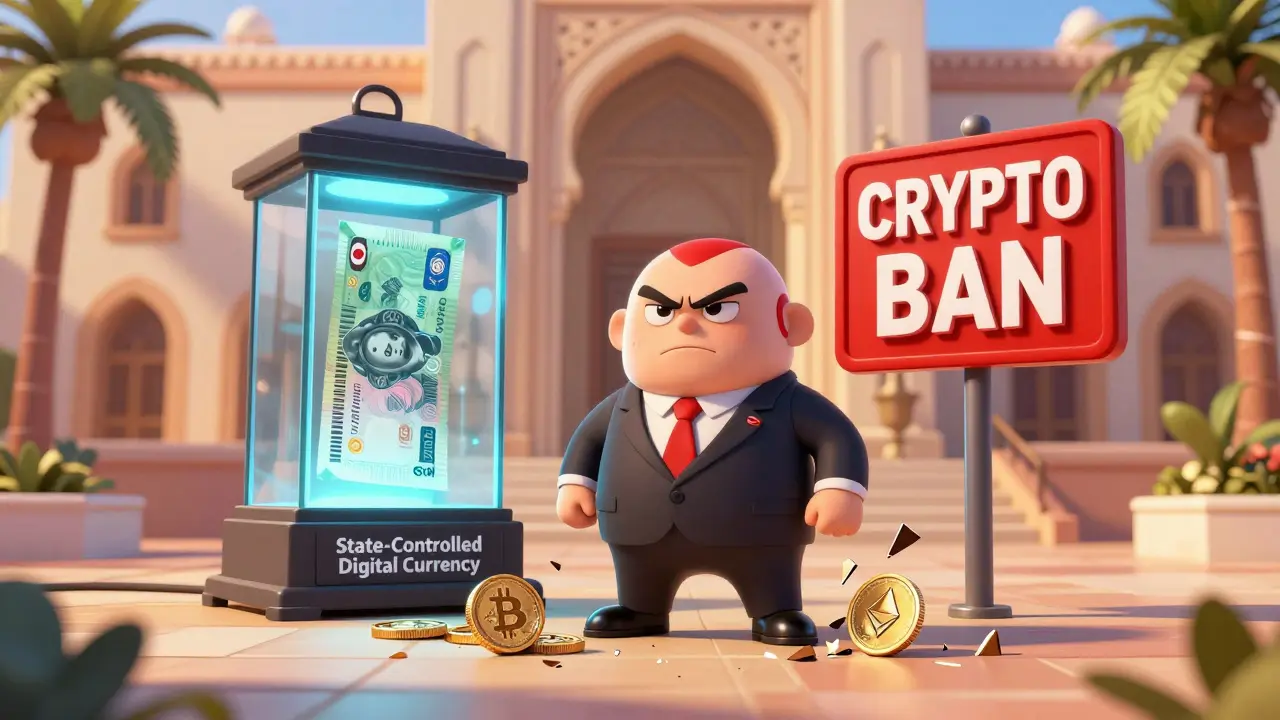
Since May 2018, the Central Bank of Tunisia is the national monetary authority responsible for regulating financial systems and currency stability in Tunisia. Also known as Banque Centrale de Tunisie (BCT), it has enforced one of the strictest cryptocurrency bans in the world. If you’re in Tunisia and you hold Bitcoin, trade Ethereum, or mine Litecoin, you’re breaking the law. Not just a gray area - outright illegal. The penalties? Up to five years in prison and heavy fines. This isn’t a warning. It’s enforcement.
What’s Actually Banned?
The BCT’s 2018 directive doesn’t just discourage crypto - it shuts down every possible entry point. You can’t buy Bitcoin with your Tunisian dinar card. You can’t sell it. You can’t accept it as payment for your goods or services. Even if you mine crypto in your garage, importing the mining rigs into Tunisia is a customs violation. Equipment gets seized. No questions asked.
Trading platforms? Illegal. Exchanges? Banned. Marketing tokens? Criminal. Holding crypto? Risky. The law doesn’t distinguish between small-time users and big operators - the rules apply to everyone. In 2021, a teenager was jailed for exchanging a few hundred dollars’ worth of cryptocurrency. That case shocked the public and sparked rare cabinet-level debates. But nothing changed.
Financial institutions are under strict orders. Banks can’t process transactions linked to crypto. Payment processors can’t integrate wallets. Even e-commerce sites that try to list prices in Bitcoin end up moving their operations offshore to avoid legal trouble. The ban isn’t just on paper - it’s built into the banking system.
Why Did Tunisia Ban Crypto So Hard?
The reasons go back to 2013, when Bitcoin started popping up in Tunisian chat rooms. No one was regulating it. People traded peer-to-peer. Some used it to send money abroad. Others bought goods from international sellers. The Central Bank noticed capital leaving the country - money flowing out faster than it could be tracked. That’s dangerous for a nation with tight foreign currency reserves and a struggling economy.
By 2018, the BCT had enough. They feared crypto could be used for money laundering, tax evasion, or bypassing currency controls. With inflation pressures and a weak dinar, the government couldn’t afford unregulated financial flows. The ban was meant to protect the national currency and maintain control over monetary policy.
It wasn’t just about crime. It was about sovereignty. If people started using Bitcoin instead of dinars, the central bank loses its ability to manage interest rates, control inflation, or respond to economic shocks. That’s why Tunisia joined the small club of countries - like China, Egypt, and Algeria - that chose total prohibition over regulation.
Blockchain Is Different - And It’s Being Tested
Here’s the twist: Tunisia doesn’t hate blockchain. In fact, the government actively encourages it - under strict control.
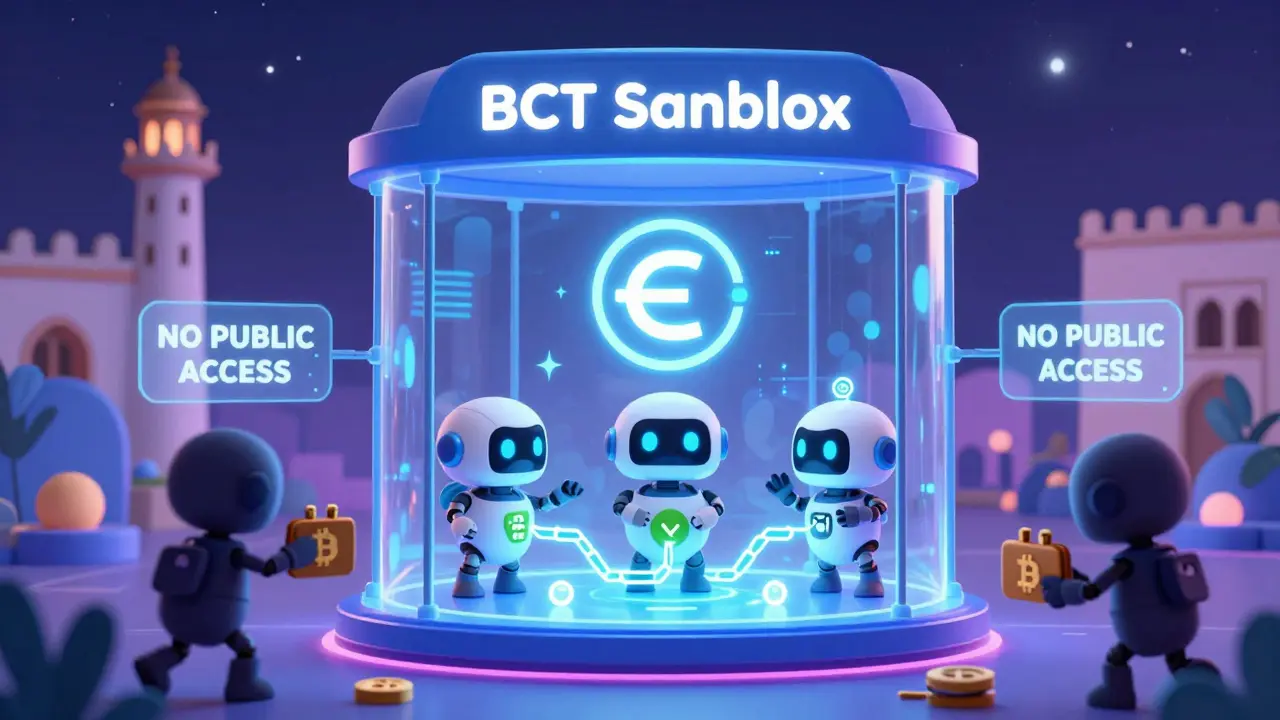
Since 2020, the Central Bank has run a regulatory sandbox is a controlled environment where fintech firms test new financial technologies under supervision. It’s not a loophole - it’s a cage. Only a handful of startups get in. They can’t serve the public. They can’t handle real money. They can’t even host servers in Tunisia. But they can test blockchain for things like carbon credit tracking, supply chain transparency, or AI-generated NFTs.
Companies like VFunder is a Tunisian startup that tested blockchain-based crowdfunding in the BCT sandbox., Hydro E-Blocks is a startup using blockchain to track carbon emissions under Tunisia’s sandbox program., and No Phobos is a Tunisian firm experimenting with AI-generated NFTs under the BCT’s regulatory sandbox. all participated. But their tech runs on foreign servers. Their users are outside Tunisia. Their goal isn’t to replace dinars - it’s to prove blockchain can help government systems.
This is where the real policy lives: blockchain for public good, crypto for private gain. The government wants to digitize land registries, track subsidy payments, and prevent fraud - but only using permissioned, state-approved ledgers. No decentralization. No anonymity. No public access.
Who’s Enforcing This?
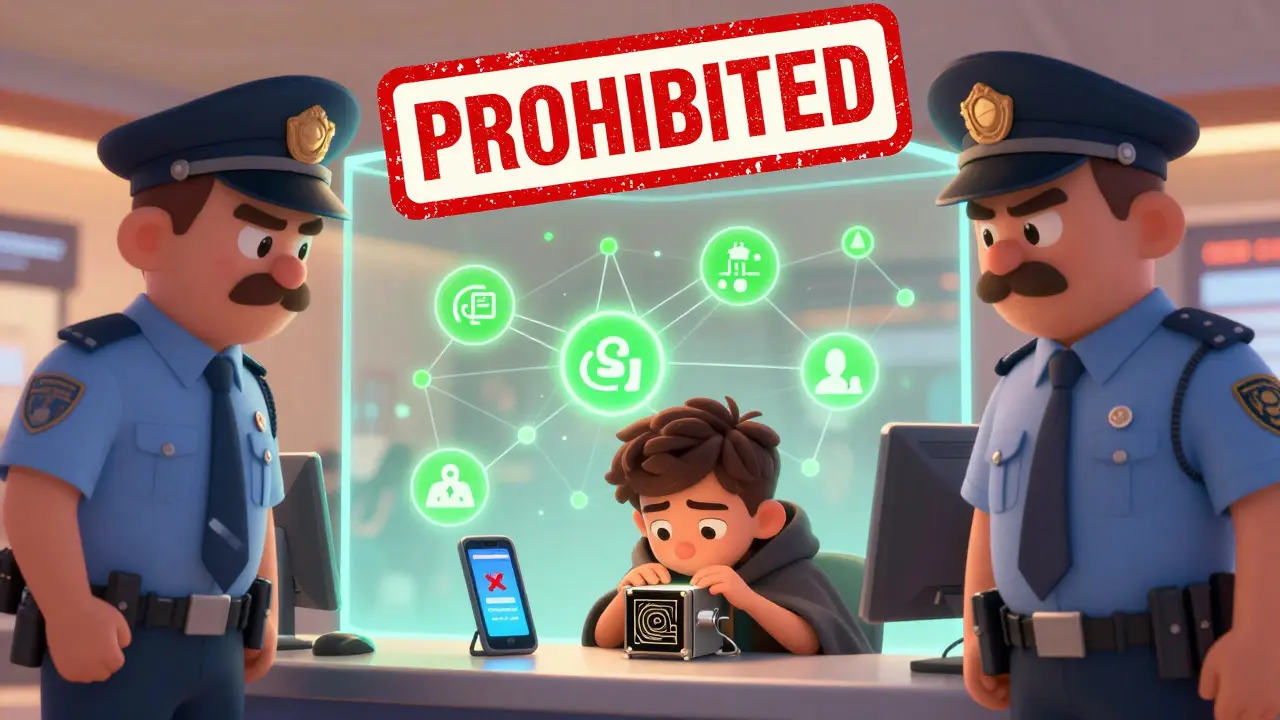
The BCT doesn’t act alone. It works with the Ministry of ICT & Digital Economy is the Tunisian government body overseeing digital transformation and technology policy. and the Financial Market Council (CMF) is the regulatory body that would oversee tokenized securities if crypto bans were lifted.. Customs officers at airports and ports scan for mining hardware. Banks report suspicious transfers. Telecom providers are required to flag crypto-related communications.
There’s no public database of arrests, but local reports and legal cases confirm enforcement is real. One 2023 case involved a man caught trying to smuggle six ASIC miners into the country. The equipment was confiscated. He was fined 15,000 dinars (about $4,800 USD) and given a suspended sentence. That’s not a warning - it’s a message.
What About a Central Bank Digital Currency?
In 2019, the BCT quietly explored launching an E-Dinar - a digital version of the Tunisian dinar. It was a proof-of-concept, not a rollout. No public announcement. No pilot. Just internal testing. The idea was dropped quickly, but it showed something important: the bank isn’t against digital money. It’s against decentralized money.
A CBDC would give the central bank full control. No blockchain anonymity. No peer-to-peer transfers outside the system. Just digital dinars tracked and managed by the state. That’s the model Tunisia wants: digital, but not disruptive.
How Does Tunisia Compare to the Rest of the World?
Most countries don’t ban crypto - they regulate it. The U.S., EU, Japan, and Singapore all have clear rules for exchanges, taxes, and consumer protection. Even countries like India and Nigeria, which have cracked down hard, still allow trading under oversight.
Tunisia is in a tiny group: China, Algeria, Egypt, Qatar, Morocco, Nepal, Bangladesh. These are the outliers. They’re not trying to adapt to crypto. They’re trying to contain it.
But the world is moving. PayPal lets users buy crypto. Microsoft accepts Bitcoin for cloud services. Tesla held Bitcoin as an asset. Tunisia’s ban looks more like a time capsule than a forward-looking policy.
Will the Ban Ever Change?
There’s no official sign it will. The 2025 Digital Tunisia project still lists blockchain as a tool for government efficiency - not financial freedom. The sandbox continues. The ban holds.
But pressure is building. Young Tunisians are tech-savvy. They use VPNs to access global exchanges. Some work remotely for foreign companies and get paid in crypto. The black market for crypto is growing quietly. The government knows this. That’s why the sandbox exists - to study the problem before it explodes.
The real question isn’t whether Tunisia will lift the ban. It’s whether it will create a new rule: crypto is allowed, but only if the state controls it. That’s the path most authoritarian regimes are taking. Tunisia might be heading there.
For now, if you’re in Tunisia, your best bet is to avoid crypto entirely. Not because it’s risky - because it’s illegal. The BCT isn’t bluffing. And they’ve got the power to make you pay.
What’s Next for Tunisia’s Crypto Policy?
Look to the sandbox. That’s where the future is being written. If startups prove blockchain can reduce corruption in public procurement or cut fraud in agricultural subsidies, the government might expand the program. Maybe one day, tokenized bonds or digital land titles go live - all under central bank control.
But don’t expect Bitcoin ATMs or crypto exchanges in Tunis anytime soon. The BCT’s priority isn’t innovation for its own sake. It’s stability. Control. Sovereignty. The digital economy they want isn’t decentralized. It’s managed. And it’s theirs alone.
Is it illegal to own cryptocurrency in Tunisia?
Yes. While the law doesn’t explicitly say "owning crypto is illegal," the 2018 directive bans all transactions involving virtual money. That includes buying, selling, exchanging, and using crypto as payment. Holding crypto becomes illegal if you attempt to convert it to dinars or transfer it to someone else. Authorities treat possession as evidence of intent to transact, which triggers penalties.
Can I mine cryptocurrency in Tunisia?
Mining crypto is effectively banned. Importing mining hardware like ASIC rigs is a customs violation, and equipment is seized at borders. Even if you somehow get equipment into the country, converting mined coins into Tunisian dinars or selling them violates the 2018 directive. The risk of arrest, fines, and confiscation makes mining impractical and dangerous.
Does Tunisia have a central bank digital currency (CBDC)?
No. Tunisia tested a digital dinar (E-Dinar) concept in 2019 but shelved the project. There is no active CBDC. However, the Central Bank of Tunisia continues to explore digital currency technologies - but only under full state control. Any future CBDC would likely be centralized, not blockchain-based, and restricted to government-approved uses.
Can I use crypto to pay for goods or services in Tunisia?
No. Accepting cryptocurrency as payment for goods or services is explicitly prohibited under the 2018 directive. Merchants who try to do this risk fines, legal action, and shutdown of their business. Even online stores that list prices in Bitcoin must convert payments to dinars before processing - and even then, they often operate offshore to avoid detection.
Are there any legal ways to use blockchain in Tunisia?
Yes - but only through the Central Bank’s regulatory sandbox. A small number of fintech startups are allowed to test blockchain applications like supply chain tracking, carbon credit verification, and digital identity systems. These projects must use permissioned ledgers, host servers outside Tunisia, and operate under strict supervision. They cannot serve the public or handle real cryptocurrency.

Jessica Boling
January 22, 2026 AT 20:35Classic authoritarian tech policy: control the tool, not the outcome. They want digital ledgers without the decentralization. Basically, 'We'll digitize your life but you don't get to own it.'
Tammy Goodwin
January 23, 2026 AT 04:45Shamari Harrison
January 23, 2026 AT 20:13Bonnie Sands
January 23, 2026 AT 20:21Abdulahi Oluwasegun Fagbayi
January 24, 2026 AT 11:46Anna Topping
January 25, 2026 AT 11:22Jeffrey Dufoe
January 25, 2026 AT 11:36katie gibson
January 26, 2026 AT 23:08Ashok Sharma
January 27, 2026 AT 00:58Mathew Finch
January 28, 2026 AT 15:01