
Buying cryptocurrency as a citizen of Mainland China feels like solving a puzzle where half the pieces are missing. The People's Bank of China (PBOC) is the central bank of the People's Republic of China that enforces strict bans on cryptocurrency trading and mining has maintained a hard line since September 2017, declaring initial coin offerings illegal and shutting down domestic exchanges. By May 2021, this stance hardened into a comprehensive ban on all crypto transactions and mining activities within Mainland China. Yet, despite these regulations, an estimated $18.4 billion in annual transaction volume still flows through offshore channels. If you are trying to navigate this landscape in 2026, you need to understand not just which exchanges exist, but how they interact with Chinese identity documents, IP addresses, and banking systems.
The core problem isn't just finding an exchange; it's finding one that accepts your identification without triggering an immediate account freeze. Most global giants actively block Chinese IP addresses to avoid regulatory heat. However, a bifurcated market exists. While Mainland China remains closed, Hong Kong operates under a separate legal framework with its own licensing regime. This creates a complex web of options ranging from fully regulated Hong Kong platforms to offshore entities that tolerate Chinese users if you can bypass technical barriers.
The Regulatory Landscape: Mainland vs. Hong Kong
To choose the right platform, you first need to understand where the rules apply. The distinction between Mainland China and Hong Kong is critical. In Mainland China, the PBOC’s "zero tolerance" policy means no local exchange can legally operate. Any platform claiming to be based in Beijing or Shanghai is likely a scam or operating illegally. Conversely, Hong Kong has embraced digital assets. The Securities and Futures Commission (SFC) administers the Virtual Asset Trading Platform (VATP) licensing regime. As of mid-2025, eleven platforms held full licenses there. This creates a "regulatory bridge" for Chinese citizens who can access Hong Kong-based services, provided they have the correct documentation.
The implication for you is simple: if you hold only a Mainland Chinese ID card, your options are severely limited to offshore, unregulated platforms. If you have a Hong Kong ID, a passport from another country, or a residence permit, you unlock access to compliant, safer environments. This divide dictates every other decision you will make regarding exchange selection, payment methods, and risk management.
Top Offshore Exchanges Accessible to Chinese Users
Despite the ban, several major offshore exchanges remain popular among Chinese citizens. These platforms often originated in Asia or maintain strong ties to the region. They do not officially welcome Mainland Chinese residents in their terms of service, but many users access them using Virtual Private Networks (VPNs) and non-Chinese identification documents. Here is how the major players stack up in 2026:
| Exchange | Chinese IP Status | ID Requirements | Trading Fees | Key Feature |
|---|---|---|---|---|
| Binance | Blocked (requires VPN) | International Passport preferred | 0.1% Maker/Taker | Highest liquidity, vast asset list (356+ coins) |
| Huobi (HTX) | Accessible via VPN | Flexible, often accepts HK ID | 0.2% Standard | Strong Asian user base, 430+ listings |
| Bybit | Blocked (requires VPN) | International Passport/HK ID | 0.1% Standard | Applied for HK license, 650+ coins, good UI |
| Crypto.com | Restricted | Non-Chinese ID required | 0.4% Standard | High app usability, 250+ coins |
| Kraken | Blocked | Strict Non-Chinese ID | 0.16% - 0.26% | High security, 245 coins, transparent reporting |
Binance remains the giant in the room. Despite moving its headquarters offshore in 2017, it retains massive popularity due to its deep liquidity and wide range of assets. However, it aggressively blocks Chinese IPs. You will need a reliable VPN to even load the site. Once connected, verification is the hurdle. Binance generally rejects Mainland Chinese IDs, so users often submit passports from other countries or Hong Kong identities. Huobi, now rebranded as HTX, was founded in China before relocating to Seychelles. It maintains a significant user base in Greater China, with reports indicating 35% of its active users originate from the region. It is often more flexible with identification, though fees are slightly higher than Binance. Bybit has emerged as a strong contender, particularly after applying for a Hong Kong license in June 2025. It offers a smooth interface and high leverage options, appealing to traders who find Binance too restrictive. Crypto.com and Kraken are viable but stricter. Kraken, known for its security, explicitly restricts access from Mainland China and requires robust non-Chinese identification. Crypto.com offers a polished mobile experience but has faced criticism from Chinese users regarding KYC delays and account freezes during periods of heightened regulatory scrutiny.
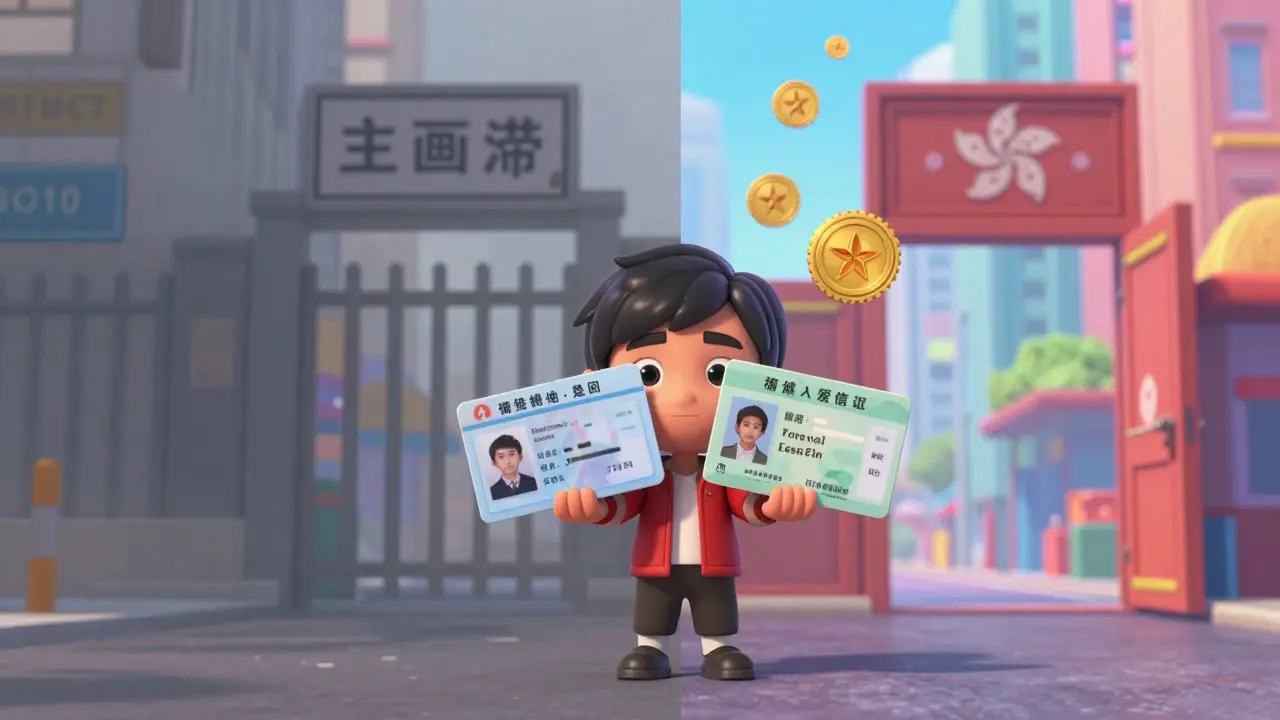
The Hong Kong Advantage: Regulated Alternatives
If you want to sleep better at night, look south to Hong Kong. The SFC’s VATP license provides a layer of consumer protection that offshore exchanges lack. Platforms like OSL Exchange, the first to receive full licensing in December 2020, offer a compliant environment. OSL accepts international clients, including Chinese citizens, provided they have non-Mainland identification, such as a Hong Kong ID or foreign passport. The trade-off is selection. Licensed platforms currently list fewer cryptocurrencies-OSL offers around 50 compared to Binance’s 356+. However, the security and regulatory clarity are worth it for long-term holders. WhaleFin and Crypto.com’s Hong Kong entity are also licensed, providing additional options. Bybit’s pending application suggests this sector will expand further by late 2026. Using these platforms reduces the risk of sudden delisting or frozen assets due to mainland regulatory crackdowns, making them ideal for users with access to Hong Kong residency or citizenship.
Navigating Technical Barriers: VPNs and KYC
Accessing these exchanges is not just about choosing a name; it’s about overcoming technical friction. The Great Firewall of China blocks direct access to most offshore financial sites. According to a July 2024 CoinGecko survey, 42% of Chinese crypto users rely on VPNs to connect. Services like NordVPN and ExpressVPN are frequently recommended in community forums for their stability and speed. Without a consistent connection, you risk being logged out mid-trade or having your location flagged by the exchange’s geo-fencing technology. Seventy-eight percent of major exchanges now use sophisticated geo-blocking that catches 95% of Chinese IP addresses. A cheap, unreliable VPN will get you banned faster than a Mainland ID.
Know Your Customer (KYC) verification is the second major wall. Exchanges need to prove to regulators that they aren’t laundering money. For Chinese citizens, this means your standard national ID card is often useless. The most successful strategy involves obtaining alternative identification. A Hong Kong ID is the gold standard, accepted by 82% of exchanges according to OKX compliance data. An international passport works for many, but some platforms cross-reference your address and reject applications if your residential history is solely in Mainland China. Verification delays are common; Huobi reported average processing times of 72 hours for Chinese users in mid-2025. During periods of political tension, these times can triple. Patience and clear, high-quality document scans are essential. Never submit forged documents; blockchain analysis firms like Chainalysis can trace anomalies, leading to permanent bans.

Funding Your Account: The Payment Puzzle
Getting onto the exchange is only half the battle; getting money in is the other. Domestic payment giants Alipay and WeChat Pay strictly prohibit crypto-related transactions. If you try to wire funds directly from a Chinese bank account to an exchange, the bank may flag the transfer and freeze your account. The solution lies in Peer-to-Peer (P2P) trading and international banking. P2P platforms integrated into exchanges like Binance and Huobi allow you to buy USDT or Bitcoin directly from other individuals using CNY bank transfers. This method dominates, with 92% of Chinese users relying on P2P or crypto-to-crypto trades. The risk? Counterparty fraud. Always use the exchange’s escrow system and check seller ratings meticulously. Alternatively, establishing an international bank account, such as with HSBC Hong Kong or Standard Chartered, allows for smoother fiat deposits. This route requires more upfront effort but offers greater stability for larger volumes. Stablecoins like USDT serve as the bridge currency, allowing you to move value across borders without converting back to fiat repeatedly.
Risks and Realities of the Underground Market
You must acknowledge the risks. Trading crypto from Mainland China exists in a gray area. While individual holding is not explicitly criminalized, the infrastructure to support it is banned. This means you have little recourse if things go wrong. Account freezes are common during regulatory announcements. In May 2025, a Reddit user documented a $15,000 loss on a P2P platform due to fraud, highlighting the dangers of unregulated channels. Withdrawal limitations affect 68% of negative reviews from Chinese users. Furthermore, the Chinese government monitors capital outflows closely. Large, frequent transfers to overseas accounts can trigger anti-money laundering investigations. To mitigate this, diversify your holdings across multiple exchanges and jurisdictions. Do not keep all your eggs in one basket. Use hardware wallets for long-term storage to remove reliance on exchange custody entirely. Stay informed on regulatory shifts; the coordination between Mainland and Hong Kong authorities could tighten controls unexpectedly. The market is resilient, but it is fragile.
Can I use my Chinese National ID to verify a crypto exchange?
Generally, no. Most major offshore exchanges like Binance, Kraken, and Coinbase reject Mainland Chinese National IDs due to regulatory pressure. You typically need a Hong Kong ID, a passport from another country, or a residence permit from outside Mainland China to pass KYC verification successfully.
Which crypto exchanges are legal in Hong Kong?
Exchanges licensed under the Securities and Futures Commission (SFC) Virtual Asset Trading Platform (VATP) regime are legal. As of mid-2025, these include OSL Exchange, Crypto.com (HK entity), WhaleFin, and others. Bybit had applied for licensing in 2025. These platforms offer regulated services but require proper identification.
How do Chinese citizens fund their crypto accounts?
Most users rely on Peer-to-Peer (P2P) trading platforms built into exchanges like Binance and Huobi, using CNY bank transfers to buy stablecoins like USDT. Others use international bank accounts (e.g., HSBC Hong Kong) for direct fiat deposits. Direct transfers from Mainland banks to exchanges are risky and often blocked.
Do I need a VPN to use crypto exchanges in China?
Yes, for most offshore exchanges. The Great Firewall blocks access to sites like Binance, Kraken, and Coinbase. A reliable VPN is essential to mask your IP address and access the platforms. However, note that many exchanges also geo-block Chinese IPs, so a high-quality, static IP VPN is recommended.
Is it safe to trade crypto as a Chinese citizen?
It carries significant risk. While holding crypto is not explicitly illegal, the trading infrastructure is banned. You face risks of account freezes, payment blocks, and limited legal recourse. Using regulated Hong Kong platforms with proper ID reduces risk, but offshore trading remains a gray area subject to sudden regulatory changes.
