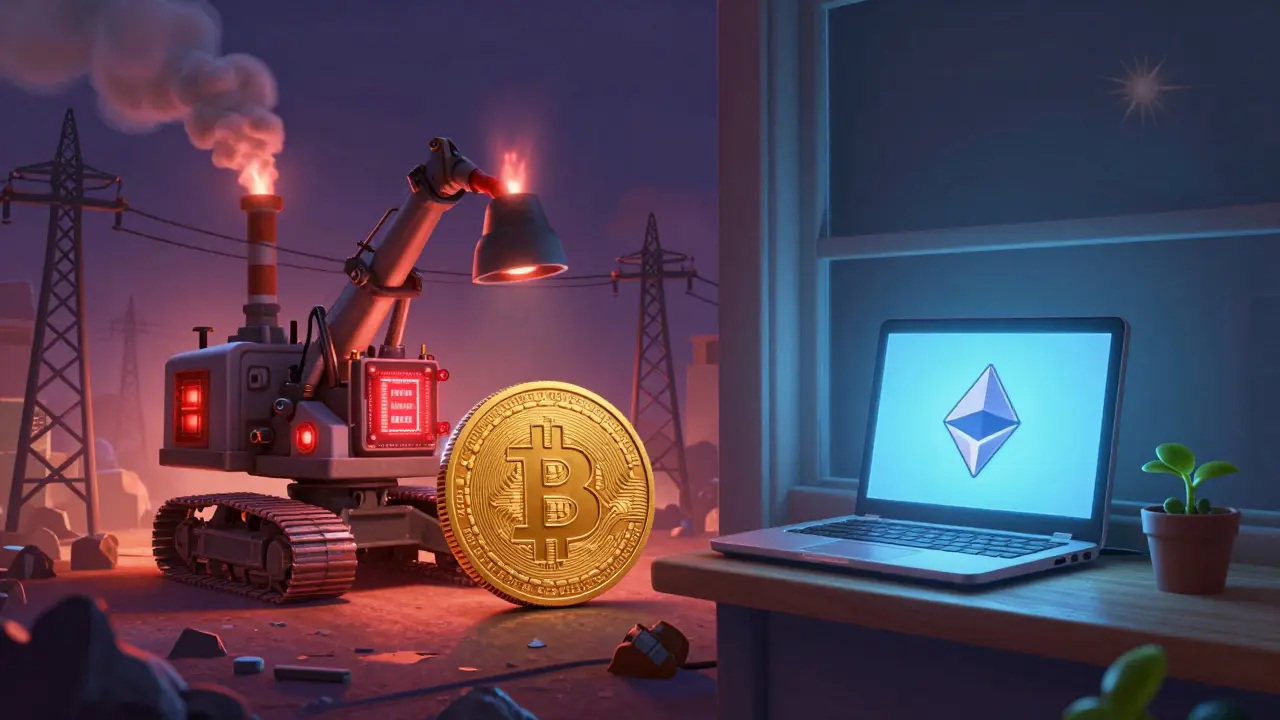
When you hear "blockchain," you probably think of Bitcoin. But behind that one name lies two very different ways the network stays secure: mining and staking. They both do the same job-validating transactions and adding new blocks-but they do it in ways that couldn’t be more different. One burns electricity like a power plant. The other runs quietly on your laptop. Which one is right for you? And why does it even matter?
How Mining Works: The Energy-Intensive Way
Mining is the original method. It started with Bitcoin in 2009 and still runs Bitcoin today. Miners don’t just "verify" transactions-they compete to solve a math puzzle so hard that only powerful computers can handle it. The first one to solve it gets to add the next block and earns a reward in Bitcoin. It’s like a global lottery, but you need a supercomputer to even enter. To mine, you need specialized hardware: ASICs (Application-Specific Integrated Circuits) or high-end GPUs. These machines are expensive. A decent mining rig costs $2,000 to $5,000. But the real cost isn’t the hardware-it’s the electricity. Bitcoin miners used over 120 terawatt-hours in 2023. That’s more than the entire country of Argentina. If mining were a country, it would rank 30th in global energy use. Mining difficulty adjusts every two weeks. As more miners join, the puzzles get harder. That means your rig might’ve been profitable last year, but this year? It’s a money pit. You’re not just fighting other miners-you’re fighting the network itself. And if your hardware breaks? You’re out thousands of dollars. No warranty. No refunds. Still, mining has one big advantage: security. Because it costs so much to build the hardware and power it, attacking the network would require controlling over 50% of all mining power. That’s astronomically expensive. That’s why Bitcoin is still the most secure blockchain in existence.How Staking Works: The Quiet Alternative
Staking is what happened when blockchain got smarter. Instead of solving math problems, you lock up your coins as collateral. If you stake Ethereum, you lock 32 ETH into a smart contract and become a validator. The network picks validators at random to propose new blocks. If you do your job right, you earn rewards. If you go offline or try to cheat? You lose part of your stake-a penalty called "slashing." You don’t need a supercomputer. You just need a regular laptop, an internet connection, and some ETH. That’s it. No fans. No heat. No power bills. When Ethereum switched from mining to staking in September 2022, its energy use dropped by 99.95%. That’s not a typo. One network cut its carbon footprint by nearly the entire amount of a small country’s electricity use. Staking doesn’t require huge upfront costs. You can stake as little as $10 through exchanges like Coinbase or Kraken. You don’t even need to run your own node. The platform does it for you. In return, you get 3% to 6% annual returns-steady, predictable, and passive. No hardware upgrades. No cooling systems. No noise. But there’s a catch. Your coins are locked up. You can’t sell them for weeks or months. That’s a problem if the market crashes. And if the validator you’re staking with gets slashed? You lose money too. Most platforms protect you from slashing, but not all. Read the fine print.Energy: One Uses a Power Plant. The Other Uses a Phone Charger.
This is the biggest difference. Mining is a resource hog. Staking is a whisper. A single Bitcoin transaction uses about 1,500 kWh of electricity. That’s enough to power an average U.S. home for over a month. A single Ethereum transaction on PoS? About 0.0005 kWh. You could do 3 million Ethereum transactions for the same energy it takes to do one Bitcoin transaction. That’s why regulators are watching. The European Union has proposed rules to limit energy-intensive crypto mining. Some U.S. states like New York have banned new mining operations. Meanwhile, staking is being welcomed as a green alternative. Countries like Singapore and Switzerland now offer tax incentives for PoS validators.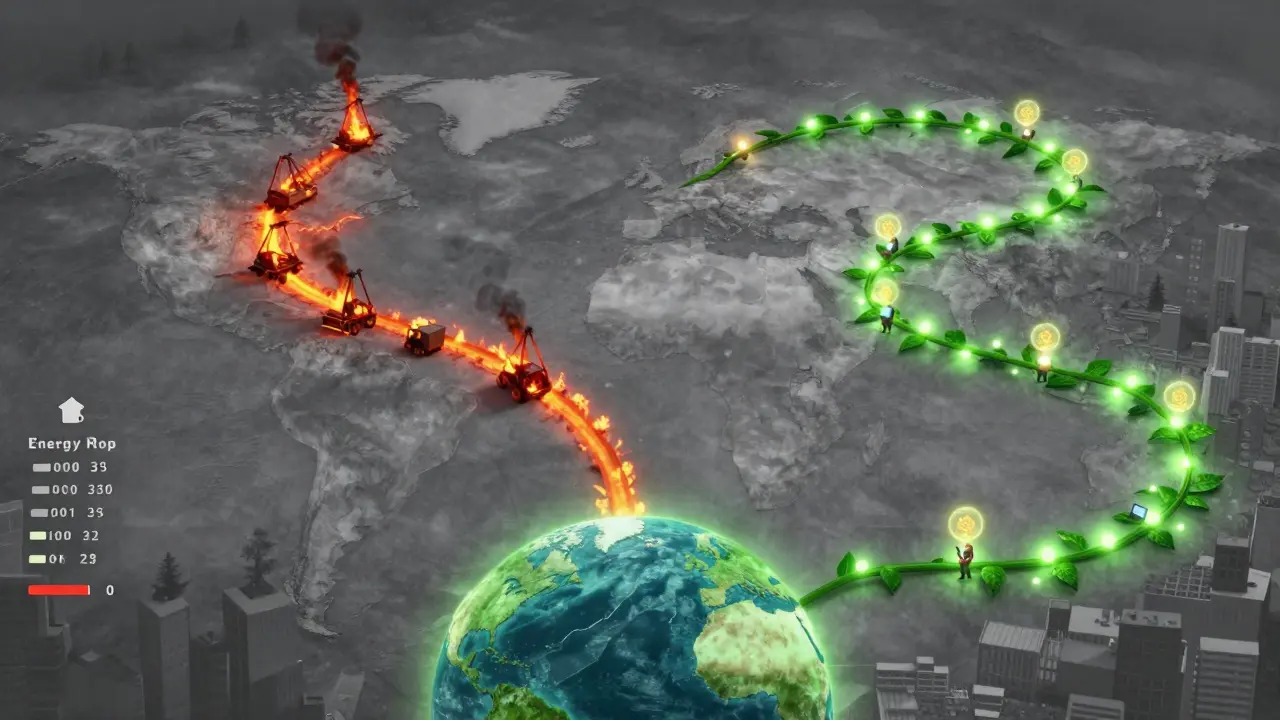
Costs: Hardware vs Lockup
Mining: You pay upfront. Thousands on hardware. Hundreds on electricity each month. You need a warehouse, cooling, and constant maintenance. Profitability depends on electricity prices, Bitcoin’s price, and mining difficulty. One bad month and you’re in the red. Staking: You pay with your coins. No hardware. No electricity bill. But your money is tied up. You can’t access it. If ETH drops 40% while you’re staked? You still earn 5%-but you’re down 35% overall. That’s a trade-off. You’re betting on price stability, not just rewards. Mining gives you control. You own the machine. You choose the pool. You decide when to upgrade. Staking gives you convenience. You click a button. You earn. You forget about it. But you’re trusting someone else to run the validator. That’s decentralization? Not really. That’s outsourcing.Accessibility: Who Can Participate?
Mining is for the few. You need technical skills, capital, and patience. You need to know how to flash firmware, configure mining software, and monitor hashrate. Most people can’t-or won’t-do it. Staking is for everyone. You can stake from your phone. You can stake $10. You can stake through your brokerage account. Platforms like Binance, Coinbase, and Kraken handle everything. Millions of people who’ve never touched a command line are now validators. But here’s the paradox: the more accessible staking becomes, the more centralized it gets. If 80% of Ethereum stakers use just three exchanges, then those exchanges control the network. That’s the opposite of decentralization.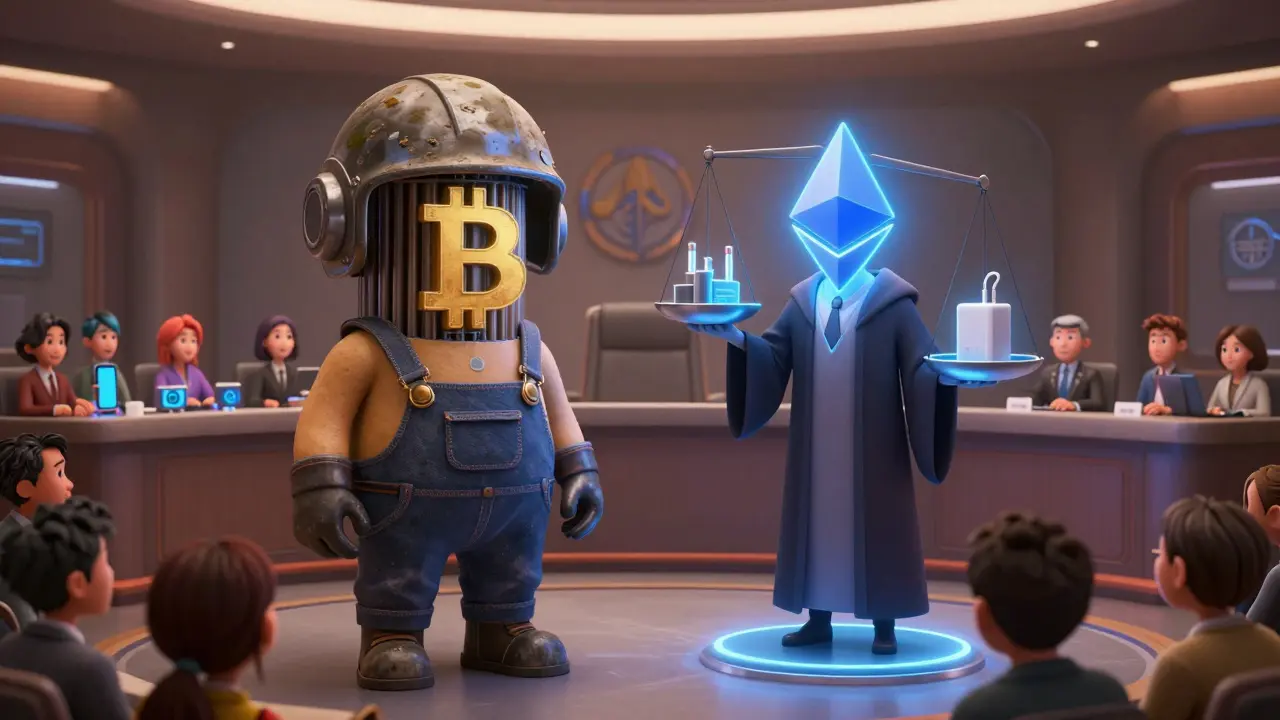
Security: Power vs Stake
Miners secure Bitcoin with electricity. To attack it, you’d need to spend billions on hardware and power. That’s why Bitcoin’s network is still the most secure in crypto. Stakers secure Ethereum with money. To attack it, you’d need to buy 51% of all staked ETH. That’s over $100 billion. But here’s the twist: if you own 51% of ETH, you’re also the biggest holder. Why would you attack a network you’re rich from? It’s self-defeating. That’s why PoS can be just as secure-but for different reasons.Future: Which One Wins?
Bitcoin isn’t changing. It’s too old. Too entrenched. Too proud. Mining will live on with Bitcoin, Litecoin, and a few others. But new blockchains? Almost all of them use staking now. Solana, Cardano, Polkadot, Avalanche-they all stake. Ethereum’s shift was the turning point. After that, PoW became the exception, not the rule. Liquid staking is the next big thing. It lets you stake your ETH and still trade a token that represents your staked balance. You get rewards and liquidity. That solves the biggest complaint about staking. If this takes off, staking could become the default for everyone. Mining isn’t dead. But it’s becoming a niche. A legacy system. A symbol of crypto’s early, wasteful days. Staking is the future-not because it’s perfect, but because it’s sustainable. And in 2026, sustainability isn’t a buzzword. It’s a requirement.Can I mine and stake at the same time?
Yes, but not on the same blockchain. You can mine Bitcoin while staking Ethereum. The two systems operate independently. Many people do this: they mine for the long-term value of Bitcoin and stake for steady income on PoS chains. Just make sure your hardware and electricity setup can handle both.
Is staking safer than mining?
It depends on what you mean by "safe." Mining has higher financial risk: hardware failure, electricity spikes, and price drops can wipe out profits. Staking has lower financial risk, but introduces new ones: slashing, exchange hacks, and locked funds. If you stake on a reputable exchange, it’s generally safer. If you run your own validator, you need technical skill. Neither is risk-free.
Do I need to be a tech expert to stake?
No. Most people stake through exchanges like Coinbase or Kraken. It’s like earning interest in a savings account. Just deposit your crypto, click "stake," and you’re done. If you want to run your own validator (like with 32 ETH on Ethereum), then yes-you need technical knowledge. But that’s optional. The vast majority of stakers don’t.
Why did Ethereum switch from mining to staking?
Ethereum switched in 2022 to solve three problems: high energy use, centralization of mining pools, and scalability. Mining was consuming as much electricity as a small country. A few mining pools controlled most of the network. And Ethereum couldn’t handle enough transactions. Staking fixed all three. It cut energy use by 99.95%, opened participation to millions, and laid the groundwork for faster, cheaper transactions.
Which gives better returns: mining or staking?
Mining can offer higher returns-but only if you’re lucky and efficient. With rising difficulty and falling Bitcoin prices, many miners break even or lose money. Staking offers lower but more predictable returns: 3% to 6% annually, paid regularly. For most people, staking is the better option. Mining is a business. Staking is a passive income stream.

Marc Morgan
March 16, 2026 AT 14:53Anastasia Thyroff
March 18, 2026 AT 10:34shreya gupta
March 20, 2026 AT 03:28Shreya Baid
March 21, 2026 AT 11:43Christopher Hoar
March 21, 2026 AT 12:49Heather James
March 21, 2026 AT 14:54iam jacob
March 23, 2026 AT 13:55Jesse Pals
March 24, 2026 AT 10:27Ross McLeod
March 24, 2026 AT 16:43rajan gupta
March 24, 2026 AT 23:34Cheri Farnsworth
March 25, 2026 AT 10:18Gene Inoue
March 26, 2026 AT 12:29Ricky Fairlamb
March 28, 2026 AT 06:47Arlene Miles
March 29, 2026 AT 20:47Lucy de Gruchy
March 31, 2026 AT 19:00Lauren J. Walter
April 2, 2026 AT 05:46Carol Lueneburg
April 2, 2026 AT 20:03Taylor Holloman.
April 3, 2026 AT 22:49Bryan Roth
April 5, 2026 AT 14:01sai nikhil
April 7, 2026 AT 09:58Marc Morgan
April 8, 2026 AT 10:49