
The DYP airdrop from the original DeFi Yield Protocol wasn’t just another free token giveaway. It was a carefully designed system to build a real, active community - not just people grabbing tokens and leaving. If you’re looking back at this now, you’re probably wondering: How did it actually work? And more importantly, why did it matter?
What Was the DeFi Yield Protocol?
Before it became Dypius, the project started as DeFi Yield Protocol, or DYP. Launched in 2021, it wasn’t just another DeFi app. It was built around a simple but powerful idea: reward people who were already mining Ethereum with free DYP tokens. This wasn’t a marketing stunt. It was a way to grow a user base by giving value to people who were already doing something useful - mining ETH.The protocol ran on Ethereum, Binance Smart Chain, and Avalanche. Its native token, DYP, had a total supply of 30 million. Out of that, 5 million tokens were set aside for a mining pool airdrop. That’s a huge chunk - and it wasn’t handed out randomly. You had to earn it.
The Mining Pool Airdrop: How It Actually Worked
The centerpiece of the DYP airdrop was a zero-fee Ethereum mining pool. If you joined this pool, you didn’t pay any fees to mine ETH. In return, you got a bonus: 10% of your monthly ETH earnings paid out in DYP tokens.So if you mined 1 ETH in a month, you got 0.1 DYP. Not a huge amount on its own - but it added up. And here’s the twist: you didn’t just get tokens. You also got access to the DYP Earn Vault.
The Earn Vault was an automated yield farming system. It took your DYP tokens (and sometimes your ETH) and moved them between the highest-yielding DeFi protocols on Ethereum and BSC. It was like having a smart bot that hunted for the best returns for you. The more you staked, the more you earned - and the more DYP you accumulated.
The goal? Get at least 200,000 miners to join. And it worked. Thousands of miners signed up, not because they were promised quick riches, but because they saw real utility: better mining rewards, automated yield, and a voice in the protocol’s future.
DYP Was More Than a Token - It Was a Tool
DYP wasn’t just a currency. It was the key to multiple parts of the ecosystem:- Governance: Holders could vote on upgrades, fee changes, and new features.
- Yield Farming: Stake DYP to earn more DYP or other tokens like ETH, BNB, or AVAX.
- Access to Tools: The DYP Tools suite gave users real-time market data, news, and analytics - all locked behind DYP holdings.
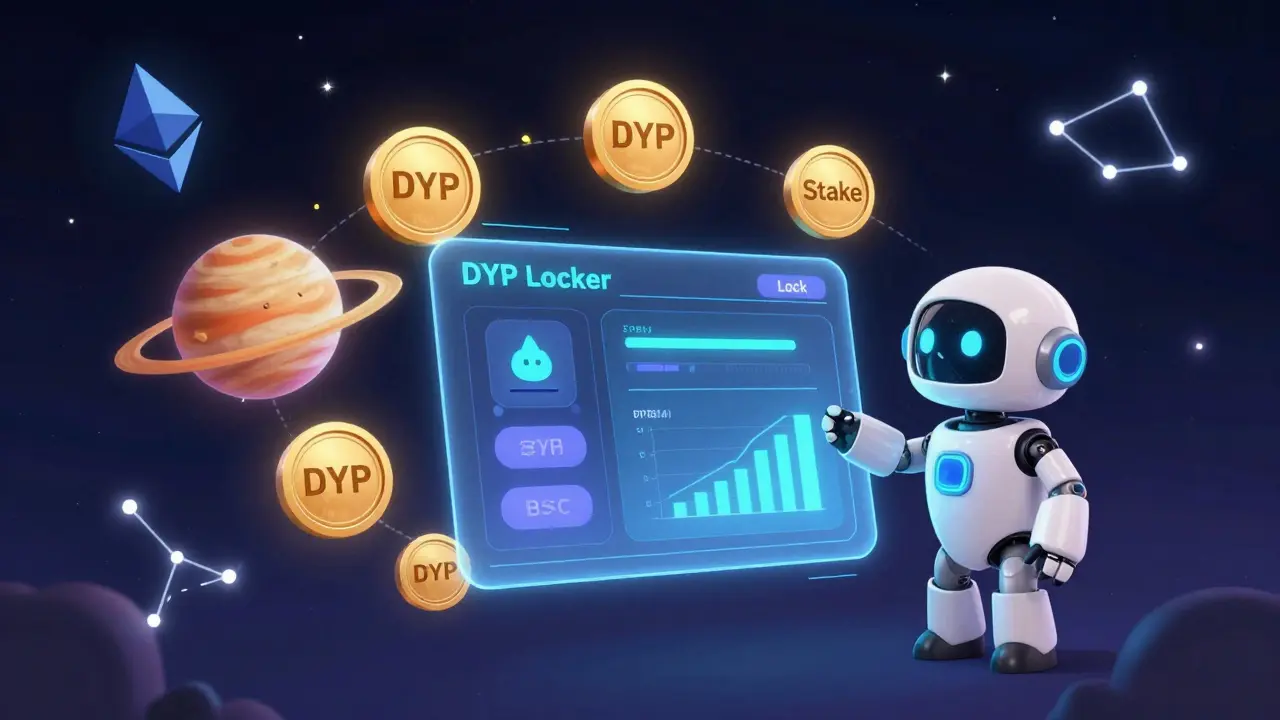
- DYP Locker: Lock your DYP for longer periods to earn higher rewards and exclusive perks.
This wasn’t a token designed to pump and dump. It was built to keep people engaged. The more you used the platform, the more DYP you earned - and the more power you had.
Security and Fairness: How They Kept It Honest
Airdrops often get gamed. Bots. Sybil attacks. Fake accounts. The DYP team knew this. So they built defenses.All smart contracts were audited by top firms: CertiK, PeckShield, and Blockchain Consilium. That’s not something you see in every DeFi project. They also used a 24/7 Security Oracle from CertiK to monitor for suspicious activity. If someone tried to create 50 fake mining accounts, the system flagged it.
They also limited rewards based on actual mining activity. You couldn’t just connect a wallet and claim tokens. You had to be actively mining. This kept the airdrop fair and ensured real users benefited.
The Rebrand: From DYP to Dypius
On December 12, 2022, the project officially rebranded from DeFi Yield Protocol to Dypius. The name wasn’t random. It came from the suffix of nebulae - the clouds of gas and dust in space that eventually form stars and planets. The team wanted Dypius to be a place where new crypto projects, communities, and ideas could form.The DYP token didn’t disappear. It became the backbone of the new ecosystem. The same 30 million supply stayed. The same mining pool history stayed. But now, the platform expanded:
- CAWS NFT Staking: Stake NFTs to earn DYP.
- World of Dypians: A metaverse where DYP holders get access to events and virtual land.
- DYP Launchpad: Early access to new token sales for long-term holders.
- DYP News: Premium crypto news and insights powered by DYP holdings.
The old airdrop participants didn’t get left behind. Their DYP tokens kept working. In fact, they became even more valuable as the ecosystem grew.
Why This Airdrop Still Matters Today
Most airdrops are forgettable. You claim your tokens, sell them on day one, and move on. The DYP airdrop was different.It didn’t just give away tokens - it gave away participation. You didn’t just receive something. You became part of something. You mined. You farmed. You voted. You used the tools. You stayed.
That’s why Dypius still has a strong community today. The original miners are still there. They’re not just token holders - they’re contributors. And the DYP token? It’s still the heart of the whole system.
If you’re looking at old airdrops to understand how to build something lasting, this is one of the few examples that actually worked. It wasn’t about hype. It was about utility. About trust. About rewarding real behavior - not just wallets.
What Happened to the Original Airdrop Tokens?
If you claimed DYP during the original mining pool airdrop, your tokens didn’t vanish. They were automatically carried over when the project became Dypius. All your staking positions, your Earn Vault balances, your governance rights - they all transitioned seamlessly.There was no airdrop claim window that expired. No forced migration. No wallet swap. The team made sure users didn’t lose anything. If you had DYP in 2021, you still have it today - and it still works the same way.
Is There Still a DYP Airdrop Today?
No. The original mining pool airdrop ended years ago. The 5 million token allocation was fully distributed. There are no active DYP airdrops running right now.But Dypius still gives out rewards - just differently. Today, you can earn DYP by:
- Staking CAWS NFTs
- Using the DYP Earn Vault
- Locking DYP in the DYP Locker
- Participating in DYP Launchpad events
- Contributing to the World of Dypians metaverse
It’s no longer an airdrop. It’s an ongoing ecosystem reward system - and it’s still powered by the same token.
Was the DYP airdrop real, or was it a scam?
The DYP airdrop was real. It wasn’t a rug pull. The team audited their smart contracts with top security firms, ran a live mining pool with thousands of participants, and delivered on every promise. The DYP token still exists today as part of Dypius, and the original participants still hold and use their tokens. There’s public blockchain data showing all distributions, and the project evolved into a larger ecosystem instead of disappearing.
How much DYP did participants actually earn from the mining pool?
Participants earned 10% of their monthly ETH mining income in DYP tokens. For example, if you mined 2 ETH in a month, you got 0.2 DYP. Over a year, that could add up to 2.4 DYP per ETH mined. Since ETH mining income varied, actual earnings depended on hardware, electricity costs, and ETH price. But for many, it was a steady, low-risk way to accumulate DYP without buying it.
Do I still need the original DYP wallet to claim rewards today?
No. If you held DYP in 2022, your tokens were automatically migrated to the new Dypius system. You don’t need to do anything special. Just connect your wallet to the current Dypius platform - whether it’s on Ethereum, BSC, or Avalanche - and your balance will show up. The system tracks ownership on-chain, not by wallet history.
Can I still join the old mining pool?
No. The original ETH mining pool with the 10% DYP bonus ended in late 2022 when the project rebranded to Dypius. The pool was shut down as the team shifted focus to NFT staking, metaverse integration, and automated yield vaults. The mining pool was a temporary tool to bootstrap the ecosystem - and it served its purpose.
What happened to the 5 million DYP tokens allocated for the airdrop?
All 5 million DYP tokens were distributed to miners who participated in the ETH mining pool. The tokens were distributed monthly over the life of the program, which lasted about 18 months. No tokens were burned, sold, or held back. Every token went to active users. You can verify this on-chain using Etherscan or BSCScan by checking the distribution addresses tied to the mining pool contracts.
