Bitcoin Value Calculator
Calculate the current value of Bitcoin based on historical transactions like the famous pizza trade (May 22, 2010).
Results
Before Bitcoin, digital money was a dream that kept failing. People tried for decades to build cash that worked online - no banks, no middlemen, just pure digital value. But every attempt collapsed. Too centralized. Too vulnerable. Too dependent on trust in institutions. Then, on January 3, 2009, everything changed. A single block was mined. A message was buried inside it. And the first real cryptocurrency was born.
The Genesis Block That Started It All
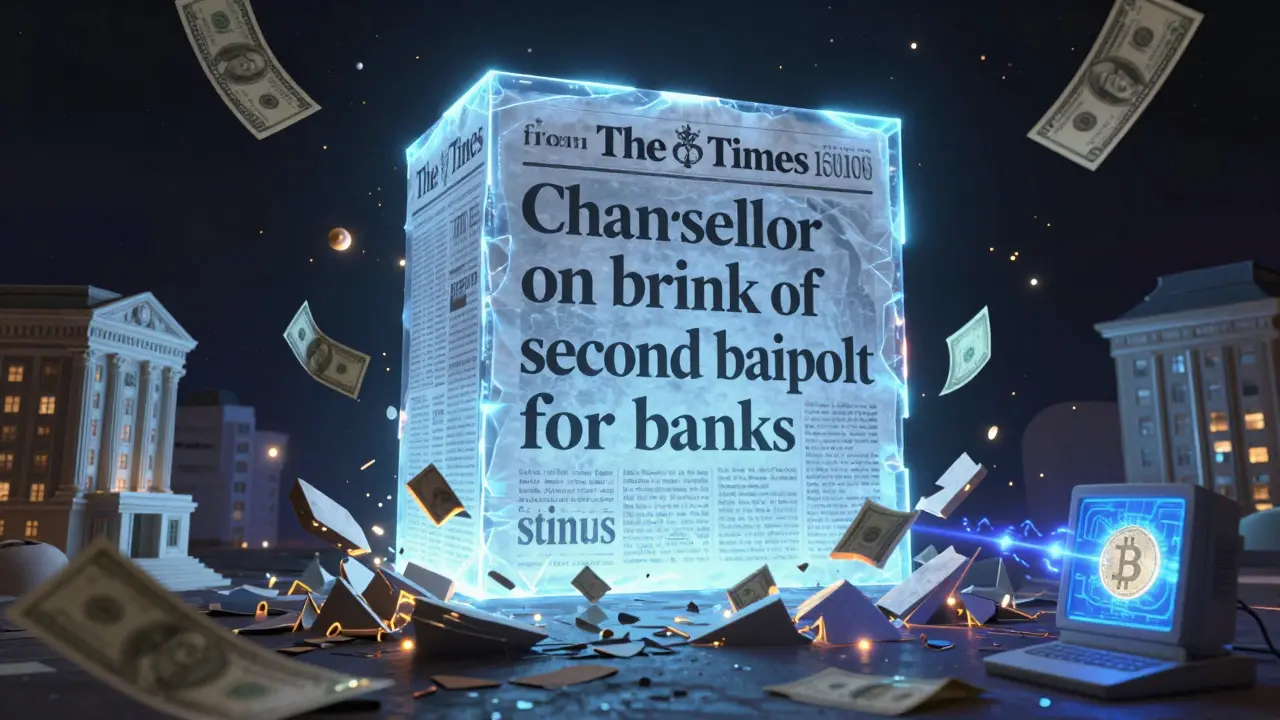
The very first Bitcoin block, called the genesis block, wasn’t just code. It was a statement. Hidden inside its data was a headline from The Times: "Chancellor on brink of second bailout for banks." That wasn’t random. It was a timestamp. And a protest. The 2008 financial crisis had just shattered trust in banks. Lehman Brothers collapsed. Trillions vanished. Governments printed money to save the very institutions that caused the mess. Bitcoin’s creator, whoever they were, didn’t want to rebuild the system. They wanted to replace it. That block didn’t just start a currency. It started a movement. No one owned it. No bank controlled it. No government could freeze it. Transactions happened directly between people, verified by a network of computers, not by a central authority. The math did the work. The code was the rulebook. And it was open for anyone to see.Who Really Created Bitcoin?
The name attached to Bitcoin is Satoshi Nakamoto. But that’s not a person. It’s a ghost. Satoshi posted the Bitcoin whitepaper on a cryptography mailing list on October 31, 2008. It was short, clear, and radical. It solved the double-spending problem - the biggest flaw in digital cash - without needing a trusted third party. Then, in January 2009, Satoshi launched the software and mined the first block. For the next two years, Satoshi was active. They responded to questions, fixed bugs, and guided early development. Then, in 2011, they vanished. No emails. No updates. No trace. People have tried to unmask them for over a decade. Names like Hal Finney, Nick Szabo, and even Elon Musk have been floated. But none stick. The real Satoshi is still unknown. And maybe that’s the point. Bitcoin wasn’t built to glorify one person. It was built to prove a system could work without one.What Came Before Bitcoin?
Bitcoin didn’t come out of nowhere. It was the result of 20 years of failed experiments. In 1983, David Chaum created eCash, a system that let users withdraw encrypted digital notes from banks. It was private, but it still needed banks. In 1998, Wei Dai proposed b-money - a decentralized system where users would solve puzzles to create money. Nick Szabo’s bit gold, also from 1998, required proof-of-work to generate value. Both were brilliant. Neither worked at scale. Why? Because they lacked the full stack. They didn’t have a working blockchain. They didn’t have a way to get people to actually use it. Bitcoin fixed all that. It combined existing ideas - cryptographic hashing, proof-of-work, peer-to-peer networking - into one working, usable system. And it had a killer feature: mining rewards. People got paid in Bitcoin just for helping secure the network. That’s what made it spread.
The First Real Bitcoin Transaction
Bitcoin sat unused for months after launch. No one knew what it was worth. Then, on May 22, 2010, a programmer named Laszlo Hanyecz made history. He offered 10,000 Bitcoins for two pizzas. Someone took the deal. Two Papa John’s pizzas were delivered. And the first real-world Bitcoin transaction was complete. At the time, those 10,000 Bitcoins were worth about $40. Today, they’d be worth over $600 million. That trade didn’t just buy pizza. It proved Bitcoin could be used as money. It gave the network its first real price signal. And it started a tradition - May 22 is now celebrated as Bitcoin Pizza Day.How Bitcoin Actually Works
Bitcoin runs on a public ledger called the blockchain. Every transaction is recorded in a block. Miners - people running powerful computers - compete to solve a complex math puzzle. The first one to solve it gets to add the next block and is rewarded with new Bitcoin. This is called proof-of-work. It’s energy-intensive, but it’s what keeps the network secure. No one can cheat the system. If you try to spend the same Bitcoin twice, the network rejects it. Every node checks every transaction against the entire history. There’s no central server to hack. To change a past transaction, you’d need to control more than half the network’s computing power - a feat so expensive and difficult it’s practically impossible. The total supply of Bitcoin is capped at 21 million. That’s hardcoded. Every four years, the mining reward is cut in half. This is called the halving. The first one happened in 2012. The next is expected in 2028. This design makes Bitcoin deflationary - the opposite of traditional money, which loses value over time due to inflation.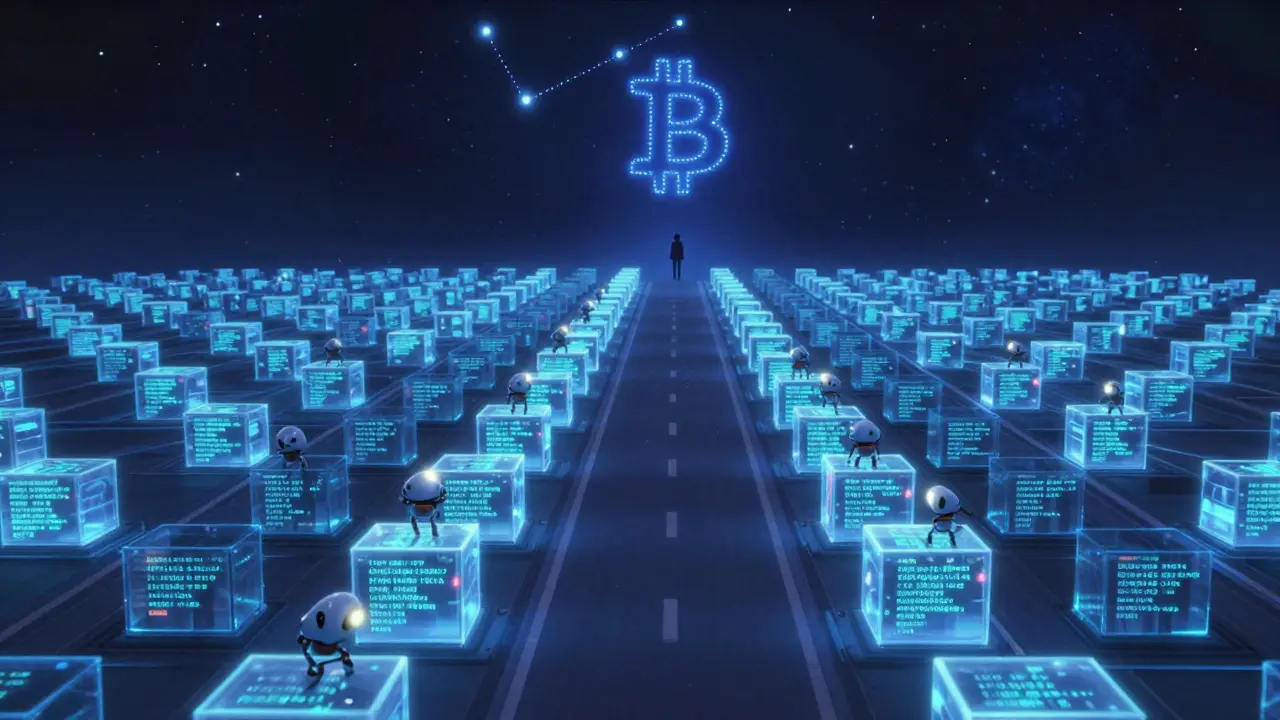
Why Bitcoin Matters Today
In 2025, Bitcoin is no longer a fringe experiment. It’s a global asset. Institutions like CME Group offer Bitcoin futures. Major banks now hold it on their balance sheets. Countries like El Salvador have made it legal tender. Over 25,000 other cryptocurrencies have been built on top of Bitcoin’s ideas. But none have matched its resilience. Bitcoin’s real power isn’t its price. It’s its permanence. Once a transaction is confirmed, it can’t be reversed. No government can shut it down. No bank can freeze your wallet. Your money belongs to you - not to an institution, not to a policy, not to a political decision. That’s why, even after 16 years, Bitcoin still feels revolutionary.The Ripple Effect
Bitcoin didn’t just create a currency. It created a new category of technology: blockchain. Namecoin tried to build a decentralized internet domain system. Litecoin changed the mining algorithm to be more accessible. Peercoin introduced proof-of-stake, a less energy-heavy way to secure a network. All of them borrowed from Bitcoin’s blueprint. Today, blockchain is used in supply chains, voting systems, and digital identity. But Bitcoin remains the original. The one that proved it could work. The one that showed people could trust math more than banks. And it still runs the same way it did in 2009 - open, transparent, and unstoppable.Who was the real creator of Bitcoin?
The real identity of Bitcoin’s creator remains unknown. The person or group used the pseudonym Satoshi Nakamoto and disappeared from public view in 2011. Despite numerous claims and investigations, no one has provided verifiable proof of being Satoshi. The anonymity was intentional - the focus was on the system, not the person behind it.
Why was the Bitcoin genesis block message important?
The message in the genesis block - referencing a headline about bank bailouts - was a deliberate political statement. It tied Bitcoin’s birth to the 2008 financial crisis, showing that the system was designed as a response to centralized financial failure. It wasn’t just a timestamp; it was a declaration that a new kind of money was needed.
Was Bitcoin the first digital currency ever?
No, Bitcoin wasn’t the first attempt at digital money. Earlier systems like eCash, b-money, and bit gold laid the groundwork. But none succeeded in creating a decentralized, trustless, and widely adopted system. Bitcoin was the first to combine all the necessary pieces - cryptography, proof-of-work, peer-to-peer networking, and economic incentives - into a working, live network.
How did Bitcoin get its first value?
Bitcoin had no price until May 22, 2010, when someone traded 10,000 BTC for two pizzas. That trade established the first real-world exchange rate. Before that, Bitcoin was just code. After that, it became a measurable asset. The first recorded price was $0.003 on March 17, 2010, but the pizza trade gave it tangible meaning.
Why does Bitcoin have a 21 million coin limit?
The 21 million cap was built into Bitcoin’s code by Satoshi Nakamoto to create scarcity. Unlike traditional currencies that can be printed endlessly, Bitcoin’s supply is fixed. This makes it deflationary - meaning its value tends to increase over time as demand grows and supply stays constant. The limit also ensures predictable issuance through halving events every four years.

Holly Cute
December 10, 2025 AT 10:02Neal Schechter
December 11, 2025 AT 07:35Madison Agado
December 11, 2025 AT 22:16Tisha Berg
December 12, 2025 AT 18:02Billye Nipper
December 12, 2025 AT 21:30Roseline Stephen
December 14, 2025 AT 02:52Isha Kaur
December 15, 2025 AT 07:43Glenn Jones
December 15, 2025 AT 10:10Nelson Issangya
December 15, 2025 AT 10:32Joe West
December 17, 2025 AT 05:59Richard T
December 19, 2025 AT 05:54jonathan dunlow
December 20, 2025 AT 06:20