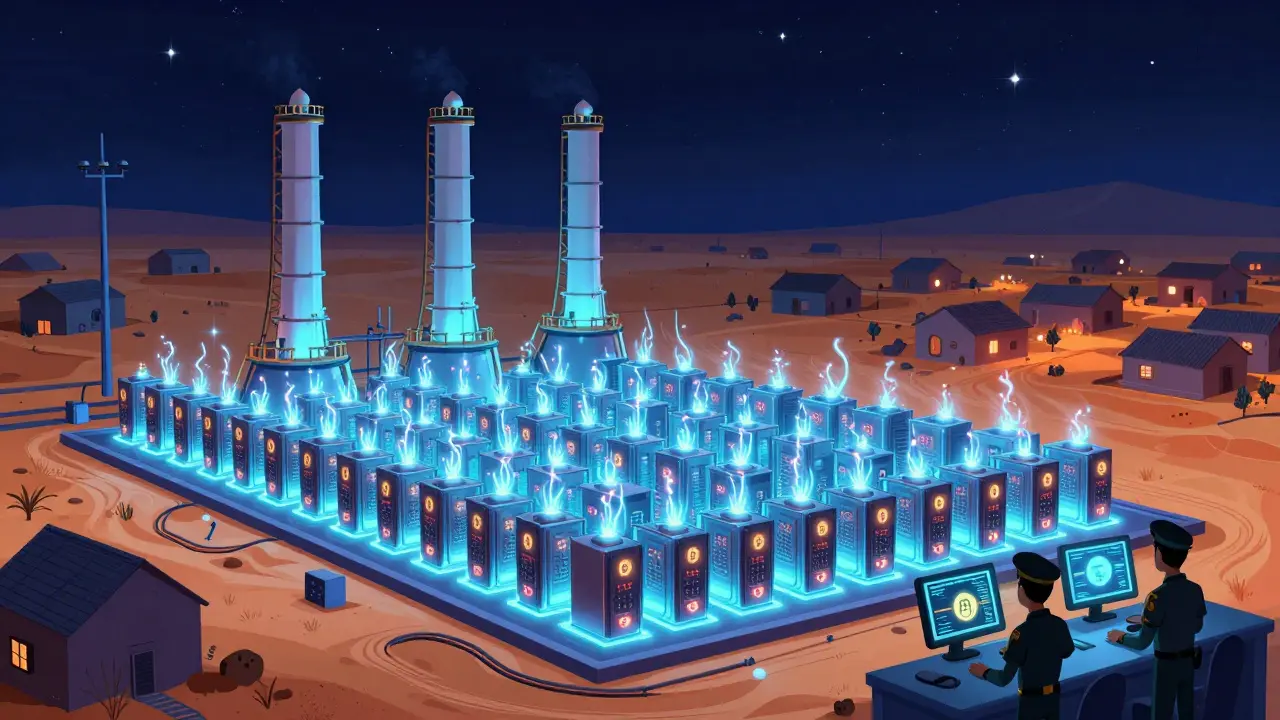
By 2025, Iran was mining Bitcoin at a scale that put it among the top four countries in the world - not because it had the best technology, but because it had the cheapest electricity and the most to lose. When the U.S. pulled out of the Iran nuclear deal in 2018, the world cut off its banks, froze its assets, and blocked its oil sales. Iran didn’t fold. Instead, it turned its power plants into Bitcoin factories.
Why Bitcoin? Because It Doesn’t Need a Bank
Bitcoin doesn’t care about SWIFT, U.S. Treasury sanctions, or international banking rules. All it needs is electricity and an internet connection. Iran had both - especially electricity. The country sits on massive natural gas reserves and produces more power than it can use. Instead of letting that surplus go to waste, the government started redirecting it to Bitcoin mining rigs. By 2024, Iranian miners were generating $4.18 billion in cryptocurrency exports - up 70% from the year before. That’s not just profit. It’s survival. This money buys medicine, food, and industrial parts that sanctions otherwise block. And unlike traditional trade, Bitcoin moves without passports, customs forms, or bank approvals.The State Runs the Mines - And Gets Paid in Bitcoin
This isn’t a grassroots movement. It’s a state-run operation. The Islamic Revolutionary Guard Corps (IRGC) and religious foundations like Astan Quds Razavi control most of the big mining farms. One facility in Rafsanjan, Kerman province, uses 175 megawatts of power - enough to light up a small city. It runs 24/7, paid for by the government, not the miner. Iran doesn’t just allow mining - it licenses it. Over 10,000 mining farms were officially registered by 2022. The Central Bank of Iran even created rules for crypto payments. By 2020, Iran began accepting Bitcoin and other cryptocurrencies to pay for imports. The first official purchase? $10 million in medical equipment, paid directly in crypto. The IRGC didn’t wait for permission. It started mining as soon as sanctions bit. In 2019, Supreme Leader Ali Khamenei reportedly ordered crypto mining as compensation for losing access to U.S. dollars. Now, those mines are wired into Iran’s sanctions evasion network - alongside its shadow oil fleet of 320 tankers.How It Works: From Power Plant to Wallet
Here’s the chain: Iran’s power plants burn cheap natural gas to make electricity. That electricity feeds racks of Chinese-made ASIC miners. These machines solve complex math problems to earn Bitcoin. The Bitcoin goes into wallets controlled by state-linked entities. From there, it’s swapped into stablecoins like USDT or TRON’s TRX, then moved through exchanges in the UAE, Hong Kong, or Turkey - places where enforcement is weak. Binance, the world’s largest exchange, processed over $8 billion in Iranian-linked transactions between 2018 and 2025. Iranian firms used shell companies in free zones to hide their tracks. Chainalysis and Elliptic confirmed these flows. The U.S. Treasury flagged them. But because Bitcoin is decentralized, shutting it down isn’t like shutting a bank.
Why Iran’s Strategy Beats Venezuela and North Korea
Venezuela tried to create its own digital currency - the Petro. It failed. No one trusted it. North Korea stole crypto through hacking. It’s risky, illegal, and unsustainable. Iran did something smarter. It mined Bitcoin legally - at least under its own laws. It used its real resources: energy. It didn’t invent a new coin. It used the most trusted one in the world. And it scaled it fast. By 2025, Iran accounted for 4.5% of all Bitcoin mining globally. That’s more than Russia and Kazakhstan combined in some months. Other sanctioned nations watch. If Iran can do it, why can’t they?The Hidden Costs: Blackouts and Inequality
The price? Iranian citizens pay for it. Miners consume electricity equivalent to 10 million barrels of oil per year - about 4% of Iran’s total oil export value. That’s power that could go to hospitals, homes, and factories. Instead, entire neighborhoods face daily blackouts while mining farms run nonstop. In cities like Tehran and Mashhad, families struggle to keep lights on while state-backed miners use subsidized power for free. The profits don’t trickle down. They go to IRGC-linked companies, religious foundations, and military contractors. Ordinary Iranians can’t access these systems. They’re locked out by bureaucracy, corruption, and sanctions on hardware. A single ASIC miner costs thousands of dollars - money most can’t afford. Smuggled rigs are rare and expensive. So while the regime mines Bitcoin, regular people can’t even buy it.

kris serafin
January 9, 2026 AT 05:09Caitlin Colwell
January 10, 2026 AT 11:23Charlotte Parker
January 11, 2026 AT 18:44Sarbjit Nahl
January 12, 2026 AT 18:50Paul Johnson
January 12, 2026 AT 21:18Kelley Ramsey
January 14, 2026 AT 19:03Michael Richardson
January 15, 2026 AT 21:07Sabbra Ziro
January 16, 2026 AT 07:48Krista Hoefle
January 17, 2026 AT 14:35Jessie X
January 18, 2026 AT 13:39Kip Metcalf
January 19, 2026 AT 13:16Jacob Clark
January 20, 2026 AT 17:54Jon Martín
January 22, 2026 AT 06:05Becky Chenier
January 22, 2026 AT 13:38Staci Armezzani
January 23, 2026 AT 04:34Tracey Grammer-Porter
January 23, 2026 AT 06:12