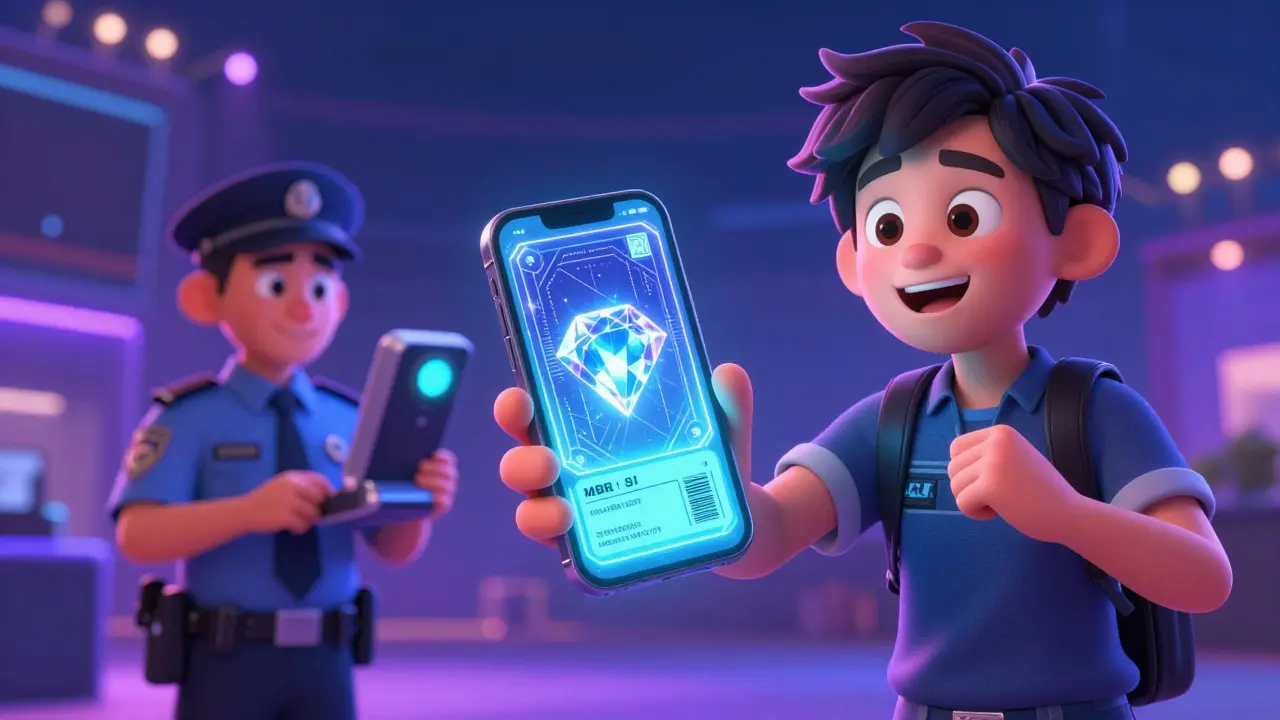
Imagine buying a front-row seat to your favorite concert, only to find out at the door that your ticket is a fake. It’s a nightmare scenario that has plagued the live events industry for decades. Traditional paper tickets and even standard digital QR codes are surprisingly easy to duplicate. But what if your ticket was as unique and secure as a diamond? That is exactly where NFT ticket authenticity verification comes in. By moving ticketing onto the blockchain, we aren't just changing how we buy passes; we are fundamentally rewriting the rules of trust, ownership, and access control for events worldwide.
In this guide, I’ll break down exactly how this technology works, why it’s safer than the old methods, and what you need to know before buying or selling an NFT ticket in 2026. We’ll look at the mechanics of verification, the role of smart contracts, and the real-world benefits for both fans and organizers.
What Is an NFT Ticket?
To understand verification, you first need to understand the asset itself. An NFT (Non-Fungible Token) is a unique digital certificate stored on a blockchain. Unlike Bitcoin or Ethereum, which are fungible-meaning one coin is identical to another-an NFT is one-of-a-kind. Think of it like a painting versus cash. You can swap a $20 bill for another $20 bill with no difference, but you can’t swap the Mona Lisa for a copy and expect the same value.
When applied to events, an NFT ticket represents a specific seat, time, and venue. It contains metadata that links it directly to the event organizer and creates an immutable record of who owns it. This isn't just a PDF attached to an email; it’s a cryptographic proof of ownership that lives on a decentralized network. Because each token has a unique ID, it is mathematically impossible to create a duplicate. If someone tries to forge a ticket, the blockchain simply won’t recognize it because the hash-the digital fingerprint-won’t match the original entry.
The Mechanics of Verification
So, how does the system actually verify that you have a real ticket when you arrive at the gate? The process relies on three core components: the blockchain ledger, digital wallets, and scanning software.
- Digital Wallet Connection: When you buy an NFT ticket, it is sent to your digital wallet (like MetaMask or Phantom). You don't "hold" the file; you hold the private key that proves you own the token associated with that ticket.
- Blockchain Query: At the venue, staff use specialized scanning apps. These apps don't just read a QR code from your phone screen. They query the blockchain to check the current owner of the specific token ID linked to your seat.
- Cryptographic Match: The scanner verifies that the public key in your wallet matches the owner address recorded on the blockchain for that ticket. If they match, the ticket is valid. If not, access is denied.
This method eliminates the need for centralized databases that can be hacked or corrupted. In traditional systems, if the central server goes down or gets breached, everyone’s ticket data is at risk. With blockchain verification, the truth is distributed across thousands of computers globally. No single point of failure exists. Companies like SeatlabNFT have developed efficient scanning protocols that perform these checks in milliseconds, ensuring long lines don’t form at the entrance despite the complex background processing.
Smart Contracts: The Automated Gatekeepers
The real magic happens behind the scenes with smart contracts. These are self-executing programs stored on the blockchain that enforce rules automatically. For ticketing, smart contracts act as the ultimate gatekeeper, controlling who can sell, transfer, or use a ticket.
Here is how they enhance security and fairness:
- Preventing Scalping: Organizers can program smart contracts to cap resale prices. If you try to sell your ticket for more than the allowed limit, the contract simply rejects the transaction. This keeps tickets affordable for genuine fans rather than bots.
- Automated Royalties: When a ticket is resold, the smart contract can automatically send a small percentage of the sale back to the artist or organizer. This creates a new revenue stream without any extra work for them.
- Usage Limits: Smart contracts can ensure a ticket is only used once. Once scanned at the door, the contract updates the status to "used," preventing re-entry or sharing.
This level of control was impossible with paper tickets. Now, the rules of the event are embedded in the code itself, making manipulation nearly impossible.
NFT Tickets vs. Traditional Digital Tickets
You might wonder, "Can’t I just use a regular app like Ticketmaster or Eventbrite?" Traditional apps do offer some security, but they rely on centralized servers. Here is a quick comparison of how they stack up against NFT-based solutions:
| Feature | Traditional QR Code | NFT Ticket |
|---|---|---|
| Verification Source | Centralized Database | Decentralized Blockchain |
| Duplication Risk | High (Screenshots/Prints) | None (Cryptographically Unique) |
| Secondary Market Control | Limited (Hard to track) | Full (Programmable Rules) |
| Ownership Proof | Email/Account Login | Private Key/Wallet |
| Transparency | Opaque (Black Box) | Public Ledger (Auditable) |
The biggest advantage of NFTs is transparency. Anyone can view the history of a ticket on the blockchain. You can see who created it, who owned it previously, and when it was transferred. This builds trust between buyers and sellers, reducing the fear of fraud that plagues secondary markets today.
Challenges and Real-World Limitations
While the technology is promising, it’s not perfect yet. There are significant hurdles that prevent mass adoption right now.
User Experience Friction: Managing crypto wallets, private keys, and gas fees (transaction costs on networks like Ethereum) is confusing for the average person. Most concertgoers just want to click "buy" and show a QR code. Asking them to set up a Web3 wallet adds a layer of complexity that drives many away.
The "Used Ticket" Problem: As mentioned earlier, marking a ticket as "used" requires coordination. On a pure blockchain, there’s no automatic way to say "this ticket was scanned at 7 PM." Organizers need hybrid systems that update the blockchain status after entry. If this fails, someone could theoretically pass their phone to a friend for re-entry. Solutions are being developed, but they require robust infrastructure.
Environmental Concerns: Older blockchains like Ethereum used energy-intensive consensus mechanisms. However, most modern NFT ticketing platforms now use Layer-2 solutions or eco-friendly chains like Polygon or Solana, which drastically reduce energy consumption. Still, perception matters, and some consumers remain wary of the environmental impact.
Future Outlook for Event Security
By 2026, we are seeing a shift toward hybrid models. Major venues are integrating NFT verification into existing apps so users don’t realize they’re using blockchain tech. The goal is invisibility: the security of blockchain with the simplicity of a standard app.
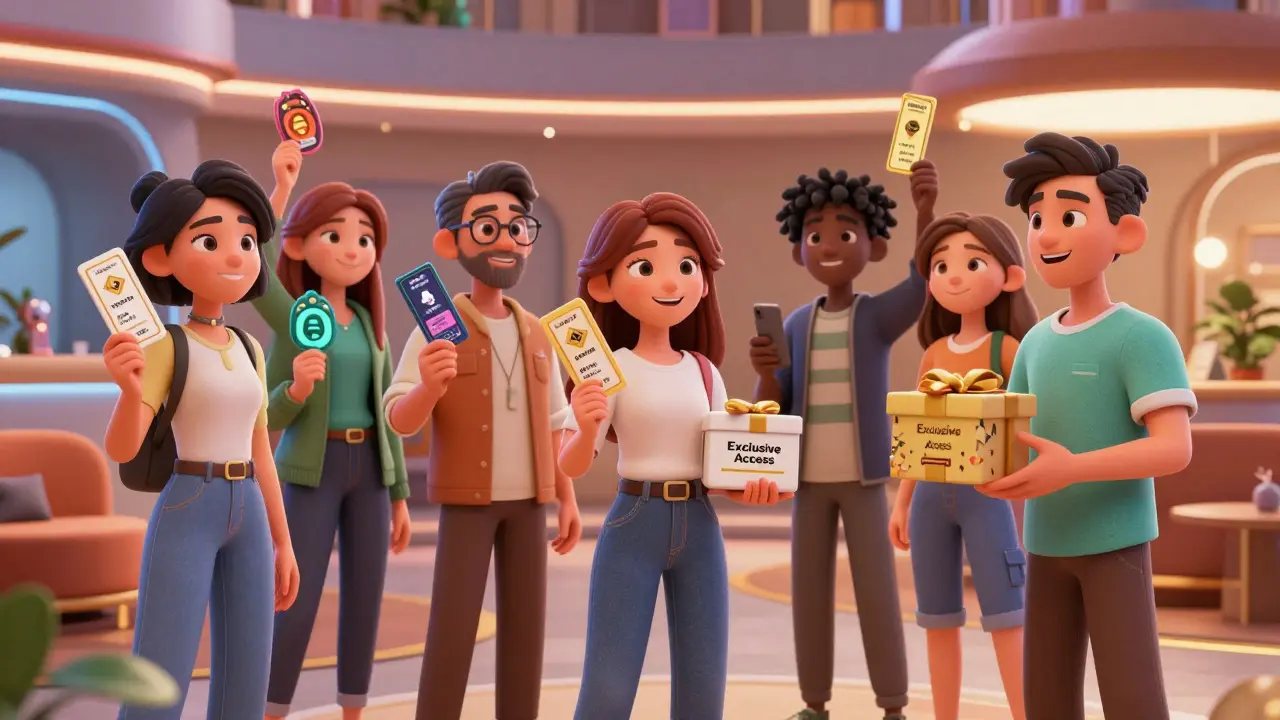
We are also seeing NFTs evolve beyond simple entry passes. They are becoming membership cards that unlock exclusive content, meet-and-greets, or merchandise discounts long after the event ends. This turns a one-time purchase into a lasting relationship between the fan and the artist.
For organizers, the ability to combat fraud and control the secondary market is too valuable to ignore. As scalability improves and costs drop, NFT ticketing will likely become the standard for high-value events, from stadium concerts to exclusive conferences.
Is my NFT ticket safe if I lose my phone?
Yes, as long as you have backed up your wallet’s seed phrase (a list of 12-24 words). Your NFT ticket is tied to your wallet address, not your physical device. You can restore your wallet on a new phone using the seed phrase and regain access to your ticket immediately.
Do I need to pay gas fees to use an NFT ticket?
Usually, no. Most modern NFT ticketing platforms use Layer-2 blockchains or sponsor the transaction fees for the end-user. You might pay a small fee when buying or reselling, but showing the ticket at the door typically doesn’t trigger a blockchain transaction that costs you money.
Can I sell my NFT ticket on any marketplace?
It depends on the smart contract rules set by the organizer. Some tickets are restricted to specific platforms to ensure price caps and royalty payments are enforced. Others may allow open trading. Always check the terms of sale before purchasing.
What happens if the blockchain network goes down?
Blockchains are highly resilient and rarely go down completely. However, if there is a temporary outage, venues usually have offline backup verification methods. Additionally, since the ledger is decentralized, it doesn’t rely on a single server staying online.
Are NFT tickets environmentally friendly?
Modern NFT ticketing largely uses energy-efficient blockchains like Polygon, Solana, or Ethereum Layer-2s, which consume a fraction of the energy compared to early blockchain networks. Many organizers choose these chains specifically to minimize their carbon footprint.
