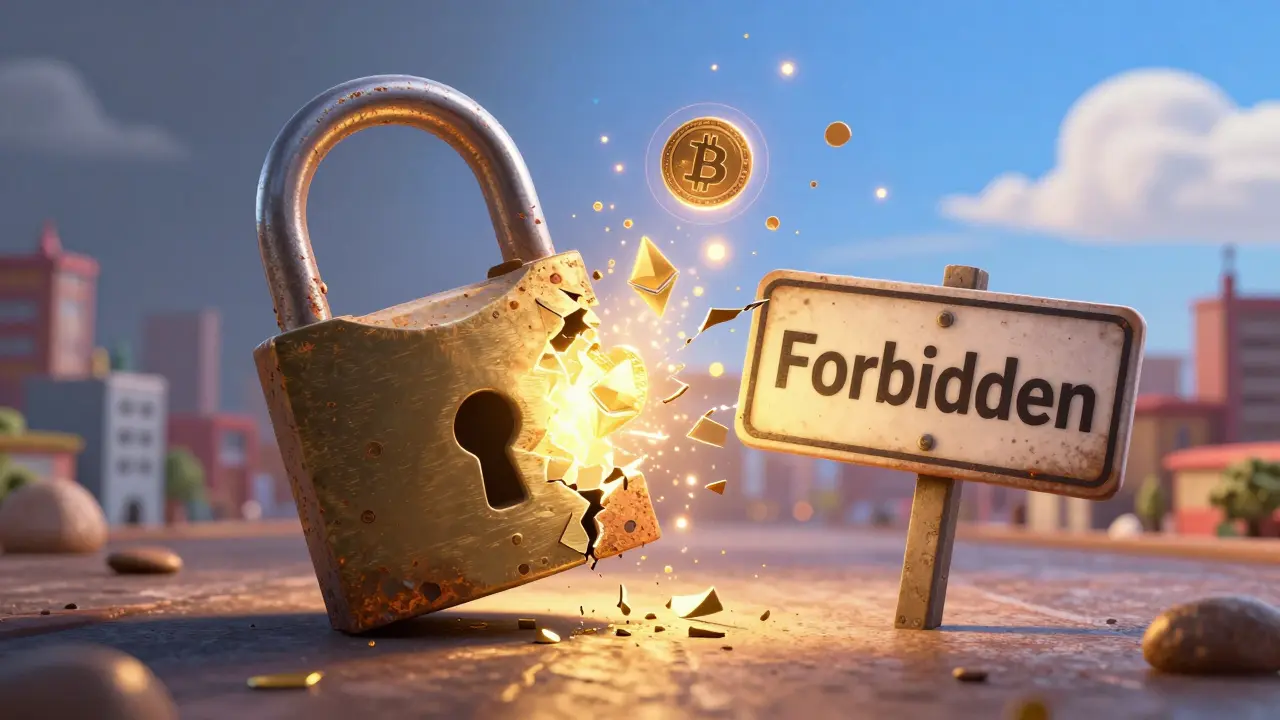
If you're looking for ways to "sneak" into a crypto exchange from Bolivia, you might be operating on outdated information. For a decade, Bolivia was one of the toughest places in the world to trade digital assets, with a strict ban that made the process a nightmare for locals. However, the game changed completely in 2024. You no longer need to hide your activity or use risky workarounds because crypto exchanges Bolivia are now accessible under a new legal framework.
The shift didn't happen by accident. A severe dollar crisis forced the government to stop fighting the tide and start using digital assets as a tool for economic survival. What was once a forbidden activity is now a government-supported path to financial growth. If you're still wondering how to navigate this new landscape, here is exactly how the system works today.
The End of the Crypto Ban
To understand where we are, we have to look at where we were. For years, the Central Bank of Bolivia (also known as the BCB) kept a tight lid on everything digital. Starting in 2014, the BCB banned almost all crypto-related activities, claiming it was necessary to protect the national economy. They doubled down on this in 2020, effectively telling banks to block any transaction that smelled like Bitcoin.
Everything flipped on June 26, 2024, with the release of Resolution No. 82/2024. This wasn't just a slight loosening of rules; it was a full-scale reversal. The government realized that cryptocurrency could help the country manage its dollar shortage and invite new investment. Since that day, crypto usage in Bolivia hasn't just grown-it has exploded by over 500% in a single year.
How to Legally Use Exchanges Today
Accessing an exchange is now straightforward, but there are a few legal milestones you should know about to ensure your funds stay safe. Throughout 2025, the government rolled out specific rules to make the transition from "underground" to "official" seamless.
- Virtual Asset Recognition: In April 2025, Resolution no. 019/2025 officially recognized virtual assets and the companies that trade them, known as Virtual Asset Service Providers (VASPs).
- Legal Framework: By May 2025, the government passed Supreme Decree No. 5384. This is the "big one"-it created the actual law that governs how crypto markets operate and requires exchanges to hold proper licenses.
- Banking Integration: Unlike the ban era, you no longer have to worry about your bank freezing your account for sending money to an exchange. The BCB now treats these platforms as legitimate stores of value.
If you're getting started, your best bet is to use exchanges that comply with the new licensing obligations mentioned in Decree 5384. This protects you from the scams that often plague unregulated markets.
| Feature | Ban Era (2014-2024) | Legal Era (2025-Present) |
|---|---|---|
| Legal Status | Strictly Prohibited | Legal & Regulated |
| Bank Access | Blocked Transactions | Supported / Integrated |
| Stablecoin Use | Risky/Hidden | BCB Authorized for Payments |
| Regulatory Body | BCB (Enforcement) | BCB & VASP Framework |

The Role of Stablecoins and Remittances
One of the most practical changes for the average Bolivian is the adoption of Stablecoins. Because the local currency can be volatile and the US dollar is hard to come by, USD-pegged coins have become a lifeline. In March 2025, the BCB began officially utilizing these assets for cross-border payments and remittances.
Why does this matter for you? It means that if you're receiving money from family abroad or paying a foreign supplier, you can use a crypto exchange to swap Bolivianos for a stablecoin without fear of legal repercussions. It's a pragmatic solution to a real-world economic problem, transforming the exchange from a "speculative casino" into a necessary financial tool.
Learning from El Salvador
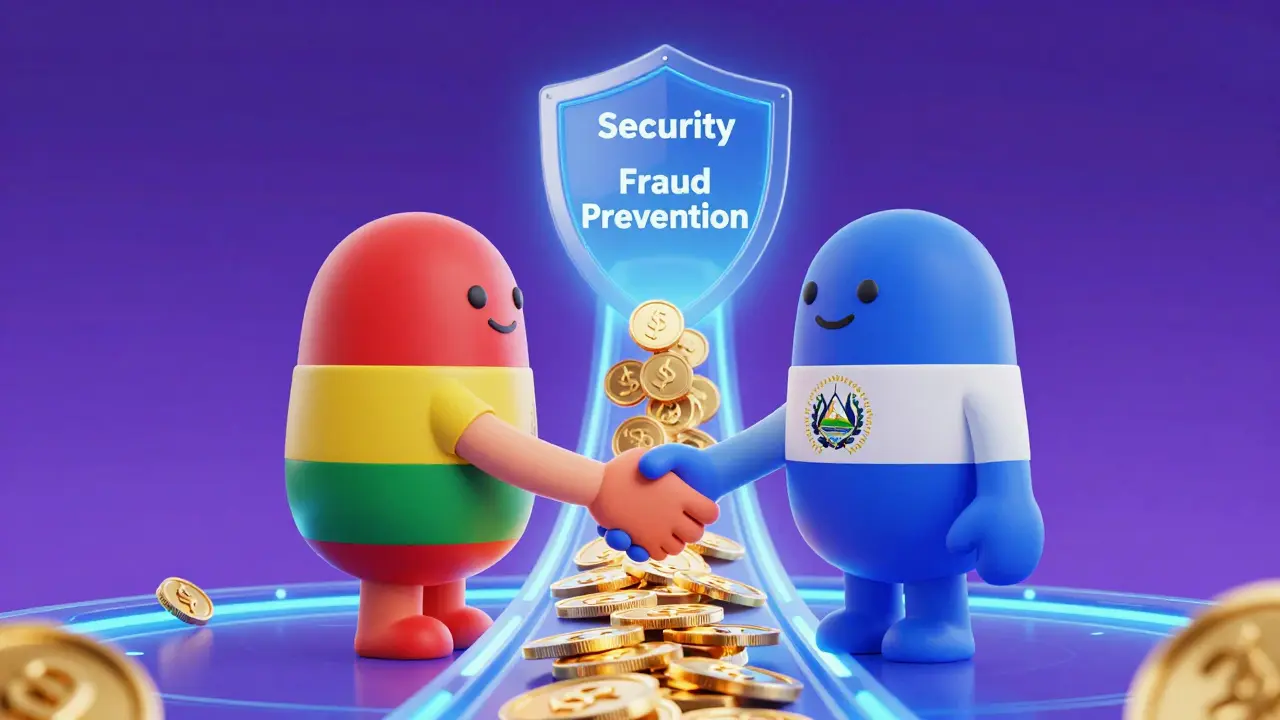
Bolivia isn't just guessing its way through this; they're studying the people who did it first. The BCB signed a Memorandum of Understanding with El Salvador's National Commission for Digital Assets (CNAD). This partnership is essentially a mentorship program for regulation.
By collaborating with CNAD, Bolivia is integrating high-tech blockchain intelligence and risk analysis tools. This means the government is focusing on two things at once: encouraging growth and stopping fraud. They're using data analytics to spot scams before they hit the mainstream, making the current environment much safer for new users than it was during the ban.
Avoiding the Remaining Pitfalls
While the general ban is gone, it's not a total "wild west." There are still specific restrictions. For example, in May 2025, when YPFB (the state oil company) tried to use crypto for fuel imports, the government stepped in and stopped them. This shows that while individuals and fintechs have a lot of freedom, state-level industrial transactions still require strict approvals.
For the regular user, the biggest risk isn't the law-it's the lack of experience. After a decade of being banned, many people are rushing into the market without knowing the basics. The BCB has launched public awareness campaigns, but it's still vital to double-check that any exchange you use is following the licensing rules set by Supreme Decree 5384.
Is it still illegal to own Bitcoin in Bolivia?
No. Since June 26, 2024, the ban on cryptocurrencies was officially lifted via Resolution No. 82/2024. Owning, trading, and using digital assets is now legal.
Can I use my Bolivian bank account to fund a crypto exchange?
Yes. The previous restrictions that forced banks to block crypto transactions have been removed to support financial growth and fintech development.
What are the safest coins to use in Bolivia right now?
USD-pegged stablecoins are highly recommended and are even used by the Central Bank of Bolivia for cross-border payments due to their stability compared to the local currency.
Do crypto exchanges need a license to operate in Bolivia?
Yes. Under Supreme Decree No. 5384 enacted in May 2025, market participants and Virtual Asset Service Providers (VASPs) are subject to licensing obligations.
Why did Bolivia suddenly lift the crypto ban?
The primary driver was a severe dollar crisis. The government viewed cryptocurrency as a pragmatic economic tool to attract investment and facilitate international trade.
What to do next
If you're ready to start trading, don't just jump into the first app you see. Start by verifying if the platform is a registered Virtual Asset Service Provider (VASP) under the 2025 guidelines. If you're concerned about volatility, start with stablecoins-they are the most stable entry point and are officially recognized for payments by the BCB.
For those who are still hesitant, keep an eye on the BCB's public education campaigns. They are designed to help you understand the risks of digital assets without needing a degree in finance. The era of hiding your keys and using VPNs to bypass a ban is over; it's time to use the legal tools available.

Jimmy vasquez
May 1, 2026 AT 18:40It's honestly wild to see such a 180-degree turn from the BCB. Using stablecoins to fight a dollar shortage is a super practical move for any country in that position. If you guys are just starting out, definitely stick to the licensed VASPs to avoid the typical rug-pulls that happen in new markets!
Abhishek Verma
May 2, 2026 AT 19:42Oh sure, because the government is just *so* selfless and suddenly decided to help everyone grow their wealth. Totally believable. 🙄
Brendan Thraxton
May 3, 2026 AT 11:23this is a huge win for financial inclusion in bolivia... the move toward stablecoins is exactly what the region needs to stabilize things for the average person
Gabrielle Danis
May 5, 2026 AT 02:20The integration of the VASP framework is a critical component for long-term sustainability. By aligning with El Salvador's CNAD, Bolivia is effectively importing a proven regulatory blueprint, which significantly reduces the trial-and-error phase. It is imperative that users maintain a rigorous verification process when selecting an exchange, as the legal status of the industry does not inherently guarantee the solvency of individual platforms.
Janis Naglis
May 5, 2026 AT 17:03The synergy here is just incredible!!! Leveraging liquidity pools through stablecoin rails will absolutely optimize the remittance pipeline... it's such a paradigm shift for the local ecosystem!!!
Wayne Gillis
May 7, 2026 AT 03:43LFG!!! 🚀 Bolivia is finally joining the party! 🇧🇴 Imagine the gains now that banks aren't blocking everything! Absolute madness! 💎🙌
edie rosa
May 7, 2026 AT 08:39Typical. People just rush into these things blindly. The government only legalized it because they were desperate, not because they care about your "financial growth." It's just another way for the system to track your every move while you gamble away your savings on a digital coin that has no intrinsic value.
Michael Repak
May 8, 2026 AT 10:02I really hope the public awareness campaigns work!!! It's so important to educate people so they don't get scammed... especially after such a long ban!!!
Nitin Gupta
May 8, 2026 AT 21:14I agree that the focus on stablecoins is a very sensible approach given the volatility of the local currency. It provides a safe harbor for those who are not interested in speculation but need a reliable way to handle cross-border payments.
Iestyn Lloyd
May 10, 2026 AT 06:50The partnership with El Salvador is quite a prudent move. It demonstrates a willingness to learn from peer nations rather than attempting to build a framework from scratch in a volatile market.
April D Thompson
May 10, 2026 AT 17:12This is literally the death of the old guard! We're witnessing the birth of a new financial consciousness in the Andes! The struggle is over, and the digital liberation has begun! It's just so poetic that a dollar crisis led to this breakthrough!
Kara Spadone
May 12, 2026 AT 16:31People think this is "freedom" but it's just another leash. :) Follow the rules and be a good little VASP compliant citizen. :)
debra hoskins
May 13, 2026 AT 12:26Strange how everyone is celebrating. The state oil company getting blocked shows the government still wants to hold the steering wheel tight. This isn't a free-for-all; it's a controlled experiment.
AP Fisher
May 14, 2026 AT 08:00Sounds like a good way to get money from home.
Pramendra Singh
May 14, 2026 AT 13:16It is very heartening to see these changes. I believe that with the right guidance and a positive outlook, many people in Bolivia will find new opportunities for stability through these legal tools. I wish everyone the best of luck in exploring this new landscape responsibly.