
Imagine you are running a validator node on a major blockchain. You have staked your tokens, you are online, and you are earning rewards. Then, suddenly, a chunk of your stake vanishes. This is not a hack in the traditional sense; it is slashing, a built-in penalty mechanism designed to punish validators who act maliciously or negligently. For anyone participating in Proof-of-Stake (PoS) networks, understanding how slashing works-and more importantly, how to prevent it-is the difference between profitable staking and catastrophic loss.
Slashing is the immune system of a PoS blockchain. It exists to make dishonest behavior economically unviable. If a validator tries to cheat the network, the protocol confiscates their staked tokens as a deterrent. While this protects the integrity of the chain, it poses a significant risk to individual operators. One mistake, one misconfigured server, or one moment of carelessness can trigger these penalties. The goal of this guide is to help you understand the mechanics of slashing and implement robust defenses so your assets remain safe.
Understanding the Mechanics of Slashing
To protect against something, you first need to know exactly what it is. In the context of Blockchain Consensus, slashing is an economic penalty enforced by the protocol itself. Unlike Proof-of-Work systems where miners spend electricity, PoS validators put up collateral-their staked tokens. If they break the rules, that collateral is burned or redistributed.
There are two primary triggers for slashing, and they carry very different weight:
- Double Signing: This is the most severe offense. It occurs when a validator signs two different blocks for the same slot or epoch. Essentially, the validator is telling the network two conflicting truths at once. This undermines the finality of the blockchain. Penalties for double signing can be massive, often reaching up to 5% of the validator's total stake, plus the immediate removal from the active set.
- Validator Downtime: This happens when a validator fails to participate in consensus for a prolonged period. While less severe than double signing, it still incurs penalties, typically around 0.1% of the stake per incident. However, repeated downtime can lead to ejection from the validator set entirely.
The severity of these penalties is intentional. By making the cost of corruption higher than the potential reward, the network ensures that rational actors behave honestly. Active participants in the network also play a role here. They act as whistleblowers, detecting invalid signatures and submitting proofs of violation to the blockchain. When a violation is confirmed, the offending validator is slashed, and the whistleblower receives a portion of the confiscated stake as a reward.
The Root Cause: Duplicate Keys and Misconfiguration
Most slashing incidents are not the result of sophisticated cyberattacks. They are usually accidents caused by poor operational hygiene. The number one cause of unintentional slashing is Duplicate Validator Keys.
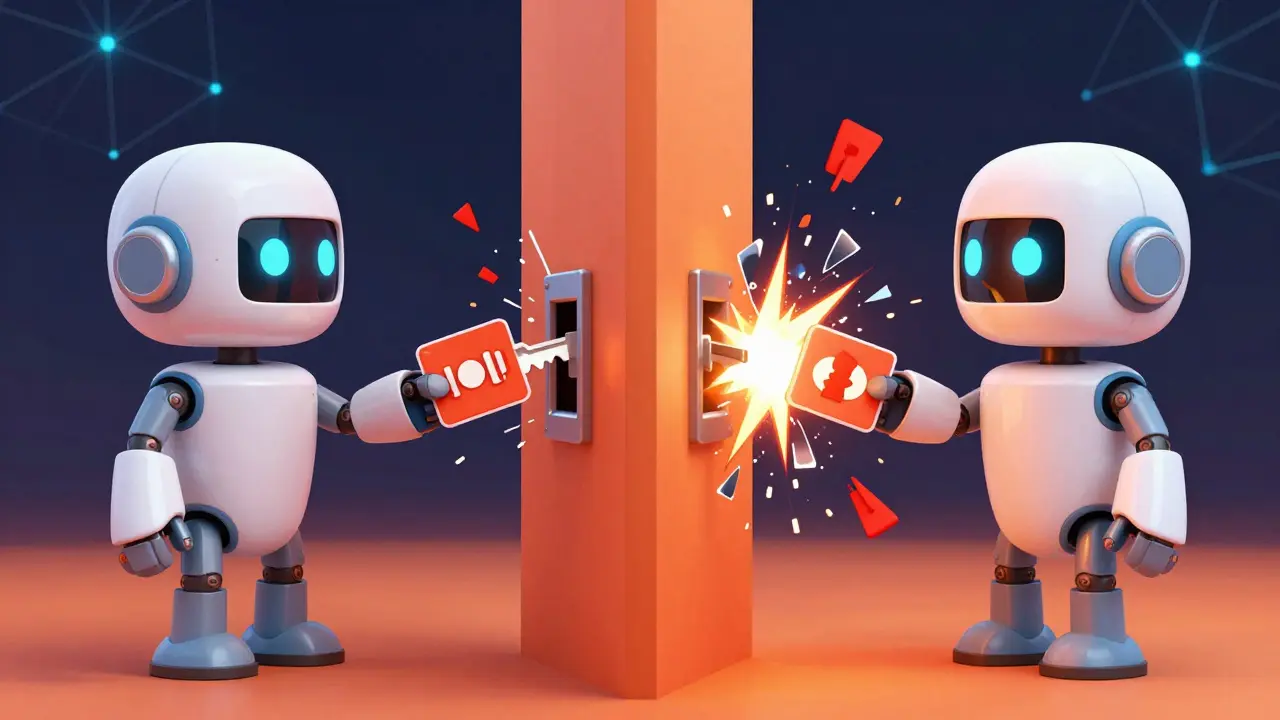
Here is how it typically happens: You run a main validator node. To ensure high uptime, you decide to spin up a backup node. You copy your private keys from the main node to the backup node so both can sign blocks if the primary goes down. Now, you have two distinct clients using the exact same cryptographic identity. If both nodes come online simultaneously-even for a few seconds-they will both attempt to sign the same block. The network sees two signatures from the same validator for the same slot. That is a double-sign event. Result? Slashing.
This scenario highlights a critical rule in validator operations: Never deploy the same validator key to multiple locations or multiple clients simultaneously. The temptation to create redundant setups for safety is understandable, but in the world of PoS, redundancy with shared keys is a liability, not an asset.
Technical Defenses: Key Management and Signers
Protecting against slashing requires moving beyond simple file-based key storage. Industry leaders like Consensys and specialized infrastructure providers have developed robust solutions to eliminate the human error factor.
One effective approach is using remote signer architectures. Tools like Web3 Signer separate the key management from the validator client. The signer maintains a comprehensive record of all recent signatures made by the validator. Before producing a new signature, it checks the request against its history. If signing the requested message would conflict with a previous signature (creating a slashable condition), the signer refuses to produce the signature. This acts as a hard brake on accidental double-signing.
For enterprise-grade security, platforms like CubeSigner take this further. CubeSigner uses hardware security modules (HSMs) sealed within Nitro enclaves on AWS. This means the private keys never leave secure hardware. They are generated, stored, and used for signing entirely within the enclave. No entity-not even the service provider-can extract the keys. This eliminates the possibility of key duplication because the keys cannot be copied out of the secure environment.
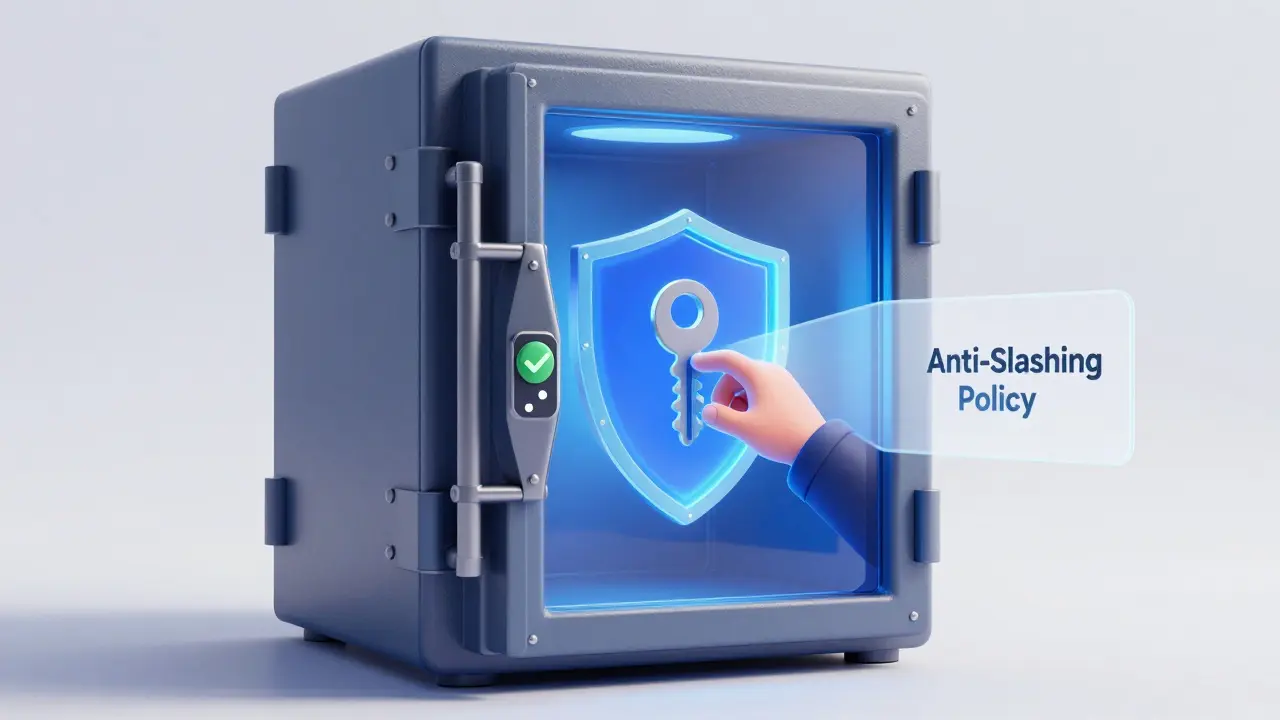
CubeSigner also includes an anti-slashing policy engine. It records the history of every signature produced by each key. Every time a new signing request comes in, the system validates it against the historical data. If the request violates any known slashing conditions for that specific blockchain, the signature is rejected automatically. This provides a layer of protection that is independent of the validator client software itself.
| Strategy | Mechanism | Effectiveness | Complexity |
|---|---|---|---|
| Single Node Operation | Running only one instance per key | High (if disciplined) | Low |
| Remote Signers (e.g., Web3 Signer) | Software check against signature history | Very High | Medium |
| HSM-Based Managers (e.g., CubeSigner) | Hardware isolation + automated policy checks | Maximum | High |
| Duplicate Key Backup | Copied keys on secondary nodes | Negative (Causes Slashing) | Low |
Operational Best Practices for Validators
Technology alone is not enough. Your operational procedures must align with security best practices. Here are actionable steps to minimize risk:
- Avoid Over-Engineering: Do not create complex failover systems that involve copying keys. If your main node goes down, accept the downtime. The penalty for being offline (downtime slashing) is significantly lower than the penalty for double signing. It is better to lose a small amount of stake due to absence than to lose a large portion due to fraud accusations.
- Use Unique Seed Phrases: When setting up multiple validators, ensure each one has a distinct seed phrase and key pair. Never reuse keys across different services or chains unless explicitly supported by non-custodial multi-chain protocols designed for it.
- Implement Strict Access Controls: Follow the principle of least privilege. Only essential personnel should have access to validator infrastructure. Use rigorous access permissions and maintain audit logs. Certifications like ISO 27001:2022 and SOC 2 Type II are good benchmarks for organizational security standards.
- Monitor Network Conditions: Stay informed about network upgrades and changes to slashing parameters. Protocols evolve, and what was safe yesterday might have different implications tomorrow. For example, Ethereum’s EIP-3076 and other specifications define precise conditions for Active Validation Services (AVSes). Understanding these specs is crucial for compliance.
The Economic Impact and Future of Slashing Protection
As the total value locked (TVL) in PoS networks grows, the stakes get higher. Institutional adoption is driving demand for enterprise-grade security solutions. The cost of corruption for adversaries must remain prohibitively high to maintain network trust. Slashing mechanisms are central to this cryptoeconomic design.
Future developments are focusing on standardizing anti-slashing protocols across different blockchains. Interoperability between protection systems is becoming a priority, allowing validators to operate across multiple chains without managing disparate security tools. Additionally, efforts are underway to reduce the technical barrier for smaller validators, making advanced protection features like HSM integration more accessible.
Remember, slashing is not just a punishment; it is a signal. It reflects the health and security posture of the entire network. By protecting yourself against slashing, you are not just safeguarding your own investment; you are contributing to the stability and trustworthiness of the decentralized ecosystem.
What is the difference between slashing and regular staking rewards?
Staking rewards are incentives paid to validators for honest participation and maintaining network uptime. Slashing is a penalty imposed on validators for violating protocol rules, such as double signing or excessive downtime. Rewards increase your stake, while slashing decreases it, potentially leading to ejection from the validator set.
Can I recover my funds if I get slashed?
No, slashing is irreversible. Once the protocol executes a slash, the confiscated tokens are either burned or redistributed to other honest validators. There is no appeal process or recovery mechanism for slashed funds. Prevention is the only viable strategy.
Is it safe to run a backup validator node with the same keys?
Absolutely not. Running two nodes with the same validator keys creates a high risk of double signing if both nodes become active simultaneously. This is the most common cause of unintentional slashing. Always use unique keys for each validator instance.
How do remote signers like Web3 Signer prevent slashing?
Remote signers maintain a local database of all signatures produced by a validator. Before generating a new signature, they check the request against this history. If the new signature would conflict with a previous one (creating a slashable condition), the signer rejects the request, preventing the double-sign event.
What is the typical penalty for validator downtime?
Downtime penalties are generally much smaller than double-signing penalties, often around 0.1% of the staked tokens per incident. However, repeated downtime can accumulate and eventually lead to the validator being ejected from the active set, resulting in the loss of future rewards and potentially the entire stake depending on the protocol's specific rules.
