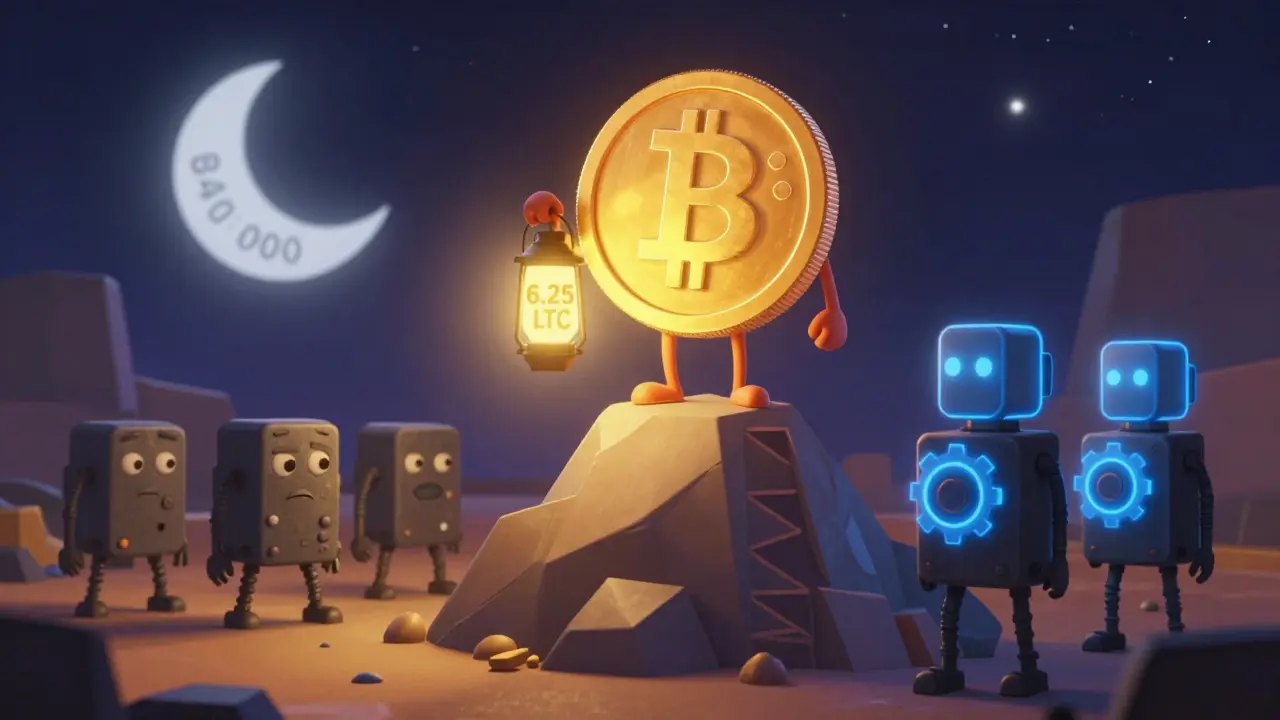
On August 2, 2023, Litecoin’s mining reward dropped from 12.5 LTC to 6.25 LTC per block. That’s a 50% cut. No announcement. No vote. Just code doing what it was programmed to do over a decade ago. This is the Litecoin halving - a quiet, predictable, and powerful economic event that reshapes who mines, who holds, and why price moves after it happens.
What Exactly Is a Crypto Halving?
A halving is a built-in reduction in how many new coins miners earn for validating transactions. It happens at fixed intervals, not because someone decided it was time, but because the math says so. Litecoin’s code was written to cut rewards every 840,000 blocks. Bitcoin does the same every 210,000 blocks. Both are designed to slow down new coin creation until the total supply runs out - 84 million for Litecoin, 21 million for Bitcoin. This isn’t just a technical detail. It’s a deliberate break from how money works in the real world. Central banks can print more dollars whenever they want. Cryptocurrencies like Litecoin can’t. The halving forces scarcity. Less new supply entering the market, while demand stays the same or grows, can push prices up - but only if people believe in it enough to buy.How Litecoin Halving Works Step by Step
Litecoin launched in October 2011 with a 50 LTC block reward. Every 2.5 minutes, a new block is added. That’s four times faster than Bitcoin. Every 840,000 blocks - roughly every four years - the reward is halved:- 2011 (Launch): 50 LTC per block
- 2015: First halving → 25 LTC per block
- 2019: Second halving → 12.5 LTC per block
- 2023: Third halving → 6.25 LTC per block
- 2027 (projected): Fourth halving → 3.125 LTC per block
Why Halvings Matter More Than Just Price
Most people focus on price after a halving. Did LTC go up? Did it crash? But that’s missing the real story. The bigger impact is on mining. Miners spend money on electricity, hardware, cooling, and maintenance. Their profit is the block reward plus transaction fees. When the reward drops by half, their income drops by half - unless fees rise to make up the difference. After the 2023 halving, many small-scale miners shut down. They couldn’t cover costs with 6.25 LTC. But the network didn’t collapse. Why? Because the miners who stayed were the ones who were already efficient - using cheap power, newer hardware, and optimized setups. The network became stronger, not weaker. Less mining power? No. Just better mining power. This is called “mining consolidation.” It’s not bad. It’s natural. The system weeds out weak participants. Only those who can operate profitably at lower rewards survive. That makes the network more secure over time.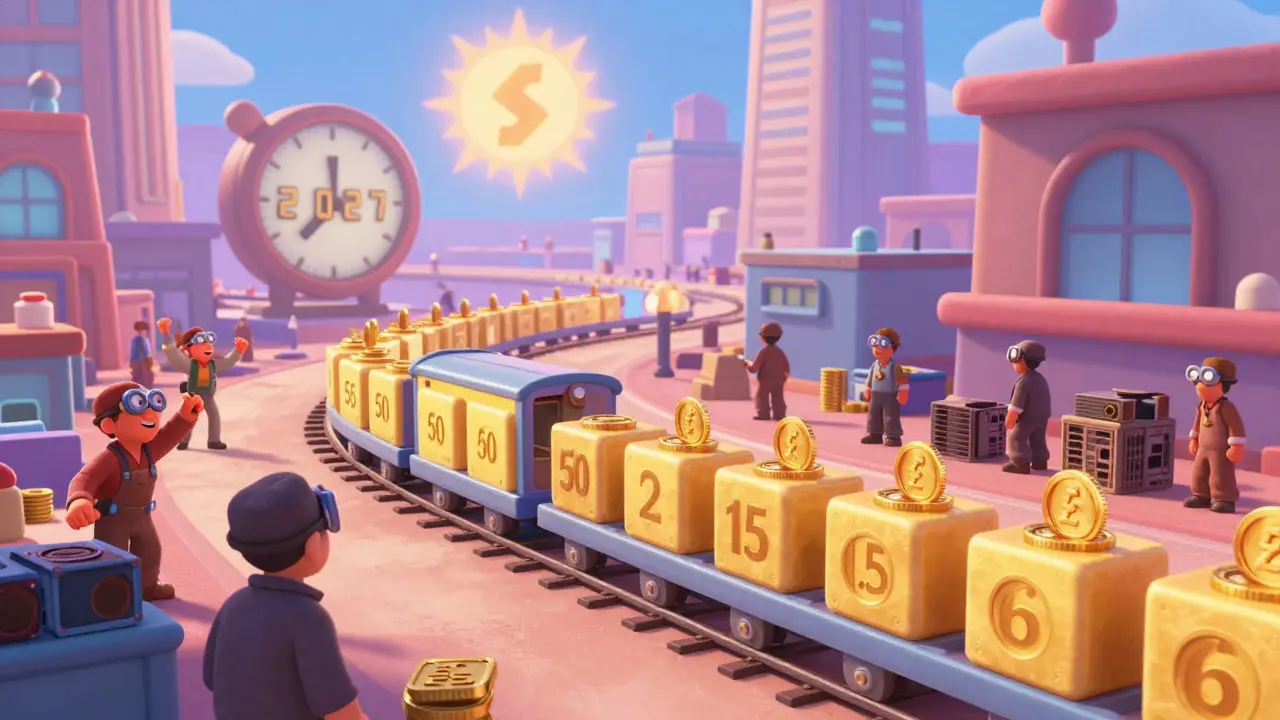
Litecoin vs. Bitcoin Halving: What’s Different?
At first glance, Litecoin and Bitcoin halvings look identical. Both cut rewards every four years. But the details change everything.| Feature | Litecoin | Bitcoin |
|---|---|---|
| Block Time | 2.5 minutes | 10 minutes |
| Halving Interval | Every 840,000 blocks | Every 210,000 blocks |
| Total Supply | 84 million LTC | 21 million BTC |
| Mining Algorithm | Scrypt | SHA-256 |
| First Halving | 2015 | 2012 |
| Current Reward (2026) | 6.25 LTC | 3.125 BTC |
What Happens to Price After a Halving?
History doesn’t guarantee future results, but patterns exist. After the 2015 halving, Litecoin rose from $2 to $100 in 12 months. After 2019, it went from $40 to $150 in six months. After the 2023 halving, it dipped briefly, then climbed to $180 by early 2025. But here’s the catch: these price moves didn’t happen because of the halving itself. They happened because people expected the halving. Months before the event, traders started buying. That’s called “pricing in.” By the time the reward actually dropped, the price had already moved. The real test comes after the hype fades. Expert analysis from TokenMetrics and SpectroCoin shows miners rarely sell their rewards immediately after a halving. Instead, they hold. Why? Because they believe in the long-term value. Selling right after a reward cut would mean locking in losses. So they wait. That reduces selling pressure - which helps support the price. Still, price isn’t guaranteed. If the broader crypto market crashes, Litecoin falls with it. If adoption stalls, the halving means nothing. The mechanism creates potential - not certainty.Who Benefits From Halvings?
Three groups win:- Long-term holders: If you bought Litecoin before the 2023 halving and held, you likely saw your position grow in value. The reduced supply means each coin becomes more valuable if demand holds.
- Efficient miners: Those with low-cost power and modern equipment survive - and even thrive. They gain market share as weaker competitors exit.
- Network security: With fewer miners operating at the edge of profitability, the remaining ones are more committed. That improves decentralization and resistance to attacks.
What Comes Next? The 2027 Halving and Beyond
The next Litecoin halving is expected in late 2027. By then, the block reward will drop to 3.125 LTC. The total supply will be over 80 million LTC - 95% of the way to maximum. What happens then? Transaction fees will need to carry more weight. If users keep transacting on Litecoin, fees will rise. If not, miners may struggle. That’s why adoption matters more than ever. Experts agree: the halving isn’t a magic price button. It’s a long-term economic engine. It ensures Litecoin doesn’t suffer from inflation like fiat currencies. But it also demands discipline - from miners, investors, and users. The real question isn’t “Will Litecoin go up after the next halving?” It’s: “Will enough people still use it in 2030 to make mining profitable without block rewards?”How to Prepare for the Next Halving
If you’re a miner:- Calculate your break-even cost per LTC mined - including electricity, hardware depreciation, and cooling.
- Upgrade to energy-efficient ASICs before the next halving.
- Join a mining pool to reduce variance in payouts.
- Don’t buy just because a halving is coming. Look at network growth, adoption, and developer activity.
- Track hash rate trends - if it drops sharply before the halving, it could signal trouble.
- Use halvings as a reminder to rebalance, not as a trading signal.
- Learn how blockchain supply works before investing.
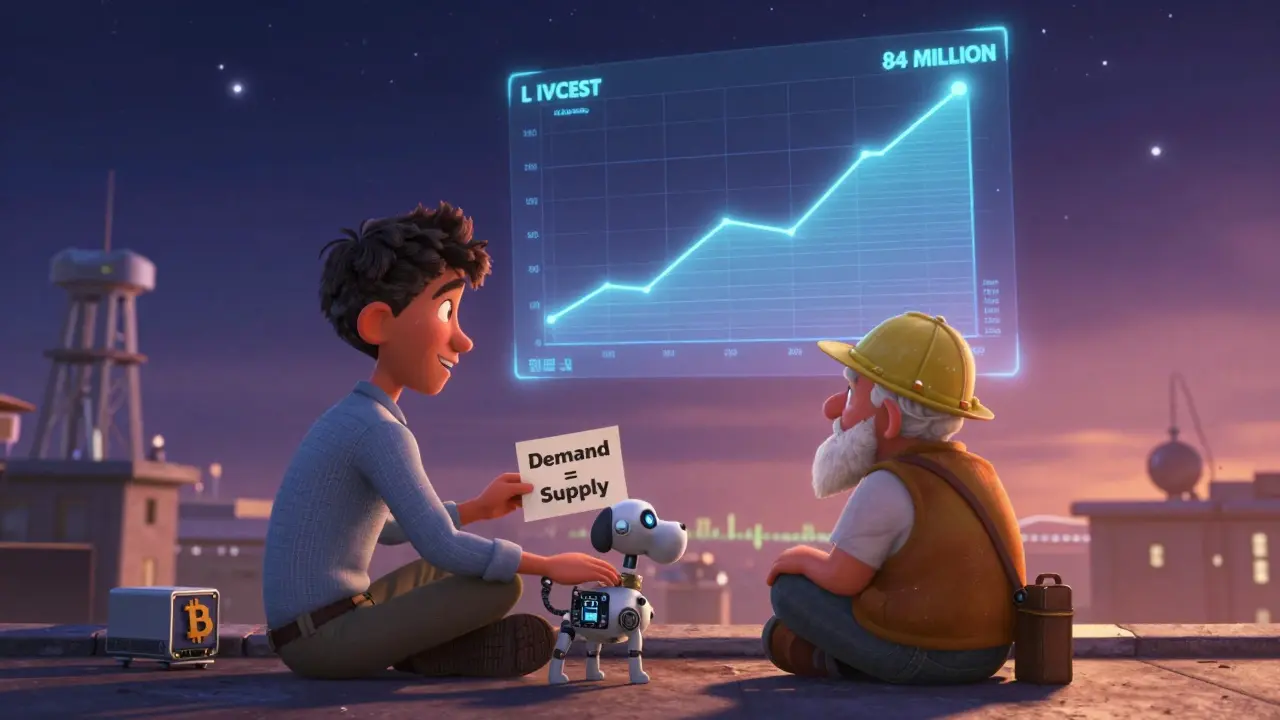
- Understand that scarcity alone doesn’t create value - demand does.
- Read Litecoin’s official documentation. It’s clear, free, and updated regularly.
Final Thought: Halvings Are About Trust, Not Just Math
The code doesn’t care if you believe in Litecoin. But people do. Halvings work because they’re predictable. They create a shared understanding: this currency won’t be inflated away. That’s powerful. In a world where governments print money to solve short-term problems, Litecoin’s fixed schedule feels like a quiet rebellion. It’s not flashy. It doesn’t promise moonshots. But it’s consistent. And in crypto, consistency is rare. The next halving isn’t a moment to watch. It’s a milestone to measure how far this experiment has come - and how much further it can go.When is the next Litecoin halving expected?
The next Litecoin halving is projected to occur around late 2027, following the same four-year cycle established since 2011. It will reduce the block reward from 6.25 LTC to 3.125 LTC per block, continuing the predictable supply reduction built into the protocol.
Does a halving always cause Litecoin’s price to rise?
No. While past halvings have been followed by price increases, the outcome depends on market sentiment, macroeconomic conditions, and adoption trends. Halvings reduce supply, but price rises only if demand increases at the same time. Many investors buy in anticipation, so the actual halving event often has less impact than expected.
Why does Litecoin use the Scrypt algorithm instead of SHA-256?
Litecoin uses Scrypt to make mining more accessible to regular users with GPUs instead of expensive ASICs. This was intentional - to promote decentralization early on. While ASICs now dominate, Scrypt still requires more memory than SHA-256, making it harder to centralize mining power in the hands of a few large operators.
What happens to miners after a halving?
Miners see their income cut in half. Those with high electricity costs or outdated hardware often shut down. Efficient miners with low-cost power and modern equipment survive and gain market share. This process, called mining consolidation, strengthens the network by removing weak participants and improving overall security.
How does Litecoin’s halving compare to Bitcoin’s?
Both use the same 50% reward reduction every four years, but Litecoin’s block time is 2.5 minutes versus Bitcoin’s 10 minutes. That means Litecoin halvings happen more frequently in calendar time, even though both occur after a fixed number of blocks. Litecoin also has a larger total supply (84 million vs. 21 million) and uses a different mining algorithm (Scrypt vs. SHA-256), leading to different mining dynamics.
Will Litecoin ever stop being mined?
Yes. The final Litecoin is expected to be mined around the year 2142. After that, no new coins will be created. Miners will rely solely on transaction fees for income. This is by design - it ensures a fixed, finite supply that cannot be inflated, similar to gold.

kris serafin
January 12, 2026 AT 19:11Tre Smith
January 13, 2026 AT 05:35Ritu Singh
January 14, 2026 AT 01:31Jordan Leon
January 14, 2026 AT 04:49Rahul Sharma
January 15, 2026 AT 22:44Gideon Kavali
January 16, 2026 AT 14:21Allen Dometita
January 17, 2026 AT 08:49Brittany Slick
January 17, 2026 AT 13:55greg greg
January 18, 2026 AT 15:19LeeAnn Herker
January 18, 2026 AT 23:05Sherry Giles
January 20, 2026 AT 10:26Andy Schichter
January 21, 2026 AT 01:59Caitlin Colwell
January 22, 2026 AT 20:54Tiffani Frey
January 24, 2026 AT 07:36Denise Paiva
January 24, 2026 AT 12:54