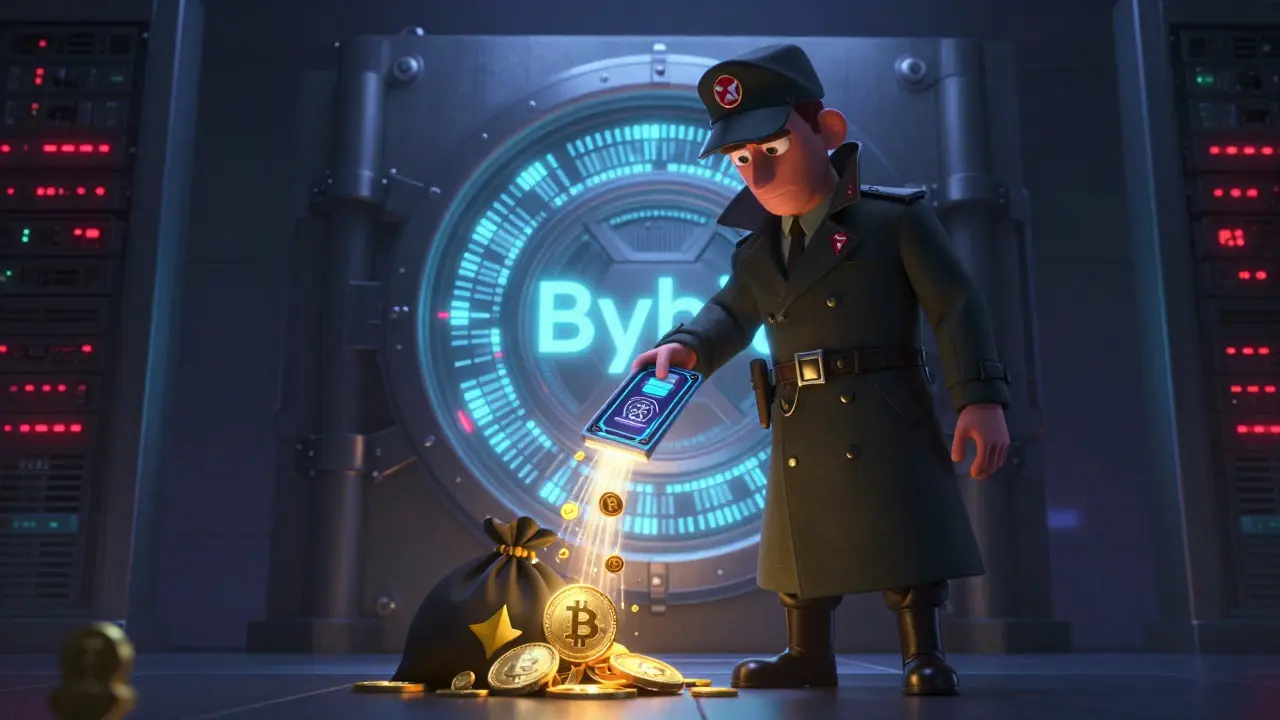
Imagine losing millions of dollars not to a hacker in a hoodie, but to a state-sponsored army operating from the shadows. That is exactly what happened in early 2025 when North Korea-linked groups stole over $1.46 billion from the Bybit exchange. This wasn't an isolated incident; it was part of a record-breaking year where the Democratic People's Republic of Korea (DPRK) siphoned off more than $2.03 billion in cryptocurrency. For investors, exchanges, and regulators, understanding North Korean crypto sanctions and how to identify sanctioned wallet addresses is no longer optional-it is a survival skill.
The landscape has shifted dramatically. What started as opportunistic hacks has evolved into a sophisticated, full-spectrum cyber program that rivals the capabilities of major global powers like China and Russia. With international bodies like the Multilateral Sanctions Monitoring Team (MSMT) releasing detailed reports in late 2025, the rules of engagement are clear. If you touch funds linked to these entities, you risk severe legal penalties and reputational ruin. Let’s break down who is behind this, how they move money, and what you need to do to stay compliant in 2026.
The Scale of the Threat: Record-Breaking Theft
To understand why sanctions are tightening, you first have to look at the sheer volume of stolen assets. According to analysis by blockchain intelligence firm Elliptic published in October 2025, North Korea set a new annual record for crypto theft. The regime stole over $2.03 billion in just nine months of 2025. To put that in perspective, this amount is nearly triple the $712 million stolen in all of 2024 and almost double the previous record year of 2022, which saw $1.35 billion vanish in attacks on the Ronin Network and Harmony Bridge.
These aren't small-time crimes. The funds are directly funnelled into the DPRK’s prohibited nuclear weapons and missile development programs. The United Nations and multiple government agencies have confirmed this link. When the MSMT released its second comprehensive report in October 2025, it highlighted that North Korea is systematically violating international sanctions by stealing cryptocurrency and using the proceeds to purchase weapons. The cumulative known value of cryptoassets stolen by the regime now exceeds $6 billion since tracking began. This isn't just about lost investment capital; it's about funding geopolitical instability.
| Year | Estimated Theft Value | Key Incidents/Context |
|---|---|---|
| 2022 | $1.35 Billion | Ronin Network hack, Harmony Bridge attack |
| 2024 | $712 Million | Increased targeting of DeFi protocols |
| 2025 (Jan-Oct) | $2.03+ Billion | Bybit breach ($1.46B), LND.fi, WOO X, Seedify |
Who Is Behind the Hacks? Key Actors and Groups
You can't fight an enemy you don't know. The U.S. Department of the Treasury’s Office of Foreign Assets Control (OFAC) has been aggressive in naming and shaming the specific entities involved. On July 24, 2025, OFAC sanctioned several key players for their roles in fraudulent IT worker schemes and direct cyber theft. These include individuals like Vitaliy Sergeyevich Andreyev and Kim Ung Sun, as well as organizations such as Shenyang Geumpungri Network Technology Co., Ltd and Korea Sinjin Trading Corporation.
Under Secretary of the Treasury for Terrorism and Financial Intelligence, John K. Hurley, made his position clear: "The North Korean regime continues to target American businesses through fraud schemes involving its overseas IT workers, who steal data and demand ransom." The goal is to protect Americans and hold the guilty accountable. But it goes beyond individual hackers. The MSMT report identifies a broader network involving the Chinyong Information Technology Cooperation Company, which uses cryptocurrency specifically for sanctions evasion.
These groups operate with military precision. They don't just hack exchanges; they run complex operations that include illicit IT work, information theft, and trafficking. The U.S. State Department offers rewards of up to $15 million for information leading to the disruption of these revenue generation schemes. This signals that the U.S. government views this as a top-tier national security threat, not just a financial crime issue.
How North Korea Launderstolen Crypto
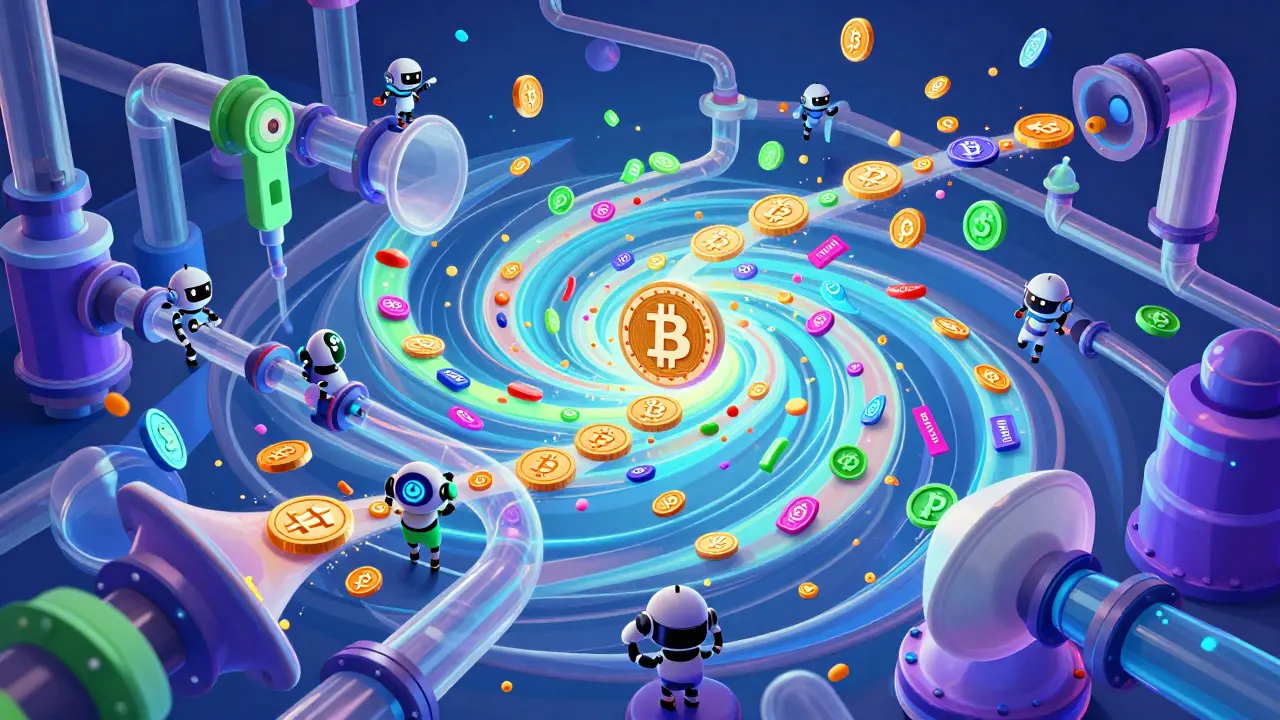
If you think spotting a sanctioned wallet is as simple as checking one address against a blacklist, you’re in trouble. North Korean actors are experts at obfuscation. Once they steal funds-like the massive haul from Bybit-they immediately begin a multi-step laundering process designed to confuse blockchain analysts.
Here is the typical flow:
- Initial Movement: Funds are moved from the victim’s exchange or wallet to intermediate addresses controlled by the hacking group.
- Mixing Services: They use tumblers and mixing services to break the link between the source and destination transactions.
- Cross-Chain Swaps: Assets are swapped across different blockchains (e.g., from Ethereum to Bitcoin via bridges) to complicate tracking.
- Privacy Coins: Funds are often converted into privacy-focused cryptocurrencies like Monero (XMR), which offer enhanced anonymity features.
- Fiat Conversion: Finally, the cleaned crypto is cashed out through offshore exchanges or peer-to-peer markets, converting digital assets into fiat currency that can be used to buy weapons or fund the regime.
This sophistication means that traditional screening methods are insufficient. Financial institutions and crypto businesses must implement advanced blockchain monitoring tools capable of detecting these complex patterns. Elliptic notes that while they attribute over thirty hacks to North Korean actors in 2025, many other thefts share hallmarks of DPRK activity but lack sufficient evidence for definitive attribution. The actual figure may be even higher.
Tracking Sanctioned Wallet Addresses
So, how do you actually track these wallets if the addresses change constantly? The answer lies in cluster analysis and intelligence-led attribution. Blockchain analytics firms like Elliptic, Chainalysis, and TRM Labs use machine learning to group addresses that likely belong to the same entity. Even if a hacker uses a new address every time, behavioral patterns-such as timing, transaction sizes, and interaction with known mixing services-reveal the connection.
However, there is a catch. Specific wallet addresses are rarely published in public reports due to operational security concerns. Releasing them publicly would alert the hackers, allowing them to move funds before they can be frozen. Instead, compliance teams rely on private databases and real-time screening APIs provided by these analytics firms. Major cryptocurrency exchanges now implement real-time screening against known DPRK-associated wallet clusters. If a transaction involves a flagged address, it is blocked or flagged for review.
For businesses, this means integrating these tools is non-negotiable. The learning curve steepened significantly in 2025. You need systems that can detect not just static blacklists, but dynamic behavioral anomalies. If your platform allows users to deposit or withdraw funds without robust AML (Anti-Money Laundering) checks, you become an unwitting accomplice in sanctions evasion.
The International Response: MSMT and UN Resolutions
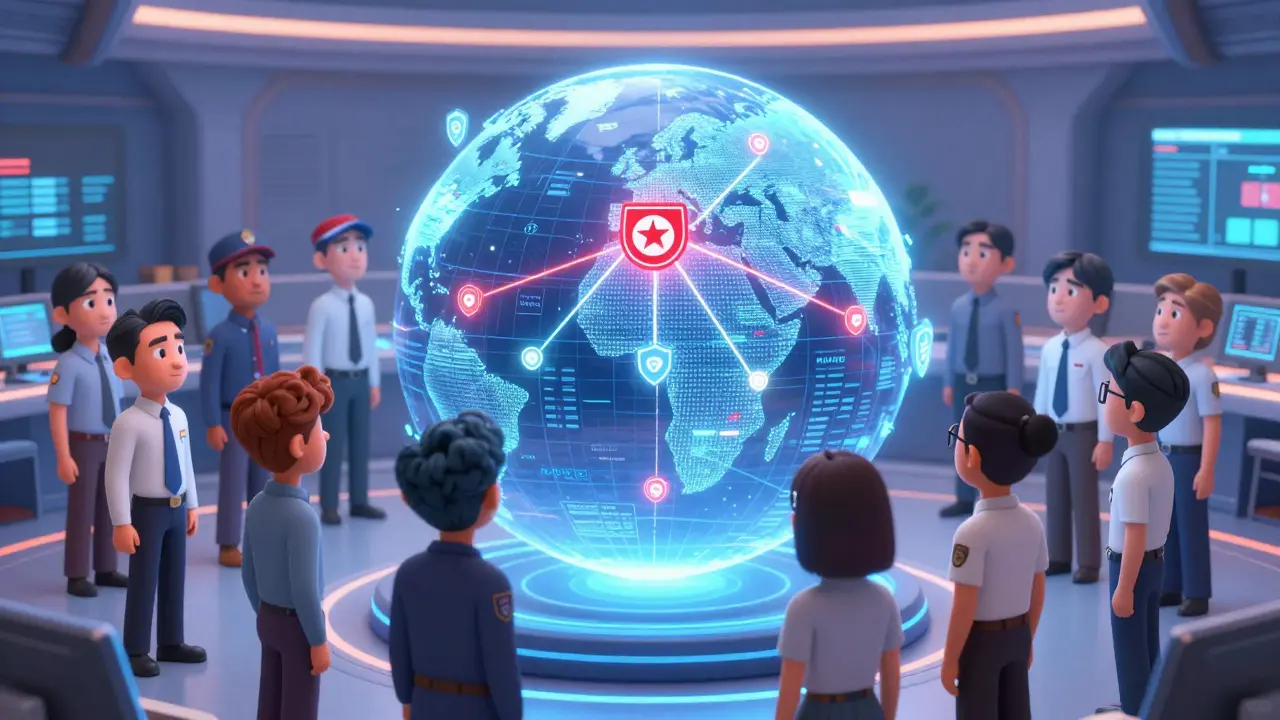
The fight against North Korean crypto theft is a global effort. The Multilateral Sanctions Monitoring Team (MSMT) represents a significant evolution in enforcement. Established to replace the disbanded UN Panel of Experts, the MSMT consists of 11 participating nations, including Japan, the United States, South Korea, and eight others. Their mandate is to ensure the effectiveness of relevant UN Security Council Resolutions (UNSCRs).
In their joint statement accompanying the second report in October 2025, these nations asserted that North Korea’s cyber program now rivals the sophistication of major state actors. They called for the complete dismantlement of North Korea’s nuclear and ballistic missile programs. The coordination between the U.S., Japan, and South Korea has been particularly tight, with foreign ministries issuing joint statements addressing the threats posed by DPRK IT workers.
This international alignment creates a powerful net. While North Korea tries to exploit gaps between jurisdictions, the shared intelligence and coordinated sanctions make it increasingly difficult to find safe havens for their stolen wealth. The MSMT’s focus on both cryptocurrency theft and foreign currency earnings generated by IT workers highlights the breadth of the threat. It’s not just about code; it’s about people being exploited in fraudulent employment schemes abroad.
What This Means for Businesses and Investors in 2026
As we move into 2026, the pressure on compliance is intensifying. Cybersecurity firms predict that North Korea will increasingly target decentralized finance (DeFi) protocols and cross-chain bridges. These areas are attractive because they often lack the centralized controls and KYC (Know Your Customer) requirements of traditional exchanges. The pattern established by the Bybit breach suggests that high-value targets with large liquidity pools will remain primary objectives.
For crypto businesses, here is your checklist for staying compliant:
- Implement Real-Time Screening: Use blockchain analytics providers to screen all incoming and outgoing transactions against updated DPRK wallet clusters.
- Monitor DeFi Interactions: If your service interacts with DeFi protocols, ensure you have visibility into the underlying smart contract interactions and counterparty risks.
- Train Staff on Red Flags: Educate your team on the signs of North Korean-linked activity, such as unusual transaction patterns or attempts to interact with known mixing services.
- Stay Updated on Sanctions Lists: Regularly check OFAC and UN sanctions lists for new designations. The list grows frequently, as seen with the July 2025 updates.
- Report Suspicious Activity: File Suspicious Activity Reports (SARs) promptly with relevant authorities. Cooperation with law enforcement can mitigate liability.
For individual investors, the lesson is caution. Never engage with platforms that lack proper regulatory oversight. If an exchange promises high returns with little security, it might be a front for money laundering. Always verify the security practices of any platform you use. The reputational damage to the industry from these hacks is significant, as noted by the University of Hawai'i at West O'ahu's Cyber Program. Protecting your assets starts with choosing trustworthy partners.
Future Outlook: The Cat-and-Mouse Game Continues
Will North Korea stop? Unlikely. The regime has demonstrated remarkable adaptability. As blockchain analytics capabilities improve, so do their laundering techniques. Elliptic’s threat forecasting suggests these attacks will remain a persistent threat through at least 2026. However, the long-term viability of their operations faces growing challenges. International cooperation is strengthening, and the technical ability to trace funds is improving exponentially.
The U.S. Treasury’s “whole-of-government” effort, combined with the MSMT’s rigorous reporting, creates a hostile environment for DPRK cybercriminals. Every stolen dollar is harder to spend than the last. For the crypto industry, this is a wake-up call. Security and compliance are not afterthoughts; they are the foundation of trust. By understanding the mechanics of North Korean crypto sanctions and actively monitoring sanctioned wallet addresses, you play a crucial role in disrupting this illicit revenue stream. Stay vigilant, stay compliant, and keep your assets secure.
How much cryptocurrency did North Korea steal in 2025?
According to Elliptic's analysis from October 2025, North Korea-linked hacking groups stole over $2.03 billion in cryptocurrency during the first nine months of 2025 alone. This includes a massive $1.46 billion breach of the Bybit exchange in February 2025.
What is the MSMT and why is it important?
The Multilateral Sanctions Monitoring Team (MSMT) is an initiative by 11 nations, including the US, Japan, and South Korea, to monitor and report on North Korea's sanctions violations. Their second report, released in October 2025, highlighted the sophistication of DPRK's cyber program and its role in funding weapons development.
Can I see a list of sanctioned North Korean wallet addresses?
Specific wallet addresses are rarely published publicly to avoid tipping off hackers. Instead, businesses should use blockchain analytics tools like Elliptic or Chainalysis that provide real-time screening against updated clusters of sanctioned addresses. Individuals should rely on regulated exchanges that perform these checks automatically.
Who are some of the sanctioned entities involved in North Korean crypto theft?
In July 2025, the U.S. Treasury sanctioned individuals like Vitaliy Sergeyevich Andreyev and Kim Ung Sun, as well as entities such as Shenyang Geumpungri Network Technology Co., Ltd and Korea Sinjin Trading Corporation for their roles in IT worker fraud and cyber theft schemes.
How do North Korean hackers launder stolen cryptocurrency?
They use a multi-step process involving mixing services to obscure transaction trails, cross-chain swaps to move assets between different blockchains, conversion to privacy coins like Monero, and finally cashing out through offshore exchanges or peer-to-peer markets to convert crypto into fiat currency.
What is the reward for information leading to the disruption of North Korean revenue schemes?
The U.S. Department of State offers rewards of up to $15 million for information that leads to the disruption of North Korea's primary revenue generation schemes, including cryptocurrency theft and illicit IT work.
Why are DeFi protocols becoming targets for North Korean hackers?
Decentralized Finance (DeFi) protocols often lack the centralized controls and Know Your Customer (KYC) requirements of traditional exchanges. This makes them attractive targets for hackers looking to steal and launder funds with less immediate scrutiny.
How does North Korea use stolen crypto?
The stolen cryptocurrency is directly funneled into funding the DPRK's prohibited nuclear weapons and missile development programs. It serves as a critical revenue stream to circumvent international sanctions.

ELNORA JEFFERSON
July 2, 2026 AT 05:12Another day another billion stolen by the north koreans while we sit here reading articles about it. It is honestly exhausting to see how little changes in this industry despite all the warnings.
Carol @minaszilda
July 4, 2026 AT 00:44We need to remember that every person involved in these schemes is likely acting out of desperation or coercion. It is important to approach this with empathy for the individuals trapped in the system, even as we condemn the actions of the regime. Let us focus on solutions that protect both investors and vulnerable workers.
John Curry
July 5, 2026 AT 17:03The sheer scale of it is mind-boggling when you really stop to think about it. Two billion dollars vanishing into the ether, funneled directly into weapons development. It feels like watching a slow-motion car crash where everyone knows the outcome but no one seems able to hit the brakes. The sophistication of these groups rivals actual state actors from major powers, which is terrifyingly ironic given who they are.
Trent Erman1
July 6, 2026 AT 16:50Hey everyone! I have been diving deep into blockchain analytics lately and wow, the data is wild. If you are not using real-time screening tools right now, you are basically leaving your front door wide open. I highly recommend checking out Elliptic or Chainalysis if you run any kind of platform. Stay safe out there! 🚀💻
Fiona Ellis
July 7, 2026 AT 07:34I must say, it is quite fascinating how they manage to move funds across chains so seamlessly. One might wonder if the exchanges are truly doing enough due diligence or if they are just turning a blind eye to keep fees flowing. It is rather presumptuous to assume all compliance measures are effective when billions still slip through. 😒
Nicole Woessner
July 8, 2026 AT 23:02in my country we see similar issues with informal money transfer systems but crypto makes it so much harder to track because borders dont really exist online anymore. its scary how fast they can move assets before anyone notices
Jon Milton
July 9, 2026 AT 23:31This is exactly why we need stricter controls on DeFi protocols. These decentralized platforms are essentially lawless zones where criminals can operate with impunity. It is time for regulators to step in and shut down these loopholes before more money is lost. We cannot let innovation become an excuse for negligence.
Sajjad Ghorbani Moghaddam
July 10, 2026 AT 23:04I think what people often miss is the human element behind these hacks. Many of the IT workers are likely unaware of the full extent of their involvement until it is too late. We should be educating potential victims abroad rather than just punishing them after the fact. Prevention is always better than cure.
Rebecca Shoniker
July 12, 2026 AT 09:16It is absolutely imperative that financial institutions implement robust AML frameworks immediately!!! The failure to do so is not merely negligent; it is complicit in sanctions evasion!!! You cannot claim ignorance when the tools for detection are readily available!!! Compliance is not optional; it is mandatory!!!
Jay Sharma
July 12, 2026 AT 12:06Wake up sheeple. This is all part of the great reset. They want you to lose faith in traditional banking so they can push CBDCs down your throat. North Korea is just a scapegoat to justify total surveillance of your finances. Do your own research and don't trust the mainstream narrative.
Scott Miller
July 13, 2026 AT 20:57Get tough on these hackers! We need to sanction every single exchange that touches these funds without question. No more excuses, no more leniency. Protect American interests first and foremost. If you are helping them launder money, you are an enemy of the state.
Abby Martin
July 15, 2026 AT 11:17I am so tired of hearing about how sophisticated these hackers are. It is basic security 101. If your exchange gets hacked for over a billion dollars, you did something wrong. Stop blaming the victim and start holding these companies accountable for their incompetence. It is embarrassing.
Mélanie Boulay
July 15, 2026 AT 22:50While I understand the urgency of the situation, I believe that rushing into implementation of new screening technologies without proper oversight could lead to unintended consequences for legitimate users. We must ensure that our response is measured, thoughtful, and respects individual privacy rights while still addressing the threat effectively. It is a delicate balance that requires careful consideration from all stakeholders involved in the process.
Maurice Flynn
July 17, 2026 AT 12:56Just observing the trend here. It seems like every year the numbers go up. Interesting how the methods evolve but the goal stays the same. Not sure what can be done other than stay vigilant and hope for the best. Time will tell if the new regulations make any real difference.
nancy jarecki
July 19, 2026 AT 10:03The layman's understanding of blockchain obfuscation techniques is painfully apparent in this article. Cluster analysis is not magic; it is probabilistic inference based on heuristic patterns. Those who fail to grasp the nuances of zero-knowledge proofs and cross-chain atomic swaps are simply ill-equipped to navigate the modern financial landscape. Pathetic.
Robert Hundley
July 21, 2026 AT 04:00Man this is crazy stuff! I never realized how much money was being moved around like this. Gotta love the tech side of things though, always learning something new. Keep those wallets secure folks! 👍
Melissa L
July 21, 2026 AT 12:13i cant belive they stole so much money. its just sitting there in digital form and poof its gone. i guess i need to be more carefull with my crypto too
Rob Morton
July 22, 2026 AT 02:33What fascinates me is the psychological aspect of these operations. How does a group maintain such discipline and secrecy over years? It suggests a level of organizational structure that is rarely seen in typical cybercrime rings. Understanding their mindset might be key to predicting future moves.
Routh Middaugh
July 23, 2026 AT 18:16It is interesting to note that the international community is finally coming together on this issue. However, one must ask if this unity is sustainable in the long term. Geopolitical tensions often overshadow cooperative efforts. Will this alliance hold when economic interests diverge again? Only time will tell.
Ryan Peters
July 25, 2026 AT 07:34Typical Western weakness. We sit around debating ethics while they build missiles. The US Treasury needs to stop playing nice and freeze every asset linked to these scumbags immediately. No more reports, no more studies. Action. Now. Or admit we are losing the war.