You've probably heard the buzz about Bitcoin Ordinals-those unique digital artifacts inscribed directly onto the Bitcoin blockchain-but finding a reliable place to manage them is tricky. Many traders are eyeing OKX as a leading cryptocurrency exchange rebranded from OKEx in 2021, yet there's confusion over whether they actually support Ordinals natively. The short answer is nuanced: while the exchange itself focuses on tokenized assets, its ecosystem integrates deeply with Ordinals via the wallet. As we navigate through April 2026, understanding this distinction is crucial before you deposit a single satoshi.
If you're reading this, you're likely weighing your options between OKX and giants like Binance or Coinbase. You want to know if it's safe, cheap enough to matter, and if you can actually handle those cool BRC-20 tokens and inscriptions you've been chasing. This isn't just another generic review; I'm breaking down exactly where OKX stands in the current 2026 market landscape. We'll look at the hard numbers on security, the gritty details of fee structures, and specifically address the elephant in the room regarding regional restrictions that might keep you locked out depending on where you sit.
Executive Summary: Key Takeaways
- Ordinals Support: OKX does not offer direct trading pairs for Bitcoin Ordinals on its main spot engine, but the integrated OKX Wallet supports managing these assets across Bitcoin-based networks.
- Trading Power: With a matching engine handling 300,000 orders per second, it competes technically with top-tier rivals like Binance.
- Regulatory Reality: Accessible in 180+ countries, but strictly unavailable for users physically located in the United States, Canada, or mainland China.
- Security Rating: Holds a AAA rating from CER.live and utilizes zk-STARK technology for transparent Proof of Reserves.
- Fee Structure: Standard maker fees start at 0.08%, dropping significantly with high volume or holding the native OKB token.
Understanding the Platform Architecture
To truly grasp why OKX Ordinals functionality feels different here compared to dedicated marketplaces, you need to understand the platform's structure. Founded in 2017 by Star Xu, the exchange evolved from a simple spot trading hub into a comprehensive DeFi gateway. By early 2026, they process over $45 billion in daily average trading volume globally, ranking just behind Binance and Coinbase.
The system operates on three distinct levels. First, the Spot Market, where you buy established coins like Ethereum or Solana. Second, the Derivatives Market, offering futures contracts with leverage reaching up to 125x-a feature that serious traders love but beginners should avoid. Third, and most relevant to you, is the DeFi Infrastructure provided through the Web3 wallet ecosystem. Unlike Coinbase, which keeps its centralized and decentralized wallets somewhat separate, OKX bridges them closely. This hybrid approach means when you interact with Bitcoin inscriptions, you aren't just swapping a stock ticker symbol; you're accessing a non-custodial environment that holds the actual data.
| Feature | OKX | Binance | Coinbase |
|---|---|---|---|
| Base Maker Fee | 0.08% | 0.10% | 0.40% (Standard) |
| Max Futures Leverage | 125x | 125x | 3x |
| Supported Countries | 180+ | ~180 | 100+ |
| US Availability | No | Limited | Yes |
| Proof of Reserves | zk-STARK | Merkle Tree | Merkle Tree |
Deep Dive into Ordinals and Bitcoin Integration
This is likely the primary reason you clicked on this title. Can you handle Bitcoin Ordinals on OKX? The direct answer requires some precision. On the central order book-the screen where you click 'Buy' and 'Sell' for standard coins-you won't see a dedicated "Ordinals" marketplace like you might find on Gamma.io or specialized BRC-20 portals. Instead, OKX channels this functionality through their Wallet ecosystem.
When you download the OKX Wallet app or access it via the web interface, it acts as a multi-chain browser. Since Ordinals are essentially data inscriptions on Bitcoin, the wallet allows you to view, send, and receive them. However, this creates a separation of concerns. Your exchange account holds the funds you trade, while the wallet holds the assets you intend to interact with as NFTs. This setup offers flexibility; you can move assets from the hot wallet to the exchange for quick swapping if liquidity is needed, though the friction of moving Ordinals back and forth can sometimes be higher than expected due to network congestion.
In terms of specific utility, Slashdot's comparison tools identified OKX as a "Top P2P Crypto Exchange for Ordinals" in mid-2025 because of this wallet integration. Users appreciate the security layer that comes with the exchange backing the wallet operations. For instance, if you lose your private keys in a standalone wallet, recovery is often impossible. With OKX's ecosystem, you have additional security layers and customer support options (albeit slower, we'll discuss that later). It's worth noting that support for new inscription protocols is updated regularly; as of April 2026, the system supports standard Ordinals protocol v1 and select newer iterations found on testnets.
Fees and Cost Efficiency
One thing that immediately sets OKX apart from legacy financial systems is the transparency of costs, but hidden fees can still eat into profits if you aren't paying attention. The standard spot trading fee sits at 0.1% for takers and 0.08% for makers. That sounds small, but if you're scalping markets with high frequency, it adds up fast.
Here is where the native token, OKB, becomes vital. Holding OKB allows you to pay fees with the token, effectively giving you a discount that brings rates down significantly for long-term holders. If you hold OKB and maintain a monthly trading volume above certain thresholds, you qualify for the VIP tiers. The Diamond tier, for example, drops taker fees to 0.06%. Compare this to Coinbase Advanced Trade, where fees hover around 0.60% for lower volumes unless you are a massive institutional player. This fee structure makes OKX particularly attractive to professional day traders who move tens of thousands of dollars daily.
Deposits are generally free when transferring crypto, but fiat on-ramps vary. Buying USDT or BTC using a credit card via third-party partners can cost anywhere from 1.5% to 3.0% in processing fees depending on your region. In North America, this route is blocked entirely due to sanctions and regulatory firewalls, forcing local users to rely on peer-to-peer (P2P) markets, which carry their own counterparty risks. Withdrawal times depend heavily on the method; crypto withdrawals are usually instant, whereas fiat SEPA transfers can take 3 to 5 business days.
Security Protocols and Financial Transparency
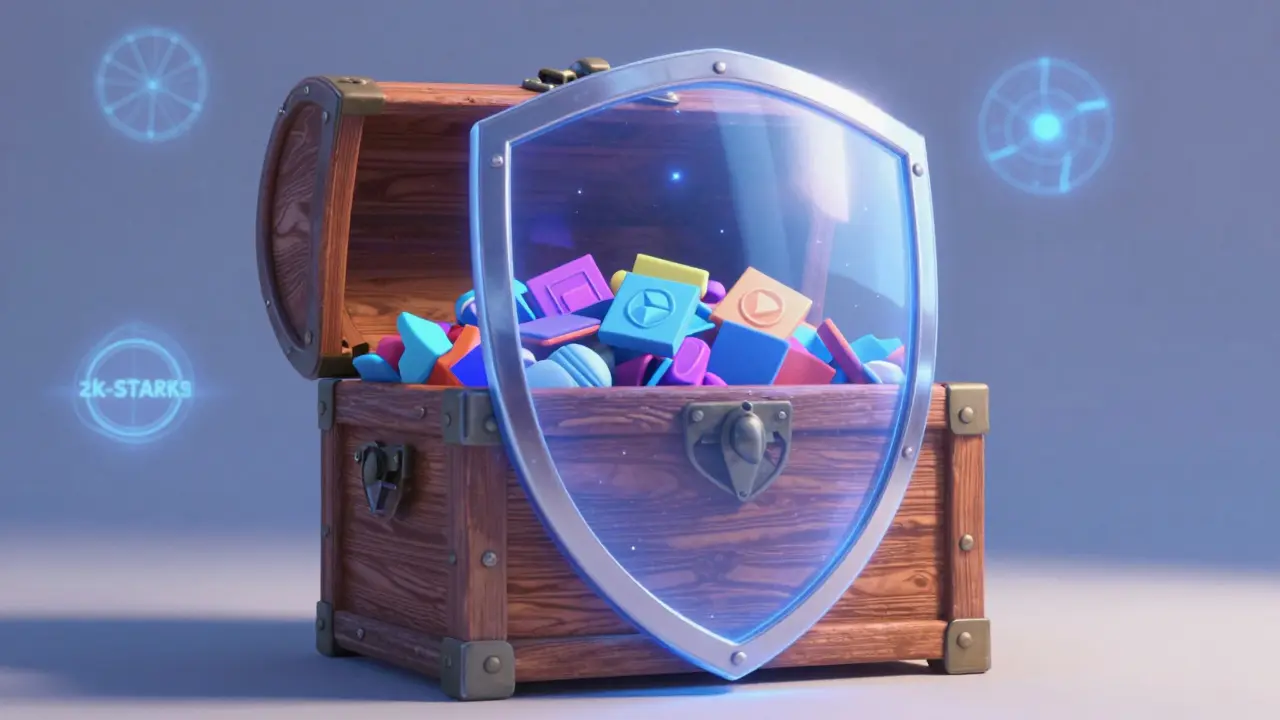
We don't need to remind you how quickly trust evaporates in the crypto world. FTX taught us all that lesson. OKX has spent years trying to distance itself from that shadow by being aggressive about transparency. Their signature feature is the Proof of Reserves (PoR) system. Most exchanges use a Merkle tree proof where they show a snapshot of liabilities against assets. OKX took it a step further using zk-STARKs (Zero-Knowledge Scalable Transparent Arguments of Knowledge).
Why does this matter to you? Traditional proofs can theoretically be faked in snapshots. zk-STARKs allow the exchange to prove that user balances exist mathematically without revealing individual user transaction histories. It's a cryptographic guarantee. They publish these audits regularly, often quarterly. As of Q1 2026, independent auditors consistently confirm their solvency. This earns them a AAA security rating from CER.live, a metric that many retail investors check before committing capital.
Beyond the balance sheet, their operational security includes multi-signature cold storage for the majority of user funds. They also enforce withdrawal whitelisting by default on new accounts. This means if someone hacks your email and tries to drain your account, the money leaves the exchange for a pre-approved wallet address only. You can change this in settings, but keeping it on provides an extra firewall against phishing attacks.
User Experience and Customer Support
A platform is only as good as its help desk when things go wrong. OKX's interface offers three modes: Beginner, Advanced, and Professional. This gradation helps prevent cognitive overload for newcomers who might accidentally set complex limit orders. Most experienced users switch to the Advanced mode within a couple of weeks to unlock features like charting overlays and API connections.
The user experience isn't flawless. A common complaint across community forums involves the response time for support tickets. Data suggests email support takes an average of 72 hours to respond. While their live chatbot is available 24/7, it's notorious for looping on basic queries without resolving complex account issues. If you are used to the instant gratification of fintech apps, this delay can be frustrating during volatile market crashes where a frozen withdrawal is terrifying.
Despite the support lag, the educational resources are robust. The OKX Academy offers courses on technical analysis and blockchain basics. This is rare for an exchange; many simply provide price charts. These resources help bridge the gap for users learning about concepts like "slippage" or "liquidity pools," making the platform more welcoming to those willing to invest time in learning rather than just gambling on green candles.
Regional Restrictions and Regulatory Landscape
We need to talk about geography. You could have the best strategy in the world, but if your IP address triggers a block, you're out of luck. OKX is strictly unavailable in the United States, Canada, and mainland China. This stems from their decision to prioritize global volume over navigating the strict SEC regulations that stifle innovation in those specific zones. While Coinbase thrives in the US due to compliance, OKX dominates in Asia, Europe, and the Middle East.
In 2026, the regulatory picture continues to shift. OKX secured a VASP license in Dubai recently, opening doors for UAE residents. Simultaneously, the European Union's MiCA regulations require stricter reporting. OKX has adapted to this by implementing rigorous KYC (Know Your Customer) checks. Verification usually takes 24 to 48 hours, but in specific jurisdictions, it can stretch to two weeks. They ask for government ID, a selfie, and sometimes proof of residence. There is no way around this anymore; anonymous trading died years ago.
Pros and Cons at a Glance
Before you sign up, weigh these factors against your personal needs.
- Pros: High liquidity allowing large trades without slippage; advanced leverage options for derivatives; superior fee discounts for active traders; strong security audit history using zero-knowledge proofs.
- Cons: Not available for US citizens; customer support response times are slow; limited native Ordinals trading compared to pure NFT platforms; complex interface for absolute beginners.
Final Verdict: Should You Use OKX?
If you are looking for a secure, professional-grade environment to trade cryptocurrencies and manage Bitcoin Ordinals through a connected wallet, OKX is a top contender. It strikes a balance between the raw power of Binance and the regulated safety of Coinbase, sitting comfortably in the middle. The tech stack is solid, and the security measures exceed industry standards.
However, if you reside in the US, you are forced to ignore this option. Even outside the US, if you prefer instant customer service, you might find the support system sluggish. Ultimately, for international traders seeking low fees and high leverage, combined with a wallet capable of handling modern blockchain innovations like Ordinals, OKX remains a powerhouse in the 2026 ecosystem.
Frequently Asked Questions
Can I directly buy Bitcoin Ordinals on the OKX exchange spot market?
No, OKX does not currently offer direct spot trading pairs for Ordinals. You must use the integrated OKX Wallet to manage and transfer these inscriptions. You can swap supported assets within the wallet, but specific Ordinals trading happens on external marketplaces accessible through the wallet browser.
Is OKX available for residents of the United States?
No, OKX services are restricted for individuals physically located in the United States, Canada, and mainland China. Attempting to access the platform with a US IP address will result in immediate blocking of login capabilities.
How do OKX trading fees compare to Binance?
OKX fees are generally competitive. Base fees start at 0.1% for takers, similar to Binance. However, OKX users holding the OKB token can achieve slightly lower effective fees at VIP levels compared to Binance's BNB rebate tiers, depending on your monthly volume.
What kind of security verification does OKX require?
Users must complete KYC verification involving photo ID and facial recognition. OKX also employs biometric security for mobile withdrawals and uses zk-STARKs to verify user reserves publicly on a regular basis.
Does OKX support fiat currency deposits?
Yes, OKX supports various fiat currencies including USD, EUR, GBP, SGD, and TRY. Deposit methods include bank transfers and P2P purchasing, though availability depends heavily on your registered country.

Joshua Aldrich
April 1, 2026 AT 21:40I really think teh article makes a lot of sense but im confused about why they dont allow us in the US directly
Its definitley sad becuse i want to trade those ordinals right now
Maybe i can find a way round it later hopefully
alex rodea
April 3, 2026 AT 02:44You should just look at the rules before you try
Trading outside the rules is risky and bad for safety
Stick to the platforms that work where you live it is much easier
Bruce Micciulla Agency
April 3, 2026 AT 03:46I have been tracking the fee structures on OKX for several months now and the data suggests a clear advantage over competitors when volume increases significantly
The maker fees are quite low compared to what we see at Coinbase which charges much higher rates for standard transactions
When you factor in the VIP tiers it becomes obvious that serious traders need to hold some OKB token to get the best discounts available on the market
This discount system incentivizes holding the native asset which creates a nice feedback loop for the ecosystem liquidity pool
Security protocols like zk-STARK proofs are also superior to simple Merkle tree snapshots because they offer zero knowledge guarantees without leaking private transaction data
Most exchanges fail to update their proof of reserves quarterly but OKX seems consistent with their auditing schedule throughout the year
Customer support delays are indeed a drawback for many retail users who expect instant gratification when things go wrong during a crash
However the technical infrastructure handles massive order volumes without slippage issues even during high volatility periods in the early morning
Regional restrictions remain a pain point for many Americans who are currently blocked from accessing these features entirely due to regulatory firewalls
The integration with Web3 wallets is seamless for managing Bitcoin inscriptions although moving assets back to the hot wallet takes time
Network congestion can still impact transaction speeds when transferring Ordinals between chains so patience is required during peak hours
Overall the platform offers a professional environment that competes well with Binance regarding speed and leverage capabilities offered on futures markets
Users who ignore the risks of unsupported regions will face account freezes eventually if IP addresses trigger automatic detection systems
Education resources through the Academy help bridge gaps for newcomers who struggle with terms like slippage or liquidity pools initially
I personally recommend testing the interface with small amounts before committing large capital to verify comfort with the layout and tools
Trish Swanson
April 3, 2026 AT 13:09That was a great breakdown of the fees!!
But I still worry about the support times!!!
gladys christine
April 4, 2026 AT 08:57wow that is scary stuff about getting frozen if you are in the united states
i feel like the whole crypto world is moving away from normal banks anyway
Manisha Sharma
April 5, 2026 AT 04:59Our india is doing great with blockchain tech and okx supports our users perfectly
why does western goverment block innovation everywhere they go it is stupid
we know how to manage digital assets better than anyone else in teh world
Suvoranjan Mukherjee
April 6, 2026 AT 15:15The liquidity depth on the order book is genuinely impressive when you consider the average daily trading volume metrics
We see significant slippage reduction compared to lower tier exchanges handling the same BRC-20 token pairs through their gateway systems
Integration with non-custodial environments means your keys stay safer while still enjoying swap functionality within the wallet interface
Technical architecture bridges centralized spot markets with decentralized web3 interactions quite seamlessly for experienced power users
Regulatory compliance adds friction but ensures long term stability which is necessary for institutional grade adoption in 2026
June Coleman
April 8, 2026 AT 14:00Oh wonderful another expert telling us how great it is until the support chat loops forever
Just kidding but honestly the bot never helps with real problems anyway
Diana Martín Prieto
April 8, 2026 AT 20:51Good luck with your trades!
Susan Wright
April 9, 2026 AT 05:10I hope you have great success with whatever path you choose for managing your assets safely
Always remember to double check your withdrawals and whitelist your addresses beforehand to prevent unauthorized access
Emily 2231
April 10, 2026 AT 15:54they say its safe but big tech always watches your movements behind the firewall
trust nothing and watch the data trails everywhere
Nicholas Whooley
April 11, 2026 AT 04:58The technology stack demonstrates robust progress in transparency measures which bodes well for future market confidence
We can expect continued improvements in verification processes as global regulations evolve alongside digital asset growth trends
JERRY ORTEGA
April 12, 2026 AT 22:44been using it for a while now its pretty chill actually
just wish customer service answered faster when i need them
shubhu patel
April 13, 2026 AT 07:21Your experience aligns with many reports we have seen across international communities where service levels vary depending on your specific region and time zone
It is important to maintain realistic expectations regarding response times during global peak trading hours when demand surges exponentially
Patience remains a key virtue for anyone navigating these complex financial ecosystems without dedicated concierge support options available
Robert Coskrey
April 13, 2026 AT 10:57The regulatory landscape demands strict adherence to KYC protocols for identity verification purposes.
Users must submit valid government issued identification documents along with photographic proof to satisfy compliance requirements.
Failure to provide accurate documentation results in immediate suspension of withdrawal privileges indefinitely.
Arlen Medina
April 14, 2026 AT 07:41I mean they need the info obviously but the process is way too slow compared to my local brokers
Why bother asking for selfies when AI can fake everything nowadays anyway just asking
Suzanne Robitaille
April 14, 2026 AT 16:14There is a profound philosophical weight to the idea of trusting math over institutions in an era of digital scarcity
We stand on the precipice of a new financial paradigm where sovereignty belongs to the individual rather than the bank vault keeper
Brooke Herold
April 16, 2026 AT 08:24I reflect on how different cultures adapt to these changes and it is truly fascinating to observe the regional responses
Some nations embrace the decentralization while others tighten borders to control monetary flow
sekhar reddy
April 18, 2026 AT 01:43THIS IS THE FUTURE OF TRADING EVERYONE NEEDS TO SEE THIS NOW!!!
OKX IS GOING TO DOMINATE THE MARKET IN 2026 WITHOUT A DOUBT!!