
When Ethereum was booming in 2021, transaction fees regularly spiked past $15. People couldn’t afford to swap tokens, stake ETH, or even send a simple NFT. The network was slow, expensive, and frustrating. That’s when optimistic rollups stepped in - not as a magic fix, but as a practical bridge that made Ethereum usable again.
What Exactly Are Optimistic Rollups?
Optimistic rollups are a Layer 2 scaling solution built on top of Ethereum. They don’t replace Ethereum - they work alongside it. Think of them like a high-speed toll lane connected to a busy highway. All the heavy lifting - processing thousands of transactions - happens off-chain. But instead of leaving security behind, they anchor back to Ethereum’s main chain for final validation.
The name "optimistic" comes from a simple idea: assume every transaction is valid until someone proves otherwise. This is different from ZK-Rollups, which prove every batch is correct using complex math. Optimistic rollups only step in when something looks fishy. That makes them faster and cheaper to run - but introduces a waiting game.
How Do They Actually Work?
There are three main parts to an optimistic rollup:
- The on-chain contract - This lives on Ethereum and keeps track of the rollup’s state. It stores a cryptographic summary (a Merkle root) of all transactions.
- The off-chain execution engine - This is where transactions happen. A sequencer (a centralized server in current versions) collects, orders, and bundles hundreds of transactions into one batch.
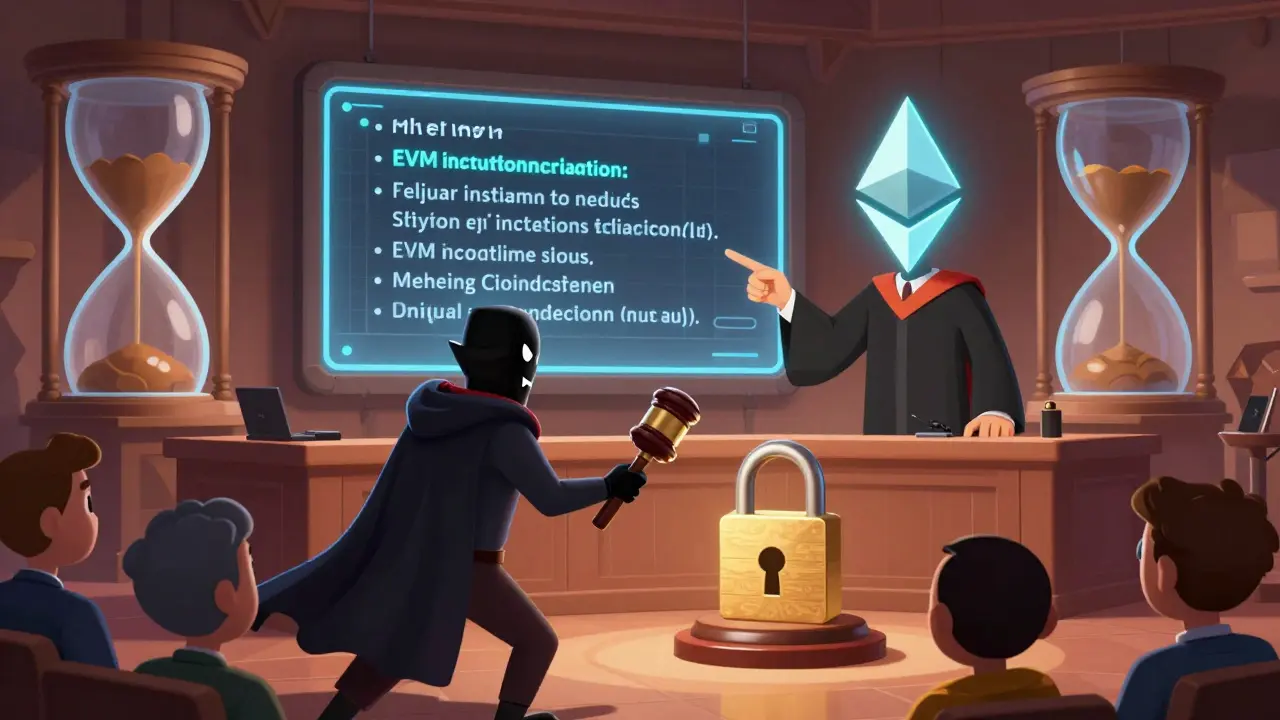
- The fraud proof system - If someone suspects fraud, they can challenge the batch. A 7-day window opens up. During this time, challengers and defenders go back and forth, narrowing down the disputed step until it’s just one EVM instruction. Then Ethereum checks it. If it’s wrong, the bad actor loses their bond. If it’s right, the challenger pays.
For example, Arbitrum bundles about 5,000 transactions into a single batch and submits it to Ethereum as calldata. That cuts on-chain data by 90%. The result? Fees drop from $10 to under $0.10.
Why Are Arbitrum and Optimism So Popular?
By January 2026, Arbitrum and Optimism together held over $38 billion in locked value - 62% of the entire Ethereum Layer 2 market. Why? Because they’re almost fully compatible with Ethereum.
Most smart contracts written for Ethereum work on Arbitrum and Optimism without changes. A DeFi protocol like Uniswap or Aave can move over with minimal code tweaks. That’s huge. Early ZK-Rollups could only support 85% of Ethereum contracts. Today, Arbitrum supports 99.8%. That’s why 87% of the top 100 DeFi protocols are on optimistic rollups.
They also handle more transactions. Arbitrum peaks at 4,200 transactions per second. That’s double what early ZK-Rollups could manage. For complex DeFi trades, that matters.
The Big Trade-Off: 7-Day Withdrawals
Here’s where things get messy. Because optimistic rollups wait for challenges, withdrawals take up to 7 days. That’s not a bug - it’s built into the design. If you try to pull your ETH or USDC out, you’re stuck waiting.
Users hate this. On Trustpilot, 63% of negative reviews mention withdrawal delays. One Reddit user lost $420 because their withdrawal got stuck during a network spike. It wasn’t a hack - it was just the system doing its job.
Some services try to fix this. Platforms like Synapse Protocol offer instant withdrawals by lending you liquidity upfront - for a 0.3% fee. But that’s not the same as true decentralization. You’re trusting another middleman.
How Do They Compare to Other Solutions?
Let’s break it down:
| Feature | Optimistic Rollups | ZK-Rollups | Sidechains |
|---|---|---|---|
| Transaction Fees | $0.02-$0.15 | $0.10-$0.35 | $0.01-$0.05 |
| Withdrawal Time | 7 days | Under 1 hour | Under 1 hour |
| EVM Compatibility | 99.8% | 85-95% | 100% |
| Throughput (TPS) | 4,000-8,000 | 2,000-5,000 | 1,000-2,000 |
| Security Model | Ethereum-based | Ethereum-based | Independent validators |
Optimistic rollups win on compatibility and throughput. ZK-Rollups win on speed and security. Sidechains are fast and cheap - but less secure because they don’t inherit Ethereum’s consensus.

What’s Changing in 2026?
The 7-day wait isn’t set in stone anymore. Arbitrum Nova, launched in September 2025, introduced "single-round fraud proofs" for simple transfers. That cut the challenge window from 7 days to 60 minutes. Adoption jumped 37% in two months.
Optimism is working on "Bedrock," a major upgrade that removes the centralized sequencer. Instead, anyone can become a sequencer. That’s a big step toward true decentralization.
Arbitrum’s "Stylus" upgrade, rolled out in early 2026, lets developers write smart contracts in Rust or WebAssembly - not just Solidity. That opens the door to faster, more efficient code. Throughput could hit 10,000 TPS.
And there’s talk of hybrids. Vitalik Buterin recently proposed combining optimistic rollups with occasional ZK proofs. Imagine a system that’s cheap and compatible - but can prove correctness on demand. That might be the future.
Is This Technology Right for You?
If you’re a regular user: stick with Arbitrum or Optimism if you’re doing DeFi, trading, or NFTs. The fees are a fraction of Ethereum’s. Just plan for the 7-day wait if you’re withdrawing.
If you’re a developer: these are the easiest Layer 2s to build on. Your existing Ethereum code works. The documentation is solid. Arbitrum scores 4.5/5 in developer surveys. Optimism is 4.2/5. That’s better than most ZK-Rollups.
If you’re an institution: the regulatory clarity helps. The SEC classified optimistic rollup tokens as utility tokens in late 2025. That’s why big players like Coinbase, Kraken, and Fidelity are all building on them.
But don’t ignore the risks. Centralized sequencers can censor transactions. Fraud proofs can be delayed. MEV (miner extractable value) opportunities have increased by 12.3% on optimistic rollups compared to Ethereum mainnet. You’re trading convenience for some hidden complexity.
What’s Next?
Optimistic rollups aren’t the endgame - but they’re the most practical solution we have right now. They made Ethereum usable during its toughest years. They brought millions of users online. They kept DeFi alive.
By 2028, ZK-Rollups might overtake them. But until then, optimistic rollups are the backbone of Ethereum’s scaling story. They’re not perfect. But they work - and that’s more than most scaling ideas can say.
Are optimistic rollups safe?
Yes - but with caveats. They inherit Ethereum’s security, so the underlying chain can’t be hacked. But they rely on sequencers to order transactions. If a sequencer goes offline or censors users, you’re stuck. Also, fraud proofs only work if someone is watching. If no one challenges a bad batch, it can slip through. That’s why running your own node or using trusted bridges matters.
Why are fees so low on optimistic rollups?
Because they batch thousands of transactions into one single submission to Ethereum. Instead of paying for each transaction’s data, you pay for one compressed batch. That cuts on-chain costs by 80-90%. Ethereum only stores a cryptographic summary - not the full details. That’s why fees drop from $10 to under $0.10.
Can I use MetaMask with optimistic rollups?
Yes. MetaMask automatically detects Arbitrum and Optimism. You just need to add their network IDs - which most wallets do for you. You can send ETH, swap tokens, and interact with DeFi apps just like on Ethereum. The only difference is the withdrawal delay.
Do I need to bridge my assets to use optimistic rollups?
Yes. You must move your assets from Ethereum mainnet to the rollup using a bridge. This usually takes 10-30 minutes. Once there, you can use them like native tokens. But if you want to move them back, expect a 7-day wait unless you use a liquidity provider like Synapse or Across Protocol.
What happens if no one challenges a fraudulent batch?
The batch gets finalized. That’s the risk. Optimistic rollups assume transactions are valid unless someone proves otherwise. If no one is watching - or if the challenge window passes without action - the fraud goes uncorrected. That’s why decentralized sequencers and active monitoring tools are being developed. Users can’t just assume it’s safe - they need to stay informed.
Optimistic rollups didn’t solve Ethereum’s scaling crisis alone - but they bought time. They made the network usable. They kept the ecosystem alive. And for now, they’re still the most reliable path forward.

George Suggs
February 21, 2026 AT 22:25Colin Lethem
February 23, 2026 AT 20:12Fiona Monroe
February 25, 2026 AT 06:44Molley Spencer
February 25, 2026 AT 21:13John Fuller
February 27, 2026 AT 18:33Lucy Simmonds
February 27, 2026 AT 23:49Dana Sikand
February 28, 2026 AT 23:01Lilly Markou
March 2, 2026 AT 16:17McKenna Becker
March 3, 2026 AT 12:43precious Ncube
March 4, 2026 AT 15:48Amita Pandey
March 5, 2026 AT 19:25Jan Czuchaj
March 6, 2026 AT 20:07Tracy Peterson
March 8, 2026 AT 12:01Dianna Bethea
March 10, 2026 AT 04:09