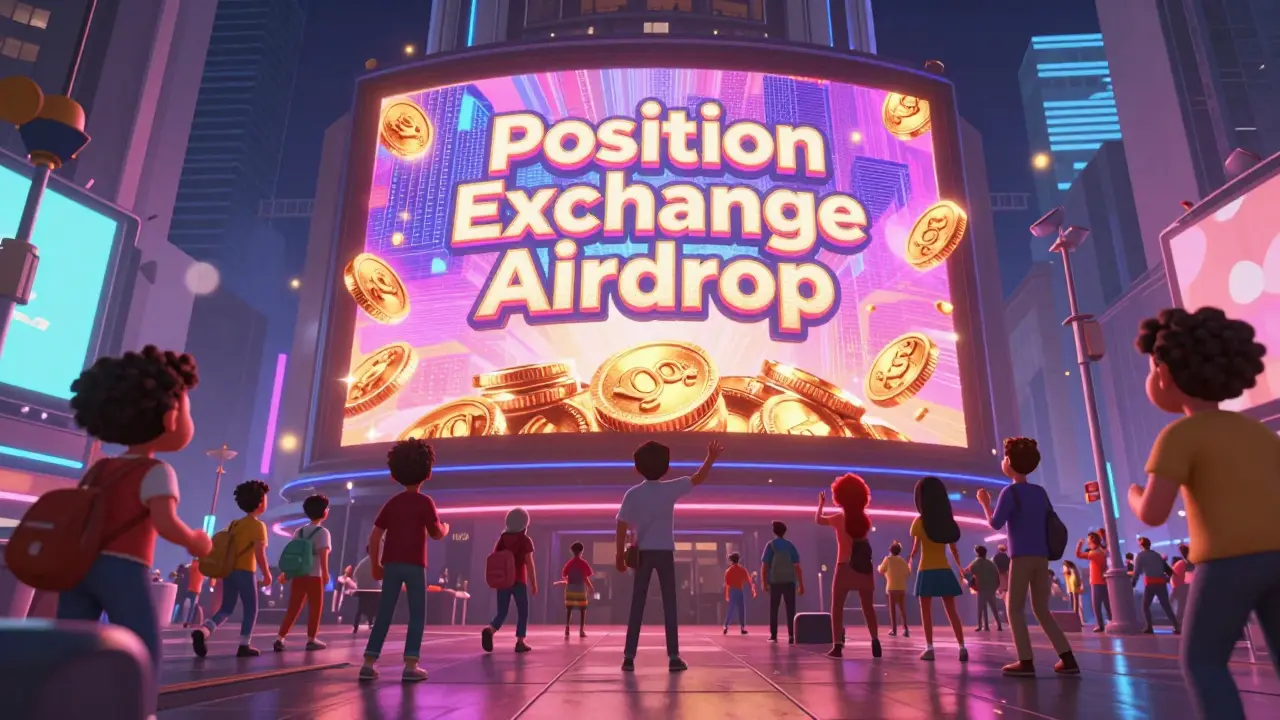
Imagine walking through the neon glow of New York City and seeing a massive screen announcing a free windfall of tokens. It sounds like the ultimate marketing stunt, but when it comes to the Position Exchange airdrop, the reality is far more dangerous than a simple advertisement. If you've seen social media posts claiming that a billboard in Times Square is giving away free crypto, stop everything. You aren't looking at a marketing campaign; you're looking at a meticulously crafted trap.
The Truth About the Position Exchange Event
Let's be clear: there is no legitimate Position Exchange billboard event in New York. Despite the flashy images circulating on TikTok and Instagram, no reputable advertising agency or Times Square authority has any record of this project. In the world of digital assets, a Airdrop is a marketing strategy where coins or tokens are distributed for free to wallet addresses to promote a new project. However, real airdrops happen on the blockchain, not via physical signage.
The "event" is a coordinated effort to create a sense of urgency and legitimacy. By using the prestige of Times Square-a global hub known for its billion-dollar advertising industry-scammers trick people into believing the project is "too big to be fake." But if you dig into the data, the red flags are everywhere. Blockchain explorers like Etherscan show zero transactions associated with this specific billboard claim, and the project's domain is essentially a ghost town.
How the Billboard Scam Actually Works
You might wonder how a physical billboard can be part of a digital heist. The secret is that the billboard usually doesn't exist. Scammers use high-end Photoshop mockups to place their logo on a picture of a New York screen. They then post these images with hashtags like #CryptoAirdrop to lure in unsuspecting users. Once you're hooked, the process follows a predictable, predatory path:
- The Hook: You see a post showing a "Position Exchange" billboard in NYC.
- The Bait: The post tells you to visit a specific "claim portal" to get your free tokens.
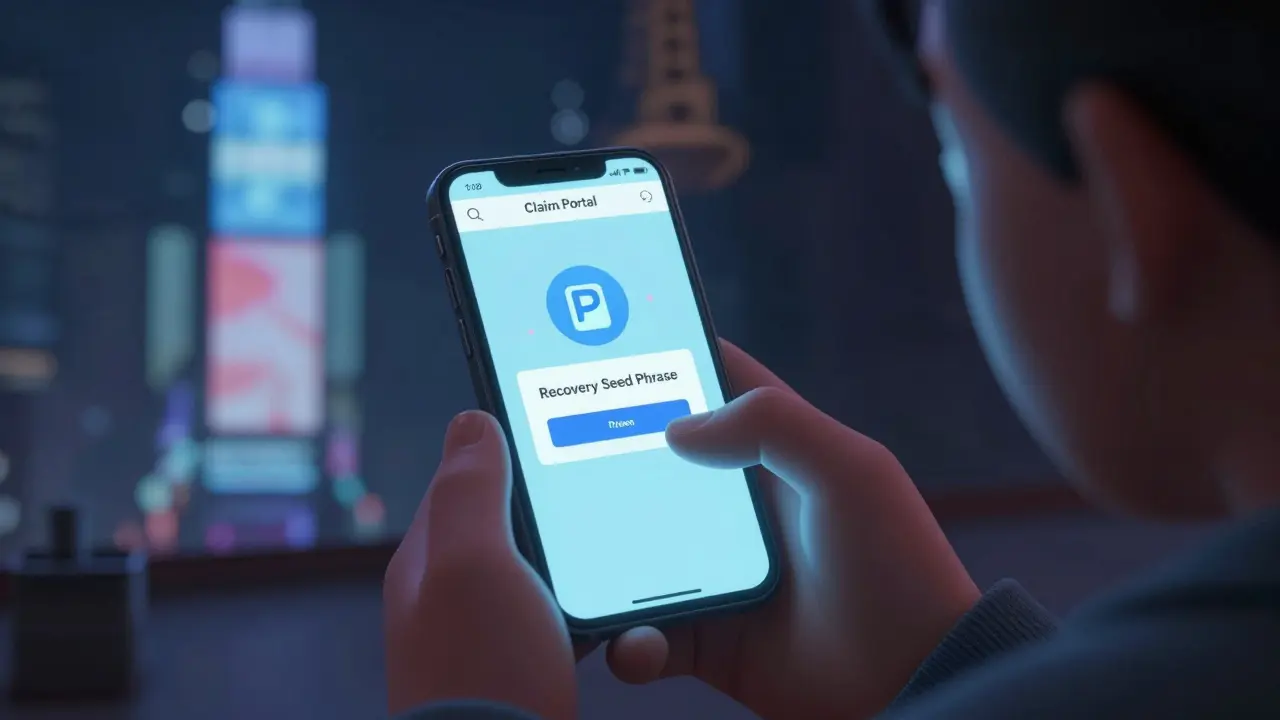
- The Trap: The website asks you to connect your wallet or, worse, enter your recovery seed phrase.
- The Heist: The moment you provide your credentials, a bot drains every single asset from your wallet.
This isn't just a theory. Security researchers have already traced millions of dollars in losses from this specific variant of the scam, with the stolen funds being shuffled through Tornado Cash to hide the trail. If a website asks for your private keys to "verify" your eligibility for an airdrop, it is 100% a scam.
Technical Impossibility: Why This Can't Be Real
Beyond the lack of evidence, there is a fundamental technical reason why a billboard cannot "distribute" an airdrop. The digital screens in Times Square, managed by companies like Disney or the Nasdaq Tower, are essentially giant televisions. They are designed to display images and video; they do not have NFC, Bluetooth, or any blockchain-integrated hardware that could interact with your crypto wallet.
| Feature | Legitimate Crypto Ad (e.g., Coinbase) | Position Exchange "Airdrop" |
|---|---|---|
| Purpose | Brand Awareness | Wallet Draining (Phishing) |
| Interaction | Directs to official, verified website | Directs to fake "claim" portal |
| Requirement | No private keys ever requested | Requests seed phrase or wallet connection |
| Verification | Listed in official ad registries | Only exists in social media screenshots |
When real companies like Binance or Crypto.com buy billboard space, they are paying for eyes, not for a direct transaction mechanism. They want you to know their name, not to hand over your keys in the middle of a sidewalk.
Protecting Your Assets from Phishing
The psychology behind these scams is simple: greed and FOMO (Fear Of Missing Out). The thought of getting "free money" makes people ignore the basic rules of security. To keep your funds safe, you need to develop a skeptical mindset toward any offer that seems too good to be true. If you encounter another "billboard event," remember these golden rules:
- Never Share Your Seed Phrase: No legitimate project, exchange, or support team will ever ask for your recovery phrase. Ever.
- Verify via Official Channels: Don't trust a screenshot. Go to the project's official Twitter (check for the gold/blue check and follower count) or their official documentation.
- Use a "Burner" Wallet: If you absolutely must interact with a new airdrop site, use a fresh wallet with no significant funds in it.
- Check Blockchain Explorers: Look for actual token movements on BscScan or Etherscan. If the tokens aren't moving, the event isn't happening.
The Federal Trade Commission has repeatedly warned about these types of traps. They often use the "halo effect," where the legitimacy of a location (like Times Square) is transferred to the scammer's project to make it seem trustworthy.
The Bigger Picture: The Rise of Social Engineering
The Position Exchange incident is a symptom of a larger trend in Social Engineering. Scammers are moving away from simple emails and toward immersive "experiences." By creating a fake physical presence in the real world, they bypass the natural suspicion people have for random internet links.
This specific attack leverages the "proof of presence" fallacy. The victim thinks, "It's on a billboard in New York, so it must be real." In reality, it's just a digital image shared on a screen in your hand. The gap between a digital image and a physical reality is where the scammers live.
Is the Position Exchange billboard event real?
No. There is no verified evidence of any such event. It is a confirmed scam designed to steal cryptocurrency from users via phishing websites.
How do I know if an airdrop is a scam?
If the "airdrop" requires you to provide your seed phrase, private keys, or pay a "gas fee" upfront to receive tokens, it is a scam. Always verify the news through multiple independent, reputable sources.
Can a billboard actually send tokens to a wallet?
No. Billboards are display devices. They cannot interact with blockchain wallets directly. Any "claim" process happens on a website, and that is where the risk of phishing occurs.
What should I do if I already connected my wallet to the site?
Immediately move any remaining funds to a new, secure wallet. Revoke all token approvals using a tool like Revoke.cash and change any passwords associated with your accounts.
Who is investigating these scams?
Various entities, including the New York Attorney General's office and blockchain forensic firms like Chainalysis, monitor and investigate these coordinated phishing schemes.
Next Steps for Your Security
If you've been targeted or are worried about your security, the first step is to audit your permissions. Many people forget that when they "connect" a wallet, they might be signing a transaction that gives the scammer permission to spend their tokens indefinitely. Use a revocation tool to clear these permissions immediately.
For those who love hunting for airdrops, stick to established platforms. Look for projects with active GitHub repositories, transparent teams, and legitimate venture capital backing. Avoid any project that relies on "viral" screenshots of billboards or celebrity endorsements that look edited. In the fast-moving world of crypto, the safest move is often to assume a "free' gift" is actually a cost you can't afford to pay.

Rob Mitchell
April 14, 2026 AT 07:41Use a hardware wallet for everything. Never keep your main stash on a hot wallet if you're hunting for these things.
Tracie and Matthew Hartley
April 15, 2026 AT 12:15idk why everyone is so spooked lol. maybe its just a new way of doin things. ppl love to say everything is a scam these days
Samson Selleck
April 17, 2026 AT 01:02The cognitive dissonance displayed by the retail crowd is frankly staggering. We are witnessing a textbook application of social engineering leveraging the heuristic of physical presence to bypass basic security protocols. Most users lack the fundamental understanding of asymmetric cryptography and the immutable nature of private keys, which makes them the perfect liquidity for these bad actors. It is an exercise in Darwinian selection within the DeFi ecosystem. Only those with a rigorous understanding of smart contract approvals and the ability to audit a transaction's bytecode on a block explorer can survive this environment. The systemic failure here isn't the scam itself, but the abysmal level of technical literacy among the participants who treat high-risk financial instruments like a lottery ticket. Truly a pathetic display of intellectual laziness.
Akshay Gorad
April 17, 2026 AT 20:34It is very important to remain cautious of these lures. Let us all maintain our security standards.
Aaliyah BROTHERS
April 18, 2026 AT 04:26THIS IS ALL PART OF THE GREAT RESET!!! They use these fake "scams" to make us fear digital currency so they can force us into their central bank slavery!!! WAKE UP PEOPLE!!! The billboards are just a distraction from the REAL surveillance state operating in NYC!!! Absolute madness!!!
Omotola Balogun
April 18, 2026 AT 05:43Actually, a lot of people forget that the seed phrase is the actual key to the wallet and not just a password. Its basic blockhain logic. The scamers are just using the lack of education in the masses to their advatage. You dont need a billboard to steal money when people are this gullible.
william manes
April 19, 2026 AT 04:23Only suckers fall for this! 🇺🇸 Keep your money in US banks or real gold! 🇺🇸 🚫🤡
Tyler Webb
April 19, 2026 AT 16:27It's really heartbreaking to see people lose their hard-earned savings to these tricks. Just be careful out there everyone 🫂
Rima Dinar
April 21, 2026 AT 13:41I really believe that the best way to handle this is to spend some time educating ourselves on the fundamentals of wallet security because once you understand how a private key works you will never feel the need to enter it into a website regardless of how flashy the advertisement is or where it is located in the world and I think if we all shared more knowledge with each other we could stop these scammers from ever finding a victim again because a community that learns together grows together and stays safe together.
Artavius Edmond
April 23, 2026 AT 10:27Just another wild day in the crypto world haha. Stay safe everyone!
Rebecca Violette
April 23, 2026 AT 17:23omg i almost did this last week... i feel so dume for even thinking about it
Prasanna Shembekar
April 24, 2026 AT 17:51my wallet is empty anyway lol
Alan Seiden
April 25, 2026 AT 02:31Typical garbage. These pathetic scams are a disgrace to the industry and the people who fall for them are absolute morons. This is why the UK needs tighter regulations to stop this filth.
Jessie Tayaban
April 26, 2026 AT 02:59OH MY GOD!!! thank goodness someone posted this!! i saw that tiktok and was literally about to connect my metamask!! 😱
Amanda Faust
April 26, 2026 AT 22:07seed phrases are never for public entry that is crypto 101
Adam Auksel
April 28, 2026 AT 03:19If anyone is feeling overwhelmed by the technical side, just remember the rule: if it's free, you are the product. 🛡️✨
Carroll Foster
April 29, 2026 AT 05:15Oh look, another "revolutionary" way to lose your life savings. The level of sophistication here is just breathtakingly low. I'm sure the "blockchain integration" of a 4K LED screen is just around the corner, right?
ssjuul z
April 30, 2026 AT 19:56Let's all agree to report these accounts as soon as we see them! We can take them down together! 💪🚀
Chidinma Sandra okafor
May 1, 2026 AT 10:27Imagine being so desperate for money that you believe a billboard is a bank. Nigeria is way ahead of this game, we've seen it all before. Truly a masterpiece of stupidity.
logan bates
May 2, 2026 AT 01:54New York is the only city that can make a scam look this prestigious. Get it out of my city.