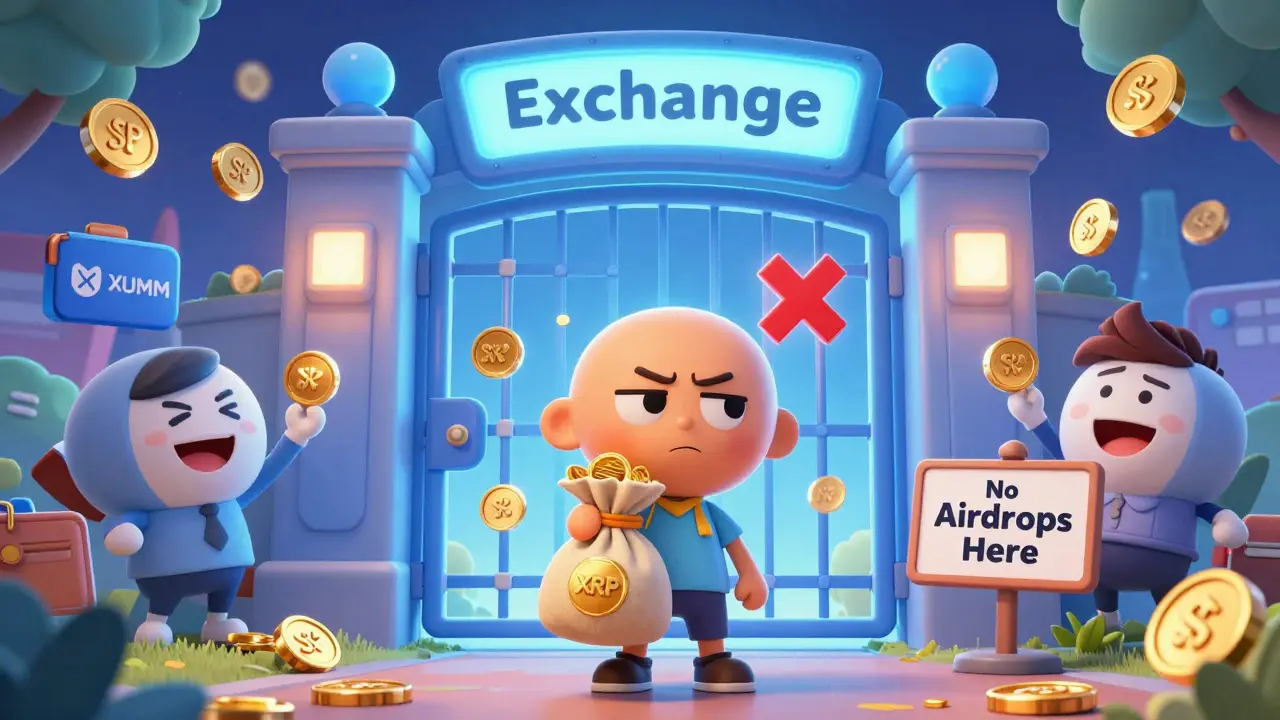
Missing out on a crypto airdrop because you left your coins on an exchange is one of the most painful mistakes in Web3. For Sologenic (SOLO), this isn't just a hypothetical risk-it’s a documented reality that has cost thousands of users their free tokens. If you are holding XRP or already own SOLO, understanding exactly how these distributions work is critical right now.
Sologenic operates as a high-level asset tokenization platform built on the XRP Ledger. Unlike typical meme-coin giveaways, their airdrops are tied to specific technical actions, wallet custody, and partnership ecosystems like Coreum. This guide breaks down what you need to do to qualify, why timing matters more than luck, and how to set up your wallet correctly so you don’t get left behind.
How Sologenic Airdrops Actually Work
To understand Sologenic airdrops, you first need to understand the underlying technology. Sologenic builds its infrastructure on the XRP Ledger (XRPL), which is a decentralized blockchain known for fast transaction speeds and low fees. Because XRPL handles assets differently than Ethereum or Solana, the mechanics of receiving tokens are unique.
Most Sologenic distributions follow a "snapshot" model. The team takes a picture of the ledger at a precise second. If your wallet meets the criteria at that exact moment, you are eligible. However, there is a catch: XRPL requires something called a trustline to receive non-XRP tokens. You cannot just send any token to any address; the receiver must explicitly authorize the issuer.
- The Snapshot: A specific date and time when eligibility is checked.
- The Trustline: A permission setting in your wallet that allows it to hold a specific token (like SOLO or CORE).
- The Distribution: The actual transfer of tokens, which often happens weeks after the snapshot to prevent market manipulation.
If you miss the trustline setup step, the tokens simply bounce back or are lost. This technical hurdle filters out casual participants, which is why preparation is key.
The Historical Context: The 2021 XRP Holder Mistake
Let’s look at the biggest lesson from Sologenic’s history. In December 2021, Sologenic announced a major airdrop targeting XRP holders. The snapshot was scheduled for December 24, 2021, at 8:00 PM UTC. On the surface, this sounded easy: just hold XRP and get free SOLO.
Here is where many people failed. Major centralized exchanges, including Zondacrypto, explicitly stated they would not support the airdrop. They refused to distribute the tokens to user accounts. Why? Because managing individual trustlines for millions of users is technically complex and costly for exchanges.
If you held your XRP on Binance, Coinbase, or Kraken during that snapshot, you got nothing. To qualify, you had to withdraw your XRP to a self-custody wallet-like XUMM, Toast, or Ledger-that supports XRPL trustlines. Those who didn’t move their funds missed out on approximately 40 SOLO tokens per eligible account. At current prices, that might seem small, but historically, early airdrop allocations have appreciated significantly.
This event established a clear rule for Sologenic: Custodial holdings on exchanges usually disqualify you from XRPL-based airdrops. Always verify if an exchange supports a specific claim before assuming your balance is safe.
The Coreum (CORE) Partnership Airdrop
The most significant recent development involves the partnership between Sologenic and Coreum, a blockchain platform designed for enterprise-grade application deployment. This isn't a random giveaway; it's a strategic alignment of two ecosystems.
Sologenic allocated 100 million CORE tokens to distribute among eligible SOLO holders. This program targets loyalty rather than new user acquisition. Here are the specifics you need to know:
| Feature | Details |
|---|---|
| Eligibility | Existing SOLO token holders |
| Total Allocation | 100 Million CORE Tokens |
| Snapshot Window | September 18-26, 2025 (12:00-16:00 UTC daily) |
| Distribution Timing | 6-8 weeks after monthly snapshots |
| Requirement | Active trustline with Coreum gateway on XRPL |
The timeline here is crucial. The snapshots occurred in late September 2025. However, the tokens were not distributed immediately. Sologenic uses a randomized distribution schedule, delivering tokens 6 to 8 weeks post-snapshot. This delay prevents traders from instantly dumping the tokens upon receipt, which protects the price stability of both SOLO and CORE.
If you held SOLO during that window, you likely received your CORE tokens by late November or December 2025. But did you actually get them? Only if you had the correct trustline enabled. Many users reported confusion because their wallets showed zero balance until they manually created the trustline for CORE in their interface.
Step-by-Step: How to Prepare for Future Distributions
You can’t predict the next airdrop, but you can prepare your infrastructure so you’re ready when it happens. Here is the checklist every XRPL participant should follow.
- Use a Self-Custody Wallet: Abandon exchanges for long-term holds if you want airdrop eligibility. Download XUMM, a popular mobile wallet for the XRP Ledger or use a hardware wallet like Ledger connected to a compatible interface. These tools give you control over trustlines.
- Understand Trustlines: In your wallet settings, look for the option to "Create Trustline." You will need to enter the Issuer Address of the token you expect. For Sologenic, this is the SOLO issuer. For Coreum, it’s the CORE issuer. Without this line, the network rejects incoming transfers.
- Monitor Official Channels: Sologenic announces snapshots via their official Discord, Telegram, and Twitter/X. Do not rely on third-party aggregators, as they often lag or contain scams. Look for the exact UTC timestamp of the snapshot.
- Verify Exchange Policies: If you must keep funds on an exchange, check their announcements. Most will say "We do not support this airdrop." If they do, great. If they don’t, withdraw your assets to a personal wallet at least 24 hours before the snapshot to ensure the transaction clears.
- Check Your Balance Post-Snapshot: After the snapshot, wait for the distribution window. Remember, it may take weeks. Don’t panic if you don’t see tokens immediately. Check your wallet’s "Assets" or "Tokens" tab, not just the main XRP balance.
Technical Requirements and Common Pitfalls
One of the biggest barriers for newcomers is the technical complexity of the XRP Ledger compared to EVM chains like Ethereum. On Ethereum, you just connect MetaMask and click "Claim." On XRPL, the process is slightly more manual.
Pitfall 1: Insufficient Reserve. Every account on XRPL must maintain a minimum reserve of XRP (currently 10 XRP for the base account, plus 2 XRP for each trustline). If your balance drops below this threshold, your account becomes frozen, and you cannot receive or send tokens. Ensure you have enough XRP to cover the trustline costs for any new tokens you expect.
Pitfall 2: Wrong Issuer Address. When creating a trustline, you must copy the exact issuer address provided by Sologenic. A single character error means you create a trustline for a fake token, wasting your reserve fee. Always double-check the address against the official Sologenic documentation.
Pitfall 3: Ignoring Tax Implications. In many jurisdictions, including the United States, airdropped tokens are considered taxable income at the fair market value on the day of receipt. Since Sologenic distributions can happen in batches over weeks, you may need to track multiple receipt dates for tax reporting. Keep screenshots of your wallet balances and distribution notifications.

Why Sologenic Targets Institutional Clients
It’s worth noting that Sologenic isn’t just about retail airdrops. Their primary business is B2B. They provide tokenization solutions for banks, brokerages, and investment firms. Features like SOLONEX, a brokerage solution for institutional clients, allow traditional finance entities to trade tokenized assets seamlessly.
This focus explains why their airdrops are structured around loyalty and technical competence. They aren’t trying to attract bots or quick-flippers. They are building a community of serious participants who understand the technology. The Coreum partnership reinforces this: both projects aim to bring enterprise-grade reliability to blockchain infrastructure.
For the average holder, this means the ecosystem is stable but slow-moving. You won’t see viral marketing campaigns promising moonshots. Instead, you’ll see methodical distributions, clear technical guidelines, and partnerships with established blockchain projects. This approach reduces the risk of rug pulls but requires patience and attention to detail from users.
Future Outlook: What to Expect Next
As of mid-2026, Sologenic continues to expand its partnership network. The success of the Coreum integration suggests future collaborations with other XRPL-native projects. Potential areas for upcoming airdrops include:
- Wealth Transfer Solutions: Sologenic has advocated for blockchain-based inheritance systems. An airdrop related to testing or using these services could emerge.
- New Asset Tokenizations: As more real-world assets (RWAs) like bonds or real estate are tokenized on XRPL, Sologenic may reward holders who participate in liquidity pools or trading pairs for these new assets.
- Governance Participation: Future distributions might be tied to voting in protocol upgrades, encouraging active community engagement rather than passive holding.
The key takeaway remains consistent: stay off exchanges if you want to maximize opportunities. Use a secure, trustline-capable wallet, keep your XRP reserve healthy, and monitor official channels for snapshot announcements. The rewards go to those who are prepared, not just those who are lucky.
Did I miss the Sologenic airdrop if my XRP was on an exchange?
Yes, likely. For the major 2021 airdrop and subsequent XRPL-based distributions, most centralized exchanges did not support the claim process. Users needed to hold XRP in a self-custody wallet (like XUMM or Ledger) that supported trustlines at the exact moment of the snapshot. If your funds were on Binance, Coinbase, or similar platforms, you were generally ineligible unless the exchange explicitly partnered with Sologenic to distribute tokens, which was rare.
What is a trustline and why do I need it for Sologenic airdrops?
A trustline is a feature of the XRP Ledger that allows a wallet to accept a specific issued token (like SOLO or CORE). Unlike native cryptocurrencies, tokens on XRPL require the receiver to explicitly authorize the issuer. Without an active trustline for the specific token, the network will reject incoming transfers. You must create this trustline in your wallet settings before the distribution occurs, and it costs a small amount of XRP (2 XRP reserve) to maintain.
When will I receive my Coreum (CORE) tokens from the Sologenic partnership?
The Coreum airdrop followed a delayed distribution model. Snapshots were taken between September 18 and September 26, 2025. However, tokens were not sent immediately. Sologenic distributes tokens 6 to 8 weeks after the monthly snapshot at randomized times to prevent market manipulation. Therefore, eligible holders received their CORE tokens between late November and December 2025. If you haven't seen them, check if you have an active trustline for CORE in your wallet.
Is the Sologenic airdrop still ongoing in 2026?
The initial historical airdrops (like the 2021 XRP holder drop) are closed. The Coreum partnership distribution concluded its snapshot phase in late 2025. However, Sologenic frequently runs community reward programs and may launch new airdrops tied to future partnerships or platform features. There is no permanent "open" airdrop; each is a discrete event with specific deadlines. You must monitor their official social channels for new announcements.
Which wallet is best for claiming Sologenic airdrops?
For ease of use and trustline management, XUMM is widely recommended by the XRPL community. It provides a user-friendly interface for creating trustlines and viewing multi-token balances. Hardware wallets like Ledger or Trezor offer higher security but may require additional software interfaces (like Xaman or Exodus) to manage trustlines effectively. Avoid using exchange wallets for airdrop participation due to lack of control and frequent non-support policies.
Are Sologenic airdrops taxable?
In many jurisdictions, including the US, yes. Airdropped tokens are typically treated as ordinary income at their fair market value on the date of receipt. Since Sologenic distributions can occur in batches over several weeks, you may need to report income on multiple dates. Consult a tax professional familiar with cryptocurrency regulations to ensure compliance, especially if you sell the tokens later, which would trigger capital gains tax.

Craig Swanson
May 27, 2026 AT 13:23look, i know it stings but blaming the exchange doesnt bring back the tokens. you gotta take control of your own keys if you want to play in the xrpl sandbox. trustlines are a pain but they keep the network clean. stop whining and set up your ledger properly for next time.
lorna erni
May 28, 2026 AT 06:04i feel like we should all just accept that crypto is hard and move on. its not really an attack on anyone personally, just how the tech works right now. lets try to be more collaborative about sharing wallet tips instead of fighting over past mistakes. peace out everyone.
stalin brian
May 29, 2026 AT 00:30thats so true lorna. i always forget to check the issuer address before making a trustline. its crazy how one tiny typo can cost you 2 xrp. maybe we should make a checklist thread for newbies so they dont mess up like i did?
kamal ifrani
May 30, 2026 AT 19:35you people are so naive thinking a checklist will save you from being scammed. the real issue is that sologenic targets only the tech-savvy elites who actually read whitepapers. if you cant figure out a trustline you deserve to miss out. its natural selection in web3.
trisya hazriyana
May 30, 2026 AT 19:53oh please kamal spare me the moral superiority lecture. nobody deserves to lose money due to poor documentation. sologenic could have made this easier but they chose complexity to filter out retail investors. classic institutional gatekeeping behavior much.
Miss Masquer
June 1, 2026 AT 07:25i have been following the coreum partnership closely and it seems like a very strategic move for both ecosystems to align their technical standards. the delay in distribution is actually quite smart because it prevents immediate dumping by traders who just want quick profits. i think many users underestimate the importance of having a stable token price during these initial phases. when you look at the broader picture of enterprise blockchain adoption this kind of patience is necessary. we need to educate ourselves on how these ledgers work rather than expecting instant gratification like we see with meme coins. the future of asset tokenization depends on serious participants who understand the underlying mechanics.
Debbie Lewis
June 3, 2026 AT 13:32yeah i just use xumm now. way less headache than trying to manage everything on an exchange. feels safer knowing i control the trustlines myself.
Eric Grosso
June 4, 2026 AT 09:55did u guys see the part about tax implications? thats scary. i didnt know getting free tokens counts as income. gonna need to talk to my accountant about this mess.
Edith Mair
June 5, 2026 AT 08:23you absolutely need to track every single receipt date. the irs does not care if it was an airdrop. if you sell later you owe capital gains too. keep screenshots of everything or you will regret it during audit season.
Sam Dashti
June 5, 2026 AT 19:13its like a digital treasure hunt where the map keeps changing. i love the puzzle aspect but hate the financial risk. maybe ill just watch from the sidelines this time and let the brave souls dive in first.
Joe Clements
June 7, 2026 AT 01:12hey sam i get that feeling. its exciting but also stressful. just remember to double check those issuer addresses. i almost messed mine up last month.
Rosie Morris
June 8, 2026 AT 06:39omg i totally forgot about the reserve requirement. i thought i had enough xrp but then i created two trustlines and my account froze. what a nightmare. glad i found this post before doing it again.
saradee dee
June 9, 2026 AT 00:18it is really dramatic when your account freezes isnt it. i felt so helpless. but hey at least we learned something valuable for next time right
Bill Gunn
June 9, 2026 AT 09:55here is a pro tip: always keep 15 extra xrp in your wallet just in case. it covers the base reserve plus a few trustlines without stressing you out. happy hunting! 🚀💎
Dana Rapoport
June 10, 2026 AT 13:01the philosophy behind delayed distributions is interesting. it forces holders to think long term rather than reacting emotionally to short term volatility. perhaps this model will become standard for serious projects.
Hadleigh Edwards
June 11, 2026 AT 02:17i believe that every challenge we face in this space is an opportunity to grow our understanding of decentralized systems. by embracing the complexity of trustlines and reserves we are building a stronger foundation for the future of finance. let us stay optimistic and supportive of each other as we navigate these technical waters together. the journey is just as important as the destination.
mark valmart
June 13, 2026 AT 01:10cool stuff. i just wanna know if i can use trezor directly or do i need exodus. sounds like exodus is needed for the interface.
Crystal Davis
June 13, 2026 AT 19:06trezor alone does not handle xrpl trustlines well without a companion app. you need exodus or xaman to interact with the ledger properly. most hardware wallets are ethereum centric so you have to adapt. stop expecting plug and play solutions for non evm chains.